Πίνακας Περιεχομένων
Dry mortar plant capacity should be measured at the boundary that matters to the sales commitment. For a bagged product, that boundary is usually accepted packaged output handed to the next defined operation. The mixer can have spare capacity while packaging or downstream handling limits the quantity available for dispatch. Buyers need to understand that constraint before investing in a larger mixing arrangement.
Start with an explicit question: how much accepted bagged product must be ready, in what formats and by what time? Keep this separate from a supplier's instantaneous machine rate. A production promise depends on the connected system, the order sequence and the practical time available for each activity.
Define dry mortar plant capacity at packaging
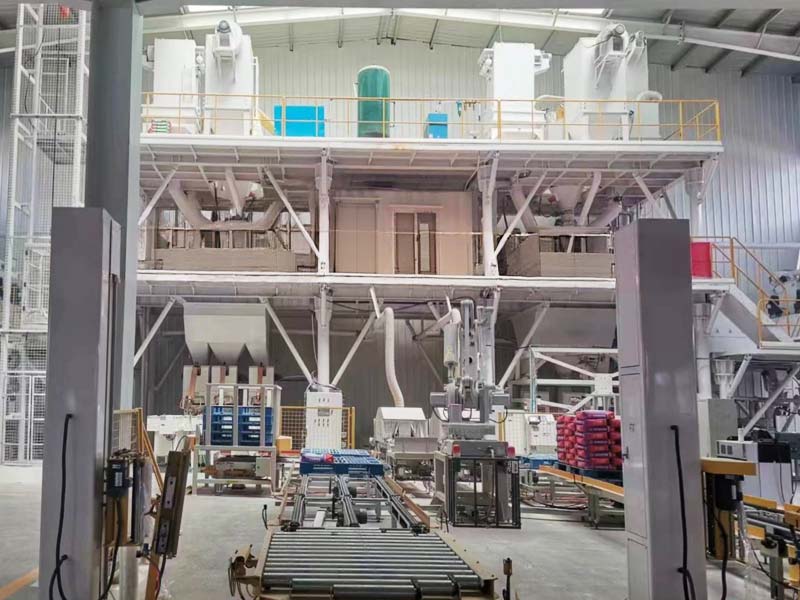
Record the intended package formats, product range and acceptance checks. State where output is counted and how rejected or held packages are represented. A bag crossing the filling outlet is not necessarily an accepted unit ready for the warehouse.
Dry mortar plant capacity comparisons need the same measurement boundary. One proposal may quote mixer discharge, another filling-machine output and another a complete handling line. Ask each supplier to identify the exact equipment and activities included in its figure before comparing the numbers.
Use consistent units. Bags per minute become tonnes per hour only when the package mass and observation interval are defined. Keep mixed package formats separate in the calculation; a combined bag count can conceal a substantial difference in accepted material quantity.
Translate the order mix into packaging duty
Build a representative sequence of orders showing product, package mass, quantity and required readiness time. Include changes that are expected in normal operation. The packaging arrangement should be assessed against this sequence rather than an uninterrupted campaign of the easiest product and format.
As a purely illustrative example, 600 accepted bags at 25 kilograms represent 15 tonnes. Producing them over a 90-minute observation interval corresponds to 10 tonnes per hour over that interval. This calculation describes the example's accepted output; it is not a performance claim for any dry mortar plant or packaging machine.
Identify what happens before the next order can begin. Product transition, package replenishment, identification changes and downstream availability may consume time or require checks. The dry mortar plant capacity review should make those assumptions visible so the schedule can be tested against the actual sales mix.
Trace the feed between mixer and packer
Follow the finished material from the mixer to the packaging feed point. Identify intermediate bins, conveying equipment and shared routes. Ask which equipment must be available before the mixer can discharge and how the controls represent a full or unavailable destination.
An intermediate bin may decouple operations for a defined period, but it does not remove the packaging constraint indefinitely. Its usefulness depends on available capacity, product assignment and the subsequent release of space. Show its occupancy across the order sequence rather than treating the installed volume as continuously available storage.
Check whether different formulations share the same intermediate route. Product identity and approved transition requirements may prevent the next batch entering while earlier material remains assigned to the current order. Dry mortar plant capacity depends on those practical route permissions as well as the nominal capacities of individual machines.
Observe downstream interruptions separately
Record the packaging line's major states during a representative run. Distinguish material waiting, machine operation, package-related interruption, accepted-package checking and downstream waiting. Each lost period needs an understandable cause if the result will support an equipment investment.
A full downstream holding area may stop a functioning packer. Conversely, a packer may have space available while it waits for material or an approved product change. Combining both situations into one generic downtime total makes it difficult to identify which part of the system needs improvement.
Use the ISO 22400-2 overview as context for defining manufacturing indicators with clear elements, units and time behavior. The example calculations in this article are illustrative planning relationships; they are not a declaration that the plant implements that standard.
Compare equipment changes with operating changes

Before buying a larger mixer, ask whether a packaging or handling change would address the observed limit. The answer should come from measured states and a coordinated proposal. A larger upstream machine can increase waiting or finished-bin occupancy without increasing accepted packaged output.
Assess candidate changes one at a time where possible. A revised order sequence, a different packaging arrangement or additional approved finished storage affects different interfaces. Record what each option is expected to change and which conditions must hold for the expected benefit to occur.
Avoid estimating the benefit by adding unrelated machine nameplate rates. Dry mortar plant capacity is governed by the connected process under the defined duty. The useful comparison is accepted output over a representative interval, with product quality and traceability requirements maintained.
Use a constraint-focused comparison table
The table below helps turn an output shortfall into a testable question. It describes observations and potential review areas, not automatic diagnoses. Confirm causes with the relevant equipment supplier and operating team.
| Observed state | Evidence to examine | Question before investment |
|---|---|---|
| Mixer waits for finished destination | Bin occupancy and route status | Is packaging releasing storage as planned? |
| Packer waits for material | Feed route and batch completion events | Is upstream delivery consistent? |
| Packer waits with material available | Machine and package interruption records | Which packaging condition limits output? |
| Accepted packages accumulate | Downstream movement and storage availability | Can the handling interface accept the rate? |
| Frequent order transitions | Change records and product sequence | Is the actual sales mix represented in the proposal? |
| High gross count, lower accepted count | Package checks and hold records | Which output definition is being quoted? |
Attach timestamps and order identifiers to the observations. This connects the constraint to a real production period and allows the team to compare the same event across mixer, packaging and warehouse records.
Run a representative packaging trial
Agree the product sequence, package formats, measurement point and acceptance checks before the trial begins. Include the normal supporting tasks and record exceptions. A short steady run can demonstrate an equipment condition, but it may not represent an entire shift with material and order changes.
Measure accepted output and the elapsed interval directly. Retain gross package counts, rejected or held quantities and the causes of waiting. If the trial requires temporary staffing or an unusual downstream arrangement, state that condition so the result is not presented as ordinary operating performance.
Review the observed constraint before repeating the test. A retest should have a defined change or resolved evidence gap. Keep the original result and the reason for the new run; replacing a disappointing record with a favorable one removes information needed to understand the dry mortar plant capacity decision.
Request the whole packaging interface in the quotation
For an indoor arrangement, review the workshop type dry mortar mixing plant. For another equipment configuration, discuss the step type dry mortar mixing plant using the same packaging duty and accepted-output definition.
Provide the supplier with the product list, package formats, order sequence, readiness deadlines and downstream boundaries. Ask it to identify the proposed packaging feed, finished storage, handling interfaces and performance assumptions. A complete proposal explains which equipment or operating condition governs deliverable output.
Use measured evidence to decide where additional capacity is valuable. When the accepted-package boundary is defined clearly, dry mortar plant capacity becomes a practical procurement question about fulfilled orders. Send your representative packaging schedule to discuss a configuration and trial that test the real constraint.
Συχνές ερω
Does dry mortar plant capacity increase automatically with mixer output?
No. Packaging, intermediate storage, product transitions and downstream handling can limit accepted bagged output. Review the connected system against the order mix.
How should bags per minute be compared with tonnes per hour?
State the package mass, accepted bag count and observation interval. Keep different formats identifiable and avoid comparing an instantaneous rate with a full-shift result.
Does a finished bin eliminate packaging interruptions?
It can provide a defined buffer when available and correctly assigned. Once its usable space is occupied, the upstream process may still wait for packaging or a permitted destination.
What should a packaging trial record?
Record accepted quantities, gross and held packages, product and format changes, elapsed time and causes of waiting. Identify any temporary support that differs from normal operation.
When should the buyer consider a larger mixer?
When evidence shows that upstream production limits accepted output under the intended duty and the connected interfaces can use the increase. Compare alternatives before selecting the investment.