
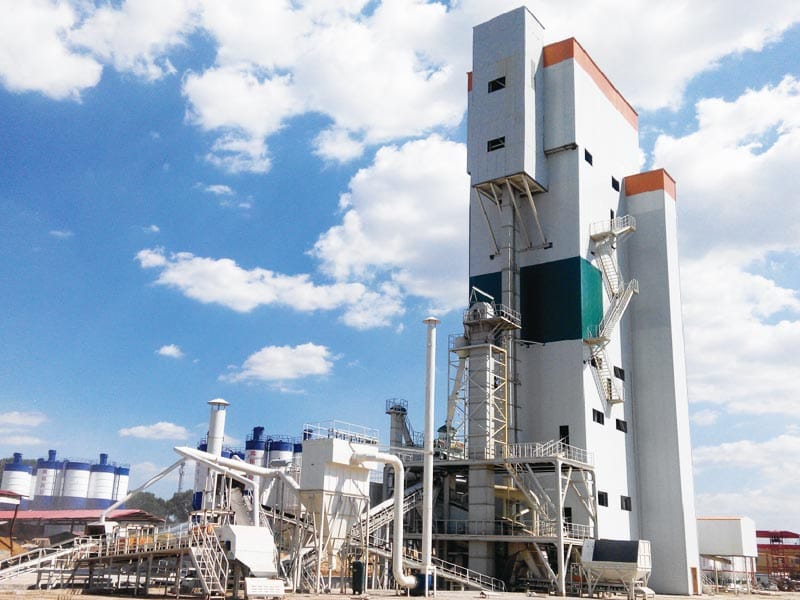
Dry mortar plant capacity should not be judged by mixer size alone. A line that produces masonry mortar efficiently can deliver a different practical output when it switches to tile adhesive, wall putty or self-leveling mortar because the number of ingredients, dosing time, mixing sequence, cleaning requirements and packaging rate can all change.
For buyers, the useful question is therefore not simply “How many tonnes per hour can this plant produce?” It is “How much of my actual product can the complete line produce under the intended operating schedule?”
Μας ξηρά λύσεις παραγωγής κονιάματος include tower, step and workshop configurations as well as integrated manufactured-sand systems. This guide explains what really determines dry mortar plant capacity and how product type changes the answer.
What Does Dry Mortar Plant Capacity Actually Mean?
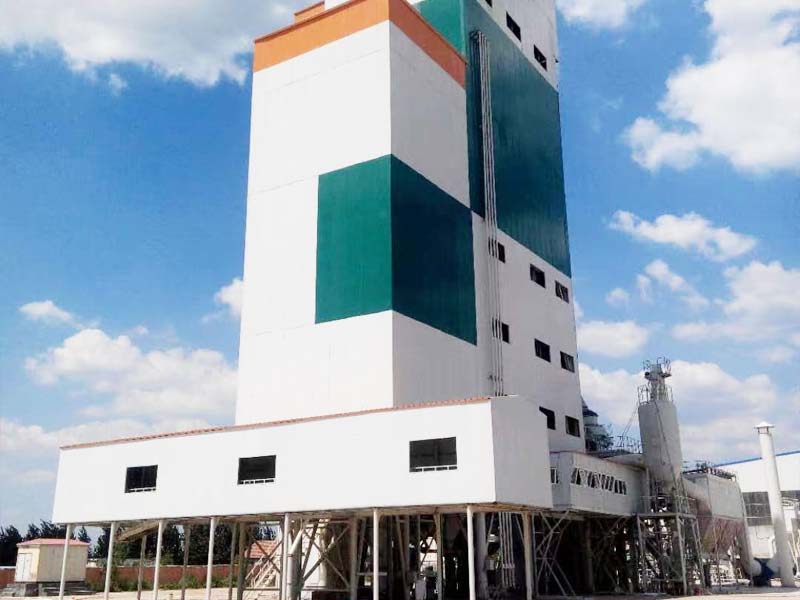
Dry mortar plant capacity can refer to several different things, and they should not be treated as interchangeable.
| Capacity term | What it describes | Why it can be misleading |
|---|---|---|
| Mixer capacity | How much material the mixer can process per batch or per hour | Does not include weighing, transfer, cleaning or packaging delays |
| Instantaneous line rate | Output during uninterrupted production | May ignore recipe changes, maintenance and material replenishment |
| Συσκευασμένη έξοδος | Finished bags produced per hour | Can be limited by the packing section rather than the mixer |
| Daily practical output | Finished production over a complete shift | Depends on operating hours, changeovers and downtime |
When comparing dry mortar plant capacity, ask which definition is being used. A high mixer throughput does not automatically mean the complete production line can sustain the same packaged output.
Product Type Changes the Number of Ingredients Per Batch
One of the biggest reasons dry mortar plant capacity changes is recipe complexity.
A relatively simple masonry mortar may use a limited number of major ingredients. A tile adhesive or self-leveling product can require several binders, fillers and functional additives, each with its own dosing step.
Every additional ingredient can add time for:
- bin selection;
- feeder operation;
- weighing;
- settling;
- transfer to the mixer;
- confirmation that the weighing hopper is empty.
If some ingredients can be weighed in parallel, the time impact may be small. If several materials share one weighing system, the same recipe can take longer to prepare.
This is why dry mortar plant capacity should be evaluated using the real formulation structure rather than one generic cycle time.
Micro-Additives Can Become the Slowest Dosing Step
Special mortars often use small quantities of functional additives. These materials can have a disproportionate effect on dry mortar plant capacity because they may require slower feeding to reach the intended quantity reliably.
For example, a large sand dose may be weighed quickly while a micro-additive system spends additional time approaching a small target through fine feeding.
If the additive dosing occurs at the same time as major-ingredient weighing, the effect on the total cycle may be limited. If the mixer must wait for the additive system, it can become part of the critical path.
For dry mortar plant capacity planning, record:
- number of additives per recipe;
- minimum and normal doses;
- whether additives are weighed independently or sequentially;
- feeding and settling time;
- whether manual additions are required.
Μας dry mortar weighing accuracy guide explains why small-dose materials need their own validated measuring range.
Mixing Time Depends on the Product, Not Just the Mixer
Dry mortar plant capacity can change when a product requires a different mixing sequence or longer validated mixing time.
A dry mortar mixer must achieve sufficient blend uniformity for the intended product. The correct mixing duration depends on ingredient properties, fill level and mixing sequence.
Do not assume that every product should use the shortest technically possible cycle. First establish acceptable product uniformity, then optimize the production time.
Tile adhesive, wall putty and self-leveling mortar can contain fine powders and low-dose additives that need adequate dispersion. A simpler mortar may reach its validated condition under a different cycle.
For dry mortar plant capacity, use the approved production time for each product rather than one brochure mixing time.
Batch Size Can Change When the Product Portfolio Changes
A plant may not always run at the nominal mixer batch size.
Large-volume standard mortar can justify repeated full batches. Specialty products may be produced in smaller campaigns because demand is lower or because the factory needs several formulations during one shift.
Smaller batches can reduce practical dry mortar plant capacity in two ways. First, the mixer processes less material per cycle. Second, fixed steps such as weighing, discharge and cleaning still consume time.
Consider a hypothetical line:
| Operating case | Batch size | Complete cycle | Illustrative output |
|---|---|---|---|
| Product A | 3.0 t | 8 min | 22, 5 t/h |
| Product B | 2.0 t | 8 min | 15.0 t/h |
| Product C | 1.5 t | 9 min | 10.0 t/h |
These values are illustrative, not MixingPlantPro performance claims. They show why dry mortar plant capacity can change significantly even when the same mixer is used.
Changeover Frequency Reduces Practical Output
A line running one product for an entire shift can achieve a different daily output from the same line making several products.
Recipe changeover can require:
- stopping material feeding;
- emptying hoppers;
- cleaning conveyors;
- cleaning or purging the mixer;
- changing packaging settings;
- verifying the next recipe;
- releasing the first acceptable batch.
For dry mortar plant capacity, these non-production periods need to be included in the daily calculation.
If one shift includes four 20-minute changeovers, the line loses 80 minutes of potential production time. The impact depends on the plant’s normal output and whether some changeover work can occur in parallel.
Μας dry mortar plant maintenance guide explains why cleaning and readiness for the next product should be treated separately from simple mechanical availability.
Tower, Step and Workshop Layouts Handle Material Flow Differently
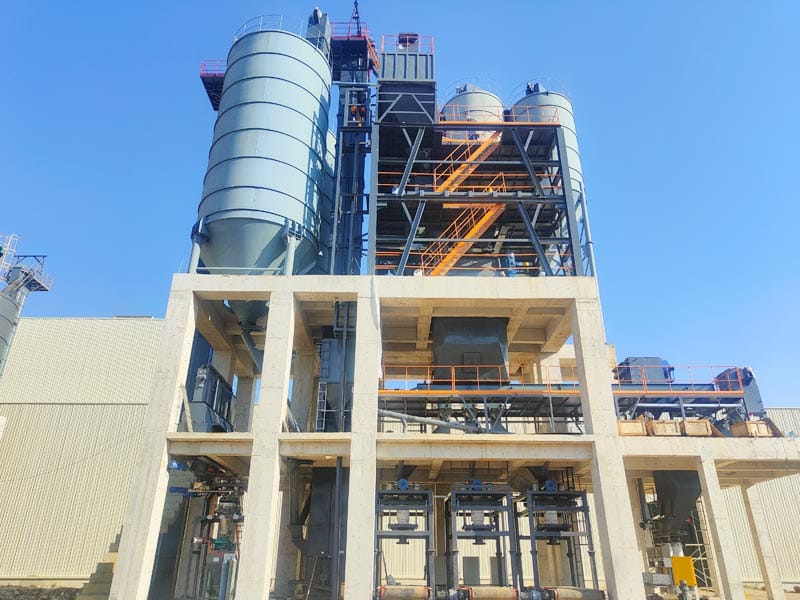
Plant layout can influence dry mortar plant capacity because it changes how materials move between storage, weighing, mixing and packaging.
A εργοστάσιο ξηρού κονιάματος τύπου πύργου uses a more vertical process so gravity can assist material movement through several stages.
A step-type arrangement combines gravity flow with mechanical conveying. A εργοστάσιο ξηρού κονιάματος τύπου εργαστηρίου distributes equipment more horizontally and relies more heavily on screw conveyors between stages.
These layouts should not be assigned one universal output ceiling. Their practical dry mortar plant capacity depends on the selected equipment, recipe complexity, site and downstream packaging system.
The choice should therefore be based on a complete flow diagram and cycle analysis rather than only the layout name.
Mechanical Conveying Can Become a Hidden Bottleneck
In a horizontal or step-type line, the mixer may finish before the next screw conveyor or elevator is ready to receive material.
Dry mortar plant capacity should therefore include transfer equipment in the timing study.
Έλεγχος:
- sand transfer rate;
- powder screw capacity;
- finished-product conveyor capacity;
- intermediate hopper volume;
- time required to empty each transfer route;
- residual material during product changes.
If a finished-product conveyor can move 12 tonnes per hour while the mixer can theoretically produce 18 tonnes per hour, the mixer cannot sustain 18 tonnes per hour indefinitely.
Buffer storage can delay the bottleneck, but it cannot remove a long-term capacity imbalance.
Packaging Often Defines the Real Finished-Product Capacity
Packaging is one of the most common reasons dry mortar plant capacity differs from mixer output.
A bagging machine has its own cycle. Bag loading, filling, settling, release, sealing, palletizing and operator handling all affect the actual packaged output.
Suppose the mixer can produce 20 tonnes per hour but the packaging section reliably handles 14 tonnes per hour. A finished-product hopper can absorb six tonnes per hour of difference temporarily. Once the buffer fills, upstream production must slow down.
That makes 14 tonnes per hour the sustainable packaged output under those assumptions.
Our recent guide on mortar bag weight variation explains why packing speed and bag-weight stability must be evaluated together.
Bulk Delivery Can Change the Output Limitation
Some mortar plants support both bagged and bulk finished-product delivery.
If a product is dispatched in bulk, the packaging bottleneck may disappear, but another limit can appear at the bulk loading or storage stage.
For dry mortar plant capacity, define the percentage of production that will be:
- bagged;
- loaded in bulk;
- stored temporarily;
- sent directly to another production stage.
The tower-type dry mortar line supports both automatic packaging and bulk delivery configurations. The final sustainable output still depends on the selected downstream equipment and dispatch schedule.
Sand Drying Can Limit the Complete Plant
If the plant receives wet sand, the drying system may determine how much dry mortar can be produced.
Dry mortar plant capacity should be calculated on the basis of dry, usable sand delivered to storage—not simply wet feed entering a dryer.
The drying load changes with incoming moisture. A dryer processing the same wet tonnage at 2% moisture and 8% moisture has a very different amount of water to remove.
For projects using wet sand, provide seasonal moisture data when the line is sized.
If sand already arrives dry and graded, the drying stage may not be part of the production line at all. Capacity comparisons should therefore use the same process boundary.
Manufactured Sand Integration Adds Another Capacity Balance
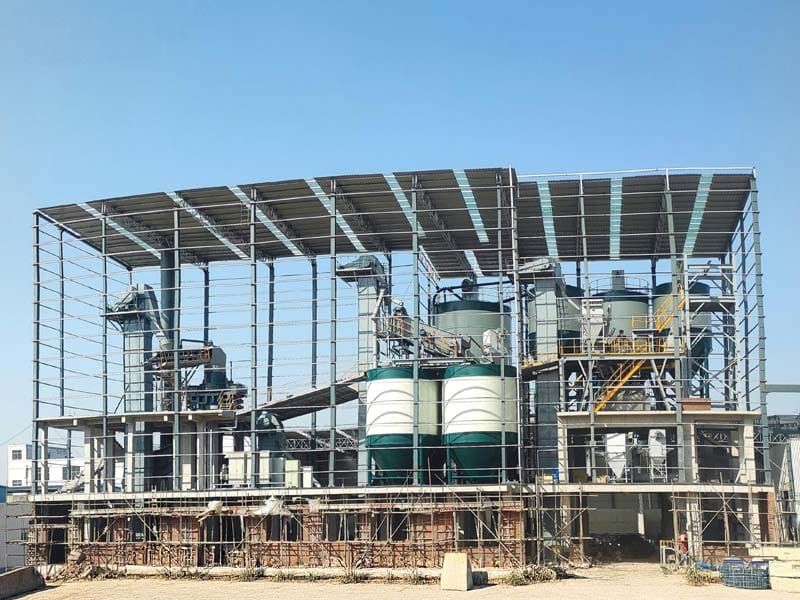
An integrated sand-and-mortar plant has two linked production systems.
Μας manufactured sand and special mortar integrated plant connects sand preparation with mortar batching and mixing.
In this arrangement, dry mortar plant capacity depends on whether the sand section can supply the correct fractions at the required rate.
Total manufactured-sand output can be higher than mortar demand while one critical sand fraction remains short.
For example, if mortar production needs 12 tonnes per hour of a medium fraction but the sand process produces only 9 tonnes per hour of that fraction, the mortar section cannot maintain its intended rate without buffer inventory or a different grading strategy.
Capacity must therefore be balanced fraction by fraction.
Raw Material Replenishment Can Interrupt Production
Large silos and bins do not eliminate the need to plan material replenishment.
Dry mortar plant capacity can fall when sand, cement, filler or additives are not available at the correct time.
For each major material, calculate:
- consumption per hour;
- usable storage volume;
- delivery frequency;
- minimum reorder point;
- time required to refill storage.
Also consider whether filling a silo or bin interrupts production. A plant where delivery trucks block the production route can lose output even when storage capacity looks adequate on paper.
Recipe Complexity Can Change the Number of Active Storage Bins
Special mortars may require several sand grades, binders and fillers.
Dry mortar plant capacity can be affected when one material has to be switched between bins or manually handled because the plant does not have enough dedicated storage positions.
A production line with adequate mixer output but insufficient storage can spend more time changing materials or waiting for replenishment.
When designing the plant, compare the number of frequently used ingredients with the number of available bins and silos.
Do not automatically maximize the number of silos. Every additional storage point adds cost, controls and maintenance. The goal is to match storage to the actual product portfolio.
Actual Shift Output Should Include Planned Downtime
Hourly dry mortar plant capacity is only one part of a production plan.
Daily or annual output should account for:
- startup;
- planned cleaning;
- recipe changeovers;
- quality checks;
- material replenishment;
- maintenance;
- packaging adjustments;
- unplanned interruptions.
Consider an illustrative eight-hour shift. If the line has 6.5 productive hours after planned changeovers and cleaning, a sustainable production rate of 16 tonnes per hour would produce 104 tonnes during that shift—not 128 tonnes.
This example is only arithmetic. The correct production allowance should come from the actual operating plan.
Use OEE Carefully for Dry Mortar Capacity Planning
Overall Equipment Effectiveness can help separate availability, performance and quality losses, but it should not be used as a substitute for process analysis.
For dry mortar plant capacity, a low output day could result from:
- availability loss because the line was stopped;
- performance loss because a bottleneck slowed the cycle;
- quality loss because finished product required rework or rejection.
Tracking these categories can help the factory identify whether it needs equipment changes, better scheduling or process-control improvements.
However, buyers should not apply an arbitrary OEE percentage to estimate a new plant without understanding the expected production schedule.
Compare Product Capacity with a Common Test Scenario
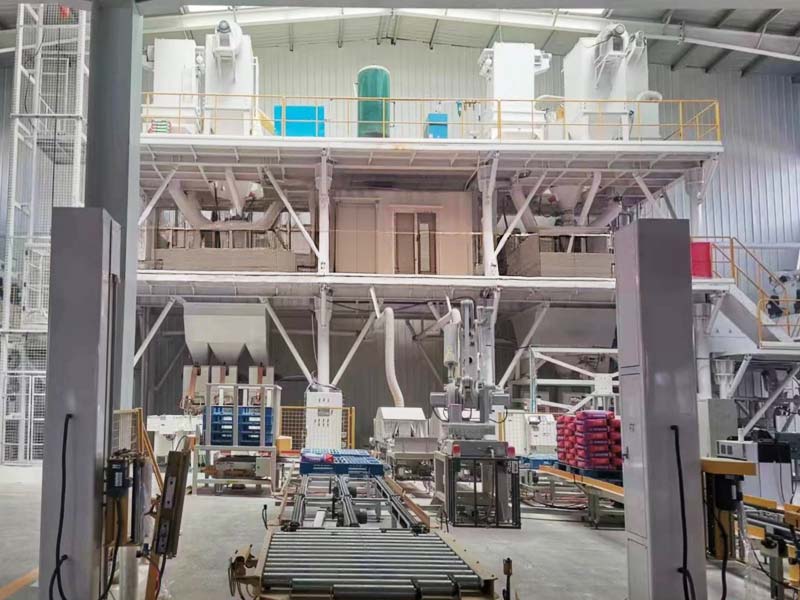
When comparing two plant configurations, use the same product and operating assumptions.
For example, specify:
| Comparison input | Condition to keep consistent |
|---|---|
| Mortar product | Same formula complexity and sand grading |
| Batch size | Same finished batch mass |
| Mixing requirement | Same validated mixing sequence |
| Συσκευασία | Same bag size and required packing rate |
| Changeovers | Same number per shift |
| Operating hours | Same productive time basis |
Only then does the dry mortar plant capacity comparison show meaningful differences between layouts or equipment choices.
What Information Should Buyers Send for Capacity Sizing?
A useful capacity inquiry should contain more than a target tonnes-per-hour number.
Παρέχω:
- product families;
- expected percentage of each product;
- number of ingredients per recipe;
- smallest additive dose;
- κανονικό μέγεθος παρτίδας.;
- required changeovers per shift;
- bag sizes or bulk-dispatch plan;
- εισερχόμενη υγρασία άμμου·;
- whether drying or manufactured-sand preparation is required;
- available operating hours;
- future production target.
Our dry mortar solutions are configured according to raw materials, formulations, production capacity and site conditions. These inputs allow the plant to be sized around a real production schedule rather than one headline output.
Send your product mix and production requirements through our σελίδα επικοινωνίας for a project-specific line review.
Συμπέρασμα
Dry mortar plant capacity changes with product type because the complete line changes its operating rhythm. Recipe complexity, micro-additive dosing, mixing time, batch size, product changeovers, conveying, packaging and sand preparation can all alter sustainable output.
The strongest capacity calculation follows one product from raw material storage to finished bag or bulk dispatch and identifies the slowest stage under realistic production conditions.
Do not buy a dry mortar line from mixer capacity alone. Define the product portfolio first, then balance every stage around the output the factory actually needs.
ΣΥΧΝΈΣ ΕΡΩΤΉΣΕΙΣ
Why does dry mortar plant capacity change with different products?
Different products can use different numbers of ingredients, additive doses, mixing times, batch sizes, cleaning procedures and packaging rates. These differences change the complete cycle even when the same mixer is used.
Is mixer capacity the same as dry mortar plant capacity?
No. Mixer capacity describes only the mixing stage. Practical plant output can be limited by weighing, conveying, cleaning, packaging, drying or another downstream process.
Why can tile adhesive reduce plant output?
Tile adhesive can require more low-dose additives, tighter dosing control, different mixing sequences and more demanding changeovers than simpler mortar products. The actual effect depends on the validated formulation and equipment configuration.
Can packaging limit dry mortar plant capacity?
Yes. If the packaging line handles less finished product per hour than the mixer produces, the finished-product buffer eventually fills and upstream production must slow down.
What information is needed to calculate dry mortar plant capacity?
Provide the product mix, ingredients, batch sizes, changeover frequency, packaging method, sand moisture, operating hours and any upstream sand preparation. Capacity should be calculated from the complete production flow.


