
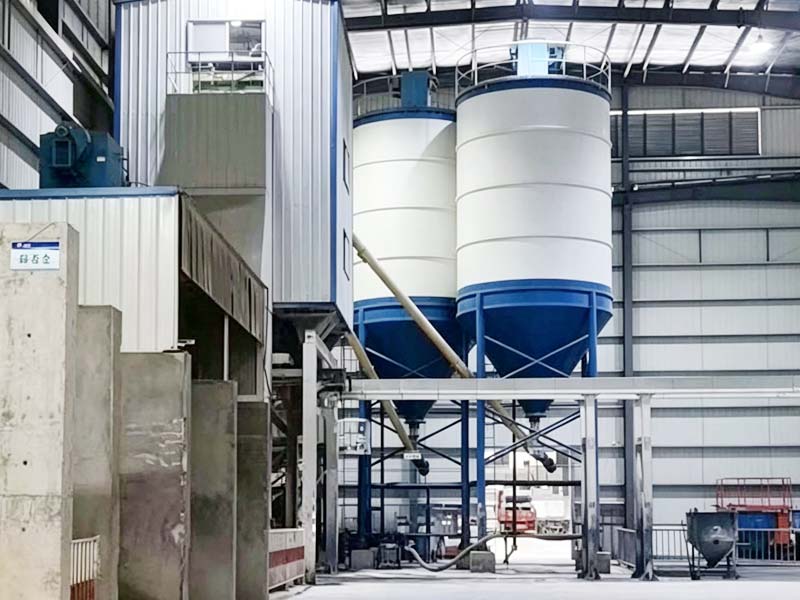
Precast concrete consistency is not created by the mixer alone. It depends on whether every batch receives the intended aggregate solids, water, cementitious materials and admixtures, whether those materials are mixed under repeatable conditions, and whether the concrete reaches the casting station without uncontrolled delay or handling changes.
For a precast factory, this matters because small batch-to-batch changes can affect mold filling, compaction, surface appearance, release timing and finished-product quality. A batching plant should therefore be selected and operated as part of the complete factory process rather than as an isolated machine.
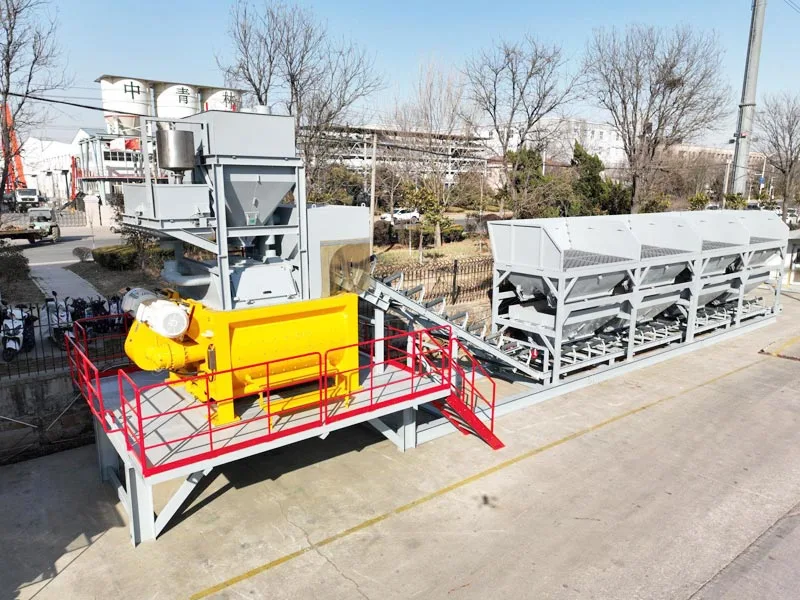
私たちの プレキャストコンクリートバッチングプラント combines planetary mixing, multiple discharge doors, material moisture and temperature monitoring, and production-line software interfaces. This guide explains how those functions connect to precast concrete consistency and what buyers should verify before approving a production system.
What Does Precast Concrete Consistency Mean?
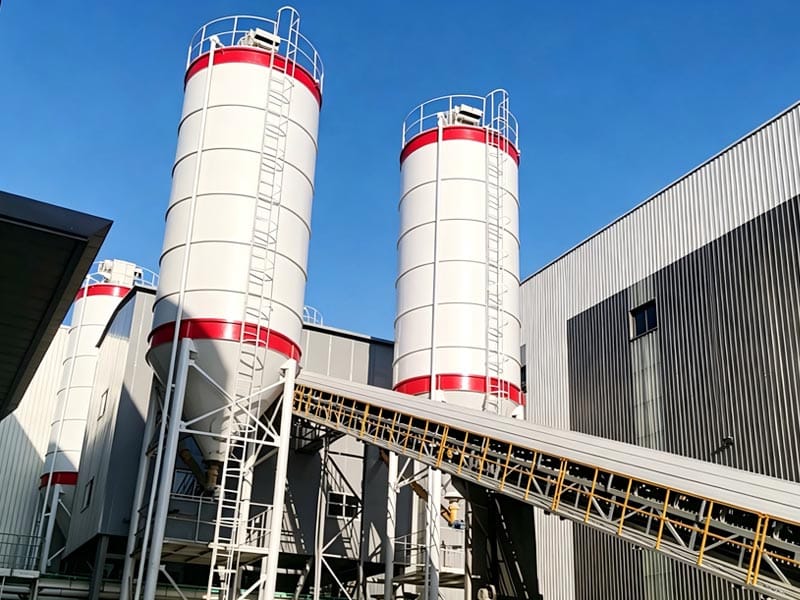
Precast concrete consistency means producing concrete that repeatedly meets the properties required by the approved mix design and casting process. It does not mean that every product must use the same slump, flow, batch size or mixing time.
The correct target depends on the concrete family and product. Wet-cast concrete, self-consolidating concrete and dry-cast concrete can require very different fresh properties. The common requirement is that each approved mixture should be reproduced within the production controls established for that product.
The National Precast Concrete Association’s current Quality Control Manual for Certified Precast Plants emphasizes consistent plant operations as a foundation of quality precast production. The latest edition became effective in 2026.
For plant buyers, precast concrete consistency should therefore be translated into measurable equipment and process questions: how accurately are materials batched, how is aggregate moisture handled, what batch range can the mixer validate, and how does concrete move from the mixer to the mold?
Start with the Product and Casting Schedule
A precast batching plant should be designed around the products it serves. Before discussing mixer size or nominal output, build a production matrix showing the concrete required by each casting station.
| 生産投入 | なぜそれが重要なのか | Question for the batching plant |
|---|---|---|
| Product family | Different products may require different fresh-concrete properties. | Can the plant manage the required recipes and changeovers? |
| Typical pour quantity | Determines normal batch size. | Does the mixer operate effectively at this load? |
| Smallest completion batch | Can expose dosing and mixing limitations. | 検証された最小バッチは何ですか? |
| Peak casting window | Determines required production rhythm. | Can batching, mixing and delivery keep up? |
| Receiving equipment | Controls how quickly concrete can leave the mixer. | How do discharge doors and transport routes connect? |
This matrix helps keep precast concrete consistency tied to real factory demand. A plant that looks adequate on average daily volume may still struggle when several casting stations require different concrete during the same short production window.
Aggregate Moisture Is One of the First Variables to Control
Aggregate moisture can change the concrete even when the stored recipe does not change. Wet sand carries surface water into the mixer, while aggregate below saturated surface-dry condition can absorb water from the mixture.
NPCA guidance on aggregate moisture content testing explains that moisture must be measured and accounted for, especially in fine aggregate. Its guidance also requires periodic validation even when moisture probes or automatic adjustment systems are used.
For precast concrete consistency, the batching system should distinguish:
- aggregate absorption;
- actual total moisture;
- surface moisture;
- corrected wet aggregate quantity;
- corrected added water.
Our precast plant configuration includes moisture monitoring, but the exact sensor location, material measured and control response should be confirmed for the project. A sensor reading is useful only when it represents the material actually being batched.
Use Moisture Data to Correct Both Aggregate and Water
Precast concrete consistency can drift if moisture correction changes only water while leaving aggregate mass unchanged.
Consider a simple illustrative example. A mix design requires 1,000 kg of sand at SSD condition. Assume absorption is 1% and total moisture is 5%, both expressed on an oven-dry basis.
The oven-dry solid mass represented by 1,000 kg SSD is:
1,000 ÷ 1.01 = 990.1 kg
The actual wet sand quantity needed is:
990.1 × 1.05 = 1,039.6 kg
The difference between the wet mass and SSD mass is about 39.6 kg of surface water. That water contribution must also be considered in the separately added batch water.
The example is not a mix design or product claim. It demonstrates why precast concrete consistency depends on a complete material balance rather than a single water adjustment.
Weighing Accuracy Must Match the Actual Ingredient Range
Concrete consistency depends on correct proportions, so the weighing system has to perform across the actual working range. A scale that performs well at a large normal batch does not automatically prove suitability for smaller completion batches.
NPCA’s batching and mixing equipment guidance emphasizes defined measured quantities and batching equipment that operates within the applicable tolerances.
For precast concrete consistency, verify each ingredient system separately:
- aggregates;
- セメント質材料;
- water;
- liquid admixtures;
- small additions where applicable.
Ask the supplier to demonstrate target versus actual quantities at minimum, normal and maximum production doses. Also distinguish scale indication from feeder performance. A correctly calibrated scale can still receive too much material if the feeder does not stop cleanly.
Small Batches Need Their Own Validation
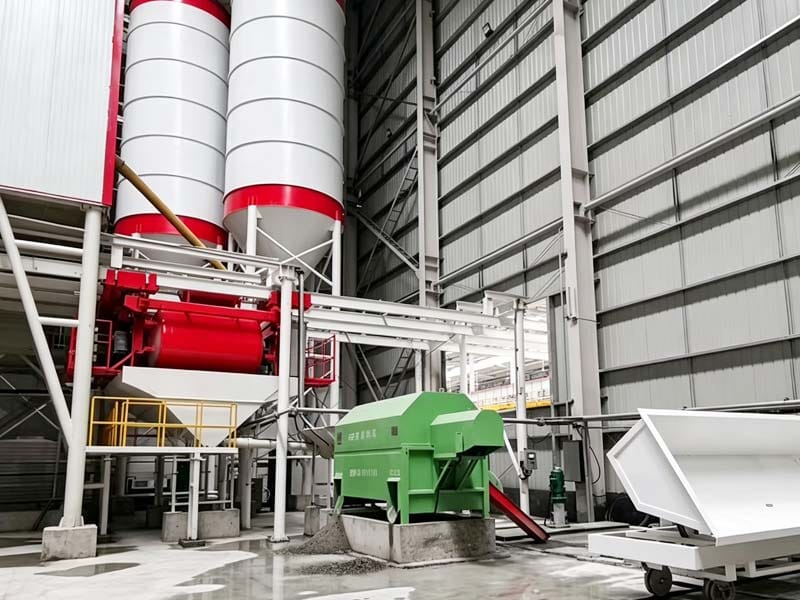
Precast factories often need partial or completion batches for molds that do not require the full mixer capacity. These batches can create two separate challenges: ingredient quantities become smaller, and mixer loading changes.
For example, a mixer that normally handles a 1.5 m³ batch may sometimes be asked to produce 0.5 m³. The reduced batch can change material depth, mixing action and the significance of fixed dosing deviations.
Precast concrete consistency should therefore be checked at the smallest routine batch size rather than inferred from a full-load trial.
During validation, record:
- ingredient targets and actuals;
- ミキシングシーケンス;
- 混合の持続時間;
- fresh-concrete properties;
- discharge behavior;
- 残留物質;
- receiving-system performance.
The objective is to establish a usable operating range, not simply prove that the mixer can rotate with a smaller load.
Mixing Time Is Only One Part of Mixing Consistency
Precast concrete consistency requires sufficient mixing, but a fixed time copied from another plant does not guarantee uniform concrete.
NISTのレビュー コンクリートの混合方法とミキサーの性能 emphasizes homogeneity and concrete performance as important ways to judge mixing effectiveness.
For a new precast plant, determine the mixing sequence and duration through representative trials. Test the actual materials and batch sizes expected in production.
Also distinguish mixing time from the complete repeat cycle. The plant may spend additional time charging materials, adding admixtures, waiting for a receiving bucket or discharging.
Improving precast concrete consistency sometimes requires a longer stable mixing period, but that does not necessarily reduce plant output if other operations occur in parallel.
Planetary Mixing Should Be Evaluated with the Actual Products
Our precast concrete batching plant uses a vertical-shaft planetary mixer. This mixing architecture is widely used in precast production because the tools move through overlapping paths inside the pan.
However, mixer type alone does not guarantee precast concrete consistency. The same planetary mixer can behave differently with stiff concrete, self-consolidating concrete, fiber-containing mixes and very small batches.
Use product-specific trials to determine whether the proposed mixer delivers the required concrete. Our comparison of planetary vs twin-shaft mixers for precast concrete explains how batch range, mixing action and discharge should be evaluated together.
For acceptance, define what evidence proves adequate mixing. Visual appearance can support inspection, but the quality plan should rely on agreed concrete tests and production records.
Self-Consolidating Concrete Needs Tighter Water Control
Self-consolidating concrete is particularly sensitive to variations in water and admixture conditions. Small changes can alter flow, viscosity and segregation resistance.
NPCA’s guidance on producing self-consolidating concrete notes that SCC generally requires close moisture control and increased testing when a plant first introduces the mixture. It also recommends moving from laboratory trials to full plant-mixer trials rather than assuming the two will behave identically.
For precast concrete consistency with SCC, pay particular attention to:
- 砂の水分;
- 水補正;
- 混合物の投与;
- ミキシングシーケンス;
- ミキサーのバッチのサイズ;
- fresh-concrete test frequency during qualification.
Do not compensate for unstable SCC by repeatedly changing water without first checking aggregate moisture and recipe execution.
Concrete Temperature Can Affect Factory Repeatability
Concrete temperature can influence fresh behavior, setting and production timing. A precast factory operating through seasonal changes should therefore record temperature alongside other batch variables.
Our precast batching plant includes material temperature monitoring within its published production configuration. That information can support precast concrete consistency when it is connected to an agreed quality-control plan.
During production, distinguish between measurement and corrective action. A temperature sensor tells the operator what the material condition is; the plant still needs a defined procedure for what to do when the temperature moves outside the approved production range.
If the project uses heated water, chilled water, ice or other temperature-control methods, those systems should be incorporated into the batching and material-balance review.
Admixture Dosing Must Be Repeatable and Traceable
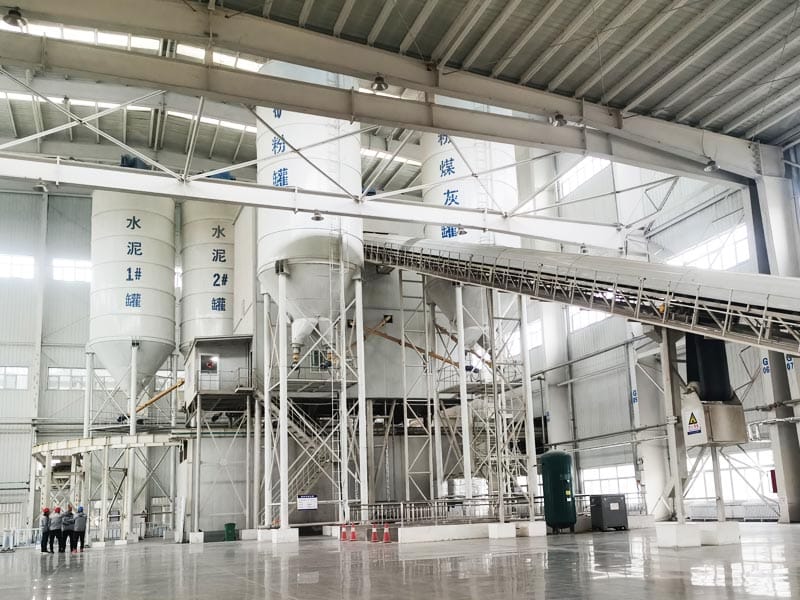
Admixtures can have a strong effect on fresh concrete, particularly in SCC and other high-performance precast mixtures. A relatively small dosing error can therefore create a noticeable change in concrete behavior.
For precast concrete consistency, verify the admixture system across the actual dose range and record which material is connected to each line.
チェック:
- minimum and normal dose;
- measuring method;
- feeder or pump response;
- line flushing or residual material;
- sequence relative to water and other ingredients;
- batch-record traceability.
Do not treat a readable control-screen value as independent proof of the delivered quantity. The installed dispenser and transfer line should be included in the production validation.
Discharge and Concrete Transport Can Change the Result
The batching plant can produce acceptable concrete and still lose precast concrete consistency before the material reaches the mold.
Our precast plant uses multiple discharge doors to support different factory delivery routes. The final plant can connect to buckets, distributors or other project-specific receiving systems.
During design, evaluate:
- discharge opening and closing sequence;
- receiving capacity;
- transport time to the mold;
- waiting time before placement;
- risk of leakage or material segregation;
- return path for transport equipment.
NPCA notes that leaking buckets, hoppers and chutes can create problems in SCC production.
Precast concrete consistency should therefore be checked at the point where the factory actually uses the concrete, not only at the mixer discharge.
Match Plant Output to the Casting Rhythm
A consistent batch that arrives at the wrong time can still disrupt precast production. The batching plant should match the casting schedule without forcing excessive waiting between mixing and placement.
Consider a hypothetical factory with three stations requiring 8 m³, 6 m³ and 4 m³ within the same hour. The total is 18 m³, but the timing of those requests matters more than the hourly average.
If two stations need concrete simultaneously, the control system must prioritize batches and the transport system must deliver them without creating uncontrolled delay.
へのガイド プレキャストコンクリートバッチングプラントを鋳造ラインに適合させます explains why mixer capacity, discharge routes and receiving stations should be scheduled as one system.
For precast concrete consistency, the production plan should state the acceptable time between batch completion and placement for each product rather than leaving the decision to operators during peak production.
Use Batch Records to Connect Concrete Tests with Production
Quality-control testing is most useful when the result can be traced back to the actual production batch.
NPCA describes quality control as a central part of precast manufacturing and emphasizes the importance of trained personnel, testing and plant procedures.
For precast concrete consistency, a useful batch record can include:
| Record field | なぜそれが重要なのか |
|---|---|
| レシピと改訂 | Confirms which approved mixture was intended. |
| Target and actual batch weights | Shows whether ingredients were dosed as intended. |
| Aggregate moisture values | Explains water and aggregate corrections. |
| Mixing duration | Links concrete performance with process time. |
| Concrete temperature | Provides context for setting and fresh behavior. |
| Admixture quantity | Helps investigate flow or setting changes. |
| Fresh-concrete test results | Links production data with the actual batch condition. |
These records help separate random variation from recurring production patterns.
Use Trends, Not Only Pass-or-Fail Results
Precast concrete consistency can deteriorate gradually before a batch actually fails an acceptance limit. Trend review can show that a process is moving away from its normal condition.
For example, sand moisture may increase through the morning while slump flow slowly rises. Every batch might still be technically acceptable, but the pattern suggests that moisture correction or sensor verification deserves attention.
Likewise, actual admixture quantities may remain within the project tolerance while consistently drifting high over several batches.
Review data by product, ingredient and production condition. Avoid combining different concrete families into one average that hides a problem.
Trend analysis should support process control, not replace the applicable acceptance specification.
Investigate Consistency Changes in a Fixed Order
When precast concrete consistency changes unexpectedly, use a fixed diagnostic sequence instead of immediately changing the mix design.
A practical order is:
- confirm the recipe and revision;
- check raw material lots;
- verify aggregate moisture;
- review target and actual batch weights;
- review water and admixture quantities;
- check mixing sequence and duration;
- check concrete temperature;
- review discharge and transport time;
- compare fresh-concrete test results.
This sequence protects the approved mix design from unnecessary adjustment when the real issue is production execution.
If a sensor or scale is suspected, verify it using the appropriate reference method rather than changing its calibration simply to make the latest batch look correct.
What Should Buyers Verify During Plant Acceptance?
A new precast plant should demonstrate the controls needed for precast concrete consistency before routine production begins.
Factory testing can verify control logic and equipment functions. Site commissioning should then use representative materials and production conditions.
含める:
- weighing verification across required ranges;
- aggregate moisture measurement and correction;
- admixture dosing checks;
- normal and minimum batch trials;
- mixing and discharge sequence;
- バッチレコード生成;
- transport to the intended receiving system;
- agreed fresh-concrete testing.
Do not accept one demonstration batch as proof of stable production. Repeatability matters. The purpose of commissioning is to show that the plant can reproduce the approved process, not merely complete one successful cycle.
結論
Precast concrete consistency depends on the complete batching and factory process. Aggregate moisture, weighing, admixture dosing, mixer loading, mixing sequence, temperature, discharge and transport can all change the concrete before it reaches the mold.
The strongest control strategy begins with a defined product and casting schedule, validates the plant across the actual batch range, and connects every concrete test to traceable production records.
Send your precast products, concrete types, batch sizes, casting schedule and factory layout through our お問い合わせページ プロジェクト固有のバッチ処理プラントのレビュー用。.
よくある質問
What causes poor precast concrete consistency?
Common causes include changing aggregate moisture, inaccurate batching, admixture variation, inconsistent mixing, temperature changes, raw-material variation and delays between mixing and placement. The production sequence should be checked before changing the approved mix design.
Why is sand moisture important for precast concrete?
Surface moisture in sand adds water to the concrete and changes the wet sand quantity needed to deliver the intended aggregate solids. Incorrect moisture data can therefore change both aggregate proportioning and total mixing water.
How does batch size affect precast concrete consistency?
Small batches can change mixer loading and make fixed dosing deviations more significant. The smallest routine production batch should be validated rather than assuming full-load performance applies at every batch size.
Why is SCC more sensitive to batching variation?
Self-consolidating concrete relies on a controlled balance of flowability, viscosity and stability. Changes in moisture, water or admixture dosage can therefore produce noticeable changes in fresh behavior.
What should be recorded for precast concrete consistency?
Useful records include recipe revision, target and actual ingredient quantities, aggregate moisture, water and admixture additions, mixing duration, concrete temperature and fresh-concrete test results.


