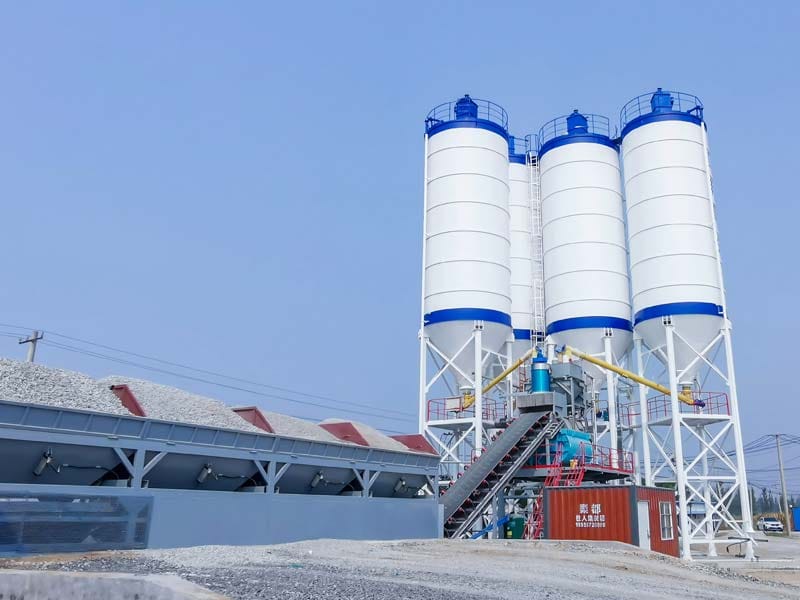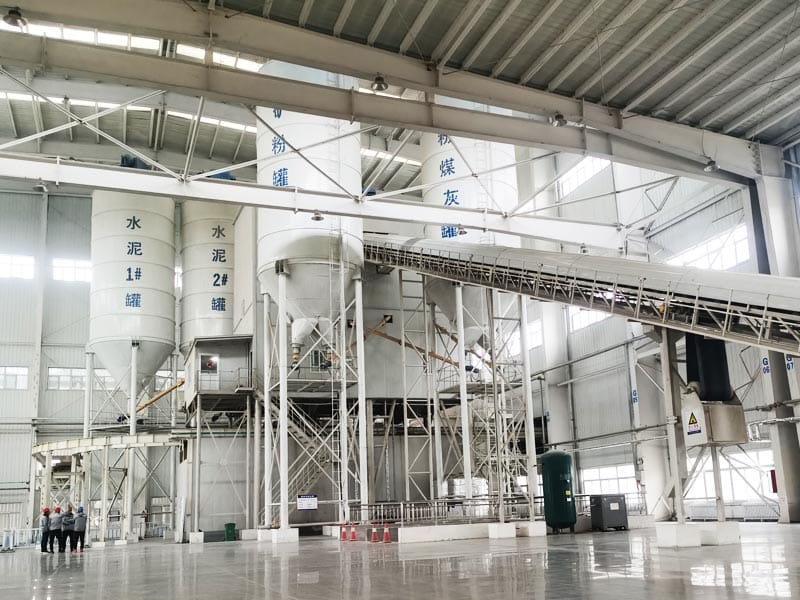
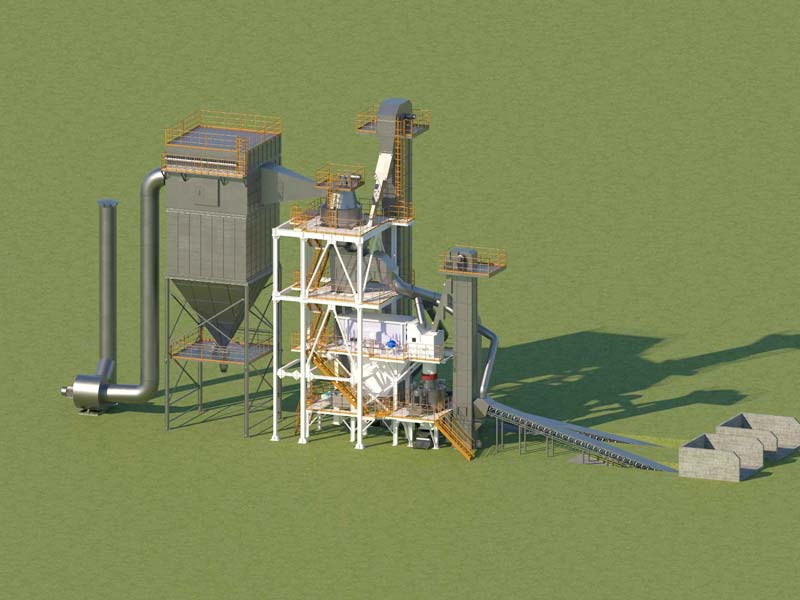
Sand production recirculation is a normal part of many closed-loop manufactured sand systems. Material that does not meet the required size after screening is returned to the sand maker for another pass instead of entering the finished-product bin. This improves product control, but it also means the crusher, screen and conveyors may handle substantially more internal material than the fresh feed entering the plant.
For equipment buyers, this distinction is essential. A line receiving 100 t/h of new stone is not necessarily processing only 100 t/h inside the circuit. If 30 t/h of screen oversize returns to the VSI, part of the equipment may actually be handling 130 t/h. That extra internal movement does not create 30 additional tonnes of saleable sand; it is the same material circulating again.
Của chúng tôi dây chuyền sản xuất cát sản xuất uses a closed-loop process with VSI sand making, circular screening, airflow powder classification and return of unqualified material to the sand maker. This guide explains how sand production recirculation affects capacity, wear, screening, grading and finished-sand output.
What Is Sand Production Recirculation?
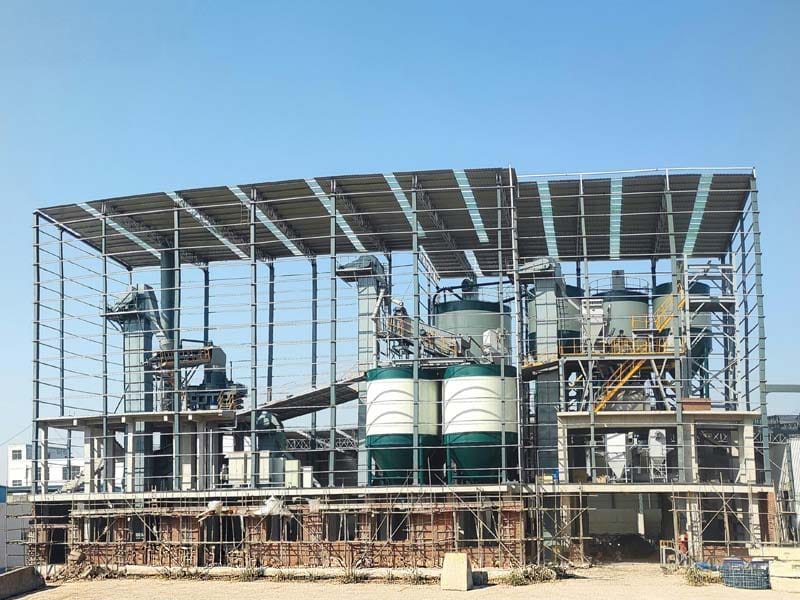
Sand production recirculation is the internal return of material that has not yet reached the finished-product specification.
In a simplified closed circuit:
- fresh feed enters the sand maker;
- the crushed material goes to screening;
- qualified material continues toward classification and finished storage;
- unqualified oversize returns to the sand maker;
- the returned material passes through the circuit again.
The return stream is commonly called circulating load or recirculating load.
Sand production recirculation is therefore not waste by definition. It is material still inside the production process.
Fresh Feed, Internal Load and Finished Output Are Different Numbers
One of the most common capacity mistakes is adding internal return material to finished production.
| Material stream | Meaning | How it should be counted |
|---|---|---|
| Fresh feed | New stone entering the system | External input |
| Recirculating load | Material returning from screening | Internal flow only |
| Accepted sand | Material meeting finished specification | Saleable or usable output |
| Separated powder | Fine stream removed by classification | Separate output if collected |
Sand production recirculation should be shown separately on the process mass balance.
A Simple Mass-Balance Example
Consider an illustrative process with 100 t/h of fresh feed.
After crushing and screening:
- 75 t/h becomes accepted finished sand;
- 15 t/h leaves as a separate fine-powder stream;
- 10 t/h leaves as another defined output or loss;
- 40 t/h of oversize returns internally to the VSI.
The external balance is still 100 t/h in and 100 t/h out.
The 40 t/h return stream is not added to the external product total because it is the same material moving through the plant again.
However, part of the equipment can see:
100 t/h fresh feed + 40 t/h return = 140 t/h internal load.
This is why sand production recirculation matters when sizing the internal equipment.
Recirculating Load Can Be Necessary
A return conveyor carrying material is not automatically evidence of poor plant performance.
The screen is performing a quality-control function by preventing oversize from entering the final sand.
Sand production recirculation can help:
- keep finished maximum size within specification;
- give oversize particles another crushing pass;
- stabilize finished grading;
- reduce unqualified coarse discharge.
The correct goal is not zero return. The goal is controlled return within the design capability of the circuit.
Why Excessive Recirculation Becomes a Problem
When too much material returns, the internal circuit can become overloaded.
High sand production recirculation can increase load on:
- VSI sand maker;
- screen;
- return conveyor;
- bucket elevator or transfer equipment;
- dust collection;
- structural supports.
The plant may then process large internal tonnage while finished-sand output does not increase proportionally.
Screen Efficiency Has a Direct Effect on Recirculation
The screen decides which particles leave as qualified material and which remain in the return stream.
If screening efficiency falls, correctly sized particles can travel with the oversize stream and return unnecessarily.
This increases sand production recirculation without improving product quality.
Kiểm tra:
- screen media condition;
- blinding;
- feed distribution across the deck;
- deck loading;
- material moisture;
- vibration condition.
Recent aggregate-industry case studies also show that screen blinding can increase circulating load in closed-loop processes.
Screen Blinding Can Send Good Sand Back to the VSI
When screen openings become blocked, material that should pass through may stay on the deck.
This can create:
- higher oversize return;
- lower finished output;
- more VSI load;
- more wear;
- higher energy use per tonne of accepted product.
For sand production recirculation, repeated screen blinding should be treated as a root-cause problem rather than simply accepted as normal return load.
Moisture Can Increase Internal Return
Dry screening works best when material remains sufficiently free-flowing.
Moisture can make fine particles adhere to larger grains and can blind screen openings.
If the material is wetter than the design condition, sand production recirculation can increase even when the VSI settings have not changed.
Record feed moisture together with return-load data so the production team can distinguish mechanical problems from changing raw-material conditions.
VSI Product Grading Controls the Amount of Oversize
The screen can only separate what the VSI produces.
If the VSI discharge becomes coarser, more material can report to the return stream.
Nguyên nhân có thể bao gồm:
- changed feed grading;
- wear-part condition;
- changed rotor speed;
- different parent rock;
- higher feed rate.
Sand production recirculation should therefore be reviewed together with VSI operating condition.
Feed Size Stability Helps Stabilize the Closed Circuit
MixingPlantPro’s current manufactured sand process begins with prepared 5–15 mm stone.
If the prepared feed varies significantly outside the expected grading, the amount of work required from the VSI and screen can change.
Của chúng tôi manufactured sand feed size guide explains why a stable prepared feed helps keep the downstream circuit more predictable.
For sand production recirculation, monitor both fresh-feed grading and return grading.
Return Material Is Not the Same as Fresh Feed
Material that has already passed through the VSI may have a different:
- hình dạng hạt;
- surface texture;
- phân bố kích thước hạt;
- fine-powder content.
When this material returns, the combined VSI feed is a blend of fresh stone and previously processed particles.
Sand production recirculation therefore changes the real feed entering the crusher even when external fresh-feed rate is constant.
Circulating Load Can Change Crusher Wear
Every returned particle passes through handling equipment again and may pass through the VSI again.
Higher sand production recirculation can therefore increase:
- wear-part exposure;
- internal impact events;
- conveyor operating hours;
- screen loading;
- maintenance demand.
Wear should be evaluated against accepted finished output rather than internal tonnage alone.
Energy Use Should Be Related to Accepted Sand
If the plant processes more internal material but produces the same amount of accepted sand, energy per tonne of finished product can rise.
For sand production recirculation, useful energy indicators include:
- VSI power;
- screen power;
- return conveyor power;
- fresh feed rate;
- accepted sand output.
Do not interpret high internal throughput as higher productivity unless accepted output also increases.
Returned Material Can Affect Fines Generation
Every additional crushing pass can create more fine particles.
If sand production recirculation becomes excessive, the line may produce more powder even though the original problem was oversize.
This creates a process interaction between:
- VSI crushing;
- sàng lọc;
- return load;
- phân loại không khí;
- powder output.
Trying to solve oversize only by increasing recirculation can therefore change the fine end of the grading curve.
Air Classification Should Be Reviewed Separately
MixingPlantPro’s process uses airflow powder classification after screening.
This stage mainly controls very fine powder.
Sand production recirculation, by contrast, is mainly associated with material rejected from the screening stage and returned for further processing.
Của chúng tôi hướng dẫn phân loại cát khô explains why screen classification and air classification solve different problems.
Do Not Send Fine Powder Back Just Because It Is Not Final Product
Every process stream should have a defined destination.
Material can be:
- accepted finished sand;
- oversize return;
- separated powder;
- off-spec product requiring review.
Sand production recirculation should not become an undefined route for every non-product stream.
Returning excessive fine material to the VSI can increase dust and unnecessary internal processing.
Return-Load Percentage Needs a Clear Calculation Basis
Engineers may describe circulating load as a percentage, but the denominator must be defined.
For example, one project may calculate:
Return load ÷ fresh feed × 100%
while another report may use:
Return load ÷ combined crusher feed × 100%.
These produce different percentages.
For sand production recirculation, always state the calculation method before comparing two plants or two operating periods.
Measure the Return Stream Instead of Guessing
If return-load data are important to the process, measure or estimate them systematically.
Possible approaches include:
- belt scale;
- periodic timed sampling;
- mass-balance calculation;
- equipment feed-rate data.
The appropriate method depends on the plant design and required accuracy.
A visual judgment that “the return belt looks full” is not enough for process optimization.
Trend Return Load with Finished Grading
Return load has meaning only when compared with product quality.
Track:
- fresh feed rate;
- return rate;
- accepted sand rate;
- finished grading;
- hàm lượng bột;
- VSI power;
- screen condition.
If sand production recirculation rises while finished grading remains unchanged, the plant may be processing more internal material without quality benefit.
Sudden Return-Load Increases Need Investigation
A rapid increase can indicate:
- screen damage or blinding;
- thức ăn thô hơn;
- VSI mặc;
- changed crusher settings;
- moisture increase;
- incorrect screen configuration.
Sand production recirculation trends can therefore act as an early warning for process drift.
A Very Low Return Load Is Not Automatically Better
If return load suddenly falls, that can also require investigation.
Possible explanations include:
- finer VSI product;
- changed feed;
- screen damage allowing oversize into product;
- incorrect screen aperture;
- lower fresh-feed rate.
The correct sand production recirculation level is the one that supports the required grading without overloading the circuit.
Internal Circulation Changes Equipment Capacity Requirements
Suppose the fresh feed target is 200 t/h and the expected return stream is 60 t/h.
If both streams enter the same VSI stage, the crusher-feed system must be evaluated around approximately 260 t/h of combined internal flow in that simplified scenario.
This does not mean the plant produces 260 t/h of finished sand.
For sand production recirculation, internal equipment capacity and external product capacity should always be stated separately.
Screen Capacity Should Include the Circulating Stream
If all returned material goes through the screen again, the screen may also see fresh material plus recirculated material.
Undersizing the screen can create a feedback loop:
- screen overload increases;
- separation efficiency falls;
- more material returns;
- screen load rises further.
This is one reason sand production recirculation needs to be included in equipment sizing.
Conveyor Capacity Should Also Include Return Flow
The return conveyor must handle the expected recirculating material continuously.
Kiểm tra:
- belt width;
- belt speed;
- transfer chute;
- drive power;
- surge conditions.
A small return conveyor can become the limiting point of an otherwise adequately sized sand-making circuit.
Buffering Can Stabilize Short-Term Flow Variation
Return flow is not always perfectly steady.
Changes in screen loading and feed grading can create short-term fluctuations.
Where the process design includes buffer capacity, it can help prevent momentary return surges from immediately disturbing the VSI feed.
For sand production recirculation, buffer design should still avoid segregation and excessive residence time.
Finished Sand Yield Depends on Product Specification
The proportion of fresh feed that becomes accepted sand depends on what the project defines as acceptable.
A tighter grading envelope can increase return or separate more material.
A broader approved product range can change yield in the opposite direction.
Sand production recirculation should therefore be evaluated against a written finished-sand specification.
Của chúng tôi manufactured sand screening guide explains why the required fractions should be defined before screen configuration.
Integrated Mortar Production Adds Another Capacity Constraint
Của chúng tôi nhà máy sản xuất cát và vữa đặc biệt tích hợp links sand preparation with downstream mortar production.
In this arrangement, the key question is not only total accepted sand output.
The system must produce enough of each required fraction.
Sand production recirculation can affect:
- fine-fraction availability;
- medium-fraction output;
- powder generation;
- buffer inventory;
- mortar production continuity.
Startup and Adjustment Periods Can Have Higher Recirculation
During startup, the process may not yet be at steady state.
Screen decks, crusher feed and classifier settings can take time to stabilize.
For sand production recirculation, separate startup data from stable-production data when evaluating performance.
Otherwise, a short startup surge can distort the calculated average.
Inventory Changes Can Distort the Mass Balance
If bins are filling or emptying during the test period, fresh feed and finished output may not balance over a short interval.
For a reliable sand production recirculation study, record:
- opening inventory;
- closing inventory;
- fresh feed;
- accepted product;
- separate powder;
- other product streams.
Longer steady-state test periods generally provide a clearer mass balance.
Use Representative Raw Material During Commissioning
A closed-loop sand circuit should be commissioned with feed representative of normal production.
Kỷ lục:
| Commissioning value | Tại sao nó quan trọng |
|---|---|
| Fresh feed rate | Defines external input |
| Fresh feed grading | Explains crusher demand |
| Return rate | Defines internal circulation |
| Return grading | Shows what is being recycled |
| Accepted sand output | Defines usable production |
| Finished grading | Confirms product quality |
| Powder output | Completes material balance |
This creates a baseline for future troubleshooting.
What Should Buyers Send for a Recirculation Review?
A useful sand production recirculation review needs more than the requested finished tonnage.
Cung cấp:
- prepared feed grading;
- tốc độ thức ăn;
- parent rock;
- target finished grading;
- required finished particle size;
- screen cut points;
- current return-load data if available;
- powder-content requirement;
- downstream mortar or concrete application;
- site layout.
Của chúng tôi giải pháp cát sản xuất can then be reviewed around both finished output and the internal material balance.
Send your feed material data and target sand grading through our trang liên h for a process review.
Kết luận
Sand production recirculation is a normal and useful part of closed-loop manufactured sand processing, but the return stream must be understood correctly.
Fresh feed, internal circulating load and accepted finished sand are different quantities. High recirculation can increase VSI, screen and conveyor loading without increasing saleable output, while unusually low recirculation can also indicate a grading or screen-control problem.
The strongest process review measures the return stream, tracks it with finished grading and sizes internal equipment for the combined load. That makes capacity claims more meaningful and helps the plant maintain the required sand quality without unnecessary internal processing.
Câu hỏi thường gặp
What is sand production recirculation?
It is the return of material that does not meet the required screened size back into the sand-making process for another pass.
Does recirculating load count as finished sand output?
No. It is internal material movement. Finished output should include only material that leaves the circuit and meets the defined product specification.
Why can high recirculating load reduce sand production efficiency?
High internal return increases load on the VSI, screen and conveyors and can increase wear and energy use without producing the same increase in accepted sand.
What causes recirculating load to increase?
Common causes include coarser feed, VSI wear, screen blinding, poor screening efficiency, moisture changes and incorrect screen configuration.
What data are needed to evaluate sand production recirculation?
Provide fresh feed rate and grading, return rate and grading, finished sand output, screen cuts, powder output and target product specification.