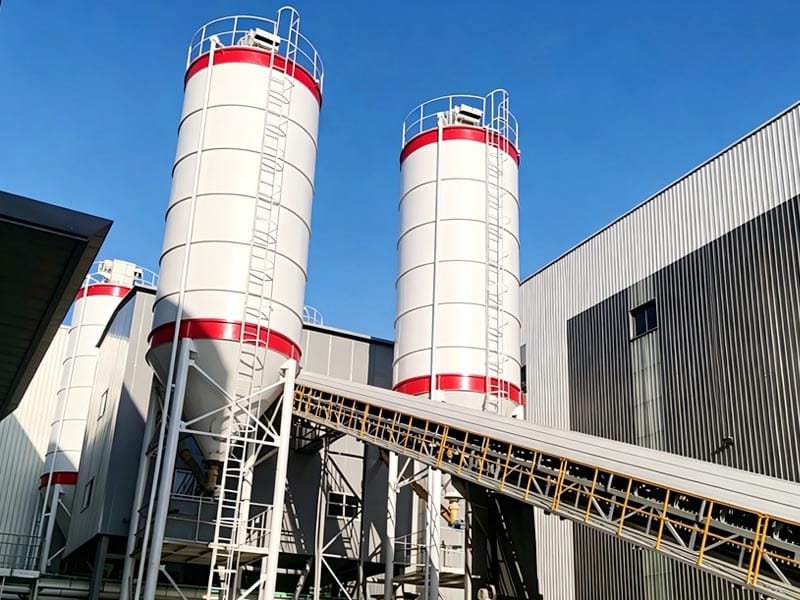
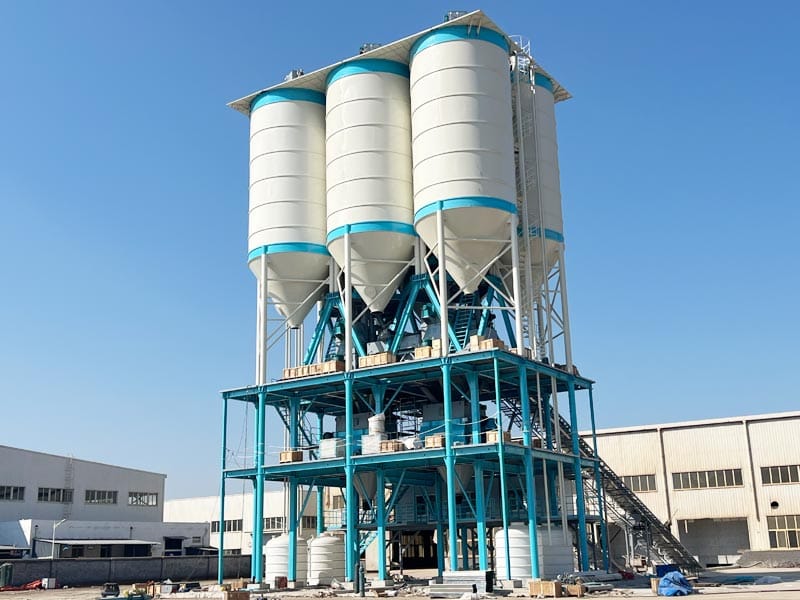
Batching plant site acceptance should confirm that the equipment supplied at the factory has been installed, connected, calibrated and operated correctly under the real conditions of the project site. It is the stage where drawings, control logic and factory test results meet actual foundations, utilities, raw materials, transport routes and production requirements.
For buyers, site acceptance should not be improvised after erection is complete. The acceptance criteria should be agreed before shipment so both supplier and buyer know which tests will be performed, which resources must be available and what evidence is required before the plant is considered ready for production.
Unser Seitlich angebrachte Bandbetonmischanlage and other MixingPlantPro configurations can be customized around site layout, material handling and automation requirements. This guide explains how batching plant site acceptance should be planned from installation inspection through real-material commissioning.
What Is Batching Plant Site Acceptance?
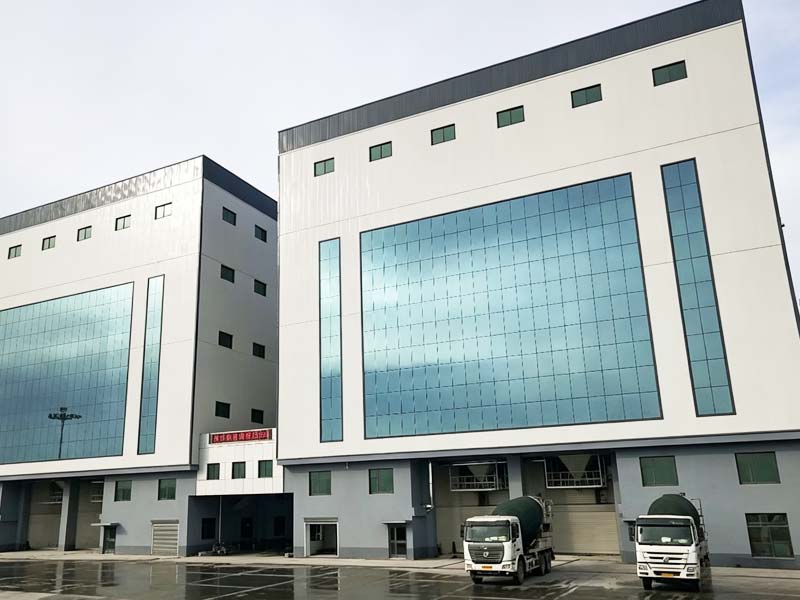
Batching plant site acceptance is the formal verification performed after the plant has been delivered, erected and connected at the project site.
It normally follows Factory Acceptance Testing but checks a different set of risks.
Batching plant site acceptance can include:
- installation completeness;
- final field wiring;
- utility connections;
- motor rotation;
- scale verification;
- water and admixture measurement;
- sensor and moisture-probe checks;
- material feeding;
- automatic sequence operation;
- batch records;
- real concrete trial batches;
- production-performance checks.
IEC 62381 distinguishes Factory Acceptance Test, Site Acceptance Test and Site Integration Test because installation and field interfaces introduce conditions that do not exist at the supplier’s factory.
Define Site Acceptance Before the Plant Is Shipped
A useful batching plant site acceptance plan should be agreed during the engineering or contract stage.
| Acceptance item | What should be agreed |
|---|---|
| Test scope | Which systems will be verified on site |
| Acceptance criteria | Required result for each test |
| Responsibility | Who provides test weights, materials, labor and utilities |
| Witnessing | Buyer, supplier, consultant or third party |
| Records | Signed forms, screenshots, batch reports and measurements |
| Punch list | How remaining items are classified and closed |
Without these definitions, site acceptance can become a dispute about what the supplier was expected to prove.
Confirm Installation Completeness First
Do not begin functional testing before the plant has been mechanically inspected.
For batching plant site acceptance, verify:
- main structure installed;
- mixer mounted correctly;
- aggregate bins and weigh hoppers installed;
- conveyors or skip hoist installed;
- powder silos and screws connected;
- water and admixture systems connected;
- platforms and guardrails installed;
- access doors usable;
- dust-control equipment connected.
Any missing mechanical item should be recorded before live testing begins.
Compare the Installed Plant with Approved Drawings
The actual installation should match the latest approved drawings and technical scope.
Prüfen:
- general arrangement;
- equipment orientation;
- conveyor route;
- silo position;
- maintenance clearance;
- truck loading position;
- utility connection points.
Unser batching plant scope of supply guide explains why field boundaries should be clear before installation starts.
Check Foundations and Anchor Interfaces
Site acceptance should include a visual and dimensional review of the interface between equipment and civil works.
Rezension:
- anchor positions;
- base plates;
- grouting;
- support level;
- structural alignment;
- visible foundation defects.
The equipment supplier’s load data do not replace the final civil engineer’s responsibility for local foundation design.
Verify Final Electrical Connections
Field wiring is one of the main differences between FAT and site acceptance.
Prüfen:
- incoming power;
- control cabinet connection;
- motor cables;
- Sensorkabel;
- junction boxes;
- earthing;
- cable labels;
- cable-tray condition.
Batching plant site acceptance should compare field terminations against the final electrical drawings.
Recheck Motor Rotation After Site Wiring
A motor that rotated correctly during FAT can rotate in the opposite direction after field wiring if phase sequence changes.
Site checks should therefore confirm rotation for:
- mixer motors;
- belt conveyors;
- Schraubenförderer;
- pumps;
- fans;
- skip-hoist drives.
Rotation should be verified before the equipment is loaded with material.
Verify Pneumatic and Water Utilities
The batching system depends on stable field utilities.
For batching plant site acceptance, confirm:
- compressed-air pressure and flow;
- air leaks;
- Wasserdruck;
- water flow;
- drainage;
- utility isolation points.
A plant that worked with temporary factory utilities may behave differently with the actual site supply.
Check All I/O Again After Field Installation
Every major input and output that depends on field wiring should be retested.
Beispiele sind:
- limit switches;
- level switches;
- load-cell signals;
- motor contactors;
- solenoid valves;
- moisture probes;
- emergency stops.
Batching plant site acceptance should confirm both PLC status and real field response.
Verify Interlocks in the Installed Plant
Some interlocks can be simulated at FAT, but site acceptance should prove them with the installed equipment.
Beispiele sind:
- aggregate discharge only when the receiving path is ready;
- powder screw operation only under correct valve conditions;
- mixer discharge only when the receiving truck or hopper is ready where designed;
- automatic batching inhibited by critical faults.
Trigger representative fault conditions and verify both alarm and equipment response.
Emergency Stops and Safety Circuits Need a Site Test
Emergency-stop devices can be added, relocated or rewired during installation.
Site acceptance should verify:
- each E-stop location;
- equipment shutdown response;
- safety relay status;
- reset logic;
- restart prevention.
Guards and access platforms should also be inspected before production testing.
Scale Verification Is a Core Site Acceptance Test
Weighing systems can be affected by shipping, erection, structural contact and field piping.
NRMCA’s current plant-certification guidance requires scales to be verified through their actual range of use and states that scale accuracy should be reverified when a portable plant is moved or when maintenance affects the weighing system.
For batching plant site acceptance, verify each relevant scale:
- aggregate scale;
- cementitious-material scale;
- water scale where used;
- other weighed materials.
Keep detailed records of test loads, indicated values and errors rather than only a pass/fail certificate.
Check the Scale for Mechanical Interference
A scale can fail site verification even when its load cells are healthy.
Inspect for:
- rigid pipe contact;
- tight flexible sleeves;
- cables carrying load;
- hopper touching structure;
- mechanical stops;
- material buildup.
Batching plant site acceptance should correct these installation problems before adjusting calibration.
Water Measurement Needs Final Verification
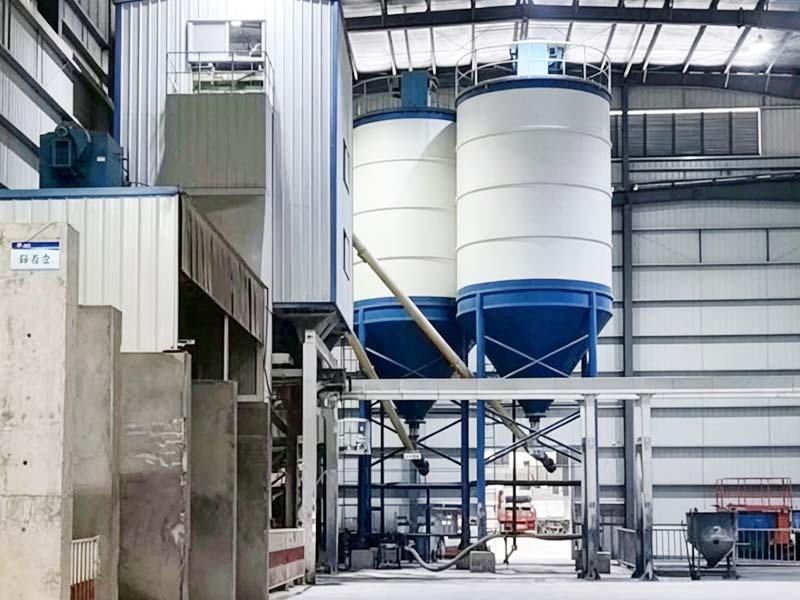
NRMCA currently requires water meters to be verified for accuracy and states that water measured by weight follows scale-verification requirements.
For site acceptance, check:
- minimum routine water quantity;
- normal water quantity;
- repeatability;
- valve cutoff;
- complete hopper discharge where applicable.
Unser water dosing guide explains the difference between weighing and flow measurement.
Verify Every Admixture Dispenser
Admixture systems should be checked after installation because piping and routing are now in their final configuration.
NRMCA requires periodic verification of each admixture dispenser and notes that collecting admixture at the mixer delivery point can also confirm delivery-line integrity.
For batching plant site acceptance, verify:
- tank identification;
- correct line routing;
- Pumpenbetrieb;
- meter or measuring vessel;
- minimum production dose;
- delivery to the mixer;
- flush-water logic.
Moisture Probes Should Be Checked Against Reference Testing
NRMCA recommends verifying moisture probes against aggregate moisture determined by drying a representative sample, with the sample taken as close as practical to the probe measurement location.
For batching plant site acceptance:
- sample the actual aggregate;
- determine reference moisture;
- compare probe reading;
- adjust according to manufacturer instructions where necessary;
- retain the verification record.
Test Aggregate Feeding with Real Material
No-load operation cannot prove that aggregate will flow correctly.
Use representative site materials to check:
- Bin-entladung;
- feeding rate;
- Überbrückung;
- Wiegezeit;
- gate response;
- complete weigh-hopper discharge.
Batching plant site acceptance should include wet or difficult sand conditions if those conditions are expected in normal operation.
Verify Belt Conveyor or Skip-Hoist Operation Under Load
For belt plants, check:
- tracking;
- loading;
- Verschüttung;
- Bandspannung;
- discharge trajectory.
For skip-hoist plants, check:
- loaded travel;
- braking;
- top and bottom positions;
- limit protections;
- discharge.
Unser Förderband-Wartungsführung und skip hoist maintenance guide provide the inspection logic for each transport system.
Test Cement and Powder Feeding with Real Material
Powder flow can differ significantly from a simulated FAT signal.
Prüfen:
- silo discharge;
- aeration or flow aids;
- screw-conveyor feeding;
- coarse/fine feed logic where included;
- material-in-flight compensation;
- weigh-hopper residue.
Unser cement weighing guide explains why scale accuracy and feeder behavior should be diagnosed separately.
Run the Mixer with Representative Concrete
The mixer should be tested with actual production materials.
Site acceptance can verify:
- charging sequence;
- mixing behavior;
- drive condition;
- discharge gate operation;
- Entladezeit;
- residual material.
Concrete quality still needs to be confirmed through the applicable testing program.
Do Not Set Mixing Time from the Timer Alone
The control timer can be tested at FAT, but the actual required mixing duration should be validated with real materials and the approved concrete mixture.
Batching plant site acceptance should therefore connect:
- mixing duration;
- Losgröße;
- concrete uniformity;
- finished concrete tests.
Run the Full Automatic Batching Sequence
After individual components are verified, test the full automatic cycle.
This should include:
- recipe call;
- aggregate weighing;
- Pulverwiegen;
- Wasser - und Beimischungsdosierung;
- material transfer;
- Mischbatterieladen;
- Mischen;
- Entladung;
- batch-record generation.
Batching plant site acceptance should demonstrate that the whole process works as one system.
Review Target-versus-Actual Batch Records
NRMCA’s inspection process evaluates the recording capabilities for batched materials, and its certification preparation documents call for consecutive batch printouts to review batching accuracy.
For site acceptance, review several consecutive batches and compare:
- target aggregate;
- actual aggregate;
- target cementitious material;
- actual cementitious material;
- target water;
- actual water;
- target admixture;
- actual admixture;
- moisture corrections.
Use Consecutive Batches, Not One Successful Batch
One good batch does not prove repeatable operation.
Batching plant site acceptance should include a series of consecutive automatic batches under stable conditions.
This helps identify:
- systematic overshoot;
- zero drift;
- slow feeders;
- cycle variability;
- moisture-correction inconsistency.
Test More Than One Recipe Where Practical
If the plant will produce several concrete families, acceptance testing should not be limited to one easy standard mixture.
Where practical, include:
- normal production recipe;
- small batch;
- recipe with multiple powders;
- recipe with multiple admixtures;
- precast or SCC recipe where relevant.
This tests more of the intended operating range.
Measure the Complete Batch Cycle
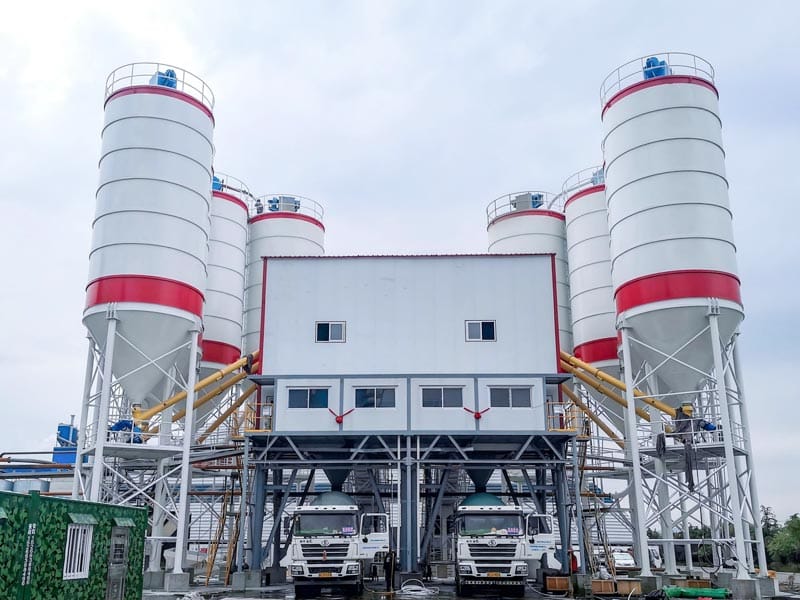
Once the plant is operating normally, record the full repeat cycle.
Include:
- Wiegen;
- Aggregatübertragung;
- powder transfer;
- charging;
- Mischen;
- Entladung;
- receiver readiness.
Unser Kapazitätsleitfaden für Betonbatchanlagen explains why mixer mixing time alone is not the complete cycle.
Capacity Testing Needs Agreed Conditions
If the contract includes a production-capacity acceptance test, the conditions should be defined before delivery.
Agree on:
- concrete recipe;
- Losgröße;
- test duration;
- material availability;
- truck or receiving system;
- allowable planned stops;
- how output is calculated.
Without those conditions, a rated-output test can become impossible to interpret fairly.
Do Not Use Site Delays as Plant Performance Data
If trucks are unavailable or aggregate replenishment stops during a capacity test, the observed output may reflect site logistics rather than equipment capability.
Batching plant site acceptance should separate:
- plant-controlled delay;
- buyer-supplied utility delay;
- truck delay;
- material-supply delay;
- quality-control hold.
This makes the performance record more meaningful.
Concrete Quality Tests Need Their Own Acceptance Criteria
The batching plant can reproduce the recipe, but the finished concrete still needs appropriate tests.
Depending on the project, these can include:
- slump or slump flow;
- temperature;
- air content;
- unit weight;
- strength specimens;
- other specified properties.
The acceptance limits should come from the project specification, not from the batching plant supplier unless explicitly included in the scope.
Check Dust, Spillage and Washout Under Real Operation
Material-loaded site acceptance is the first time some environmental controls can be evaluated realistically.
Observe:
- silo filling dust;
- aggregate transfer dust;
- mixer charging dust;
- Verschüttung;
- washout drainage;
- recycled-water routing where included.
Unser environmental design guide explains why dust, noise and water controls depend on the actual site arrangement.
Test Production Reports and Data Export
Site acceptance should verify that reports remain correct after all field devices are connected.
Prüfen:
- Batch-ID;
- recipe;
- target values;
- actual values;
- operator;
- Datum und Uhrzeit;
- alarms;
- export or printing.
Test External Interfaces on the Real Network
If the plant connects to ERP, dispatch, precast software or another external system, the final interface should be tested on the project network.
This is where Site Integration Testing can be useful.
Überprüfen:
- data mapping;
- communication loss behavior;
- retry logic;
- time synchronization;
- user permissions.
Operator Training Should Be Part of the Acceptance Process
A technically accepted plant can still perform poorly if operators do not understand the control system.
Training should cover:
- Startup;
- shutdown;
- recipe control;
- manual mode;
- Alarmbehandlung;
- Feuchtigkeitskorrektur;
- Tägliche Inspektion;
- basic troubleshooting.
MixingPlantPro’s project support includes installation guidance and technical training as part of its customized service framework.
Verify Maintenance Access Before Signing Off
Site acceptance is the best time to identify access problems before normal production begins.
Check whether technicians can safely reach:
- Mischpult;
- load cells;
- conveyor bearings;
- skip drive;
- Schraubenförderer;
- dust collectors;
- lubrication points.
If a required service point is inaccessible, record it as an acceptance issue rather than accepting a permanent maintenance problem.
Use a Punch List for Open Items
Not every open item should delay production, but every open item should be documented.
| Punch-list category | Example | Typical action |
|---|---|---|
| Critical | Safety circuit or batching function not operating correctly | Correct before production |
| Major | Required feature incomplete but plant can be safely tested | Agree corrective deadline |
| Minor | Label, document or cosmetic item | Close after agreed correction |
The contract should define who confirms closure.
Separate Provisional Acceptance from Final Acceptance
Some batching plant site acceptance projects use more than one acceptance milestone.
For example:
- mechanical completion;
- site acceptance;
- provisional production acceptance;
- final acceptance after an operating period.
If this structure is used, define it before delivery.
Batching plant site acceptance should not automatically be assumed to equal the end of every warranty or contractual obligation unless the agreement says so.
What Should Buyers Prepare Before SAT?
Batching plant site acceptance tests can fail simply because the necessary resources are not ready.
Before the acceptance team arrives, prepare:
- stable power;
- Wasser;
- Druckluft;
- test weights;
- aggregate;
- Zementhaltige Materialien;
- admixtures;
- trucks or concrete receiver;
- quality-control staff;
- approved recipes.
What Should Be Included in the Site Acceptance Record?
A useful batching plant site acceptance record should include:
- approved test procedure;
- participants;
- test date;
- measured results;
- calibration records;
- batch printouts;
- photos where useful;
- punch list;
- acceptance signatures.
This provides a baseline for later maintenance and troubleshooting.
What Should Buyers Send Before Defining Site Acceptance?
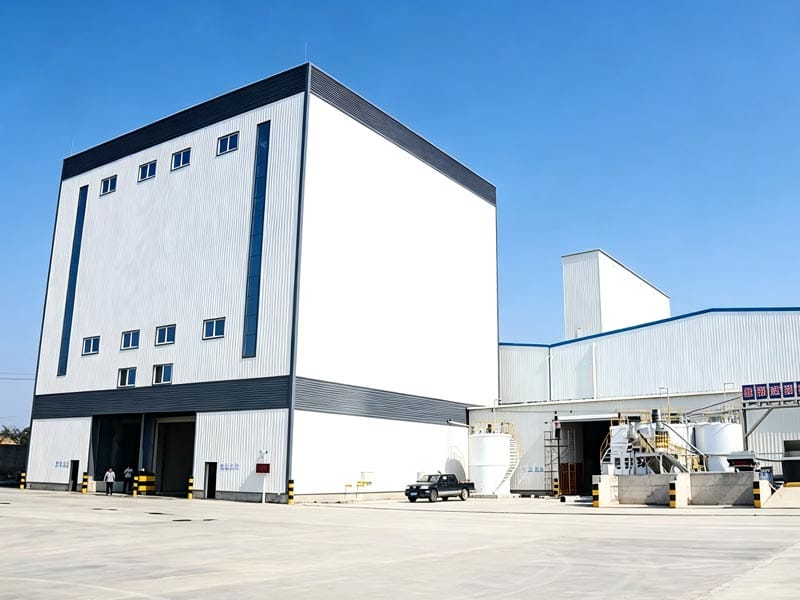
A useful batching plant site acceptance plan needs the project requirements.
Bereitstellen:
- plant configuration;
- scope of supply;
- approved recipes;
- required production capacity;
- applicable batching standard;
- quality-control tests;
- external interfaces;
- site utility conditions;
- acceptance milestones.
Unser concrete batching plant project brief can help organize the engineering information needed before delivery.
Send your project brief and site acceptance requirements through our Kontaktseite Für eine technische Überprüfung.
Schlussfolgerung
Batching plant site acceptance should verify the complete installed production system, not simply repeat the factory test. Final electrical connections, utilities, scales, material feeding, water and admixture measurement, moisture correction, real mixing, batch records and production performance all need site-level verification.
The strongest acceptance plan is written before shipment and clearly separates SAT from FAT, commissioning and long-term production certification.
When acceptance criteria, responsibilities and test conditions are agreed early, both buyer and supplier can evaluate the plant using the same evidence and resolve problems before full production begins.
FAQ
What is batching plant site acceptance?
It is the formal verification performed after the batching plant has been installed on site to confirm field wiring, utilities, measuring systems, material handling, automation and real production functions.
What is the difference between FAT and site acceptance?
FAT is performed before shipment at the supplier’s factory. Site acceptance verifies the installed plant after final wiring, utilities and field interfaces are complete.
Should scales be calibrated again after installation?
Yes. Final site verification is important because transport, erection, piping and structural contact can affect weighing systems even if they were checked before shipment.
Should actual materials be used during site acceptance?
Yes, where the test stage requires production verification. Real aggregate, cement, water and admixtures are needed to confirm feeding, weighing, mixing and batch-record performance.
What should be prepared before a batching plant SAT?
Prepare stable utilities, test weights, production materials, approved recipes, quality-control personnel, trucks or receiving equipment and the agreed test procedure.