

Mortar additive dosing is one of the most sensitive parts of dry mortar production because functional additives are often used in much smaller quantities than sand, cement or mineral filler. A dosing system can appear accurate during large powder batches but perform poorly when the target falls into the low-kilogram or sub-kilogram range.
For equipment buyers, the correct specification should start with the actual additive list and minimum routine dose. The plant then needs the right storage hopper, feeder, weighing range, control logic, dust protection and batch-record system for those materials.
Nuestro planta mezcladora de mortero seco tipo taller is designed for multi-variety and specialty mortar production with automated batching, while the planta de mortero seco tipo torre uses a more vertically integrated layout. This guide explains what buyers should specify for reliable mortar additive dosing.
Why Mortar Additive Dosing Needs Its Own Specification
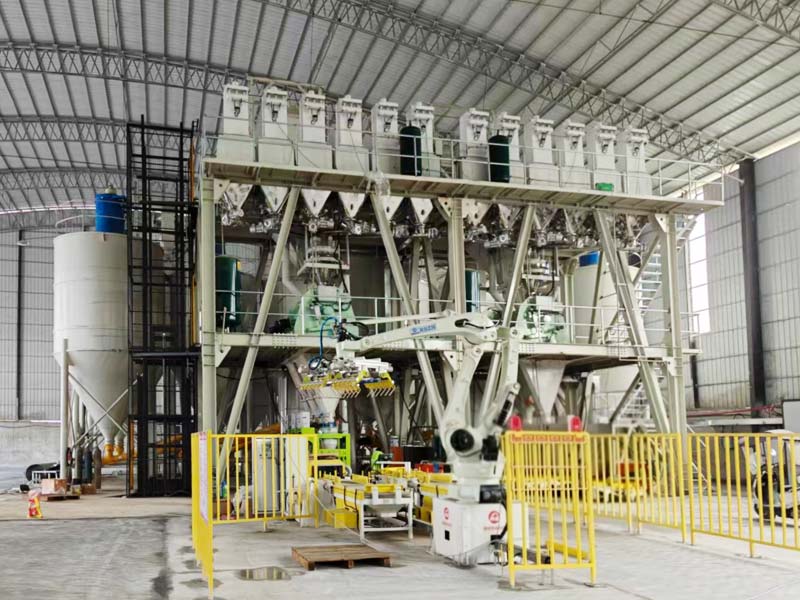
Dry mortar recipes can contain major ingredients such as sand, cement and filler together with much smaller functional ingredients.
Examples can include:
- éter de celulosa;
- redispersible polymer powder;
- starch ether;
- retarders;
- accelerators;
- defoamers;
- hydrophobic additives;
- pigments;
- fibras;
- other specialty modifiers.
Mortar additive dosing should therefore be engineered separately from bulk-material batching.
Start with the Minimum Routine Dose
The smallest normal recipe quantity is often more important than the largest one.
If a system can weigh 100 kg accurately but the smallest additive target is 0.5 kg, the low end of the range becomes the real design challenge.
For mortar additive dosing, provide:
- minimum target;
- normal target;
- maximum target;
- number of additives;
- batch size range;
- recipes using each additive.
This information determines whether one common scale is suitable or whether a dedicated micro-dosing unit is justified.
Scale Capacity and Resolution Must Match the Dose
A large-capacity scale is not automatically suitable for very small quantities.
Revisar:
- maximum scale capacity;
- load-cell range;
- display increment;
- signal stability;
- minimum useful weighing quantity.
Mortar additive dosing should be validated at the smallest production target, not only near the middle of the scale range.
| Dosing question | Por qué es importante |
|---|---|
| What is the smallest target? | Defines low-end weighing requirement |
| What is the largest target? | Defines hopper and scale capacity |
| How many additives are used? | Defines storage and line count |
| How often are recipes changed? | Defines cleaning and identification requirements |
| How fast must one batch finish? | Defines acceptable dosing time |
Do Not Treat Website Accuracy as a Universal Project Guarantee
The current MixingPlantPro workshop-type product page publishes additive batching accuracy of ±0.1% for that configuration.
That figure should not automatically be applied to every additive, every dose range or every custom line.
For mortar additive dosing, the final technical proposal should define:
- which material the accuracy applies to;
- the test range;
- método de prueba;
- repeatability requirements;
- commissioning conditions.
Each Additive Needs Its Own Material Data
Two powders with similar recipe dosage can behave very differently.
Proporcionar:
- densitate întrebă;
- tamaño de partícula;
- fluxabilidad;
- sensibilitate a hidratate;
- tendency to bridge;
- tendency to aerate;
- storage requirements.
Mortar additive dosing equipment should follow the actual powder behavior.
Bulk Solids Flowability Affects Dosing Stability
ASTM D6773-22 explains that bulk solids can suffer from arching, ratholing, flooding, segregation and caking and that measured flow properties can be used to improve hopper and bin design.
For mortar additive dosing, difficult flow can cause:
- feeder starvation;
- long dosing times;
- sudden surges;
- unstable final weight;
- material remaining in the hopper.
This is why feeder selection cannot be based on kilograms per batch alone.
Small Storage Hoppers Need Good Flow Geometry
Micro-additive hoppers are often smaller than bulk powder silos, but small size does not eliminate flow problems.
Verificar:
- hopper wall angle;
- outlet size;
- wall material;
- agitator or flow aid where required;
- refill method;
- cleanout access.
Mortar additive dosing should avoid designs that rely on repeated manual poking or vibration to keep material moving.
Bridging Can Create Both Underfeed and Overshoot
A cohesive additive can bridge above the feeder.
At first, the system doses too slowly.
If the bridge collapses suddenly, a large amount of material can enter the feeder and cause overshoot.
Nuestro guía de puente de tolva explains why flow problems should be corrected before aggressive control tuning.
Agitators Should Be Matched to the Powder
Some micro-dosing systems use hopper agitators to keep powder feeding consistently.
Industry micro-dosing equipment for dry mortar commonly uses independently driven agitators together with small precision weighing systems.
For mortar additive dosing, an agitator should:
- promote flow;
- avoid excessive compaction;
- avoid damaging fragile material;
- operate independently from the feeder where useful.
Screw Feeders Need the Correct Operating Range
Screw feeders are common in dry mortar plants because they can meter powders in an enclosed path.
For mortar additive dosing, review:
- screw diameter;
- screw pitch;
- motor speed;
- VFD control;
- coarse/fine feed modes;
- residual material after stopping.
An oversized screw may fill quickly but become difficult to stop accurately at a low target.
Feeder Speed and Final Accuracy Must Be Balanced
Increasing feeder speed reduces dosing time but increases the amount of material moving when the stop command occurs.
This can increase material in flight.
Mortar additive dosing should therefore balance:
- batch-cycle time;
- final error;
- repeatability;
- minimum target.
Material in Flight Must Be Included in Control Logic
When the feeder stops, powder already moving between the outlet and weigh hopper continues to fall.
The controller can compensate by stopping before target.
Nuestro dry mortar dosing overshoot guide explains how cutoff weight, final weight and dosing time can be used to tune this behavior.
Coarse and Fine Feeding Can Improve Both Speed and Control
A common strategy is to use:
- fast coarse feed for most of the target;
- slow fine feed near final weight;
- final pre-act cutoff before target.
Mortar additive dosing should define the coarse-to-fine transition based on the real powder and target range.
One Feeder Setting May Not Suit Every Recipe
An additive used at 1 kg in one mortar and 10 kg in another may need different cutoff behavior.
Consider recipe-dependent settings for:
- coarse feed;
- fine feed;
- pre-act;
- settling delay;
- refill timing.
The correct mortar additive dosing logic should follow the operating range rather than one fixed value.
Separate Storage Reduces Identification Risk
Specialty mortar plants can use many visually similar white powders.
A storage error can create a batch with the correct weight of the wrong additive.
Use:
- clear hopper labels;
- material codes;
- controlled refill procedure;
- barcode or digital confirmation where justified;
- batch-system interlocks.
Mortar additive dosing quality begins with material identity.
Refill Points Should Be Easy to Verify
If several additive hoppers are grouped together, the refill point for each should be physically obvious.
Revisar:
- label position;
- bag opening area;
- extracția de praf;
- operator access;
- wrong-hopper prevention.
A clean control screen cannot correct a material that was loaded into the wrong hopper.
Manual Addition Can Be Appropriate for Very Small or Rare Additives
Not every ingredient requires automatic dosing.
Manual addition can be reasonable when:
- the additive is used rarely;
- the quantity is extremely small;
- product variety is high;
- automation would add unnecessary complexity.
However, manual mortar additive dosing needs strict control.
Manual Dosing Needs Independent Weighing and Confirmation
A controlled manual-addition station should include:
- dedicated precision scale;
- material identification;
- ID de lot;
- target display;
- actual weight recording;
- operator confirmation.
The system should also prevent the batch from proceeding if a required manual addition has not been confirmed.
Automatic Dosing Is Strongest for Repetitive Products
Automatic mortar additive dosing can provide:
- repeatable recipe execution;
- lower manual handling;
- batch records;
- faster product repetition;
- better traceability.
It becomes especially valuable when the same additives are used across frequent production batches.
Workshop-Type Plants Can Suit Multi-Product Additive Handling
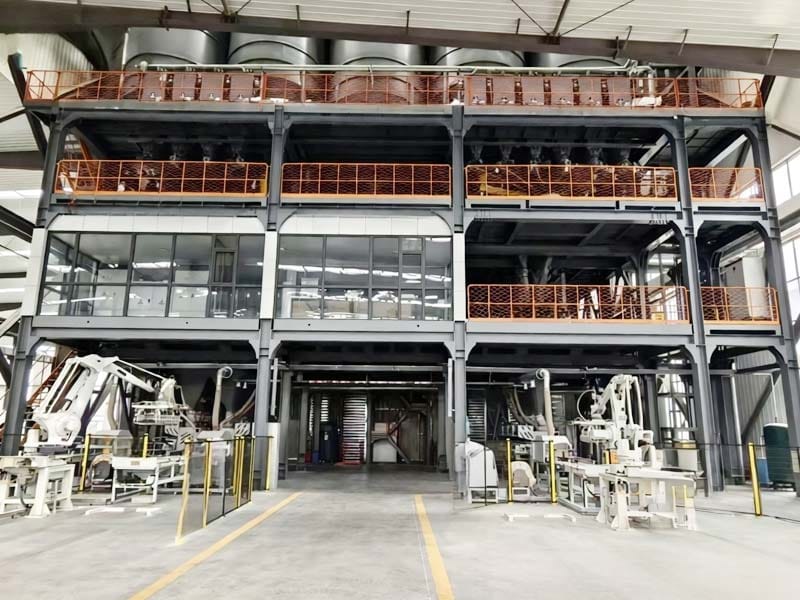
The MixingPlantPro workshop-type dry mortar plant places core components on the same workshop floor and feeds sand, powder and additives separately by screw conveyor into metering hoppers.
For mortar additive dosing, this arrangement can help where:
- product variety is high;
- operators need direct feeder access;
- small batches are frequent;
- changeovers occur often.
Tower-Type Plants Favor Centralized Automated Production
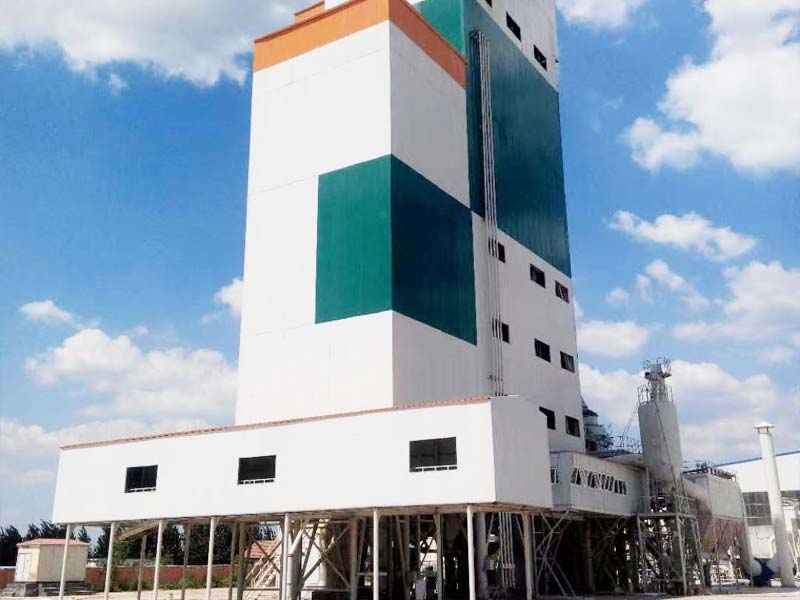
The tower-type plant uses vertical storage and gravity-assisted flow with automated batching and centralized control.
For mortar additive dosing, tower layouts can integrate multiple ingredient streams into a more centralized process.
The best configuration still depends on the number of additives and dose ranges.
Do Not Choose Plant Layout from Additive Accuracy Alone
A workshop, step or tower plant should not be selected solely because one page publishes a dosing accuracy number.
The complete project also depends on:
- capacity;
- site footprint;
- building height;
- product variety;
- almacenaj de materiale crud;
- embalaje;
- changeover frequency.
Nuestro dry mortar plant types guide compares the three layouts through production decisions.
Additive Weigh Hoppers Need Mechanical Isolation
Small weigh hoppers are sensitive to forces unrelated to material weight.
Inspeccionar:
- mangas flexibles;
- dust hoses;
- cables;
- pipe contact;
- nearby vibration.
Mortar additive dosing can become unstable if the weigh hopper touches the surrounding structure.
Dust Extraction Should Not Disturb the Scale
Fine additives can generate dust during refill and dosing.
Dust extraction is useful, but excessive negative pressure or rigid ducting can affect a small weigh hopper.
Verify the weighing signal with the dust system both on and off during commissioning.
Refill Events Can Change Feeding Behavior
After a hopper is refilled, powder can have a different bulk condition from material that has been stored and consolidated.
Mortar additive dosing should be checked:
- immediately after refill;
- at normal hopper level;
- near low level.
This helps identify feeder-output changes caused by material condition.
Low-Level Alarms Can Protect Repeatability
If an additive hopper becomes nearly empty, the feeder can starve.
Symptoms include:
- longer dosing time;
- under-dosing;
- irregular screw filling;
- batch timeout.
A low-level alarm can trigger refill before mortar additive dosing becomes unstable.
High-Level Control Prevents Overfilling
Overfilling an additive hopper can create:
- spillage;
- dust;
- compactación;
- wrong-hopper contamination;
- access problems.
The refill procedure should define a maximum operating level.
Batch Records Should Show Both Target and Actual Dose
For every automatically dosed additive, record:
- material ID;
- cantidad objetivo;
- cantidad real;
- ID de lot;
- recipe version;
- timp de dozare;
- alarm or override.
Mortar additive dosing becomes much easier to troubleshoot when the system retains this history.
Signed Error Is Useful for Trend Analysis
Calculate:
Signed error = actual quantity − target quantity.
Positive results show over-dosing. Negative results show under-dosing.
For mortar additive dosing, repeated positive error can suggest cutoff or material-in-flight problems, while mixed positive and negative errors can suggest unstable flow or weighing disturbance.
Product Changeover Can Contaminate Additive Lines
Specialty mortar production can involve frequent recipe changes.
Residual additive inside:
- hopper corners;
- screw feeders;
- pesar tolvas;
- transferir rampas;
- mixer inlet;
can enter the next product.
Nuestro guía de limpieza de la batidora de mortero seco explains why changeover control should extend beyond the mixer.
Dedicated Additive Lines Can Reduce Cross-Contamination
Where one additive is highly sensitive or used in a specific product family, a dedicated hopper and feeder can reduce cleaning requirements.
Whether this is justified depends on:
- product volume;
- changeover frequency;
- contamination sensitivity;
- available space.
Humidity Protection Matters for Sensitive Additives
Some polymer powders and chemical modifiers can absorb moisture or cake.
Protect storage and refill points from:
- rain;
- condensación;
- high humidity;
- wet cleaning;
- open bags left exposed.
Mortar additive dosing is difficult to stabilize if material condition changes during storage.
Water Cleaning Is Usually Unsuitable for Dry Micro-Dosing Equipment
Introducing water into additive hoppers or screws can create caking and hardened residue.
Dry cleaning or manufacturer-approved methods are generally more appropriate for dry powder dosing equipment.
Any wet-cleaning procedure should include complete drying before the next batch.
Commissioning Should Use the Actual Additives
Testing with sand or a substitute powder does not prove that the real additive will flow and dose correctly.
Commission mortar additive dosing with representative production materials.
Test:
- dosis mínima;
- dosis normal;
- dosis máxima;
- repeatability;
- refill condition;
- low hopper level;
- batch records.
Run Repeated Batches, Not One Demonstration
One successful dose can be accidental.
A stronger commissioning test uses several consecutive doses under the same conditions.
| Record | Purpose |
|---|---|
| Objetivo | Defines required dose |
| Real | Shows final result |
| Signed error | Shows bias direction |
| Dosing time | Shows feeder-flow stability |
| Hopper level | Explains head-pressure effects |
Define Acceptance Criteria Before Ordering
A buyer should specify how mortar additive dosing will be accepted.
Define:
- materials to be tested;
- dose ranges;
- number of repeated tests;
- reference weighing method;
- allowable error;
- required batch records.
This prevents a disagreement where the supplier tests one easy large dose while the buyer expects performance at a much smaller routine quantity.
What Should Buyers Send for an Additive Dosing Review?
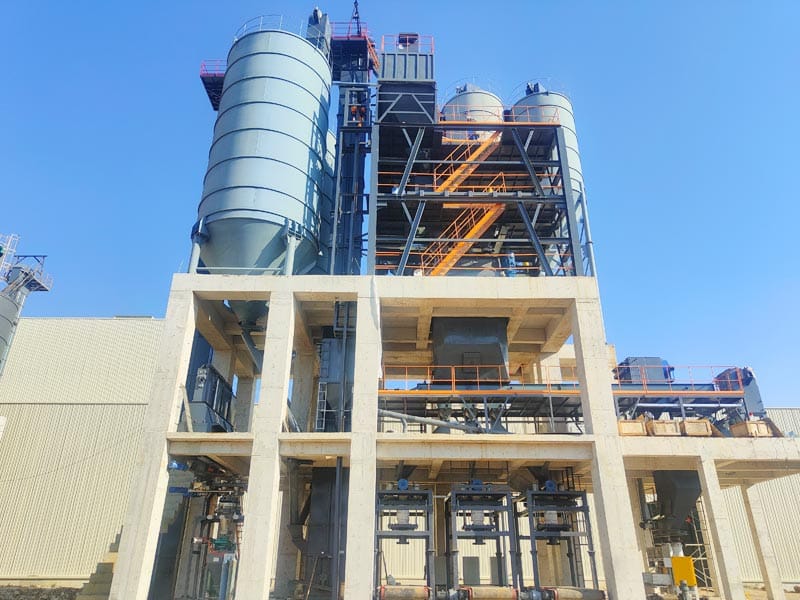
A useful mortar additive dosing review needs the actual formulation range.
Proporcionar:
- additive names;
- densitate întrebă;
- dosis mínima;
- dosis máxima;
- number of recipes;
- dimensiunea lotului;
- manual or automatic preference;
- changeover frequency;
- humidity sensitivity;
- required production rate.
Nuestro soluciones de mortero seco can then be configured around the actual ingredient list, dose range and production schedule.
Send your mortar product range and additive data through our página de contacto for a production-line review.
Conclusión
Mortar additive dosing should be specified from the smallest real recipe quantity, the physical behavior of each powder and the frequency of product changes.
Reliable dosing depends on more than a high-accuracy load cell. Storage flow, feeder size, material in flight, hopper level, refill condition, mechanical isolation and batch-control logic all affect the final result.
The strongest plant specification defines the additive list, weighing range, feeder arrangement, manual or automatic workflow, traceability and commissioning test before equipment is ordered.
Preguntas frecuentes
What is mortar additive dosing?
It is the controlled weighing and addition of low-volume functional ingredients such as polymers, cellulose ethers, setting modifiers, pigments and other dry mortar additives.
Why is micro-dosing difficult in dry mortar plants?
Small targets make scale resolution, feeder cutoff, material in flight, powder flow and residual material more significant relative to the required dose.
Should every mortar additive be dosed automatically?
No. Frequently used additives often benefit from automation, while very small or rarely used ingredients may be better handled through a controlled manual weighing station.
What causes unstable mortar additive dosing?
Common causes include bridging, feeder starvation, hopper-level changes, powder aeration, screw coast-down, vibration and mechanical interference with the weigh hopper.
What information should I provide before selecting an additive dosing system?
Provide additive names, bulk densities, minimum and maximum doses, batch sizes, product-change frequency, storage sensitivity and required production rate.