

Manufactured sand screening is the stage that converts a mixed crushed-sand stream into controlled particle-size fractions that can be stored, blended and used consistently. A sand-making line can produce enough total tonnes per hour and still fail the downstream mortar or concrete process if the required fine, medium or coarse fraction is not available in the right proportion.
For equipment buyers, screening should therefore be designed from the finished product backward. The first questions are not only “What screen size should we install?” but “Which sand fractions do our products need, how much of each fraction is required, and what happens to material outside those ranges?”
हमारे निर्मित रेत उत्पादन लाइन uses a defined process of prepared 5–15 mm stone, VSI sand making, circular vibrating screen grading, airflow powder classification, finished 0–3 mm sand storage and closed-loop return of unqualified material. This guide explains how manufactured sand screening should be configured around real downstream grading requirements.
What Is Manufactured Sand Screening?
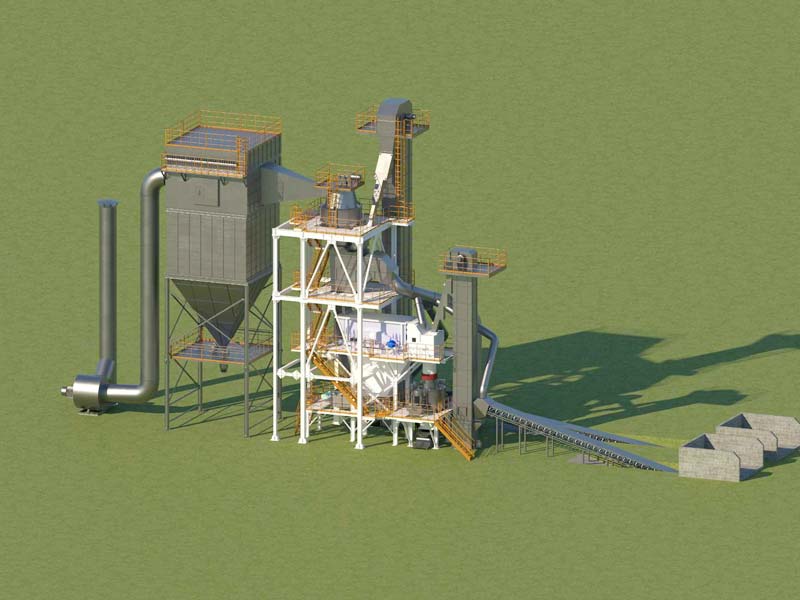
Manufactured sand screening is the mechanical separation of crushed sand according to particle size.
After the VSI shapes and reduces the prepared stone feed, the material contains a mixture of:
- oversize particles;
- usable coarse sand;
- medium sand;
- fine sand;
- very fine powder.
The vibrating screen separates the size fractions according to screen aperture.
Manufactured sand screening therefore determines which particles continue to the finished-product route, which are stored separately and which return to the crushing circuit.
Start with the Finished Sand Specification
The screen should not be selected before the target product is defined.
For manufactured sand screening, provide:
- target maximum particle size;
- full sieve distribution;
- required number of fractions;
- acceptable powder range;
- डाउनस्ट्रीम अनुप्रयोग;
- required tonnes per hour of each fraction.
ASTM C136/C136M-25 is the current ASTM method for determining particle-size distribution of fine and coarse aggregates by sieving. ASTM specifically notes that grading data are used not only for specification compliance but also for production control of aggregate products and mixtures containing aggregates.
That is exactly why screening design should begin with measured grading data.
Do Not Design the Screen from One Maximum Size
A finished sand labeled 0–3 mm can contain many different internal distributions.
One sample may contain a large proportion of particles close to 3 mm. Another may be dominated by sub-0.6 mm material.
Both may fit the same nominal maximum-size label, but they can behave differently in:
- mortar water demand;
- particle packing;
- थोक घनत्व;
- मिश्रण;
- finished-product flow.
Manufactured sand screening should therefore be based on the full grading curve, not only the top-size limit.
Screening and Air Classification Are Different Processes
Mechanical screening separates particles mainly according to physical size.
Air classification controls the very fine powder fraction according to aerodynamic behavior.
| Process | Main purpose | Typical problem addressed |
|---|---|---|
| Vibrating screening | Separate particle-size fractions | Oversize, missing fractions, fraction control |
| Air classification | Adjust very fine powder content | Excess fine powder |
| Closed-loop return | Recycle unqualified coarse material | Oversize material leaving final product |
हमारे dry sand classification guide explains why these two stages should not be confused.
Manufactured sand screening cannot replace air classification, and air classification cannot correct a damaged screen deck.
Choose Fractions from the Product Portfolio
A factory producing only general concrete sand may need fewer separate streams than a plant feeding several special-mortar products.
For manufactured sand screening, review every downstream product.
उदाहरणों में शामिल हो सकते हैंः
- general concrete sand;
- masonry mortar sand;
- tile adhesive sand;
- self-leveling mortar sand;
- repair mortar sand.
Each product may need a different balance of fine and medium particles.
The correct screen configuration should support the products that actually consume the sand.
More Sand Fractions Are Not Automatically Better
Every additional screened fraction increases plant complexity.
It can require:
- another screen deck or cut point;
- another chute;
- another conveyor;
- another storage bin;
- another weighing channel;
- more maintenance and cleaning.
Manufactured sand screening should create the minimum number of fractions required to maintain product flexibility.
If several mortar products can use the same approved fraction, dividing it further may add equipment without adding production value.
Too Few Fractions Can Reduce Formulation Flexibility
The opposite problem also occurs.
If all qualified material is stored as one broad 0–3 mm stream, the mortar plant loses the ability to adjust the fine-to-medium balance independently.
That can be a problem when different products need different particle distributions.
Manufactured sand screening may therefore need separate fine and medium fractions where the product portfolio justifies them.
हमारे sand grading curve guide explains how to use sieve data to identify whether separate storage is technically useful.
Screen Cut Points Should Follow Useful Product Boundaries
A screen aperture creates a physical separation point.
The best cut point is not necessarily a round number chosen for convenience.
It should reflect:
- the product grading requirement;
- the natural distribution coming from the VSI;
- available screen media;
- required throughput;
- fraction balance.
Manufactured sand screening should avoid creating one large surplus fraction and one chronically undersupplied fraction.
Fraction Yield Should Be Calculated from Real Feed Data
Before finalizing the screen layout, estimate how much material will report to each fraction.
Consider an illustrative feed distribution:
| Fraction | Share of screened material | Downstream demand | Planning result |
|---|---|---|---|
| Fine fraction | 25% | 35% | Potential shortage |
| Medium fraction | 45% | 40% | Near balance |
| Coarser fraction | 30% | 25% | Potential surplus |
Even if total manufactured sand output is sufficient, the fine fraction can still be short.
Manufactured sand screening should therefore be evaluated by fraction yield, not only total output.
Feed Grading Controls Screen Loading
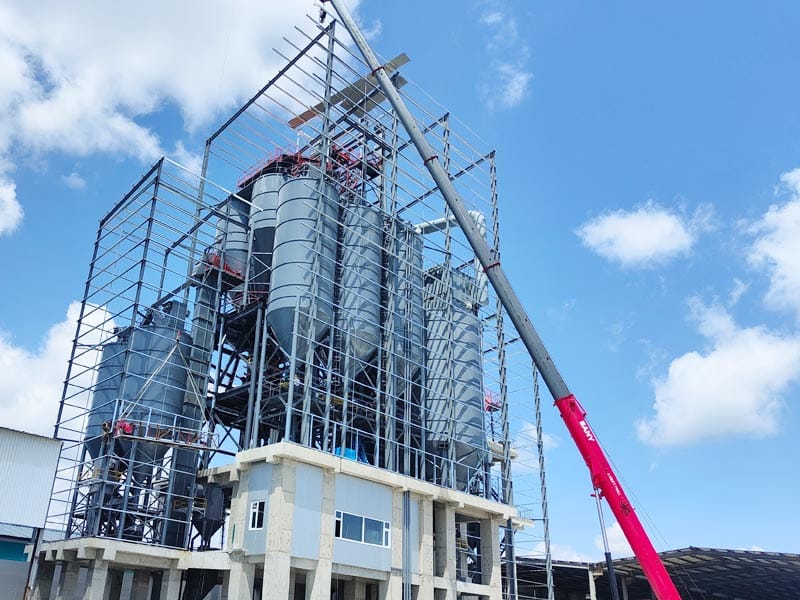
The material arriving from the VSI determines how much work the screen has to perform.
If the feed suddenly becomes coarser, oversize return can increase.
If the VSI produces more fines, the lower screen decks and airflow classifier may see heavier loading.
For manufactured sand screening, track:
- VSI feed grading;
- screen feed grading;
- finished fraction grading;
- return-load grading;
- powder content.
Stable screening starts with a reasonably stable crushing process.
Screen Area Matters as Much as Aperture Size
A screen with the correct aperture can still perform poorly if the deck area is too small for the feed rate.
Overloading can reduce the probability that particles reach the openings.
Manufactured sand screening design should therefore consider:
- feed rate;
- कण-आकार वितरण;
- number of decks;
- screening area;
- material moisture;
- screen inclination;
- vibration characteristics.
Do not select a screen only from the required cut size.
Screen Efficiency Should Be Verified with Samples
A screen does not produce a perfect mathematical separation.
Some undersize can remain in the oversize stream, while some near-size material may report differently depending on loading and screen condition.
Manufactured sand screening should therefore be verified using samples from:
- feed;
- each product stream;
- oversize return.
Compare the mass distribution across the relevant sieves.
This shows whether the screen is actually creating the intended fractions.
Near-Size Particles Are Harder to Separate
Particles much smaller than the screen opening pass easily.
Particles much larger remain on the deck.
Particles close to the aperture size can require more opportunities to contact the opening in the correct orientation.
Manufactured sand screening performance can therefore deteriorate when a large part of the feed is concentrated close to one cut size.
This should be considered during screen selection and commissioning.
Moisture Can Reduce Dry Screening Performance
Dry sand screening works best when material remains sufficiently free-flowing.
Moisture can cause fine particles to stick together or adhere to screen media.
This can lead to:
- blinding;
- lower screening efficiency;
- unstable fraction grading;
- increased cleanup;
- reduced throughput.
Manufactured sand screening should therefore include expected feed-moisture conditions in the design review.
Screen Blinding Should Be Diagnosed, Not Just Cleaned
If screen openings repeatedly become blocked, the plant should identify why.
संभावित कारणों में शामिल हैंः
- excess moisture;
- sticky fines;
- incorrect screen media;
- near-size particle concentration;
- low vibration performance;
- damaged tensioning.
Cleaning restores short-term operation, but repeated blinding indicates a process or equipment mismatch.
Worn Screen Media Can Contaminate Finished Fractions
A torn or enlarged screen opening can allow oversize particles into the next fraction.
For manufactured sand screening, routine inspection should include:
- screen cloth wear;
- tears;
- loose panels;
- frame condition;
- fasteners;
- material buildup.
If a finished sand curve suddenly becomes coarser, inspect the screen before changing the VSI or classifier.
Closed-Loop Return Keeps Oversize Inside the Process
MixingPlantPro’s published manufactured sand process returns unqualified material to the sand maker after screening rather than allowing it into finished storage.
This closed-loop arrangement improves size control, but it also creates internal circulating load.
Manufactured sand screening should therefore account for:
- ताजा चारा;
- oversize return;
- total screen feed;
- VSI recirculation load.
The screen and VSI may handle more internal tonnes per hour than the fresh external feed alone suggests.
Return Load Is a Useful Diagnostic Metric
If the return stream suddenly increases, possible causes include:
- coarser raw feed;
- VSI wear;
- changed crusher settings;
- damaged screen media;
- incorrect screen cut.
Manufactured sand screening records should therefore include return-load trends where possible.
A rising return rate can indicate that the crushing and screening balance is moving away from the intended operating condition.
Fine Powder Needs ASTM C117-Type Evaluation
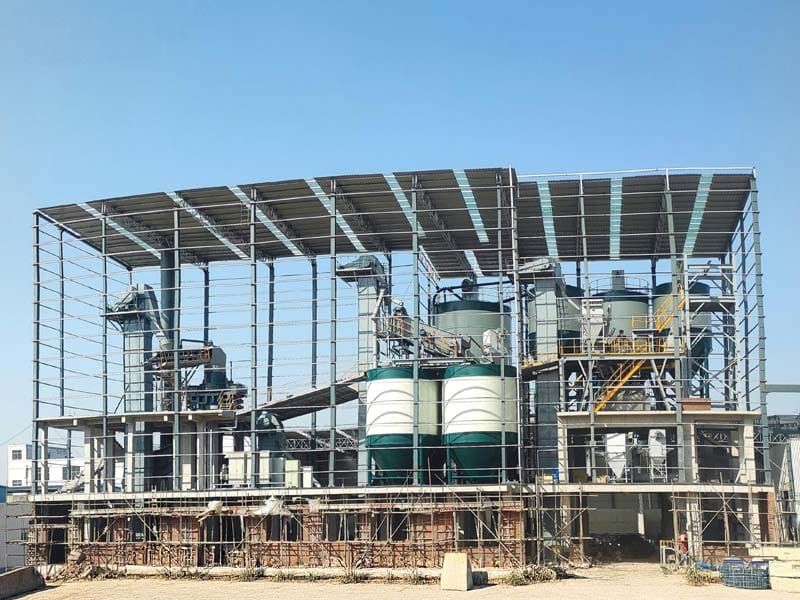
ASTM C136/C136M-25 notes that accurate determination of material finer than the 75 μm sieve cannot be achieved by sieve analysis alone and refers to ASTM C117 for that fine fraction.
This matters because manufactured sand screening primarily controls particle-size fractions, while the airflow classifier handles excess very fine powder.
Use the proper fine-material test to determine whether the air-classification stage needs adjustment.
Do Not Remove All Fine Material by Default
Very fine material is not automatically waste.
Some fines can contribute to particle packing and may be useful in certain mortar or concrete formulations.
The target should be controlled powder content, not maximum removal.
Manufactured sand screening should work together with air classification so useful fine sand is retained while excessive powder is managed separately.
Storage Bins Should Match Fraction Consumption
Once the required fractions are defined, each finished bin should be sized from demand.
For each fraction, calculate:
- consumption per batch;
- batches per hour;
- number of products using the fraction;
- replenishment rate;
- buffer time required.
A fraction used by most products may need a larger bin than a specialty fine fraction.
Manufactured sand screening and storage design should therefore be planned together.
Keep Fractions Separate After Screening
Good separation at the screen can be lost if fractions remix during transfer.
चेकः
- chute sealing;
- conveyor discharge location;
- bin partition integrity;
- overflow routes;
- cross-contamination during maintenance.
Manufactured sand screening only creates value when the classified fractions remain separate until intentional blending.
Integrated Mortar Plants Need Fraction-by-Fraction Balance
हमारे एकीकृत निर्मित रेत और विशेष मोर्टार संयंत्र links sand production directly with mortar batching.
In this arrangement, manufactured sand screening should be balanced against the actual mortar recipes.
A plant can have enough total sand but still stop mortar production because one fine fraction is exhausted.
समीक्षा:
- fraction production rate;
- fraction consumption rate;
- buffer storage;
- product-change schedule;
- surplus-fraction destination.
This is more precise than comparing only total sand tonnes per hour with total mortar tonnes per hour.
Sampling Points Should Be Included in the Layout
Operators need safe access to representative samples.
Useful sampling points can include:
- VSI discharge;
- screen feed;
- each screened fraction;
- air-classified finished sand;
- return stream.
Manufactured sand screening is easier to troubleshoot when the quality team can identify exactly where the grading changed.
Trend Several Curves Instead of Testing One Sample
One sieve analysis proves only one moment in production.
For process control, compare grading curves across:
- different shifts;
- different raw-material lots;
- before and after screen maintenance;
- different VSI wear conditions;
- different classifier settings.
Manufactured sand screening should keep normal production inside an approved grading band rather than attempt to reproduce one exact laboratory curve every hour.
Commission the Screening Circuit with Real Feed
A new sand line should be commissioned using representative material.
रिकार्ड:
| Commissioning item | What it shows |
|---|---|
| Fresh feed grading | Material entering the VSI-screen circuit |
| Screen feed rate | Actual load on the decks |
| Each fraction grading | Separation performance |
| Return-load grading | Material being recycled |
| Finished powder content | Need for air-classifier adjustment |
| Feed moisture | Dry-screening condition |
Repeat the test under more than one realistic feed condition where the raw material varies.
What Should Buyers Send for Screening Selection?
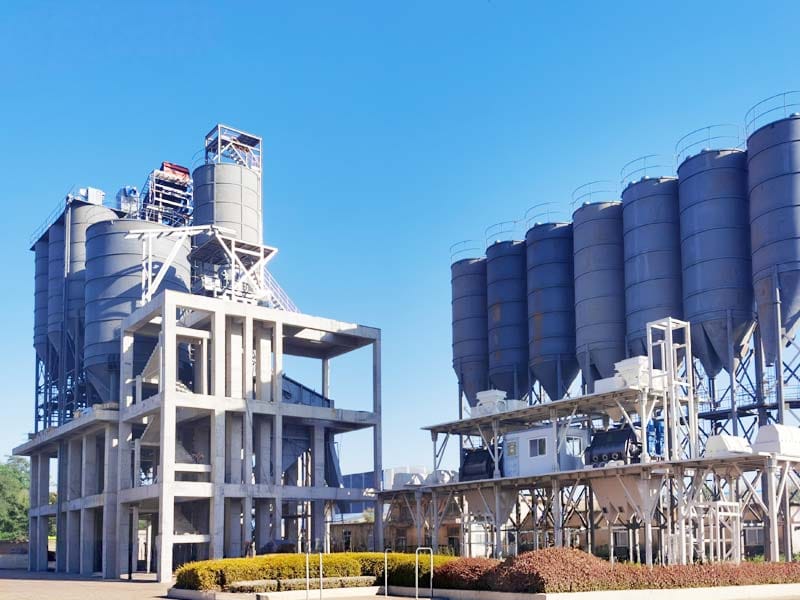
A useful manufactured sand screening review needs both feed and product data.
प्रदान करेंः
- prepared feed grading;
- feed moisture;
- parent rock;
- target finished maximum size;
- desired grading curves;
- required sand fractions;
- required tonnes per hour of each fraction;
- powder-content target;
- downstream concrete or mortar products;
- site layout and storage requirements.
हमारे निर्मित रेत समाधान can then be reviewed around the actual fraction demand instead of only total throughput.
Send your feed data and target sand grading through our संपर्क पेज for a project-specific screening and classification review.
निष्कर्ष
Manufactured sand screening determines which particle-size fractions become useful products, which need separate storage and which return to the VSI.
The correct screen design starts with the downstream grading requirement. Screen cut points, deck area, moisture tolerance, closed-loop return and finished storage should all be balanced around the required fraction demand.
Do not judge a sand line only by total tonnes per hour. A well-designed screening system should consistently produce the specific fine, medium and coarse fractions that the concrete or mortar plant actually needs.
अक्सर पूछे जाने वाले प्रश्न
What is manufactured sand screening?
It is the mechanical separation of crushed sand into controlled particle-size fractions using vibrating screens. Oversize can be returned to the sand maker while qualified fractions continue to storage or further classification.
How many sand fractions should a plant produce?
There is no universal number. The required fractions should come from the concrete or mortar product portfolio and the grading curves those products need.
Is air classification the same as sand screening?
No. Screening separates particles mainly by size, while air classification is used to control very fine powder. The two processes should be designed to work together.
Why does moisture affect manufactured sand screening?
Moisture can cause fine particles to stick together or blind screen openings, reducing separation efficiency and changing the grading of the finished fractions.
What data are needed to select a manufactured sand screen?
Provide feed grading, moisture, feed rate, target grading, required fractions, powder-content requirement and downstream product demand.

