Sadržaj
Batching plant capacity is shaped by the resources that batches share across the working day. A mixer may complete its own operation quickly while waiting for a common aggregate transfer, powder scale or receiving vehicle. Evaluating the mixer alone can therefore overstate the quantity the connected plant can deliver under the intended order pattern.
Start with a representative shift rather than a single favorable cycle. Identify the products, batch sizes, delivery sequence and planned material replenishment. The objective is to understand which resource limits accepted production and when that limitation appears, using events that the operator and supplier can interpret together.
Set the batching plant capacity boundary
Define where the output is counted. Mixer discharge, loaded concrete and accepted delivered material describe different boundaries. Batching plant capacity proposals should identify the boundary used in the quoted figure and the activities included in the observation interval.
Separate a theoretical rate from a measured operating result. Record the assumed batch size and cycle basis behind a theoretical figure. For a trial, retain the actual quantity and elapsed time, including the relevant interruptions under the agreed test definition.
Do not compare two suppliers until their boundaries align. One arrangement may include vehicle positioning and normal replenishment while another describes continuous mixer operation with material and receiving space always available. Those figures can both be meaningful within their definitions but do not answer the same purchasing question.
Identify resources that more than one operation uses
Draw a resource map covering aggregate transfer, weighing, powder conveying, water and admixture dosing, mixing and discharge. Mark which resources serve more than one stream, production activity or destination. Include shared site facilities where their availability affects the agreed output boundary.
Ask the supplier which operations may overlap and which require an exclusive resource. A control diagram or sequence description is more useful than assuming that all parallel-looking equipment can operate simultaneously. Batching plant capacity depends on the actual permitted sequence and the physical arrangement.
Record the conditions that make a resource unavailable. This may be a normal material change, a receiving destination in use or a planned inspection. The resource map should distinguish these conditions from faults, since the proposed remedy and the operating responsibilities may differ.
Track the resource rather than adding cycle times blindly
Operations can overlap, so adding every equipment duration may overstate the batch cycle. Conversely, using only the longest individual operation can miss a shared resource that must serve several tasks sequentially. Ask for an explanation of the actual timing relationships in the proposed arrangement.
Use a time-based sequence diagram with identifiable events. Show when a batch requests the resource, when the resource becomes available and when the operation completes. This helps reveal whether a wait is caused upstream, within the equipment or at the downstream handover.
For illustration, a shared resource requested at 10:02 and available at 10:05 produces a three-minute wait for that request. It does not prove that the same wait occurs on every batch. Batching plant capacity analysis needs repeated observations under the intended duty before a purchasing decision uses that interval as a recurring assumption.
Include replenishment in the shift model
Identify how aggregate and powder supplies are replenished during the planned production period. Record the responsibilities and any restrictions on simultaneous operations. An output trial with fully prepared stores may not represent a shift in which the site must continue receiving materials.
Review the relationship between storage assignments and material consumption. The relevant question is whether the intended material remains available when requested, using the approved receiving and inventory controls. A plant-wide stock total does not establish availability at the particular feed point needed for a batch.
Keep replenishment assumptions visible in the quotation. The supplier should state which material conditions support its batching plant capacity proposal and which site activities the buyer must provide. A missing loader, unavailable delivery or restricted receiving window should not appear later as an unexplained difference between tender and operation.
Model vehicle availability at the discharge boundary
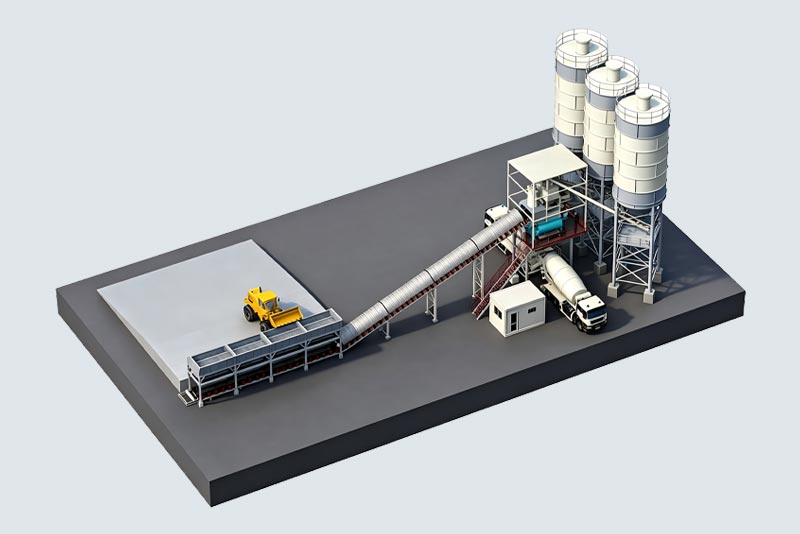
Where the output definition includes loading, identify the receiving vehicle and the point at which it becomes available. Vehicle arrival, positioning and permission to receive material are distinct events. An early arrival does not necessarily mean the mixer has an available destination.
Use the intended dispatch pattern to review waiting. A steady stream of identical vehicle movements differs from a shift with uneven order timing or several destinations. Do not assume that mixer output alone can resolve a vehicle scheduling constraint outside the equipment supplier's scope.
The ISO 22400-2 overview offers context for describing manufacturing indicators with defined units and time elements. Apply the same discipline to the project's observations without claiming that a simple shift spreadsheet constitutes implementation of the standard.
Compare likely constraints using evidence
The following table separates observations that may look similar in a daily output report. Each requires supporting event records and review by the relevant team; the observation alone is not a complete diagnosis.
| Observation | Record to connect | Question to investigate |
|---|---|---|
| Mixer waits before charging | Material-ready and weighing events | Which required material is unavailable? |
| Several batches queue at one scale | Scale request and release times | Is a shared sequence limiting the duty? |
| Conveyor runs but receiving point waits | Route and destination status | Is the permitted material route available? |
| Mixer waits after mixing | Discharge request and vehicle-ready events | Is the receiving interface the constraint? |
| Output falls during replenishment | Receiving and production timeline | Was this interaction included in the proposal? |
| Trial exceeds normal shift result | Product mix and support conditions | Which assumptions changed between periods? |
Attach batch identifiers and a consistent time basis to the events. If the controls and dispatch systems use different clocks, account for the relationship before calculating waits. Otherwise, the apparent resource delay may be a record-alignment problem.
Run a representative shift assessment
Agree the product sequence, batch-size range, material support and receiving arrangements before collecting the trial data. Include normal activities relevant to the intended duty. Record exceptions and temporary support so that the observed result remains connected to the conditions that produced it.
Calculate accepted output over the defined interval and retain the resource observations. A single final tonnes-per-hour result cannot show whether the improvement opportunity is a conveyor, a shared weighing sequence, vehicle coordination or a different production plan.
Review any proposed equipment change against the identified constraint. Increasing an upstream rate can shift waiting downstream without changing accepted output. A useful batching plant capacity proposal explains why the change affects the limiting resource and which connected interfaces can accommodate the result.
Request a capacity proposal tied to the intended duty
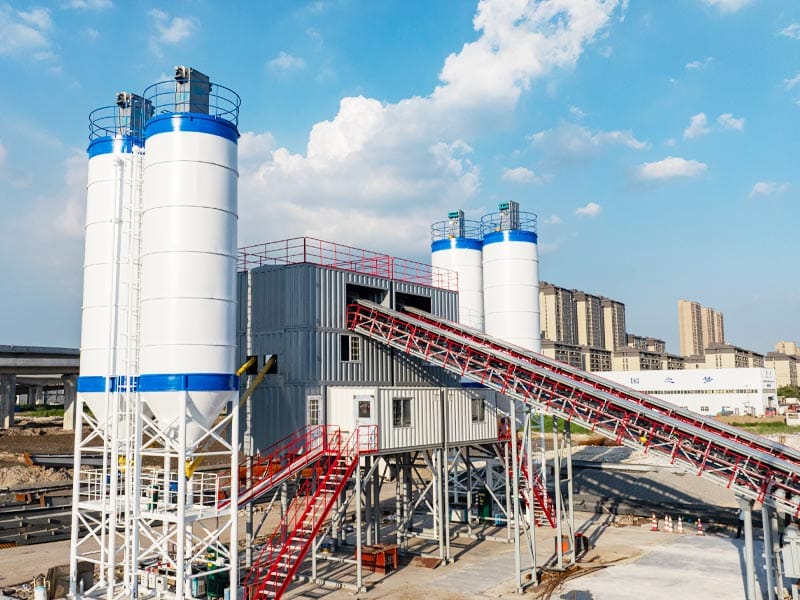
Discuss the postrojenje za miješanje betona s gornjim pojasom using the required material and delivery sequence. For a different spatial arrangement, compare the bočno montirana trakasta tvornica za miješanje betona on the same output boundary and operating assumptions.
Provide the supplier with representative orders, batch sizes, storage and replenishment plans, vehicle patterns and known site restrictions. Ask for the sequence description, shared-resource assumptions and acceptance-trial basis alongside the equipment list.
The most useful batching plant capacity discussion identifies the quantity the connected installation can deliver and the evidence supporting it. Send your shift pattern and resource constraints to obtain a proposal that addresses the limiting handover rather than relying only on the largest machine's nominal rate.
Često postavljana pitanja
What limits batching plant capacity when the mixer waits?
A shared material route, weighing resource or receiving destination may be unavailable at the required time. Review the permitted sequence and connected event records before treating the wait as a machine fault.
Should every operation time be added to estimate the batch cycle?
No. Some operations overlap while others compete for shared resources. Use the actual sequence and availability conditions confirmed by the supplier.
Does a full aggregate stockyard prove material availability?
No. The required material must be available through its assigned storage and feed route when requested. Replenishment and handling responsibilities also affect that availability.
What distinguishes a useful trial from a favorable demonstration?
A useful trial represents the intended order mix and support conditions, uses a defined output boundary and records relevant waits. Temporary assistance and exceptions remain visible.
What should accompany a plant capacity quotation?
Request the output definition, batch and cycle assumptions, shared-resource sequence, buyer support requirements and acceptance-trial conditions. Compare proposals only after those bases agree.