
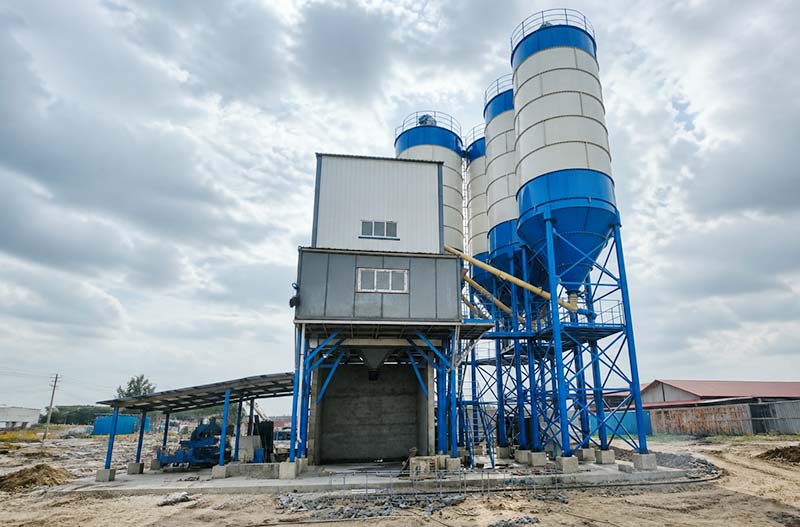
Concrete batching plant types are easy to list and harder to compare. “Mobile” describes relocation. “Wet batch” describes where mixing happens. “Belt-fed” describes aggregate transport. A single installation can fit all three descriptions.
That distinction matters when choosing equipment. Comparing a mobile plant with a wet-batch plant does not answer whether either will suit your production schedule. Comparing complete material flows does.
This guide explains concrete batching plant types through the decisions that shape daily production: mixing method, mobility, aggregate feeding, storage layout, concrete application, and achievable output. The aim is to build a shortlist that works on your site—not simply select the most impressive machine description.
Daftar Isi
How Concrete Batching Plant Types Are Classified
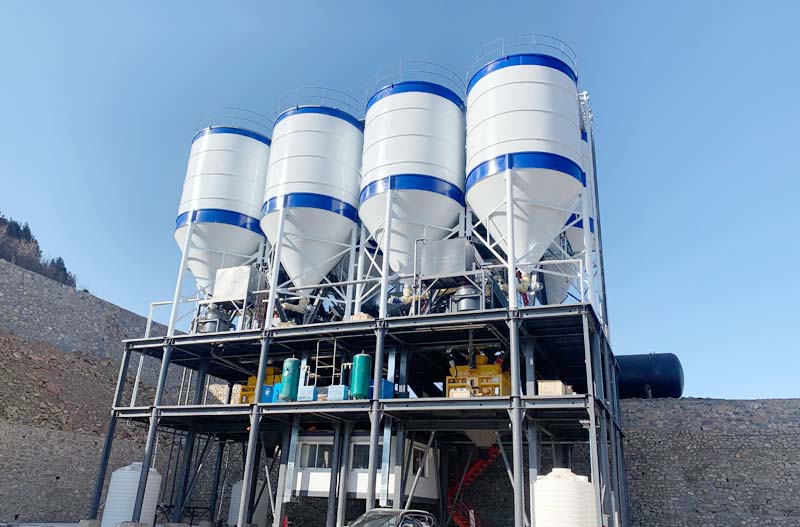
Rather than treating concrete batching plant types as separate, competing categories, use several classification layers. Each answers a different engineering question.
| Classification | Common options | What the choice actually determines |
|---|---|---|
| Mixing method | Central mix, transit mix, shrink mix | Where concrete mixing starts and finishes |
| Mobility | Mobile, relocatable modular, stationary | How installation and future moves are organized |
| Aggregate feeding | Belt conveyor, skip hoist | How aggregate reaches the mixer or charging point |
| Storage arrangement | Side-mounted silos, overhead silos, tower storage | How storage, conveying, and structural space fit together |
| Production application | Ready-mix supply, project batching, precast production | How batches reach trucks, placement equipment, or factory stations |
For example, a fixed installation can use belt-fed aggregates, side-mounted powder silos, and a central mixer. A different fixed installation may use a skip hoist and overhead silos. Both are stationary plants; their material-handling arrangements differ.
Start the comparison by writing a complete configuration description. This prevents a compact structure, a transport feature, or a mixer choice from being mistaken for an entire production solution.
Wet Batch vs Dry Batch: Where Does Mixing Happen?
The first distinction between concrete batching plant types is whether concrete is mixed in a plant-mounted mixer or a truck mixer.
A wet-batch, or central-mix, plant mixes concrete before discharge into transport equipment. A dry-batch, or transit-mix, plant measures the ingredients and loads them into a truck mixer. “Dry batch” does not necessarily mean water is added only at the construction site: most or all water may be batched at the plant. Shrink mixing starts in a plant mixer and finishes in the truck.
The ready-mixed concrete production methods explained by NRMCA provide a useful reference for these distinctions.
When comparing these concrete batching plant types, ask who controls the complete mixing cycle and how uniformity will be verified. For a central-mix installation, review mixer performance, discharge, and cleaning. For transit mixing, include the truck fleet and mixing procedure in the assessment.
Neither label is a substitute for testing. A proposed process should demonstrate the required concrete consistency with the intended materials, batch sizes, and operating sequence. Mixing architecture is also separate from mobility: installing a mixer on a modular frame does not turn wet batching into dry batching.
Mobile vs Stationary: Match the Relocation Plan
Mobility should solve a real project requirement. Before comparing mobile and stationary concrete batching plant types, decide whether the equipment will move between projects, remain throughout a long construction program, or become a permanent production facility.
A pabrik batching beton bergerak integrates core systems within a movable modular arrangement. It is worth considering when repeated relocation is part of the operating plan. A fixed arrangement deserves consideration when storage, traffic routes, and long-term production can be designed around one location.
Compare the scope of each move, not just the main mixing module. Ask what happens to silos, aggregate storage, utilities, access platforms, and control connections. Request transport dimensions and a responsibility schedule for dismantling, lifting, reassembly, and recommissioning.
For mobile concrete batching plant types, relocation is not complete when the structure is standing. Measuring systems and production functions need verification before routine operation. NRMCA’s plant guidance specifically calls for scale accuracy checks after a portable plant moves.
Ground preparation and structural support should be confirmed for the actual site. Avoid treating “mobile” as a universal promise that no civil work is required.
Belt Conveyor vs Skip Hoist: Follow the Aggregate
Aggregate transport is a separate selection decision. Belt-fed and skip-hoist concrete batching plant types describe how material reaches the elevated receiving point, not where the cement silos must stand.
A pabrik pencampuran beton sabuk yang dipasang di samping uses flat and inclined conveyors to move aggregate. Check the conveyor route, transfer points, access for inspection, and the receiving hopper’s ability to supply successive batches. Continuous conveying does not make the mixer a continuous mixer; production can still proceed in discrete batches.
A skip hoist lifts aggregate intermittently. The pabrik pencampuran beton ember di atas kepala combines this lifting method with powder silos above the main building.
To compare these concrete batching plant types fairly, request a cycle diagram. How long does filling take? When does lifting start? Can the next aggregate batch be prepared while the current batch mixes? What happens when the receiving hopper is not ready?
Do not automatically reject a skip arrangement as a small-output option. Evaluate the proposed payload, lifting cycle, buffer storage, and production requirement together. A label alone does not establish the throughput of a particular configuration.
Overhead vs Side-Mounted Silos: Check the Whole Site
Powder storage placement changes the layout without necessarily changing the mixing process. Among concrete batching plant types, “overhead” and “side-mounted” should therefore be treated as arrangement choices.
An pabrik pencampuran beton overhead belt places powder silos above the main mixing building. A side-mounted arrangement places them beside it. Compare the complete general arrangement drawing rather than the outline of the mixing building alone.
A smaller central structure does not prove that the whole operation needs less land. Your review should still include aggregate stockpiles, loader routes, powder deliveries, truck turning space, maintenance access, and room for future changes.
For vertically arranged concrete batching plant types, ask the designer to confirm total height, support loads, and access to elevated equipment. For side-mounted storage, check conveying routes and the space needed around each silo. The preferred arrangement is the one that fits both material movement and maintainability.
When a Concrete Mixing Tower Makes Sense
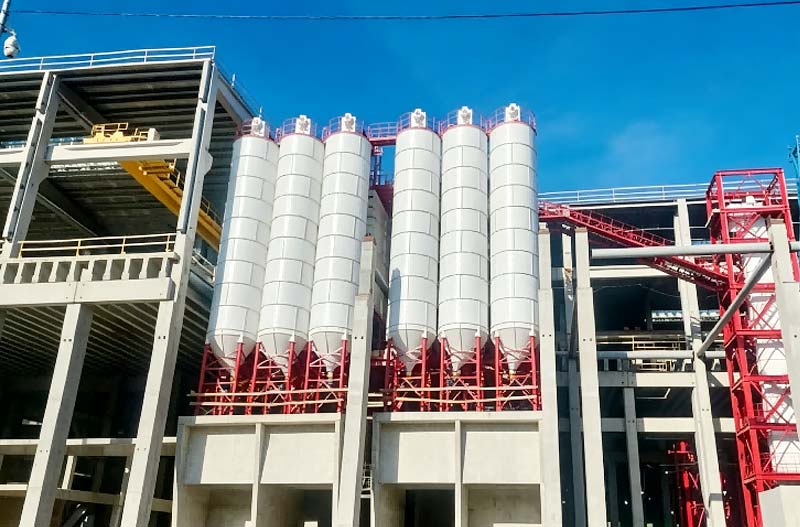
Tower configurations organize more of the production arrangement vertically. The concrete mixing tower presented in this product range includes roof storage, rotary distribution, transition storage, and batch-feeding equipment.
Consider tower-style concrete batching plant types when a long-term production plan supports an integrated storage and feeding arrangement. During review, follow each material from incoming delivery through storage, weighing, mixing, and discharge.
Ask how individual storage compartments are replenished, how inspection access is provided, and how equipment can be removed for major maintenance. Also identify which activities can continue during a service interruption.
A tower should earn its place on the shortlist through the proposed workflow. Height and structural complexity are not, by themselves, evidence of better concrete or higher usable output.
Ready-Mix and Precast Plants Need Different Workflows
The destination of each batch helps narrow concrete batching plant types. For ready-mix supply, review truck loading and dispatch. For precast production, start with the receiving stations, required batch sizes, and the factory’s casting schedule.
The pabrik batching beton pracetak in this range uses planetary mixing and offers multiple discharge doors and production-line software integration. These features warrant discussion when one plant must coordinate with several factory operations.
However, a planetary mixer is not an automatic guarantee that every precast mixture will perform as intended. Request trials covering the actual materials and the smallest and largest planned batches. NIST’s review of concrete mixing methods and mixer performance emphasizes concrete homogeneity and performance when evaluating mixing methods.
Application-specific concrete batching plant types must also fit what happens after discharge. Ask whether the receiving equipment can accept the full batch, how a delayed station affects production, and how recipe changes are coordinated. A mixer that finishes quickly is of little help when the next destination is unavailable.
Compare Real Output, Not Just Rated Capacity
Rated capacity is a starting point, not a complete production plan. When comparing concrete batching plant types, ask for the conditions behind the stated output: discharged batch volume, repeat cycle, material characteristics, and assumed availability of receiving equipment.
Consider an illustrative calculation—not a product performance claim. Suppose an installation discharges 2 cubic meters every 90 seconds during uninterrupted operation:
2 × 3,600 ÷ 90 = 80 cubic meters per hour.
If only 45 minutes within an hour contain that uninterrupted sequence, the corresponding production is 60 cubic meters. This example shows why the measurement period and operating assumptions matter.
Use the interval between completed batches, not mixing time alone. Request a schedule showing which weighing, feeding, mixing, and discharge activities overlap and which must wait.
Different concrete batching plant types should be compared using the same concrete specification and operating assumptions. Otherwise, a faster published figure may reflect different test conditions rather than a better match for your project.
Finally, separate peak hourly demand from daily average demand. A plant that supplies a modest daily total may still need to meet concentrated production windows.
Quality Control Matters Across Concrete Batching Plant Types
All concrete batching plant types need a credible method for measuring ingredients and verifying the resulting mixture. Equipment architecture does not remove that requirement.
Aggregate moisture and batch water
Wet aggregate contributes water as well as solid material. The penjelasan ACI tentang koreksi air agregat distinguishes water absorbed within aggregate from surface water that contributes to mixing water.
Ask how the proposed controls adjust both aggregate batch quantities and added water. A moisture probe reading should be checked against representative measurements rather than assumed correct indefinitely. NPCA’s panduan pengujian kelembaban agregat explains why changing storage and weather conditions matter.
Measuring range and verification records
A statement that a plant has accurate scales is not enough. Ask for verification across the intended working range, particularly when production includes small batches. Panduan sertifikasi tanaman NRMCA addresses scale checks, measuring devices, and supporting records.
When assessing automated concrete batching plant types, request a demonstration of target and actual quantities, recipe control, alarms, and operator interventions. Define the records you need before accepting the control system.
These references inform a technical review; they do not establish that a particular installation is certified. Confirm the applicable project requirements and acceptance criteria separately.
Three Project Scenarios That Change the Shortlist
These hypothetical situations show how the same concrete batching plant types can receive different priorities. They are selection examples, not completed-project claims.
A contractor moving between temporary sites
Begin with a mobile or relocatable configuration, then assess everything required to restart production. Compare transport modules, utility reconnection, local material supply, and verification after each move. A compact main frame is not enough to judge the relocation task.
A fixed ready-mix operation with tight access
Compare belt and skip arrangements alongside overhead and side-mounted storage. Put truck movements and maintenance zones on the drawing before choosing the smallest structure. Ask the designer to demonstrate a workable route for deliveries while concrete trucks are loading.
A precast factory supplying several casting stations
Start with the casting schedule and receiving equipment. Define batch quantities, recipe changes, discharge destinations, and the response to a delayed station. Review mixer trials and control interfaces before selecting the final layout.
In each case, concrete batching plant types are a way to organize options. The deciding evidence is whether the proposed installation can execute the required work under the stated site conditions.
What to Send for a Useful Plant Configuration Review
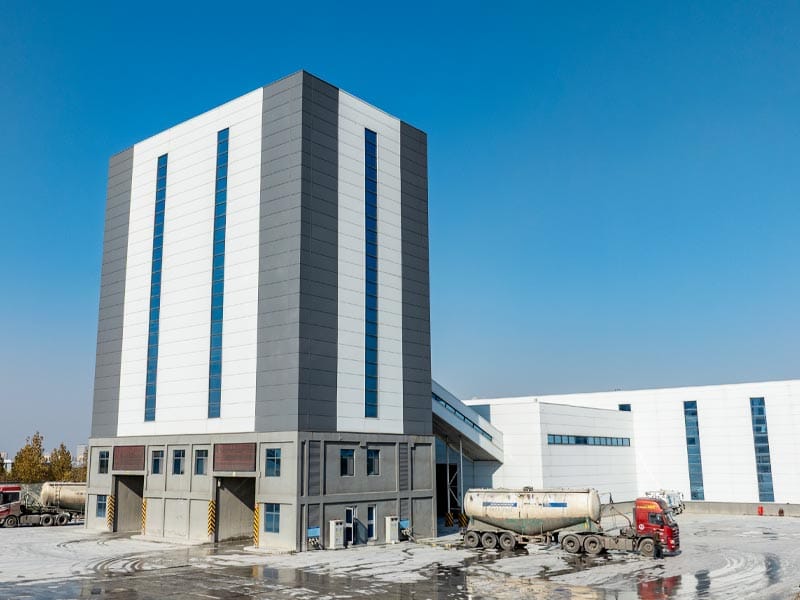
A useful inquiry needs more than a requested capacity. To narrow concrete batching plant types, provide your concrete applications, peak production windows, expected daily demand, available site dimensions, height restrictions, and relocation plans.
Include aggregate sizes and sources, powder types, admixtures, and the expected range of batch sizes. Explain how concrete will leave the plant: truck loading, transport buckets, or another defined receiving system. Where information is uncertain, identify it as a condition to investigate.
Untuk a custom plant layout and configuration review, ask for a proposed material-flow diagram, general arrangement, configuration list, and explanation of operating assumptions. Confirm the supply boundaries and identify any required equipment that is outside the proposal.
This makes competing proposals easier to evaluate and gives the engineering team a practical basis for recommending a configuration.
Kesimpulan
The most useful way to compare concrete batching plant types is to separate mixing method, mobility, aggregate feeding, storage arrangement, and application. Then test the combined configuration against your production schedule, materials, site, and quality requirements.
Choose the workflow before choosing the model. Share your output targets, raw material information, and site drawing with our team to discuss a suitable arrangement. Contact us for a project-specific plant configuration review and turn an initial shortlist into a defined equipment requirement.
FAQ
What are the main concrete batching plant types?
Common classifications include central-mix and transit-mix production, mobile and stationary installations, and belt-fed and skip-hoist aggregate systems. Storage arrangement and application provide further distinctions. These categories overlap, so describe the complete configuration rather than treating every label as a separate plant.
Can a mobile batching plant include a central mixer?
Yes. Mobility and mixing method describe different features. A mobile configuration can batch and mix concrete in a plant-mounted mixer before discharge. Review the actual equipment specification rather than assuming that a movable plant necessarily relies on truck mixing.
Is a belt conveyor always better than a skip hoist?
No. Compare the aggregate payload, repeat cycle, buffer storage, available space, and maintenance requirements. The useful question is whether the complete feeding system meets your production requirement. Neither transport method establishes a universal capacity limit or guarantees better concrete.
Which concrete batching plant types suit precast production?
Shortlist configurations around the required mixture properties, batch sizes, casting schedule, and discharge destinations. A dedicated precast arrangement may provide suitable mixing and factory interfaces. Confirm performance with representative trials and check how the system coordinates with receiving equipment.
How should two plants with the same rated capacity be compared?
Use identical assumptions for concrete composition, discharged batch size, repeat cycle, and operating time. Review weighing and feeding schedules, truck or factory receiving capacity, and verification records. Equal published ratings do not establish equal output under your actual operating conditions.


