
ซ่อมแซมการผลิตปูน: อุปกรณ์จับคู่กับความต้องการของผลิตภัณฑ์
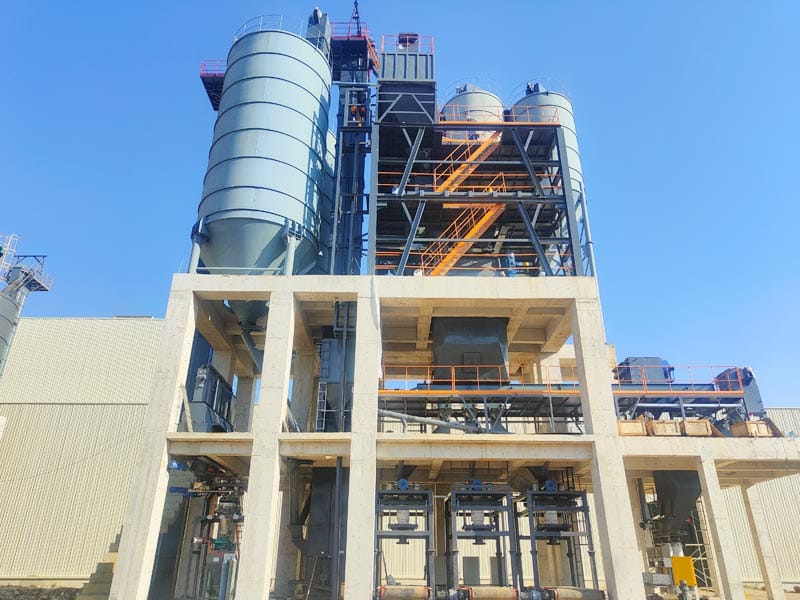
Repair mortar production is more demanding than simply blending cement and sand. A repair mortar may need carefully controlled aggregate grading, polymer powder, fibers, shrinkage-control components, accelerators, retarders or other low-dose ingredients. The production line has to reproduce that formulation consistently while keeping product changeovers, dust, packaging and traceability under control. For equipment buyers, the […]
การชั่งน้ําหนักปูนซีเมนต์ในโรงงานผสม: อะไรส่งผลต่อความสม่ําเสมอ?
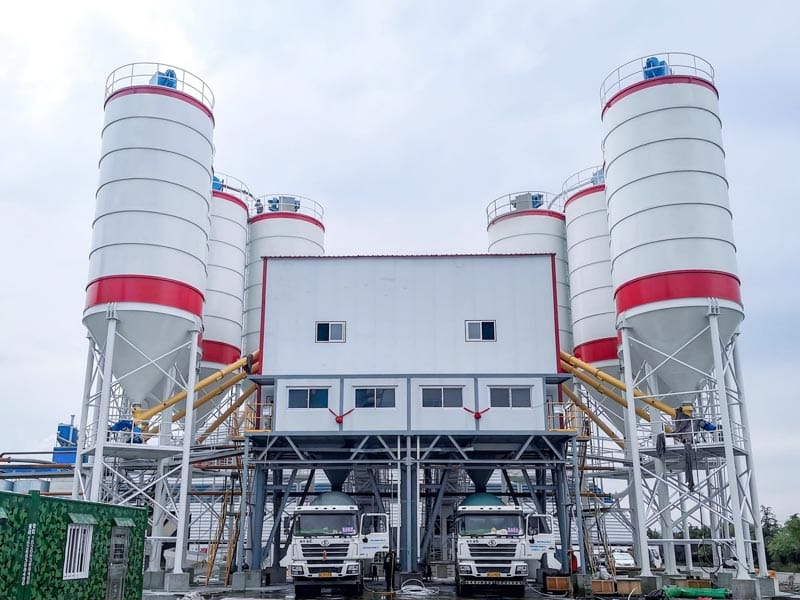
Cement weighing is a critical part of concrete batching because cementitious materials are measured in much smaller quantities than aggregates but have a strong effect on paste volume, water demand, strength development and concrete consistency. A batching plant can have a correctly calibrated cement scale and still produce unstable results if the feeder overshoots, powder […]
การจําแนกประเภททรายแห้ง: การแยกทรายที่มีประโยชน์และค่าปรับส่วนเกิน

Dry sand classification is the stage that turns crushed material into controlled sand fractions instead of leaving the production line with one mixed stream of coarse particles, useful fine aggregate and excess powder. For dry mortar and concrete applications, that separation is essential because different products need different grading and fines conditions. In a manufactured […]
แผงคอนกรีตสําเร็จรูป: ข้อกําหนดของโรงงานแบทช์ที่ต้องตรวจสอบ
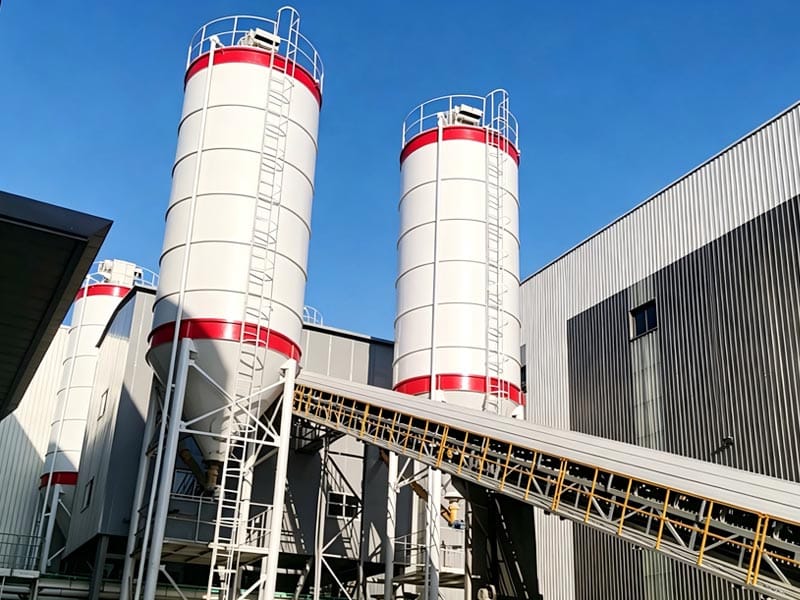
Precast concrete panels place different demands on a batching plant than a general ready-mix operation. The plant has to deliver concrete in the right batch size, at the right consistency, and at the right time for mold filling, reinforcement congestion, architectural finishes and the casting schedule used inside the factory. For equipment buyers, this means […]
แผนผังโรงงานปูนแห้ง: ตั้งแต่การบริโภควัตถุดิบไปจนถึงการจัดส่ง

Dry mortar plant layout should follow the complete material path, not just the position of the mixer. Sand, cementitious powders, fillers, additives and finished mortar all need storage, weighing, transfer and access space. If these routes conflict, a plant with adequate mixer capacity can still lose production time through long transfers, blocked aisles, packaging bottlenecks […]
ไซโลเหนือศีรษะและไซโลที่ติดตั้งด้านข้างในโรงงานผสมคอนกรีต
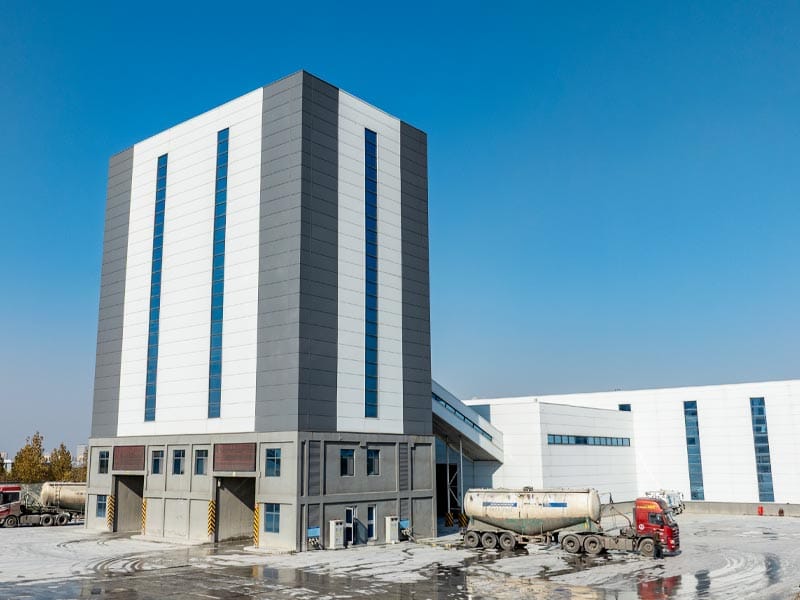
Overhead vs side-mounted silos is primarily a plant-layout decision. It describes where cement, fly ash and other powder silos are positioned relative to the main mixing building. It does not describe how aggregates reach the mixer, because aggregate transfer can use belt conveyors or skip hoists under either general layout concept. For buyers, this distinction […]
สะพานกระโดดในโรงงานปูนแห้ง: สาเหตุและการตรวจสอบการออกแบบ

Hopper bridging in dry mortar plants can stop material flow even when a storage bin still contains plenty of product. Fine sand, cement, fillers and additives can form a stable arch above the outlet, leaving the feeder starved while material remains suspended inside the hopper. For plant teams, the problem is more serious than a […]
สรุปโครงการโรงงานผสมคอนกรีต: คุณควรรวมอะไรไว้ด้วย?
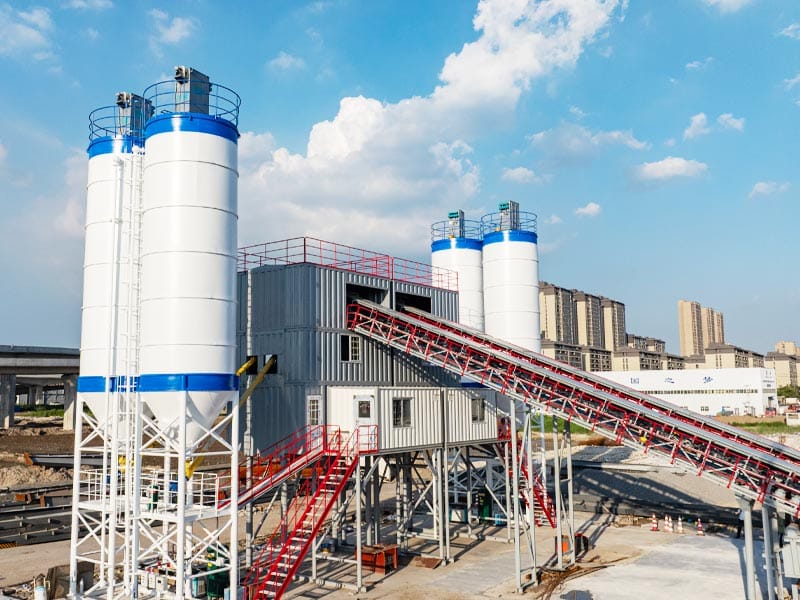
A concrete batching plant project brief should give the equipment supplier enough information to understand how the plant will actually be used. A request that says only “We need a 120 m³/h batching plant” leaves too many unanswered questions about concrete type, peak demand, aggregate supply, truck flow, site conditions, utilities and automation. For buyers, […]
ทรายละเอียดสําหรับปูน: เหตุใดช่วงขนาดเดียวจึงไม่เหมาะกับทุกผลิตภัณฑ์
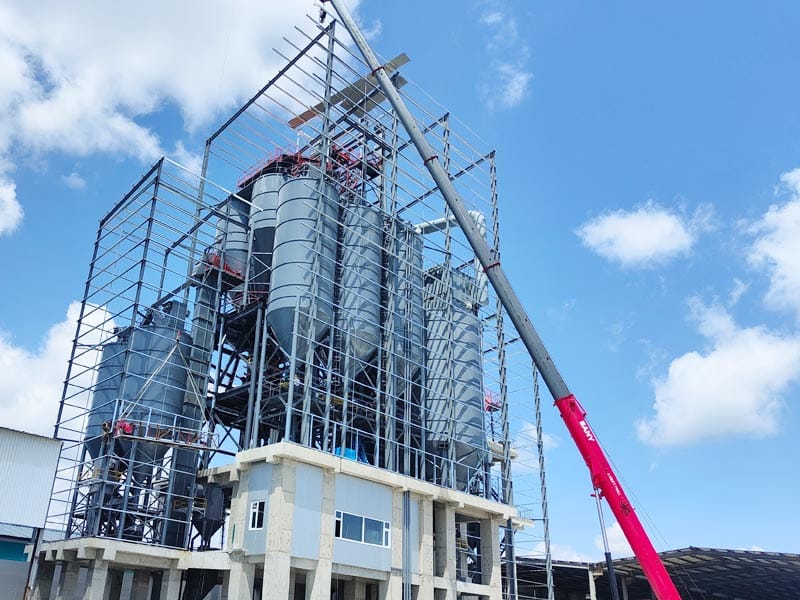
Fine sand for mortar is not a single universal material. Masonry mortar, tile adhesive, self-leveling mortar, waterproof mortar and repair mortar can all use fine aggregate, but they do not necessarily need the same particle-size distribution, powder content, particle shape or sand fraction. For dry mortar producers, the practical question is therefore not “What is […]
ซีลเพลาผสมคอนกรีต: สัญญาณเริ่มต้นที่ต้องตรวจสอบ
Concrete mixer shaft seals are critical on twin-shaft mixers because the rotating shafts pass through the mixer housing while concrete, cement paste, wash water and abrasive particles remain inside the mixing chamber. The seal system has to keep the wet mix away from bearings and other mechanical components while allowing the shafts to rotate through […]