สารบัญ
VSI crusher wear parts should be ordered against a confirmed machine configuration and an understandable condition record. A photograph of a worn component may start a supplier discussion, but it rarely contains everything needed to identify the correct replacement or explain why the previous component reached its present condition. Procurement, maintenance and production need a common record that connects the installed part, its operating period and the supplier's acceptance criteria.
This article focuses on inspection information and purchasing decisions. It does not specify wear limits, rotor balancing methods, tightening values or replacement procedures. Those requirements depend on the exact machine and approved component arrangement. Use the manufacturer's current documentation and qualified personnel for the physical work.
Identify the installed VSI crusher wear parts
Start with the machine manufacturer, model, serial number and relevant configuration reference. Record the component identification from the current parts documentation and confirm it against the installed arrangement. A family name or approximate machine size is not a reliable purchasing specification for VSI crusher wear parts.
Check whether the machine has been modified since its original delivery. A replacement rotor, revised component design or approved configuration change may make an old purchase order unsuitable as the sole reference. The current parts list should identify the revision or compatibility information needed by the supplier to confirm the proposed replacement.
Keep photographs with their equipment context. Include an identification view, the component position and a close view of the observed condition, taken under the approved inspection arrangements. Store the images beside the inspection record rather than in a messaging thread with no clear machine, date or part reference.
Define repeatable observations with the supplier
A useful condition record describes what was observed and how it was assessed. Ask the manufacturer which locations and measurements are relevant to the installed VSI crusher wear parts and what documentation applies. Use the same defined references on subsequent inspections so that two records can be compared meaningfully.
Distinguish a measured change from a subjective description. Terms such as heavily worn or still acceptable need an agreed basis if they will support a replacement decision. Where the manufacturer provides an inspection limit, record the applicable document and revision together with the observed value. Do not substitute an online photograph from a different machine for that basis.
Assign the inspection method and interpretation to competent personnel. Measurement access, component condition and the equipment state can affect both the observation and the safety of the work. The record should state who inspected the component, when it was inspected and whether the result was sufficient for a decision or required further supplier review.
Connect wear observations to the operating period
Record the start and end of the installed component's service period using a consistent basis. Operating hours, production quantity and calendar time describe different aspects of that period. If the plant records all three, keep them separate rather than presenting one as a direct substitute for another.
For example, an illustrative component record might show 160 operating hours over 20 calendar days and 6,400 tonnes of recorded feed. Those values describe the observed interval; they do not establish an expected life for other VSI crusher wear parts. Material properties, feed condition, machine arrangement and operating practice can differ between intervals and sites.
Include significant changes during the period. A different feed source, an approved setting change or an unusual operating interruption may help the supplier interpret the observed condition. Record facts with dates and supporting production references. Avoid declaring a single cause merely because one change occurred shortly before the inspection.
Separate normal condition tracking from abnormal findings
The maintenance plan should distinguish a routine observation from a finding that requires escalation under the manufacturer's procedure. Agree who has authority to restrict operation, request further assessment and release the equipment after corrective work. A purchasing lead time should not determine whether an uncertain component remains acceptable for use.
If the inspection identifies a condition outside the documented basis, preserve the evidence and contact the responsible technical specialist. Do not turn the blog's record template into an operating permission. VSI crusher wear parts are part of a rotating equipment system, and the acceptability of one observed feature may depend on the condition of associated components.
เดอะ ISO 12100 overview describes machinery risk assessment and risk reduction across relevant life-cycle phases. It supports requesting a documented approach to maintenance-related risks. It does not provide component wear limits or demonstrate compliance of a particular inspection method.
Specify replacement scope rather than a loose part name
Ask the manufacturer to confirm the appropriate replacement scope for the observed condition and configuration. Some work may involve associated components, fasteners or checks under the applicable maintenance instructions. Procurement should obtain a complete, technically confirmed scope rather than independently deciding that one visible item is the entire job.
For each proposed item, record the approved part number, description, quantity and compatibility reference. Include any required supplier documents and traceability information. When an alternative material or revised component is offered, request a written compatibility decision for the actual machine and intended duty before accepting the substitution.
Keep an approved substitution separate from a simple commercial equivalent. Similar dimensions or a matching generic name do not by themselves establish suitability for VSI crusher wear parts. The technical review should precede the purchase decision, and the resulting authorization should remain attached to the order and installation record.
Compare supplier offers on a consistent evidence basis
A low unit price can be difficult to assess when the offers include different components, documentation or support. Use the same machine identification and condition evidence for each quotation. The comparison below focuses on information quality rather than assuming one supplier or part material will provide a particular service life.
| Review item | Incomplete offer | Better-supported offer | Buyer decision |
|---|---|---|---|
| Compatibility | Generic crusher size | Exact model, configuration and part reference | Does the offer fit the installed arrangement? |
| Replacement scope | One component name | Confirmed quantities and associated items | Is the planned job fully supplied? |
| Technical basis | Unqualified life claim | Applicable inspection and installation documents | Can maintenance evaluate the proposal? |
| Delivery | Dispatch estimate only | Confirmed supply milestone and destination | Can the shutdown plan use this date? |
| Traceability | Unidentified package | Order-linked part identification | Can received items be reconciled? |
If one offer makes a longer-life claim, ask what comparable evidence supports it and what operating conditions apply. Do not turn a sales estimate into a guaranteed maintenance interval. The plant's own controlled records are useful for future comparisons, provided the installed configuration and operating basis are clear.
Plan stock around confirmed lead time and decision windows
Spare-parts planning needs the time between recognizing a likely requirement and receiving a confirmed compatible item. Record the supplier's quotation validity, manufacturing or availability basis, transport milestone and receiving requirements. Keep unconfirmed lead-time assumptions visibly separate from committed dates.
Use the condition history to establish review points with the maintenance team. A trend may justify earlier ordering or a closer inspection interval under the manufacturer's guidance, but it should not be extrapolated into a universal linear wear rule. VSI crusher wear parts can experience different conditions across the service period, and incomplete measurements can produce misleading trends.
Define the stock policy for the approved replacement scope. Consider whether associated items are available, whether stored components remain identifiable and how a revised machine configuration affects existing spares. A warehouse count is useful only if it distinguishes usable compatible stock from items awaiting technical confirmation.
Close the record after the replacement work
After work is completed under the approved procedure, connect the removed component record to the installed replacement. Capture the installed part identification, date, maintenance job reference and required release evidence. Preserve the outgoing component's condition record rather than resetting the history without a link.
Update the parts list if an authorized revision was installed. The next buyer should be able to identify the current arrangement without searching through several years of invoices. Review whether the inspection form needs a revised reference or observation location for the new configuration.
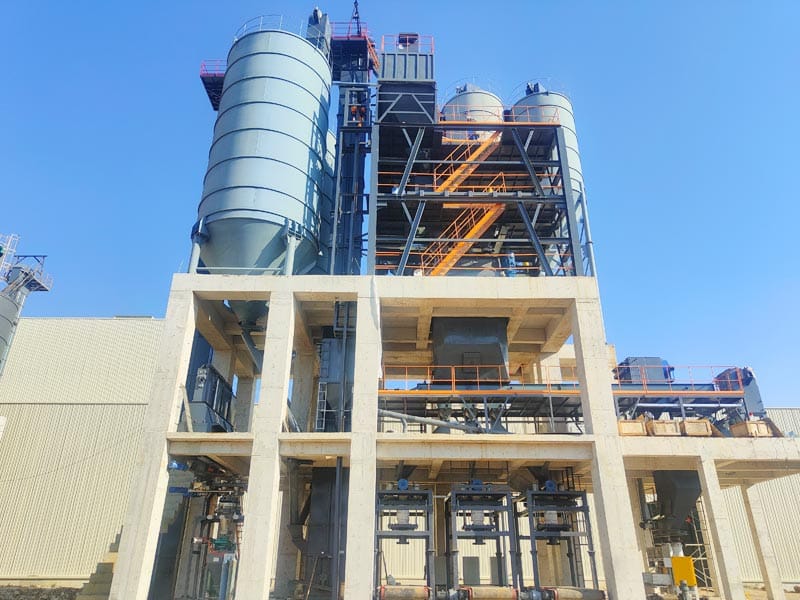
For a wider production-line discussion, review the สายการผลิตทรายที่ผลิต and the โรงงานผลิตทรายและปูนพิเศษแบบครบวงจร. Send the confirmed machine identity, current component references, condition evidence and intended maintenance window when requesting support. A complete record helps the supplier discuss compatible VSI crusher wear parts and the relevant replacement scope without relying on assumptions.
คําถามที่พบบ่อย
Can VSI crusher wear parts be ordered from a photograph alone?
A photograph is supporting evidence. Confirm the machine identity, installed configuration, component reference and required replacement scope with the supplier before ordering.
What is a useful wear-life record?
Keep the installed part identity, inspection dates, defined observations and operating interval. Record significant material or configuration changes so later comparisons have a clear basis.
Can operating hours predict the next replacement date?
Hours can support planning when interpreted with condition evidence and the manufacturer's guidance. They do not establish a universal wear limit or guarantee an acceptable future condition.
How should an alternative component be approved?
Obtain a written compatibility decision for the exact machine, configuration and intended duty. Retain the authorization with purchasing, receiving and installation records.
What should happen after a component is replaced?
Link the removed and installed component records, retain the maintenance and release evidence, and update the current parts list. Start the next condition interval with an identifiable baseline.