Clay contamination in manufactured sand is often confused with high fines content, but these are not the same problem. A manufactured sand can contain a significant amount of clean rock dust without containing harmful clay minerals. Another sand can contain relatively little total fines but still include reactive or plastic clay that affects water demand, admixture response and mortar or concrete consistency.
For equipment buyers and quality teams, this distinction matters because screening or air classification can reduce the quantity of fine particles, but it does not automatically tell you whether those fines are clean crushed-rock powder or clay contamination.
Của chúng tôi dây chuyền sản xuất cát sản xuất combines VSI crushing, circular screening, airflow powder classification and closed-loop return. That system can control grading and powder content, but raw-material quality still needs laboratory verification. This guide explains how to investigate clay contamination in manufactured sand and when equipment adjustment is not enough.
Clay Contamination Is Not the Same as High Fines Content
The first diagnostic step is to separate two questions:
- How much very fine material is present?
- What is that very fine material made of?
A grading or washing test can quantify the amount of fine material passing a selected sieve.
However, particle size alone does not identify mineral type.
Clay contamination in manufactured sand should therefore be evaluated with both quantity and quality tests.
Why the Difference Matters for Manufactured Sand
Manufactured sand is created by crushing rock.
That process naturally produces fine particles of the parent stone.
These clean fracture fines may be much smaller than normal sand grains without behaving like clay.
ASTM D2419 notes this distinction directly: fine aggregates can contain clean dust of fracture that is clay-sized but is not composed of clay minerals. In those cases, other methods such as methylene blue or mineralogical analysis may be needed to judge whether the fines are deleterious.
That is why clay contamination in manufactured sand should not be diagnosed from fines percentage alone.
What Problems Can Clay Cause?
Excess clay in fine aggregate can affect cementitious products in several ways.
Potential effects include:
- higher water demand;
- lower or unstable workability;
- changed admixture demand;
- poor consistency between batches;
- reduced bond or strength performance in some formulations;
- higher sensitivity to moisture changes.
The Concrete Society notes that excessive clay contamination in sand can affect water demand, strength and consistency.
For clay contamination in manufactured sand, the actual impact should be confirmed in the downstream concrete or mortar product rather than assumed from one laboratory number.
Start with a Representative Sample
No test is useful if the sample does not represent production.
Manufactured sand quality can vary because of:
- quarry layer or rock source;
- weathered material;
- stockpile contamination;
- rainfall;
- VSI feed changes;
- screen and classifier settings.
For clay contamination in manufactured sand, take samples that represent normal production and suspected worst-case conditions.
Do not rely on one small sample taken from the surface of a stockpile.
Use Sieve Analysis to Quantify the Fine Fraction
For clay contamination in manufactured sand, the grading curve is the logical starting point.
ASTM C136/C136M is widely used to determine aggregate particle-size distribution.
The result shows whether the manufactured sand contains an unusually large fine fraction compared with normal production.
However, sieve analysis answers a size question, not a mineralogy question.
A high percentage of fine particles does not by itself prove clay contamination in manufactured sand.
Use ASTM C117-Type Testing for Material Finer Than 75 μm
Very fine particles can adhere to larger grains and may not separate completely during dry sieving.
ASTM C117 is used to determine material finer than the 75 μm sieve by washing.
For clay contamination in manufactured sand, this helps quantify the very fine fraction more accurately.
For clay contamination in manufactured sand, this test tells you how much very fine material exists, but not whether that material is clay, clean stone powder or another mineral fraction.
Sand Equivalent Can Be a Useful Screening Test
ASTM D2419 measures the relative proportions of sand-sized particles and clay-size or plastic fines in fine aggregate.
It is commonly used as a rapid field-correlation test.
However, it has an important limitation for manufactured sand.
Clean rock dust can reduce the sand-equivalent result even when the fine particles are not harmful clay minerals.
For that reason, a low sand-equivalent result should trigger further investigation rather than automatically proving clay contamination in manufactured sand.
Methylene Blue Testing Adds Information About Clay Activity
For clay contamination in manufactured sand, methylene blue testing measures how much dye is adsorbed by the fine material.
ASTM C1777 is specifically designed for fine aggregate or mineral filler and states that the methylene blue value is influenced by both the amount and characteristics of clay minerals present.
Higher methylene blue values indicate a greater potential for clay-related performance problems in cementitious mixtures.
This makes methylene blue useful when fines quantity alone cannot explain the behavior.
Do Not Compare Methylene Blue Methods as If They Are Identical
Different methylene blue standards test different particle fractions and use different procedures.
ASTM C1777 specifically warns that its numerical results should not be expected to match values from AASHTO T 330 or EN 933-9.
| Method | General test fraction | Key point |
|---|---|---|
| ASTM C1777 | Fine aggregate/mineral filler fraction defined by the method | Uses colorimeter-based determination |
| AASHTO T 330 | Very fine aggregate fraction | Clay can be concentrated in the tested fines |
| EN 933-9 | 0/2 mm aggregate fraction, with additional fine-fraction provisions | Uses methylene blue adsorption/titration approach |
For clay contamination in manufactured sand, always compare results against the same method and the same project specification.
There Is No Universal Methylene Blue Limit for Every Application
ASTM C1777 does not provide one maximum methylene blue value for all concrete or mortar applications.
Instead, the standard states that suitable limits should be established from successful performance in the intended application.
This is important because the effect of clay contamination in manufactured sand depends on:
- total fines quantity;
- clay mineral type;
- hệ thống xi măng;
- admixture system;
- nhu cầu nước;
- mortar or concrete performance requirements.
A single MB number should therefore not be used as a universal acceptance rule.
EN 933-9 Provides Another Established MB Framework
EN 933-9:2022 specifies a reference methylene blue method for assessing fines in aggregates.
The method can be used for type testing and, with an established relationship, for production control.
For projects using European aggregate specifications, clay contamination in manufactured sand may therefore be assessed through the relevant EN testing framework.
The important point is consistency: use the method required by the project and do not mix thresholds from another test method.
X-Ray Diffraction Can Clarify Mineral Type
If field tests indicate a problem but the result remains unclear, mineralogical analysis can provide additional evidence.
X-ray diffraction can help identify minerals present in the fines.
This can be useful when:
- sand equivalent is low;
- methylene blue results are unusual;
- the source rock changes;
- weathered material is suspected;
- mortar behavior changes unexpectedly.
Clay contamination in manufactured sand is ultimately a mineral-quality question, not only a particle-size question.
Compare Fines Quantity and Clay Activity Together
The most useful interpretation combines fines quantity with a clay-activity indicator.
Consider four simplified cases:
| Fines quantity | Clay activity indicator | Likely interpretation |
|---|---|---|
| Low | Low | Low clay-related concern |
| High | Low | May be mainly clean fracture powder |
| Low | High | Small amount of potentially active clay |
| High | High | Higher risk requiring source/process review |
This table is conceptual only. Final acceptance should follow the applicable standard and product performance requirements.
Source Rock Quality Comes Before Classifier Adjustment
If the fines originate from weathered or clay-rich raw material, changing the air classifier may reduce the quantity of fine material but not improve the quality of the rock entering the process.
For clay contamination in manufactured sand, check:
- quarry face;
- weathered zones;
- soil overburden;
- stockpile contamination;
- feed segregation;
- raw-material handling.
Của chúng tôi manufactured sand raw materials guide explains why parent rock and source consistency should be reviewed before equipment settings are changed.
Air Classification Controls Quantity, Not Mineral Identity
MixingPlantPro’s manufactured sand line uses airflow powder classification after screening.
This stage can adjust the amount of fine powder retained in the finished sand.
However, the classifier does not chemically distinguish clay minerals from clean rock powder.
For clay contamination in manufactured sand, air classification can help manage excessive fines, but it should not be described as a clay-removal guarantee.
Excessive Powder Removal Can Create a New Grading Problem
If operators respond to a clay concern by simply increasing powder removal, they may also remove useful clean fines.
This can make the finished sand:
- coarser;
- less well graded;
- more dependent on filler downstream;
- different in water demand.
The correct response depends on whether the problem is fines quantity, clay mineral quality, or both.
Screening Cannot Solve Clay Mineral Contamination
Vibrating screens separate particles according to size.
If clay contamination exists within the same fine size range as useful stone powder, normal dry screening cannot selectively remove it.
Manufactured sand screening should therefore be used for grading control, while clay quality is verified through the appropriate test program.
Của chúng tôi manufactured sand screening guide explains how screen cuts should be selected from the required particle fractions.
Stockpile Management Can Prevent New Contamination
Even clean manufactured sand can become contaminated after production.
Potential sources include:
- soil under the stockpile;
- dirty loader tires;
- mixing with unprocessed feed;
- surface runoff;
- windblown fines;
- cross-contamination between bins.
For clay contamination in manufactured sand, the investigation should include finished-product storage and handling, not only the crusher and classifier.
Rainfall Can Change Both Moisture and Apparent Fines Behavior
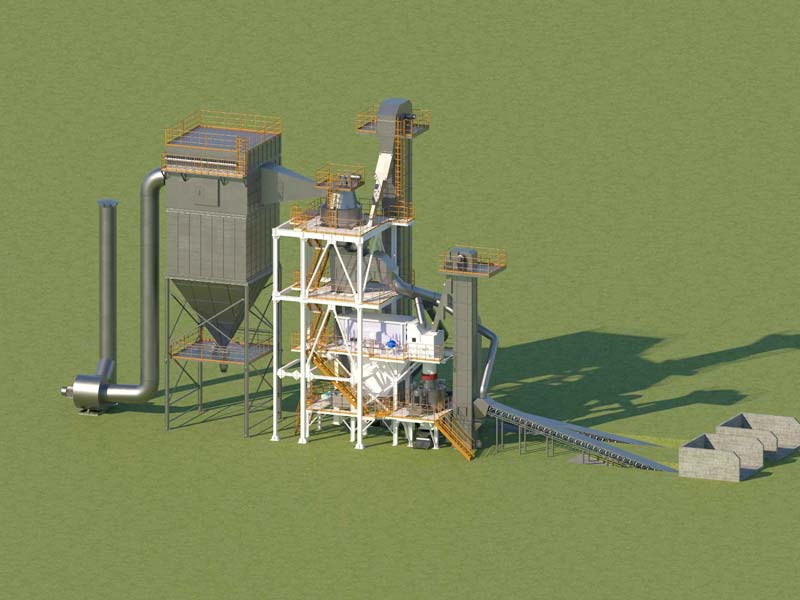
Rain can introduce moisture and wash soil contamination into stockpiles.
Wet fine material can also stick to larger particles.
Điều này có thể thay đổi:
- lấy mẫu;
- sàng lọc;
- classifier performance;
- mật độ khối;
- downstream mortar water demand.
When investigating clay contamination in manufactured sand, record weather and stockpile conditions with the laboratory result.
Downstream Mortar Testing Is the Final Performance Check
Laboratory aggregate tests help identify material risk, but the finished mortar still needs to prove performance.
For an integrated sand-and-mortar line, compare sand test results with:
- mortar water demand;
- fresh flow;
- open time where relevant;
- setting behavior;
- bond performance;
- strength;
- product-specific durability.
Của chúng tôi nhà máy sản xuất cát và vữa đặc biệt tích hợp connects sand preparation with downstream mortar production, which makes this source-to-product quality relationship especially important.
Admixture Demand Can Be a Useful Warning Signal
Clay minerals can interact strongly with some chemical admixtures and polymers.
If a previously stable concrete or mortar suddenly needs more admixture to achieve the same workability, investigate:
- aggregate moisture;
- sand grading;
- fines quantity;
- clay activity;
- cement or polymer changes.
Clay contamination in manufactured sand is one possible cause, but it should be confirmed rather than assumed.
Trend Results by Source and Date
One MB or sand-equivalent result provides only a snapshot.
For production control, track:
- raw-material source;
- sample date;
- fines percentage;
- sand-equivalent result;
- methylene blue result;
- finished grading;
- mortar or concrete test result.
This can show whether deterioration follows a particular quarry zone or production period.
Do Not Mix Results from Different Test Methods in One Trend Line
Because MB methods use different sample fractions and procedures, their numerical results are not directly interchangeable.
If the laboratory changes from one test method to another, start a new control series or establish a validated correlation.
For clay contamination in manufactured sand, method consistency is essential for useful trend analysis.
Use a Decision Tree Instead of One Pass/Fail Number
A practical investigation can follow this sequence:
| Step | Câu hỏi | Next action |
|---|---|---|
| 1 | Has grading or fines quantity changed? | Check sieve/C117-type results |
| 2 | Are fines potentially clay-rich? | Use sand equivalent or methylene blue as applicable |
| 3 | Is the result source-related? | Compare quarry zones and stockpiles |
| 4 | Can classification correct quantity only? | Adjust classifier cautiously if appropriate |
| 5 | Does downstream product still perform? | Confirm with mortar/concrete tests |
This approach separates source quality from equipment settings.
How the MixingPlantPro Sand Line Fits the Investigation
The current MixingPlantPro manufactured sand line uses:
- prepared 5–15 mm stone feed;
- VSI sand making and shaping;
- circular vibrating screen grading;
- airflow powder classification;
- closed-loop return;
- negative-pressure dust collection.
That configuration provides tools to control particle size and fine-powder quantity.
It should still be paired with raw-material testing where clay contamination in manufactured sand is a project concern.
Do Not Treat the Published MB Value as a Universal Specification
The current product page publishes a methylene blue value as part of its technical data.
That number should be interpreted within the stated equipment/product context and the test method used.
It should not automatically be applied as a universal acceptance threshold for every:
- concrete specification;
- dry mortar product;
- aggregate source;
- regional standard;
- methylene blue test method.
Project acceptance should follow the required standard and validated downstream performance.
Commissioning Should Include Raw-Material Quality Baselines
When a new sand line is commissioned, establish baseline test results for representative feed and finished sand.
Kỷ lục:
- source rock;
- feed grading;
- finished grading;
- fines percentage;
- methylene blue or other clay-related test where required;
- cài đặt phân loại;
- downstream mortar or concrete performance.
These baseline results make later clay contamination investigations much faster.
What Should Buyers Send for a Clay and Fines Review?
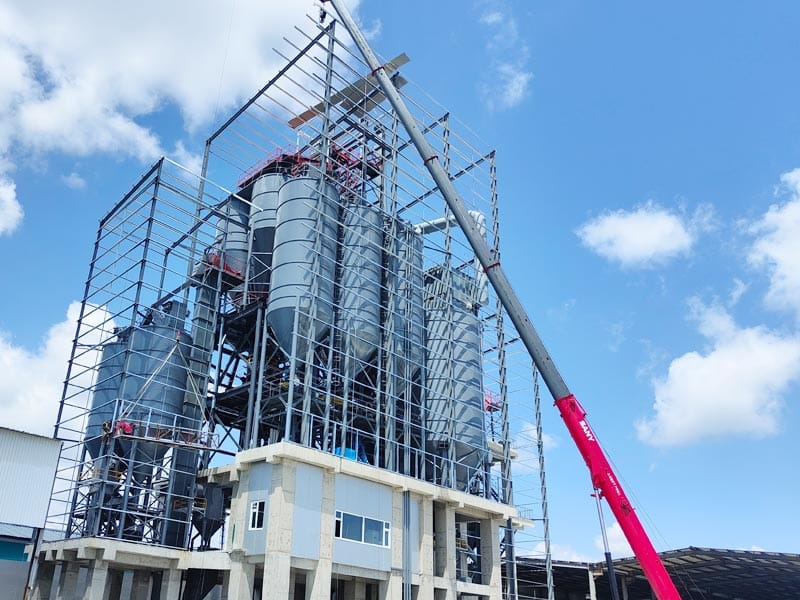
A useful project review should include both raw-material and finished-sand data.
Cung cấp:
- parent rock;
- quarry or source description;
- feed grading;
- finished sand grading;
- percentage of very fine material;
- sand-equivalent data where available;
- methylene blue results and test method;
- moisture condition;
- target concrete or mortar products;
- observed performance problem.
Của chúng tôi giải pháp cát sản xuất can then be reviewed around both process control and the actual raw-material quality.
Send your sand test data and target mortar or concrete specification through our trang liên h for a project-specific review.
Kết luận
Clay contamination in manufactured sand cannot be diagnosed from fines percentage alone. Clean crushed-rock powder and harmful clay can occupy similar particle-size ranges but behave very differently in cementitious products.
A reliable investigation combines grading, very-fine-material measurement, sand-equivalent or methylene-blue testing where appropriate, raw-material source review and downstream mortar or concrete performance.
Screening and air classification can control particle-size distribution and powder quantity, but they do not replace mineral-quality testing. The strongest process decision identifies whether the real problem is too many fines, poor-quality fines, or both before the equipment settings are changed.
Câu hỏi thường gặp
Is high fines content the same as clay contamination in manufactured sand?
No. High fines can consist mainly of clean crushed-rock powder. Clay contamination refers to clay minerals or plastic fines that can affect cementitious mixture behavior.
What test can identify clay in manufactured sand?
Methylene blue tests are commonly used to assess clay-related activity in fine aggregate. Sand equivalent can also be useful as a screening test, while mineralogical methods such as XRD can provide further clarification.
Can air classification remove clay from manufactured sand?
Air classification can reduce the amount of very fine material, but it does not selectively identify clay minerals. Raw-material quality still needs suitable testing.
Why can two methylene blue tests give different values?
Different standards test different particle-size fractions and use different procedures. Results should be compared only within the same method unless a validated correlation has been established.
What information should I provide for a clay contamination review?
Provide source rock, grading, fines percentage, sand-equivalent or methylene-blue results with the test method, moisture condition and any observed concrete or mortar performance problems.