
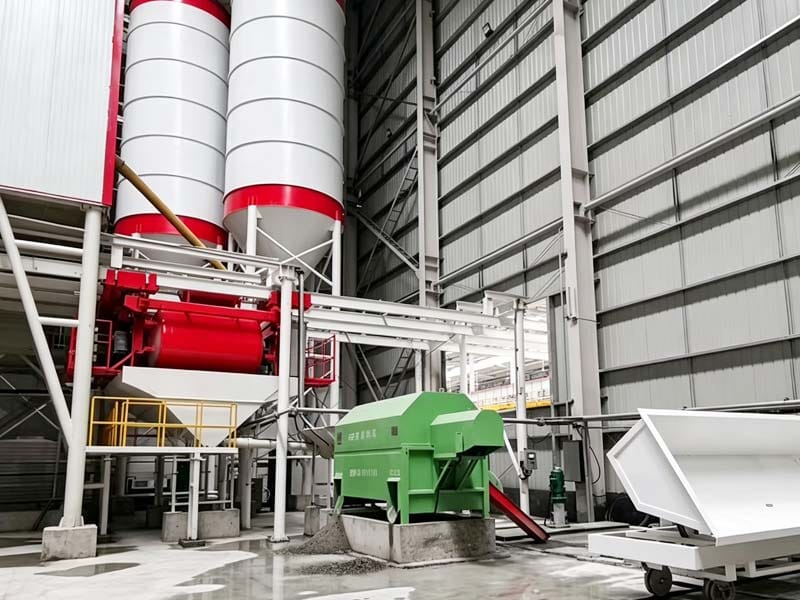
Concrete mixer maintenance should focus on the parts that directly control mixing, discharge and mechanical reliability. In a batching plant, the mixer is exposed to abrasive aggregate, cement paste, vibration, repeated starts and stops, and frequent cleaning. Wear that begins as a small clearance change or material buildup can eventually affect mixing efficiency, discharge time and unplanned downtime.
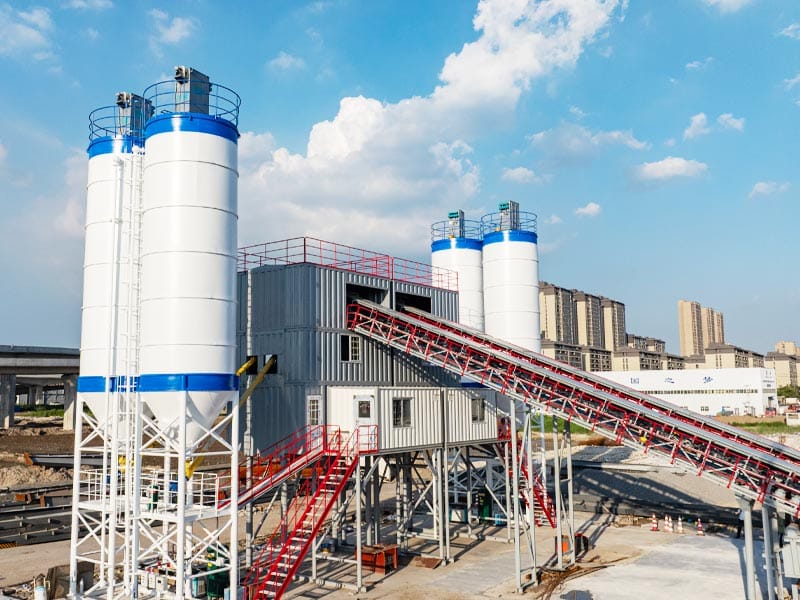
The maintenance strategy should therefore be tied to the actual mixer configuration. Our mobile concrete batching plant uses a twin-shaft forced mixer with multiple shaft-end seals, while our precast concrete batching plant uses a vertical-shaft planetary mixer with multiple discharge doors. The inspection points are related, but they are not identical.
This guide explains how plant teams can structure concrete mixer maintenance around wear parts, shaft seals, discharge systems, lubrication, cleaning and safe inspection without relying on generic replacement intervals that may not match the actual mixer or operating duty.
Why Concrete Mixer Maintenance Needs a Separate Inspection Plan
A general batching plant maintenance checklist may cover conveyors, scales, compressors, dust collection and electrical systems. Concrete mixer maintenance deserves its own inspection plan because the mixer handles every batch and directly affects the condition of the concrete leaving the plant.
Wear inside the mixer is not always visible from the control room. A worn liner, loose mixing arm or hardened buildup can develop gradually while the plant continues to run. Operators may first notice longer mixing cycles, abnormal noise, higher drive load or incomplete discharge.
| Inspection area | What to observe | Why it matters |
|---|---|---|
| Mixing tools | Wear, looseness, deformation and material buildup | Changes how materials move through the chamber |
| Wear liners | Thickness loss, cracks and exposed base structure | Protects the mixer body from abrasive material |
| Shafts and seals | Leakage, contamination and abnormal movement | Helps protect bearings and drive components |
| Discharge system | Gate movement, sealing and residual concrete | Affects cycle time and complete batch release |
| Drive and lubrication | Temperature, leakage, lubricant condition and abnormal sound | Supports reliable mechanical operation |
Concrete mixer maintenance should use this type of component-based inspection rather than one general instruction to “check the mixer regularly.”
Lock Out the Mixer Before Internal Inspection
Internal inspection is one of the highest-risk parts of concrete mixer maintenance because the mixer contains powered mixing tools, stored energy and potentially pneumatically or hydraulically operated discharge components.
OSHA’s requirements for concrete and masonry equipment state that maintenance or repair work must not be performed where inadvertent equipment operation could cause injury unless hazardous energy sources have been locked out and tagged.
In general industry settings, OSHA’s control of hazardous energy standard similarly requires energy-control procedures for servicing and maintenance where unexpected startup or stored-energy release could cause injury.
For concrete mixer maintenance, the site procedure should identify all energy sources affecting the mixer, which may include electrical power to the mixer drive, pneumatic or hydraulic energy for discharge gates, water or cleaning systems, upstream material that could fall into the mixer, and gravity or stored mechanical energy in connected equipment.
Do not enter the mixer because the control screen shows “stopped.” Use the approved isolation procedure and verify the safe condition before inspection.
Inspect Mixing Blades and Arms for Wear Patterns
Mixing blades and arms are among the most obvious concrete mixer maintenance points because they are continuously exposed to abrasive materials.
Plant teams should inspect for uneven wear, damaged edges, loose fasteners, deformation and hardened concrete buildup. Uneven wear can reveal that material is not moving through all areas of the mixer in the same way.
Do not set a universal blade-replacement interval without the mixer manufacturer’s data and site wear history. Aggregate hardness, batch frequency, concrete type and cleaning practice can all change wear rates.
A better concrete mixer maintenance approach is to record actual component condition at each planned inspection. If one blade location consistently wears faster than the others, investigate the local material flow and nearby liner condition rather than simply replacing every blade on the same calendar date.
Our existing batching plant maintenance checklist already identifies mixing blades, liners, arms and shafts as important maintenance points. This article narrows that broader plan specifically to the mixer.
Check Wear Liners Before the Mixer Body Is Exposed
Wear liners protect the structural body of the mixer from direct abrasion. Once a liner is worn through, the repair can become more complicated than replacing a sacrificial wear component.
Concrete mixer maintenance should therefore include visual or measured liner-condition checks according to the mixer documentation.
Inspect areas of visibly accelerated wear, cracks or loose liner sections, missing fasteners, material trapped behind liners, and contact between worn mixing tools and liner surfaces.
Do not infer an acceptable remaining thickness from a generic online value. The replacement criterion should come from the supplied mixer manual, drawing or engineering guidance for the specific mixer.
The objective is to replace the liner while it is still doing its intended job.
Twin-Shaft Mixer Maintenance Should Include Shaft-End Seals
On a twin-shaft mixer, the shaft passes through the mixer housing, so shaft-end sealing becomes a critical concrete mixer maintenance area.
Our mobile concrete batching plant uses a twin-shaft forced mixer with multiple shaft-end seals intended to help the mixer operate in dusty outdoor conditions. That design feature should be supported by inspection of the sealing area during service.
Look for cement slurry or water leakage around the shaft end, unusual grease or lubricant contamination, damaged protective covers, abnormal temperature, and new vibration or noise near the bearing and seal area.
Leakage should be investigated rather than treated as a normal housekeeping issue. Concrete paste reaching the wrong side of a seal can damage adjacent components and turn a relatively small maintenance task into a larger repair.
Concrete mixer maintenance records should identify which shaft end showed the symptom and whether it appeared during particular concrete products or operating conditions.
Planetary Mixer Maintenance Has Different Inspection Priorities
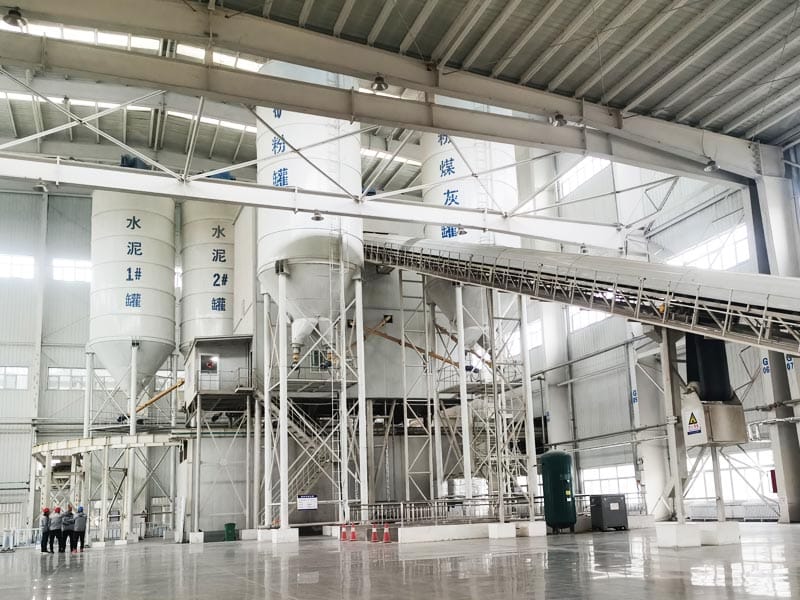
A planetary mixer does not use the same horizontal twin-shaft architecture. The mixing tools revolve through the pan while also rotating around their own axes, so maintenance should reflect that mechanical arrangement.
Our precast concrete batching plant uses a vertical-shaft planetary mixer. For concrete mixer maintenance on this type of equipment, review the planetary drive system, mixing arms, scrapers, pan liners and discharge doors according to the supplied documentation.
Precast production can also involve smaller batches, stiff concrete or frequent recipe changes. These operating patterns can affect where material buildup occurs and how quickly wear develops.
Do not transfer a twin-shaft maintenance checklist directly to a planetary mixer. The general principles are similar—inspect mixing tools, wear surfaces, drive components and discharge—but the actual inspection locations and service procedures differ.
Inspect the Discharge Gate as Part of the Mixer Cycle
Concrete mixer maintenance should treat the discharge gate as part of the production cycle rather than an accessory below the mixer.
A gate that opens slowly, fails to close completely or accumulates hardened material can increase cycle time and leave residue inside the mixer.
Check full opening and closing movement, position feedback where fitted, seal condition, material buildup around the gate, actuator condition and leakage during mixing.
On the precast concrete batching plant, multiple discharge doors can serve different delivery routes. Concrete mixer maintenance should therefore verify each installed outlet rather than assuming one functioning gate proves the whole discharge system is ready.
If a gate is slow, investigate the complete actuation system before adjusting the control sequence. Low air pressure, restricted valves, buildup or mechanical resistance can create similar symptoms.
Cleaning Should Remove Buildup Without Damaging Components
Hardened concrete buildup changes the internal geometry of the mixer and can interfere with mixing tools, discharge gates and inspection access.
Concrete mixer maintenance should include a defined cleaning procedure that is compatible with the mixer materials and safety requirements.
Do not improvise by striking structural components, bypassing guards or entering the mixer without isolation. Mechanical cleaning, washing or other methods should follow the equipment instructions and site procedure.
After cleaning, inspect the surfaces that were previously hidden by buildup. This is often the best time to identify liner wear, loose fasteners, cracks or damage to mixing tools.
Cleaning is not complete simply because the mixer looks empty from above. Check corners, discharge areas and surfaces where paste typically accumulates.
Lubrication Should Follow the Actual Mixer Manual
Lubrication is important in concrete mixer maintenance, but universal grease quantities or service intervals should not be copied from another machine.
The correct lubricant type, amount, point and interval depend on the installed bearings, seals, gearbox and lubrication system.
Plant teams should confirm approved lubricant specifications, automatic versus manual lubrication points, reservoir level, blocked or damaged lubrication lines, evidence that lubricant is reaching the intended point, and contamination or water ingress.
If an automatic system is installed, a full reservoir does not prove every point is receiving lubricant. Inspect distribution lines and alarms according to the system documentation.
Concrete mixer maintenance should record lubricant consumption trends. A sudden increase or decrease can provide useful diagnostic information.
Monitor Drive Temperature and Abnormal Noise
Operators often notice changes in sound before a mechanical fault becomes obvious. Concrete mixer maintenance should therefore combine planned inspection with daily observation.
Record abnormal gearbox noise, bearing noise, vibration and temperature changes. Compare them with the normal condition of the same mixer rather than a generic temperature or sound limit from another machine.
If the control system provides motor current or drive status, trend those values under comparable batch conditions. A gradual increase in load can indicate buildup, worn components, abnormal concrete consistency or mechanical resistance.
Do not use current alone to identify the cause. A stiff concrete batch and a developing mechanical problem can both increase load. Compare the electrical signal with the batch record and physical inspection.
Use Mixing Performance as a Maintenance Signal
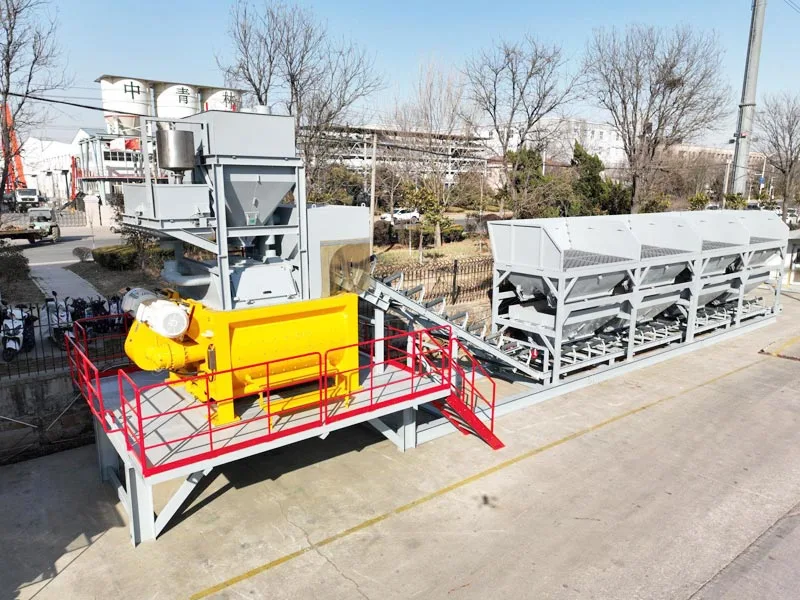
Concrete mixer maintenance should also consider changes in production performance.
If mixing time must gradually increase to achieve the same concrete result, inspect the mixer condition before assuming the mix design needs modification.
Possible contributors can include worn mixing tools, changed clearances, material buildup, damaged liners, incorrect ingredient sequence and changes in raw materials.
The mixer should not be blamed automatically, but a repeatable performance change is useful maintenance evidence.
For precast production, compare mixer condition with fresh-concrete test results and batch records. For commercial concrete plants, compare cycle time and concrete consistency under similar recipes.
Do Not Confuse Mixer Maintenance with Mix-Design Correction
When concrete consistency changes, operators may try to compensate by changing water or admixture dosage. That can hide a mechanical problem inside the mixer.
Concrete mixer maintenance should be considered when concrete behavior changes despite stable materials, moisture correction and batching quantities.
A useful diagnostic sequence is to confirm the recipe, check aggregate moisture, review target and actual batch weights, review water and admixture additions, confirm mixing sequence and duration, and inspect the mixer if the process data remain normal.
This prevents the plant team from changing the approved mix design to compensate for wear or buildup.
Plan Inspection Frequency from Duty and Condition
Concrete mixer maintenance intervals should be based on the equipment manual, actual production duty and inspection findings.
A plant mixing abrasive aggregate for long production shifts may need more frequent inspection than a plant operating fewer batches with less abrasive material. Similarly, frequent product changes can increase cleaning demand.
| Inspection item | Record | How the history helps |
|---|---|---|
| Mixing blades and arms | Wear pattern and replacement history | Shows which positions wear fastest |
| Liners | Condition at each inspection | Helps predict when protection is approaching its limit |
| Shaft seals | Leakage or contamination observations | Shows developing seal problems |
| Discharge gate | Movement, leakage and residue | Links gate condition with cycle delays |
| Drive | Noise, vibration and temperature trend | Provides early warning of mechanical change |
Concrete mixer maintenance becomes more useful when every inspection adds to this history.
Keep the Maintenance Area Accessible in the Plant Layout
Mixer maintenance depends on physical access. A well-designed plant should allow technicians to reach inspection doors, drive components, lubrication points and discharge equipment without dismantling unrelated systems.
Our broader batching plant maintenance guide recommends considering maintenance access before the plant is purchased.
For the mixer specifically, ask how wear parts are removed, what lifting equipment is needed, whether the drive can be accessed from a safe platform, whether liners can be replaced without removing unrelated equipment, whether there is sufficient clearance below the discharge gate, and whether technicians can isolate and inspect the mixer without blocking essential site traffic.
A compact layout that prevents practical service access can create longer shutdowns later.
Verify the Mixer After Maintenance Before Returning to Production
Concrete mixer maintenance is not finished when the tools are put away. The team should verify that the mixer is ready to return to service.
After work is completed and before energy is restored, OSHA’s lockout/tagout requirements call for inspecting the work area, ensuring nonessential items are removed and confirming employees are safely positioned before startup.
For the mixer, the restart check can include all guards and access doors restored, tools and loose parts removed, mixing arms and liners securely installed, lubrication system restored, discharge gate functioning correctly, control feedback and interlocks operating, and abnormal noise or vibration absent during controlled restart.
After major work, run an agreed test sequence before returning immediately to full production. The exact verification should match the work performed.
Use Maintenance Records to Improve Spare-Parts Planning
Concrete mixer maintenance records can support more accurate spare-parts planning.
Instead of stocking components only from a generic recommendation, combine the supplier’s spare-parts list with actual wear history.
Track part identification, installation date, inspection observations, replacement date, reason for replacement, and concrete or aggregate conditions associated with accelerated wear.
This history helps the plant distinguish predictable wear parts from unusual failures.
For project planning, discuss critical spares during equipment procurement so the maintenance team knows which components have long replacement lead times or require special lifting or tooling.
What Should Buyers Ask About Mixer Maintainability?
Concrete mixer maintenance should be part of equipment selection, not only an operating concern after commissioning.
Before approving a plant, ask the supplier for the mixer type and maintenance manual, wear-part drawings, liner and mixing-tool replacement method, shaft-seal arrangement for twin-shaft mixers, planetary drive and arm access for precast mixers, lubrication points, discharge-gate service method, recommended critical spares, and access and lifting requirements.
Our customized plant configuration service can incorporate maintenance access into the layout review rather than treating the mixer as a sealed box in the center of the plant.
Send your concrete products, production schedule and site conditions through our contact page for a plant configuration review.
Conclusion
Concrete mixer maintenance works best when plant teams inspect the components that actually control mixing and discharge: blades, arms, liners, seals, drive components, lubrication systems and discharge gates.
Twin-shaft and planetary mixers share common maintenance principles, but their mechanical layouts require different inspection points. Maintenance intervals should follow the equipment manual and actual duty rather than a universal calendar rule.
Most importantly, internal mixer work should be performed under a defined hazardous-energy control procedure, followed by a controlled restart and verification before the plant returns to normal production.
FAQ
What should be included in concrete mixer maintenance?
Concrete mixer maintenance should cover mixing blades and arms, wear liners, shafts and seals, lubrication, drive condition, discharge gates, buildup, cleaning and safe access. The exact inspection points depend on whether the mixer is twin-shaft, planetary or another design.
How often should a concrete mixer be inspected?
Use the mixer manufacturer’s maintenance instructions together with actual production duty and condition history. Aggregate abrasiveness, batch frequency and cleaning requirements can change the appropriate inspection frequency, so one universal interval should not be applied to every plant.
What are signs that mixer wear may be increasing?
Possible signs include longer mixing cycles, abnormal noise, increasing motor load, incomplete discharge, visible leakage, uneven wear or changes in concrete consistency. These symptoms should be investigated together with batch and material data.
Why are shaft-end seals important on a twin-shaft mixer?
The shaft passes through the mixer housing, so the seal helps prevent concrete paste and contamination from reaching adjacent mechanical components. Leakage around the shaft end should be investigated as part of concrete mixer maintenance.
Should the mixer be tested after maintenance?
Yes. After the work area is restored and hazardous-energy controls are properly removed, the team should perform an appropriate controlled restart and verify the functions affected by the maintenance before returning to full production.


