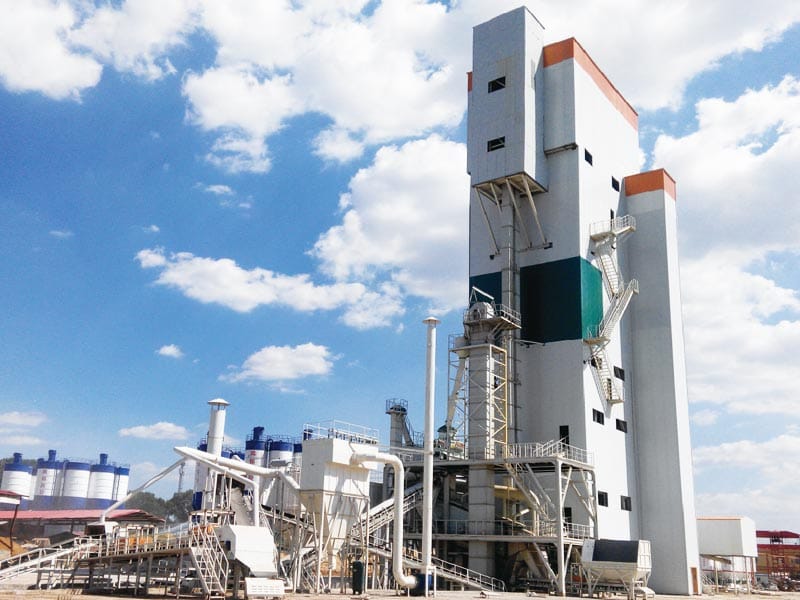
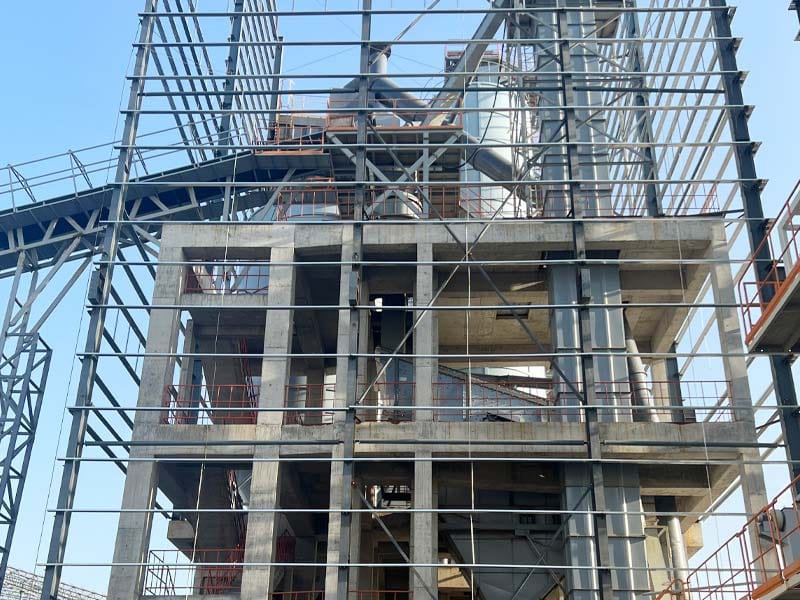
Manufactured sand capacity should be defined carefully because one production line can have several different capacity numbers at the same time. Fresh feed entering the plant, material circulating internally, screen throughput, air-classifier feed and final accepted sand are not the same quantity.
For equipment buyers, this distinction matters when comparing quotations. A supplier may state an hourly throughput for the line, while the buyer actually needs a guaranteed quantity of finished 0–3 mm sand that meets a specific grading and fines requirement. Those two numbers should never be assumed to be identical without a material balance.
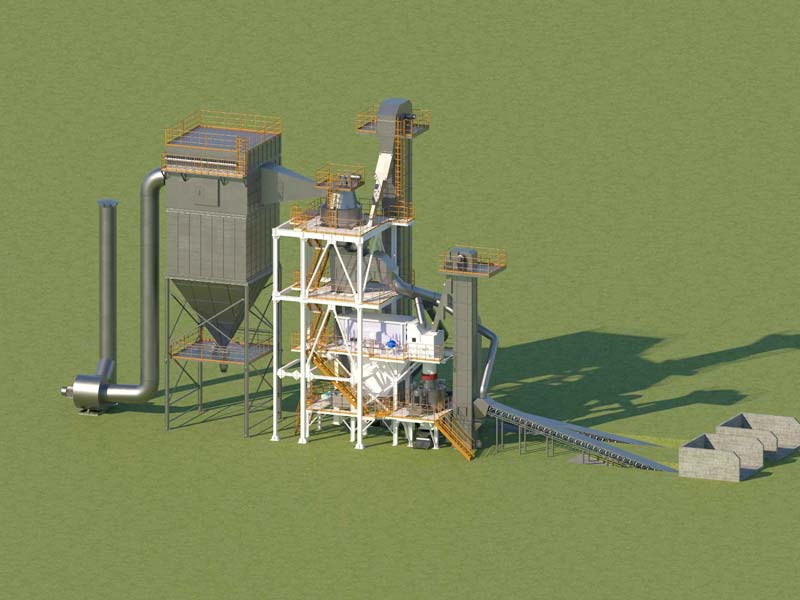
Naše výrobní linka na výrobu písku uses prepared 5–15 mm stone, VSI sand making, circular screening, airflow powder classification and closed-loop return. This guide explains how manufactured sand capacity should be evaluated from fresh feed to finished product.
What Does Manufactured Sand Capacity Actually Mean?
The word capacity can describe several different process points.
Manufactured sand capacity may refer to:
- fresh raw-material feed rate;
- VSI feed rate;
- screen throughput;
- air-classifier feed rate;
- qualified finished-sand output;
- total output including separate powder or other fractions.
A useful quotation should state exactly which process stream the capacity number represents.
Fresh Feed Is the External Input to the Plant
Fresh feed is new raw material entering the manufactured sand system.
In the current MixingPlantPro process, prepared 5–15 mm stone enters the sand maker through a belt conveyor.
For manufactured sand capacity, fresh feed should be measured separately from material that has already passed through the plant and is returning for another crushing cycle.
Finished Sand Output Is the Accepted Product
Finished sand output is the quantity that:
- passes the required screening stage;
- meets the intended particle-size specification;
- passes powder classification;
- enters the finished-product storage system.
This is the quantity most buyers actually need for production planning.
Manufactured sand capacity should therefore include a clear statement of finished accepted output, not only equipment feed rate.
The MixingPlantPro Process Includes Closed-Loop Return
The current MixingPlantPro manufactured sand line uses the following process:
Prepared 5–15 mm stone → VSI sand making and shaping → circular screening → airflow powder classification → qualified 0–3 mm manufactured sand → unqualified material returned to the VSI.
Because unqualified material returns to the sand maker, some material passes through part of the process more than once.
That internal circulation affects equipment load but does not automatically increase manufactured sand capacity at the finished-product outlet.
Recirculating Load Is Not Additional Production
Suppose a plant receives 100 t/h of fresh feed and 25 t/h of oversize is returned internally.
The VSI may temporarily handle:
100 t/h fresh feed + 25 t/h return = 125 t/h combined internal feed.
However, that does not mean the plant produces 125 t/h of new finished sand.
The 25 t/h return is material already counted in the original 100 t/h external feed.
Naše průvodce recirkulací výroby písku explains this distinction in more detail.
Use a Mass Balance to Compare Capacity Numbers
| Process stream | Example flow | Capacity meaning |
|---|---|---|
| Čerstvé krmivo | 100 t/h | New material entering the plant |
| Internal return | 25 t/h | Recirculated material, not new production |
| Combined VSI load | 125 t/h | Internal equipment load |
| Accepted finished sand | 80 t/h | Usable product output |
| Separated powder / other stream | 20 t/h | Separate external output |
The values above are illustrative only.
The principle is what matters: manufactured sand capacity should be supported by a material balance that accounts for all external outputs and internal returns.
Do Not Equate Hourly Throughput with Finished Sand Automatically
The current MixingPlantPro product page publishes an hourly throughput figure for the manufactured sand line.
That number should be read as the stated throughput parameter for the equipment configuration, not automatically as a guaranteed net finished-sand output under every raw material and product specification.
Manufactured sand capacity at the final product bin depends on:
- klasifikace krmiva;
- source rock;
- screen cut points;
- vratné zatížení;
- powder removal;
- target grading;
- accepted product definition.
Sand Yield Connects Feed to Finished Product
Sand yield describes how much of the processed material becomes the target sand product under defined conditions.
The current MixingPlantPro page publishes a sand-yield range together with its throughput data.
That is useful because manufactured sand capacity should not be interpreted from throughput alone.
For project evaluation, ask:
- What material stream is used as the yield denominator?
- What qualifies as finished sand?
- Is separated powder counted as product?
- Is oversize return excluded from final output?
Feed Grading Can Change Finished Yield
Prepared feed containing more near-product-size particles can behave differently from feed dominated by larger particles.
For manufactured sand capacity, record the complete feed grading rather than only saying “5–15 mm.”
Useful data include:
- percentage below 5 mm;
- percentage between major size bands;
- percentage near 15 mm;
- oversize contamination;
- fine-powder content.
Naše manufactured sand feed size guide explains why consistent prepared feed supports more predictable plant performance.
Parent Rock Affects Process Capacity
Different rock types respond differently to VSI crushing.
Changes in:
- hardness;
- abrasiveness;
- fracture behavior;
- natural fines;
- kontaminace jílem;
can change both equipment load and finished yield.
Manufactured sand capacity should therefore be reviewed using representative raw material.
VSI Settings Affect Both Throughput and Product Shape
VSI operation is not only about maximizing tonnes per hour.
Rotor speed and operating condition influence:
- rozbití částic;
- tvar;
- výroba prášku;
- wear;
- internal return.
If the VSI is adjusted only for higher throughput, the resulting product may no longer meet the target grading or shape requirement.
Manufactured sand capacity should always be tied to an accepted product specification.
Screen Capacity Can Become the Bottleneck
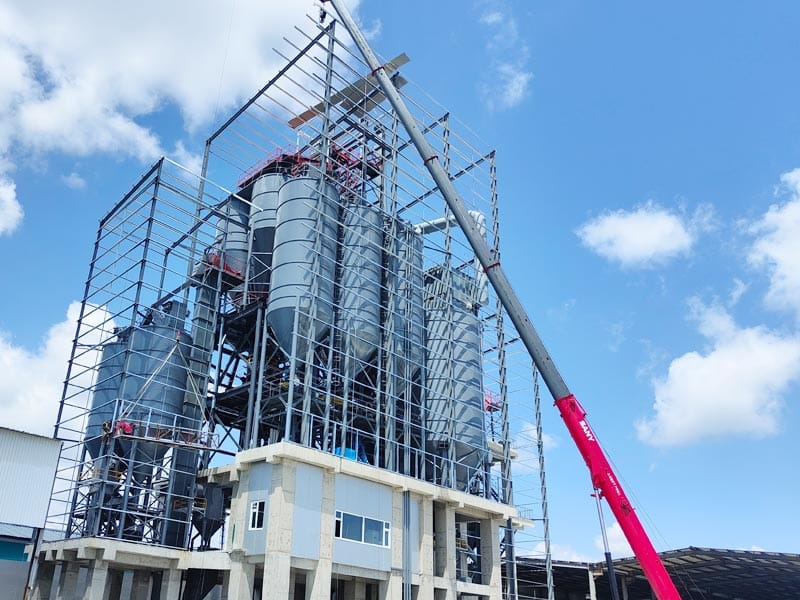
The screen has to classify the full material stream passing through the circuit.
If internal return increases, the screen can process more material than the external fresh-feed rate suggests.
High screen loading can reduce separation efficiency and send correctly sized material back into the return stream.
Aggregate-industry guidance also identifies screening as a common bottleneck when return rates become high.
Screen Blinding Can Reduce Finished Output
Blocked apertures reduce the effective screening area.
This can lead to:
- lower passage of correctly sized sand;
- higher return load;
- more VSI recirculation;
- lower net finished output.
Manufactured sand capacity can therefore fall even when the fresh-feed conveyor continues running at the same rate.
Moisture Can Change Screening Capacity
Moist material can stick to screen surfaces and to other particles.
When dry screening is used, excessive moisture can increase:
- blinding;
- agglomeration;
- misclassification;
- return load.
For manufactured sand capacity testing, record feed moisture together with throughput and grading data.
Air Classification Removes Part of the Material Stream
After screening, the MixingPlantPro process uses airflow powder classification.
This stage separates part of the fine powder from the sand stream.
The more powder removed, the greater the difference can become between classifier feed and final sand output.
Manufactured sand capacity should therefore state whether a published output includes or excludes separated powder.
Powder Content Target Changes Net Sand Output
If one customer allows more clean stone powder in the finished sand and another requires a lower powder level, the two operating conditions can produce different net output from the same fresh feed.
For manufactured sand capacity, define:
- target powder content;
- zkušební metoda;
- classifier operating condition;
- powder destination.
Naše průvodce klasifikací suchého písku explains how powder classification changes the final material balance.
Product Grading Can Change Yield
A broad accepted grading envelope can pass more material than a narrow grading envelope.
If the project specification rejects more coarse or fine material, the same plant may produce less accepted product.
Manufactured sand capacity should therefore be quoted against a written grading target.
Naše sand quality specifications guide explains why intended application should be defined first.
0–3 mm Is a Product Range, Not a Complete Specification
The current MixingPlantPro line focuses on manufactured sand in the 0–3 mm range.
However, 0–3 mm alone does not state:
- how much passes each intermediate sieve;
- modul jemnosti;
- obsah prášku;
- clay-related quality;
- particle shape.
Manufactured sand capacity should be measured while the plant is actually producing the approved quality, not merely material smaller than 3 mm.
Multiple Finished Fractions Change the Capacity Calculation
Some plants may separate more than one saleable fraction.
In that case, define:
- output of each fraction;
- total accepted product;
- powder stream;
- return stream.
A single manufactured sand capacity number can hide whether the plant is producing the specific fraction required downstream.
Integrated Mortar Plants Need Fraction-Level Capacity
Naše integrovaný závod na výrobu písku a speciální malty connects sand preparation with mortar batching.
For this type of project, total sand output is not enough.
The mortar plant may require:
- jemný písek;
- medium sand;
- coarser sand;
- controlled powder.
Manufactured sand capacity should therefore be checked for each required fraction.
A Plant Can Have Enough Total Sand but the Wrong Fraction Balance
Suppose the sand section produces sufficient total tonnes per hour but the mortar recipes consume fine sand faster than it is produced.
The integrated plant can still be forced to slow down.
For manufactured sand capacity in an integrated system, compare:
- production of each fraction;
- consumption of each fraction;
- buffer storage;
- replenishment rate.
Storage Does Not Increase Production Capacity
Large finished-product bins can buffer production and dispatch, but they do not increase the rate at which the VSI, screen and classifier make acceptable sand.
Storage can help:
- smooth short-term variation;
- separate production and truck loading;
- support downstream mortar demand.
Manufactured sand capacity should distinguish production rate from storage capacity.
Conveyor Capacity Must Match Internal Flow
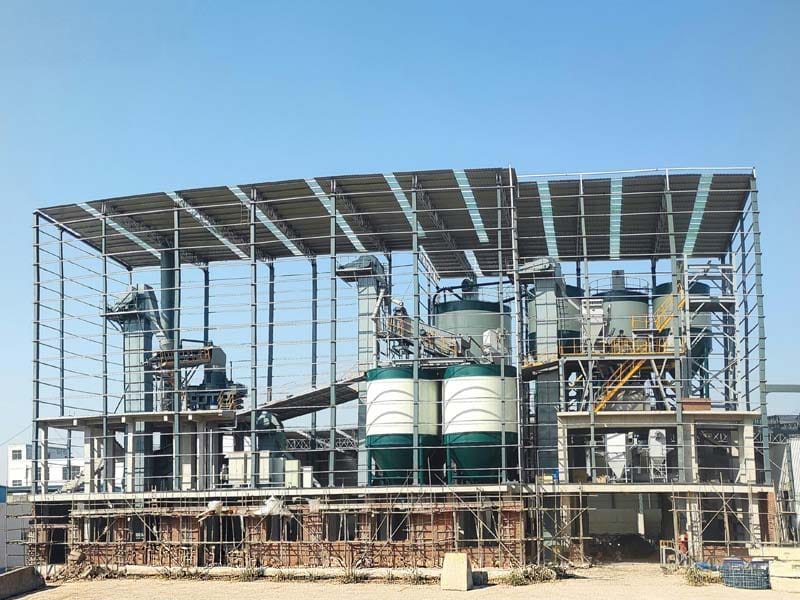
Conveyors carry material between stages.
The return conveyor may need to handle a significant internal load even though it does not carry saleable product.
Kontrola:
- fresh-feed conveyor;
- screen-feed conveyor;
- return conveyor;
- finished-product conveyor.
Manufactured sand capacity can be limited by the smallest transfer stage in the circuit.
Dust Collection Can Influence Stable Operation
The MixingPlantPro line uses full-process negative-pressure dust collection.
Dust control should be sized and maintained so that:
- transfer points remain enclosed;
- classifier airflow remains stable;
- filters do not create excessive restriction;
- collected powder is removed reliably.
A blocked or poorly maintained dust system can disturb production even if the main crushing equipment is available.
Wear Changes Capacity Over Time
VSI wear parts and screen media do not stay in new condition indefinitely.
As wear develops, the plant can experience changes in:
- product grading;
- tvar;
- vratné zatížení;
- účinnost obrazovky;
- power consumption.
Manufactured sand capacity should therefore be monitored across the maintenance cycle rather than judged from one short commissioning run.
Power Draw Can Help Explain Capacity Changes
When available, trend:
- VSI power;
- screen load;
- classifier operation;
- fresh feed;
- vratné zatížení;
- finished output.
If fresh feed stays constant while power and return load increase but finished sand falls, the circuit may be doing more internal work for less accepted output.
Use Finished Tonnes per Hour for Commercial Planning
For sales, downstream mortar consumption and truck dispatch, the useful number is usually accepted finished product.
Manufactured sand capacity used in commercial planning should therefore state:
- product grading;
- powder target;
- vlhkostního stavu;
- test period;
- accepted output.
Do not use internal VSI throughput as the sales-production number.
Use Equipment Throughput for Mechanical Sizing
Internal throughput is still important.
It is needed to size:
- VSI;
- screen;
- dopravníky;
- výtahy;
- skluzy;
- dust system.
Manufactured sand capacity therefore has two valid perspectives: internal mechanical load and external accepted output.
Commissioning Needs a Complete Material Balance
A useful production trial should record all major streams.
| Trial record | Purpose |
|---|---|
| Fresh feed rate | Defines external input |
| Feed grading | Defines raw-material condition |
| Return load | Shows internal recirculation |
| Finished sand output | Defines accepted product |
| Oddělený prášek | Completes external material balance |
| Finished grading | Confirms product quality |
| Feed moisture | Explains screening behavior |
Run the Capacity Test at Steady State
Startup data can be misleading because bins are filling, conveyors are stabilizing and the closed circuit has not yet reached its normal return load.
For manufactured sand capacity testing:
- allow the circuit to stabilize;
- record opening inventory;
- record closing inventory;
- use a defined test period;
- separate planned stops;
- sample finished quality during the test.
Inventory Changes Can Distort Short Tests
If the finished bin fills during a short trial, external product removal can appear lower than actual production.
If the bin empties, dispatch can appear higher than current production.
Manufactured sand capacity tests should account for inventory changes so stored material is not mistaken for new production.
Do Not Use One Capacity Number for Every Raw Material
A capacity test using one limestone feed cannot automatically prove the same result for granite, basalt or another source.
For manufactured sand capacity, the raw material should be identified by:
- source;
- hodnocení;
- hardness-related behavior;
- vlhkost;
- kontaminace jílem;
- abrasiveness where relevant.
Naše průvodce surovinami vyrobeného písku explains why source characterization should come before performance assumptions.
Compare Proposals on the Same Capacity Basis
When comparing two suppliers, ask both to state:
- fresh feed rate;
- target finished output;
- target grading;
- obsah prášku;
- expected return load;
- raw-material basis;
- test conditions.
Manufactured sand capacity becomes meaningful only when the comparison basis is the same.
What Should Buyers Send for a Capacity Review?
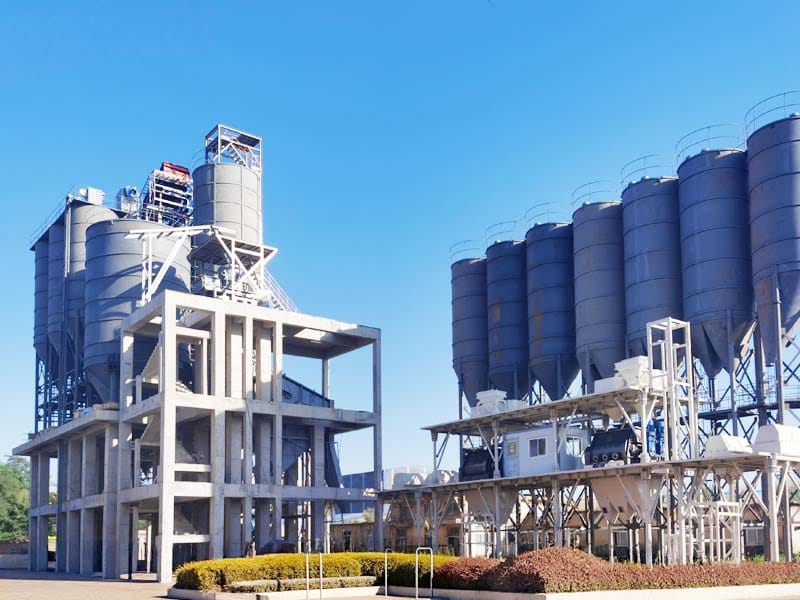
A useful manufactured sand capacity review needs both feed and product information.
Poskytněte:
- raw-material source;
- prepared feed size distribution;
- feed moisture;
- target finished grading;
- maximální velikost částic;
- powder-content requirement;
- required finished output;
- required individual fractions;
- downstream application;
- daily operating hours.
Naše vyráběné pískové roztoky can then be reviewed using a complete process material balance rather than one headline throughput number.
Send your feed material data and target sand grading through our kontaktní stránka pro přezkoumání procesu.
Závěr
Manufactured sand capacity should never be reduced to one unexplained tonnes-per-hour figure. Fresh feed, internal recirculation, screen throughput, classifier feed and accepted finished sand describe different parts of the process.
For equipment sizing, internal load matters. For commercial production and downstream mortar or concrete supply, accepted finished output matters.
The strongest capacity evaluation uses representative raw material, a written product specification and a steady-state material balance. That makes it possible to compare plant proposals on the same basis and prevents internal throughput from being mistaken for finished-sand production.
FAQ
What does manufactured sand capacity mean?
It can refer to fresh feed, internal equipment throughput or finished accepted sand. A proposal should state clearly which stream the capacity number represents.
Is plant throughput the same as finished sand output?
Not necessarily. Screening rejects, recirculating material and separated powder can make final accepted sand output different from the plant’s stated throughput.
Does recirculating material increase manufactured sand capacity?
No. It increases internal equipment load but is the same material passing through the circuit again, so it should not be counted as new finished production.
Why can the same plant produce different finished output with different stone?
Rock type, feed grading, moisture, breakage behavior, powder generation and the required finished specification can all change yield and internal load.
What data are needed to verify manufactured sand capacity?
Record fresh feed, feed grading, return load, separated powder, accepted sand output, finished grading, moisture and inventory changes during a steady-state test.