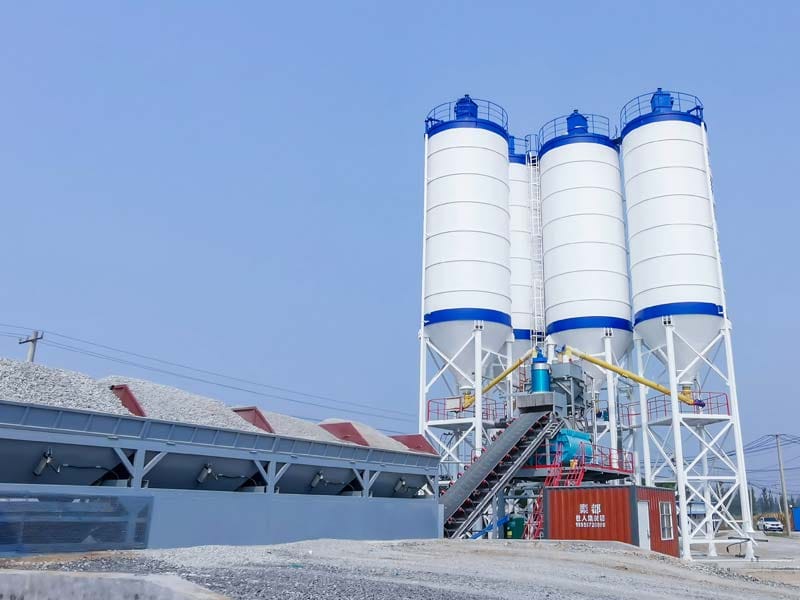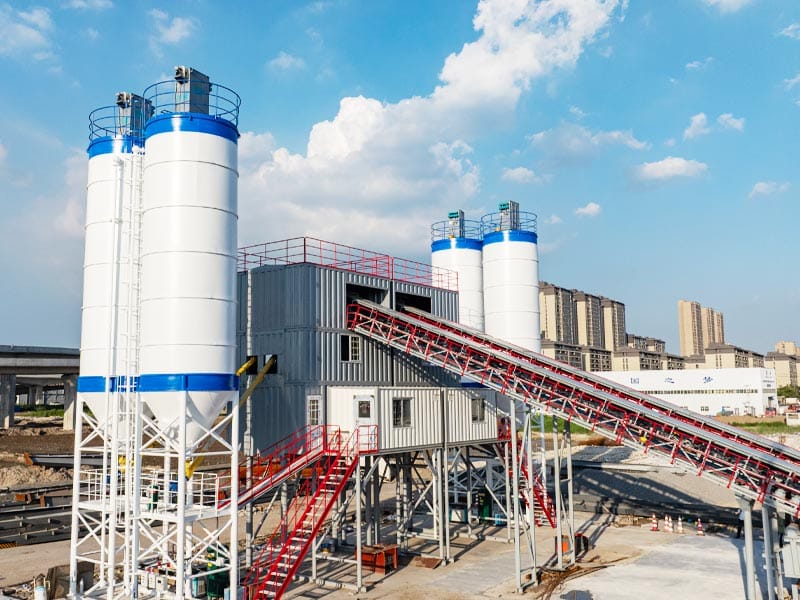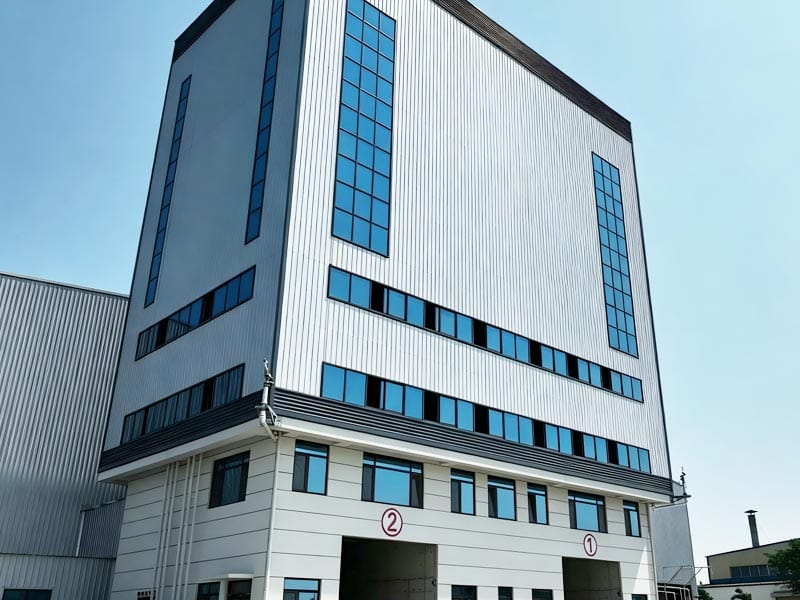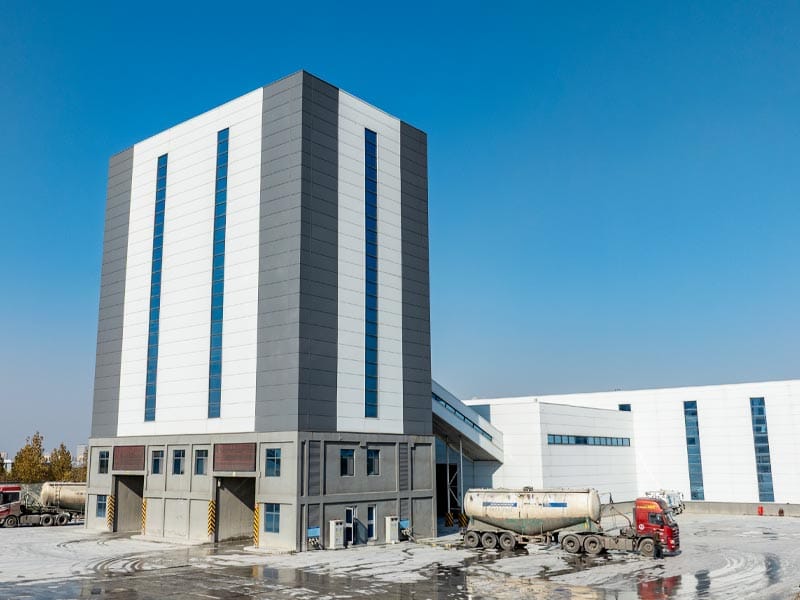
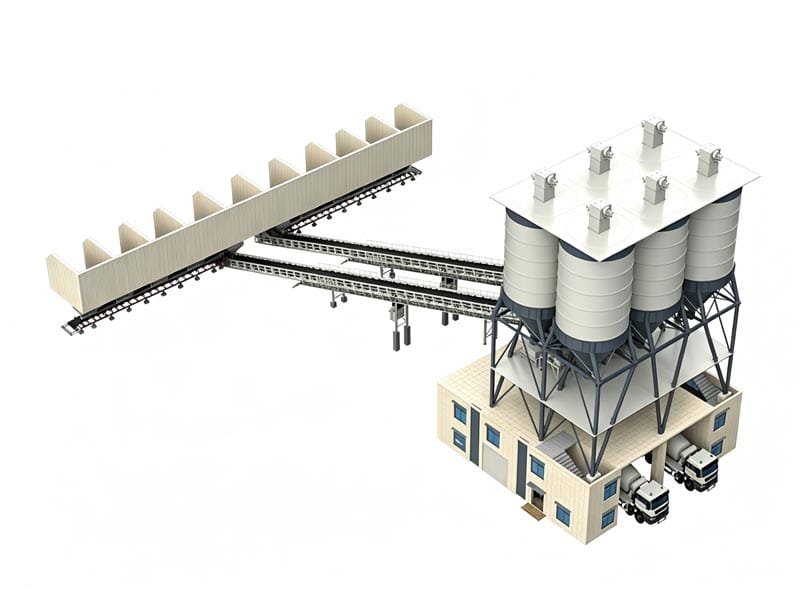
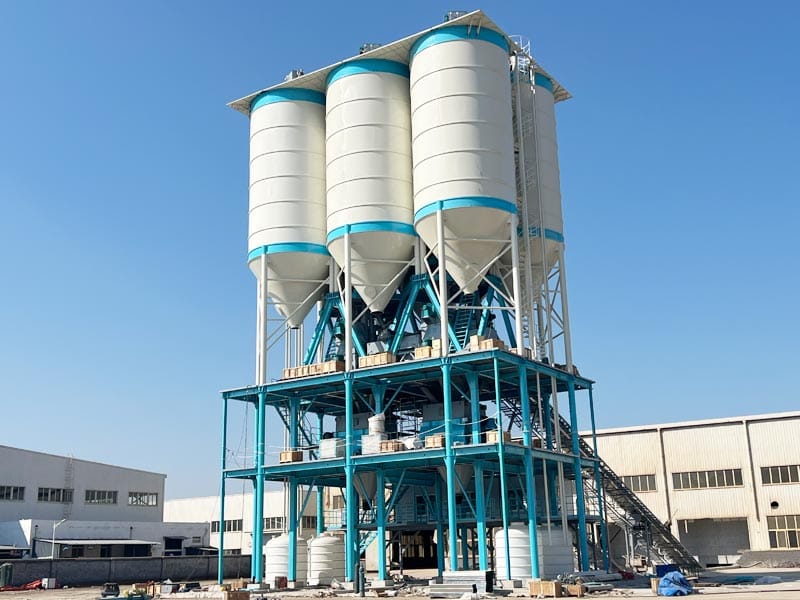
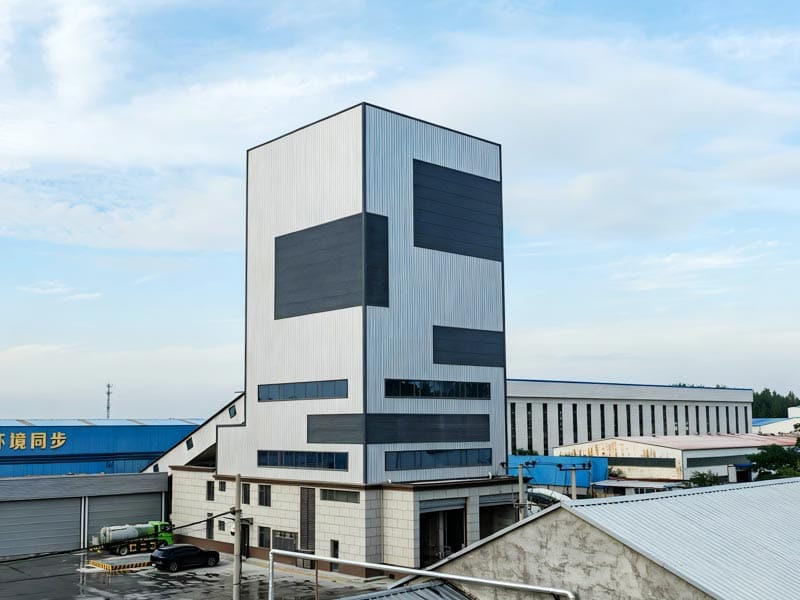
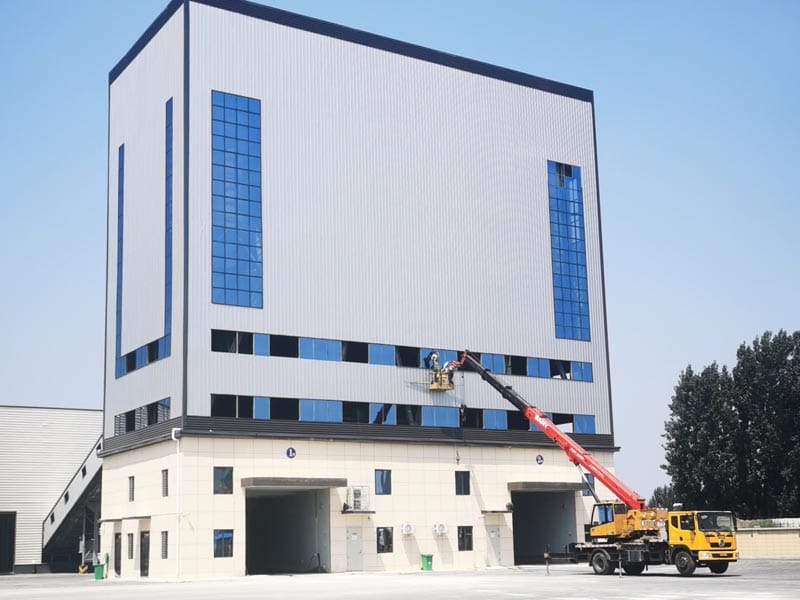
The Overhead Belt Concrete Mixing Plant places powder silos above the main mixing building and uses continuous belt conveying. It supports compact station layouts, gravity-fed batching and metering, stable high-volume output, and long-term concrete production for commercial plants and major infrastructure projects.
√ Stirring The Top Of The Main Building
√ Large And Medium-Sized Commercial Concrete Mixing Station
√ Good Force Conductivity
√ The Main Body Uses A Round Tube Design
√ Conical Finished Hopper
√ Crank Arm Design Mixing Host
√ Heighten The Upper Cover Of The Host
√ Three-Point Sensor Design
√ Built-In High-Strength Wear-Resistant Liner
√ Air Delivery Chute
√ Powder Dust Removal Pipe
Product Overview
The Overhead Belt Concrete Mixing Plant is a mainstream high-efficiency configuration for fixed concrete batching plants. Its core feature is the integrated placement of cement, fly ash, and other powder silos on top of the main mixing building, giving the main building a smaller footprint than common market structures.
Aggregates are lifted above the mixer through continuous flat belt and inclined belt conveying. Materials complete batching, metering, and mixing from top to bottom by gravity, making the plant an intensive mixing solution widely used in commercial concrete production and large infrastructure construction.
Application Fields
It is mainly intended for medium and large commercial concrete batching plants, as well as long-term fixed mixing stations for high-speed rail, bridges, large municipal works, and other projects with high daily output requirements and strict demands for production continuity and stability.
Core Advantages
The concrete main building uses column bearing, providing good overall force transmission, low vibration, fewer columns, and a more reasonable room design.
The overall steel structure uses a round-tube main body, requiring higher processing standards and providing a stable, reasonable structure.
The conical finished-material hopper resists material adhesion and is equipped with high-strength wear-resistant liners for longer service life.
The curved-arm mixer design improves mixing performance, increases speed, and enhances concrete workability.
The raised mixer cover allows powder to be premixed before entering the mixer, directs all materials into the mixer center, prevents shaft wrapping, and improves mixing efficiency.
The metering scale body uses a three-point sensor design for higher metering accuracy.
The aggregate temporary storage hopper has high-strength wear-resistant liners and a flat discharge opening with dual discharge doors, supporting smoother feeding and alternating door operation under high current to protect the motor and reducer.
The powder conveying system uses an air conveying chute with an independent fan for more stable air volume. Dual butterfly valves provide coarse and fine metering for more accurate powder measurement.
The dust collection system uses extended powder dust removal pipelines, reducing dust while avoiding powder waste.
Technical Specifications
| Overhead Belt Concrete Mixing Plant | ||||||
| Model | HZS120H | HZS180H | HZS210H | HZS240H | HZS270H | HZS300H |
| Theoretical Production Rate | 120 | 180 | 210 | 240 | 270 | 300 |
| Mixer | CHS2000 | CHS3000 | CHS3500 | CHS4000 | CHS4500 | CHS5000 |
| Dosing System | PLD3200 | PLD4800 | PLD5000 | PLD6400 | PLD7200 | PLD8000 |
| Discharge Height | 4200 | 4200 | 4200 | 4200 | 4200 | 4200 |
| Maximum Aggregate Size | 60(80) | 60(80) | 60(80) | 60(80) | 60(80) | 60(80) |
| Mixing Cycle Time | 60 | 60 | 60 | 60 | 60 | 60 |
| Aggregate Metering Accuracy | 0.02 | 0.02 | 0.02 | 0.02 | 0.02 | 0.02 |
| Cement Metering Accuracy | 0.01 | 0.01 | 0.01 | 0.01 | 0.01 | 0.01 |
| Water Metering Accuracy | 0.01 | 0.01 | 0.01 | 0.01 | 0.01 | 0.01 |
| Admixture Metering Accuracy | 0.01 | 0.01 | 0.01 | 0.01 | 0.01 | 0.01 |
| Total Installed Power | 180 | 220 | 220 | 300 | 300 | 330 |
Reliable structural design and proven technology ensure stable operation under continuous production conditions.
Advanced batching and control systems improve material proportioning accuracy and production consistency.
Multiple models and configurations are available to meet different capacities, processes and site requirements.
Strict production management and multi-stage factory testing help ensure consistent equipment quality before delivery.
Optimized system design and automated control simplify daily operation and improve overall production efficiency.
Equipment configuration and plant layout can be customized according to specific project and production requirements.