

Water dosing is one of the most sensitive parts of concrete batching because the total water in the mixture affects workability, water-cementitious ratio, strength development, setting behavior and consistency from batch to batch. A batching plant may measure water by weight in a dedicated water weigh hopper, by volume through a calibrated water meter, or through a combination of measured water streams.
For buyers, the right choice is not simply “weighing is accurate” or “flow meters are faster.” Both systems can be suitable when they are correctly sized, calibrated, verified and integrated with aggregate moisture correction. The important question is whether the selected water dosing system can consistently deliver the required quantity across the actual batch range.
Naše boční pásová betonárna and other MixingPlantPro configurations integrate water dosing with automated batching and aggregate moisture correction. This guide explains how weighing and flow measurement differ and what plant designers should check before selecting a water dosing method.
Why Water Dosing Matters in Concrete Batching
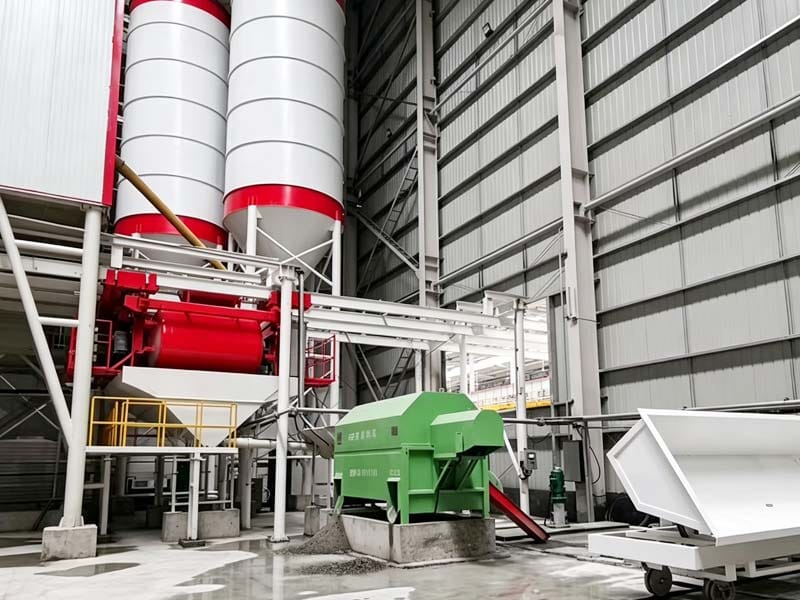
Water is not only a fluid ingredient added for workability. It is part of the concrete proportioning system.
The plant needs to account for:
- water added through the dosing system;
- water contained in wet aggregates;
- water contained in liquid admixtures where relevant to the mixture calculation;
- recycled or non-potable mixing water where approved.
That means water dosing should be reviewed together with the complete water balance.
NRMCA’s current plant-certification guidance requires verification of water meters and, where water is measured by weight, verification of the associated weighing system.
What Is Water Weigh Batching?
Water weigh batching uses a dedicated hopper or tank mounted on load cells.
The control system fills the water vessel until the target mass is reached, then discharges the measured water into the mixer.
The basic sequence is:
- tare or confirm empty condition;
- fill toward target;
- slow or stop feed near target where applicable;
- stabilize reading;
- discharge to the mixer;
- confirm empty or acceptable residual condition.
When water is measured by weight, NRMCA states that the applicable scale-accuracy requirements are used.
What Is Flow-Meter Water Dosing?
Flow-meter dosing measures the volume of water passing through a calibrated meter.
The control system totals the measured flow until the target quantity is reached.
A flow system can use:
- water meter;
- control valve;
- flow signal;
- totalizer;
- automatic cutoff logic.
NRMCA’s current certification guidance includes a specific procedure for verifying water-meter accuracy, confirming that volumetric water measurement is an accepted batching approach when properly verified.
Weighing and Flow Measurement Solve the Same Production Problem Differently
| Factor | Water weighing | Flow measurement |
|---|---|---|
| Measured quantity | Mass | Volume |
| Main device | Load-cell weigh hopper | Calibrated water meter |
| Verification | Reference-load scale verification | Known volume or mass comparison |
| Mechanical requirement | Free-hanging or isolated weigh vessel | Stable piping and meter installation |
| Discharge step | Measured water must empty from vessel | Water is delivered directly through pipework |
Neither method should be judged in isolation from installation quality and control logic.
Water Weighing Separates Measurement from Pipe Flow Conditions
One advantage of water weighing is that the final measured value is based on the mass accumulated in the weigh vessel.
Changes in upstream water pressure can alter filling speed, but if the control system stops correctly and the scale is stable, the final measured mass can still remain accurate.
However, water weighing introduces its own requirements:
- load cells must remain mechanically free;
- flexible connections must not bias the scale;
- the hopper must discharge completely;
- residual water must be controlled;
- vibration should not disturb the settled reading.
Flow Meters Depend More Directly on Piping Conditions
Flow meters can provide compact direct dosing without a separate weigh vessel.
However, meter performance can depend on installation conditions.
Depending on the meter type, review:
- pipe diameter;
- required straight-run conditions;
- air in the line;
- water pressure;
- valve location;
- pulsating flow;
- meter orientation.
Water dosing by flow measurement should therefore follow the meter manufacturer’s installation requirements.
Pressure Variation Can Change Fill Time
Even when final water quantity remains within tolerance, changing supply pressure can affect the batching cycle.
Low pressure can make a flow-meter system take longer to reach the target.
It can also slow filling of a water weigh hopper.
For water dosing, the engineering review should therefore consider:
- minimum site water pressure;
- normal pressure;
- pump capacity;
- pipe losses;
- simultaneous water users.
A water system that works during factory testing may behave differently when connected to the actual site utility network.
Valve Cutoff Can Cause Overshoot in Both Systems
Water keeps moving for a short time after a valve begins closing.
This can create overshoot.
In a weigh system, water already falling into the hopper continues to add mass after the control command.
In a flow-meter system, water continues moving through the line until the valve fully closes.
Water dosing controls may therefore use:
- fast and slow filling;
- pre-act cutoff;
- adaptive compensation;
- settling delay.
The cutoff settings should be tuned using repeated production-scale trials.
Small Water Quantities Need Separate Verification
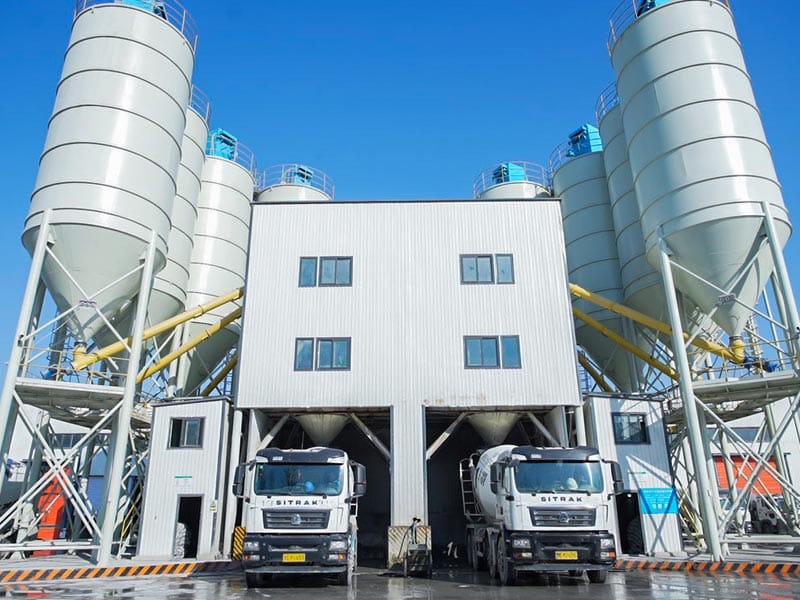
A dosing system that performs well near its normal target may behave differently at a much smaller quantity.
This can matter in:
- small concrete batches;
- low-water mixtures;
- precast production;
- completion batches;
- specialty concrete.
For water dosing, the minimum routine target should be verified separately from the normal batch target.
Low Water-Cementitious Ratio Concrete Magnifies Water Errors
When the designed water quantity is relatively low, a fixed dosing error represents a larger percentage of the target.
For example, a 2 kg deviation equals 0.5% of a 400 kg water target but 2% of a 100 kg target.
This arithmetic is illustrative only.
For water dosing in lower-water mixtures, plant teams should pay close attention to:
- meter or scale operating range;
- valve response;
- aggregate moisture correction;
- admixture contribution;
- batch-record review.
Aggregate Moisture Is Part of the Total Water Balance
The water dosing system does not control total concrete water by itself.
Wet sand and coarse aggregate already contain water.
Naše průvodce korekcí vlhkosti agregátu explains how moisture changes both wet aggregate mass and separate batch-water demand.
For water dosing, the control system should distinguish:
- target total water;
- water already carried by aggregates;
- water to be added through the plant dosing system.
A highly accurate water meter cannot compensate for incorrect aggregate moisture data.
Moisture Probe Accuracy Should Be Verified Too
NRMCA’s plant-certification program includes verification requirements for automated aggregate moisture devices when they are used.
This is important because moisture correction can change the commanded water target every batch.
If the moisture sensor reads high, the plant may subtract too much added water.
If it reads low, the plant may add too much water.
Water dosing and moisture measurement should therefore be validated as one control loop.
Recycled Water Needs Both Quality and Quantity Control
Some plants use recycled or non-potable water where the project specification permits it.
ASTM C1602/C1602M provides requirements for mixing water used in hydraulic-cement concrete, and NRMCA notes that recycled and non-potable water can be used when properly qualified.
For water dosing, the plant may need to distinguish:
- fresh water;
- recycled water;
- combined water streams.
If two water sources are blended, the control system should record how much of each source enters the batch.
Water Density Is Usually Simple but Should Not Be Ignored in Special Cases
For normal clean water near typical batching temperatures, converting between mass and volume is straightforward.
However, recycled water containing suspended solids can behave differently from clean water.
If the plant measures a nonstandard water stream by volume but the mixture design controls it by mass, the project should confirm the appropriate conversion and test method.
Flow Measurement Can Simplify Plant Layout
A flow-meter system can reduce the need for a suspended water weigh hopper and associated steel support.
This can be useful where:
- space is limited;
- direct pipeline dosing is preferred;
- the plant layout favors compact liquid systems.
However, layout simplicity should not override measurement verification and service access.
Water Weighing Requires Mechanical Isolation
A water weigh hopper must transfer its load through the intended load cells.
Rigid pipes, hoses, cables or structural contact can bias the reading.
For water dosing by weight, inspect:
- flexible water inlet connection;
- discharge connection;
- load-cell mounts;
- hopper clearance;
- cable routing;
- mechanical stops.
The same mechanical-interference principles that apply to cement scales also apply to water weigh batching.
Residual Water Can Affect the Next Batch
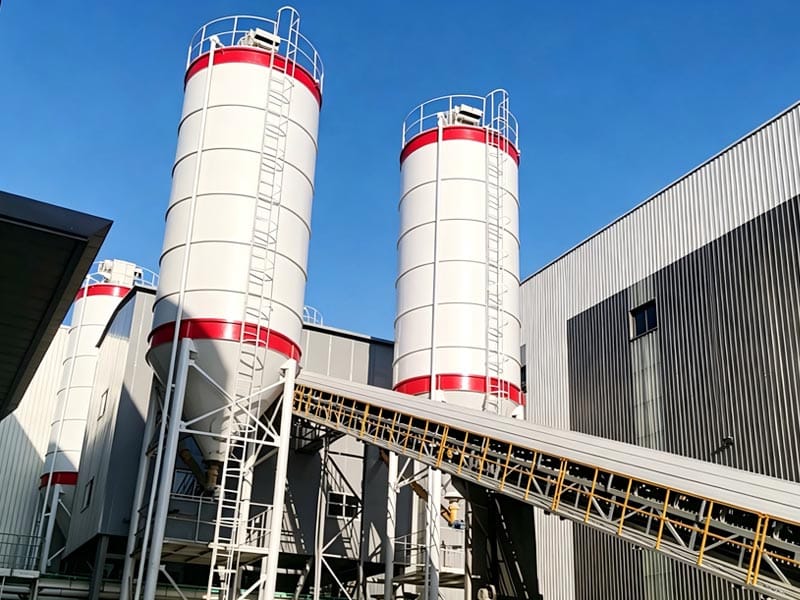
If a water weigh hopper does not drain completely, the next batch may begin with an incorrect tare condition or deliver more water than expected.
Kontrola:
- hopper slope;
- discharge valve;
- drain time;
- residual water;
- zero return after discharge.
Water dosing acceptance should therefore include both filling and emptying performance.
Flow Meter Verification Should Use a Large Enough Test Quantity
NRMCA’s current guidance recommends checking water-meter accuracy using a sufficiently large volume, such as at least 50 gallons, and comparing the measured quantity with a known reference. The procedure can use a calibrated container or mass measurement.
The reason is practical: very small test quantities can make timing and reading error a larger part of the result.
For water dosing, verification should represent the normal operating range rather than only one convenient small test.
Repeated Tests Matter More Than One Successful Run
NRMCA’s water-meter verification example recommends repeated measurements and averaging the results.
This helps distinguish repeatable measurement from one favorable reading.
For either water dosing method, record:
- target;
- measured reference quantity;
- device indication;
- error;
- test conditions.
Batch Records Should Show Target and Actual Water
A strong automatic batching system should retain enough data to review water performance later.
Useful records include:
- target added water;
- actual added water;
- hodnoty agregátní vlhkosti;
- korekce vlhkosti;
- manual water adjustments;
- alarm or override events.
NRMCA quality programs emphasize tracking batching accuracy, including mixing water, as part of concrete quality management.
Manual Water Additions Need Controlled Recording
Operators sometimes add water manually during production or loading.
If this is permitted by the project procedure, the quantity should be controlled and recorded.
Otherwise, the final water content can differ from the batch record even though the automatic water dosing system operated correctly.
NRMCA notes that water additions should be followed by sufficient mixing to restore concrete homogeneity.
Water Dosing Can Affect Batch Cycle Time
A technically accurate system can still limit plant output if it fills too slowly.
For water dosing, measure:
- fast-fill time;
- slow-fill time;
- settling time;
- doba vypouštění;
- reset time.
Compare these times with aggregate, cement and admixture batching.
If water is consistently the last ingredient ready, it may become the cycle bottleneck.
Parallel Water Preparation Can Improve Throughput
Some plant control strategies prepare the next water quantity while the current concrete batch is mixing.
This can reduce effective cycle time when the equipment design allows it.
For water dosing, confirm:
- whether the next batch can be prepared in parallel;
- whether moisture correction is available early enough;
- whether the weigh hopper or meter serves one or multiple mixers;
- whether the water system has enough flow capacity.
Weighing vs Flow Measurement: Which Is Better?
There is no universal winner.
Water weighing can be attractive when the project prefers mass-based batching and a dedicated weigh vessel fits the plant layout.
Flow measurement can be attractive when compact direct dosing is preferred and the site can provide stable piping conditions.
| Project question | Water weighing | Flow measurement |
|---|---|---|
| Need direct mass measurement? | Strong fit | Requires volume-to-mass relationship if needed |
| Limited structural space? | Needs weigh vessel and support | Can be more compact |
| Variable line pressure? | Main effect may be fill time | Meter/valve behavior should be reviewed carefully |
| Maintenance focus | Load cells, flexible connections, valves | Meter, valve, pipe condition |
| Verification | Scale verification | Known-volume or known-mass comparison |
The final choice should follow the batching standard, project specification and plant operating conditions.
Commission the Water System with Real Batch Targets
Commissioning should test more than one convenient water quantity.
For water dosing, include:
- minimum routine target;
- normal target;
- high target;
- repeated automatic batches;
- moisture-corrected targets;
- complete discharge where a weigh hopper is used;
- batch-record output.
If the plant uses recycled water, include that operating condition as well.
What Should Buyers Send for Water-System Selection?
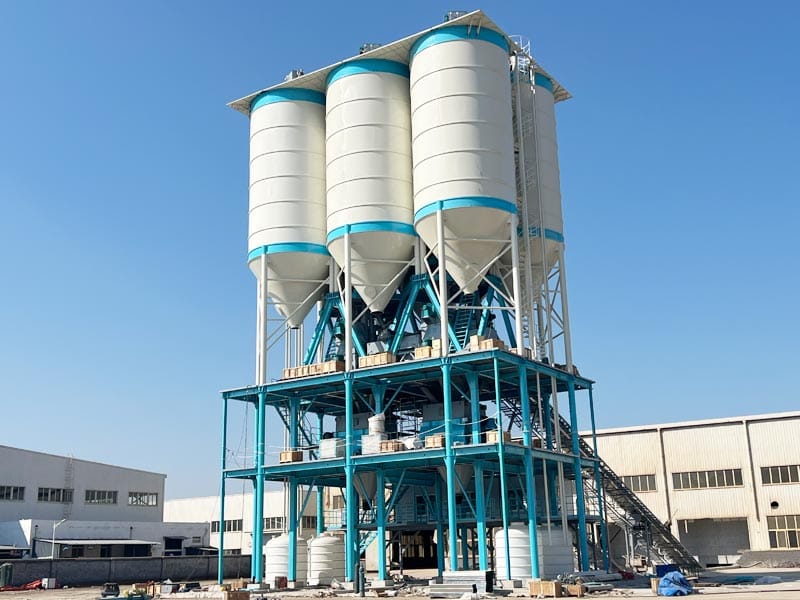
A useful water dosing review needs the actual production conditions.
Poskytněte:
- minimum and maximum water quantity per batch;
- normal batch size;
- peak production rate;
- water source;
- available water pressure;
- recycled-water requirements;
- aggregate moisture-control method;
- sortiment výrobků z betonu;
- applicable batching standard or project specification.
Naše řešení výroby betonu can then be configured around the complete material and control system.
Send your batching requirements and water-system conditions through our kontaktní stránka for a technical review.
Závěr
Water dosing can be controlled successfully by weighing or flow measurement when the system is properly selected, installed, calibrated and verified.
Water weigh batching measures mass directly but requires mechanically free load-cell support and complete discharge. Flow-meter dosing can simplify the liquid system but depends on correct meter installation, stable piping conditions and regular verification.
The strongest design also connects the dosing system with aggregate moisture correction, batch records and the complete water balance. When those elements are controlled together, the plant can manage water consistently across real production conditions rather than relying on one device in isolation.
FAQ
Is weighing more accurate than a water flow meter in concrete batching?
Not automatically. Both methods can meet batching requirements when correctly designed and verified. Performance depends on the scale or meter, installation, operating range and control logic.
How should a concrete plant water meter be verified?
Compare the meter indication with a known reference quantity, such as a calibrated container or a mass measurement, using a representative test volume and repeated checks.
Why does aggregate moisture affect water dosing?
Wet aggregate already contains water. The control system should subtract that contribution from the separate water addition so the total mixture water remains aligned with the approved recipe.
Can recycled water be used in concrete batching?
Yes, where permitted and properly qualified under the applicable specification. The plant should still measure the quantity accurately and account for the water source in the batch record.
What information is needed to select a water dosing system?
Provide water quantities per batch, production rate, water pressure, source type, moisture-correction method, concrete range and applicable project or batching requirements.

