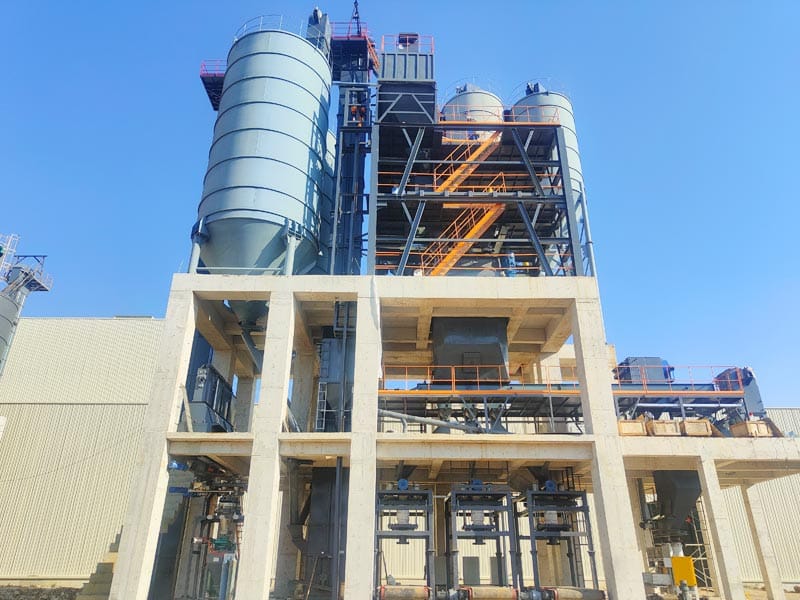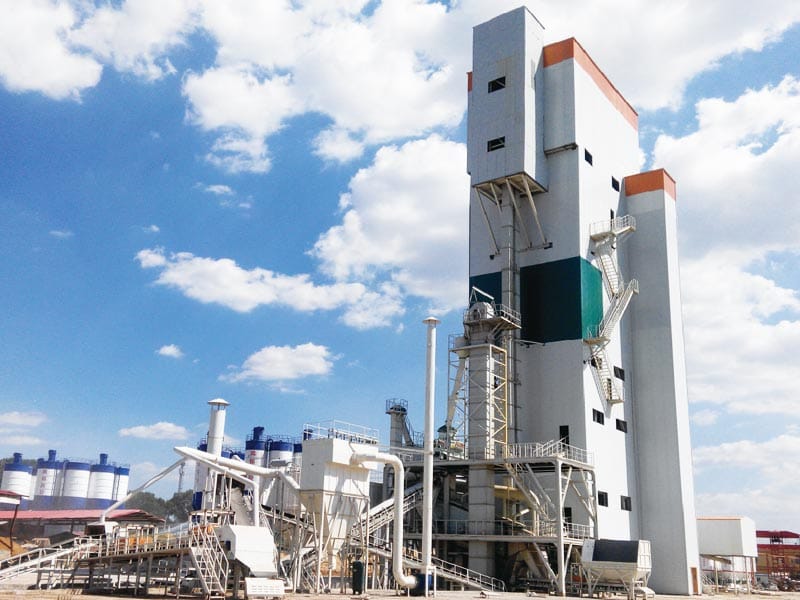
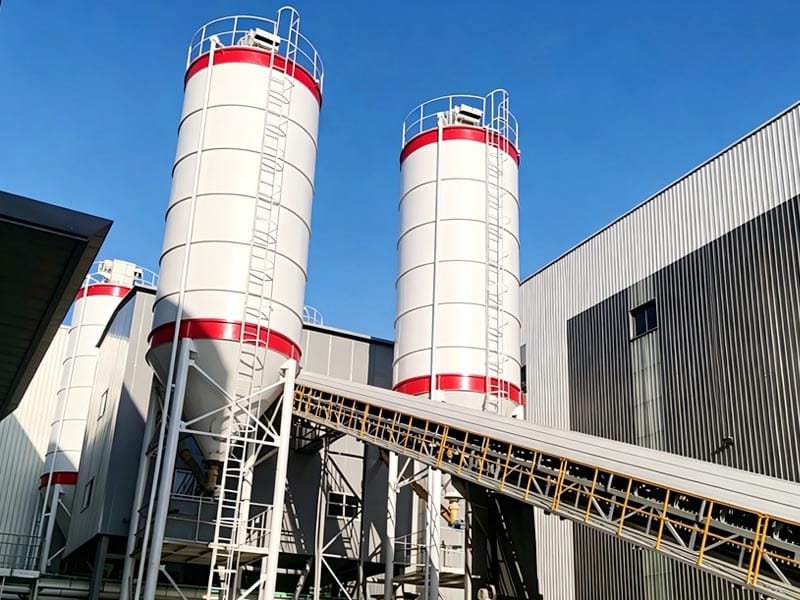
A concrete batching sequence controls what happens between recipe selection and the moment all required ingredients enter the mixer. It includes aggregate feeding and weighing, cementitious-material dosing, water measurement, admixture dosing, moisture correction, transfer readiness, interlocks and final charging.
For batching plant buyers, the important point is that batching sequence is not always a simple one-by-one order. Modern plants can weigh several material groups at the same time, then release them only when the receiving equipment is ready. The sequence therefore affects both batching accuracy and total cycle time.
Notre centrale de mélange de béton à bande latérale uses separate aggregate, powder, water and admixture batching systems together with automated control. The centrale de mélange de béton à bande aérienne uses a different powder-silo arrangement while retaining the same need for coordinated weighing and charging. This guide explains what a practical concrete batching sequence should control before mixing starts.
What Is a Concrete Batching Sequence?
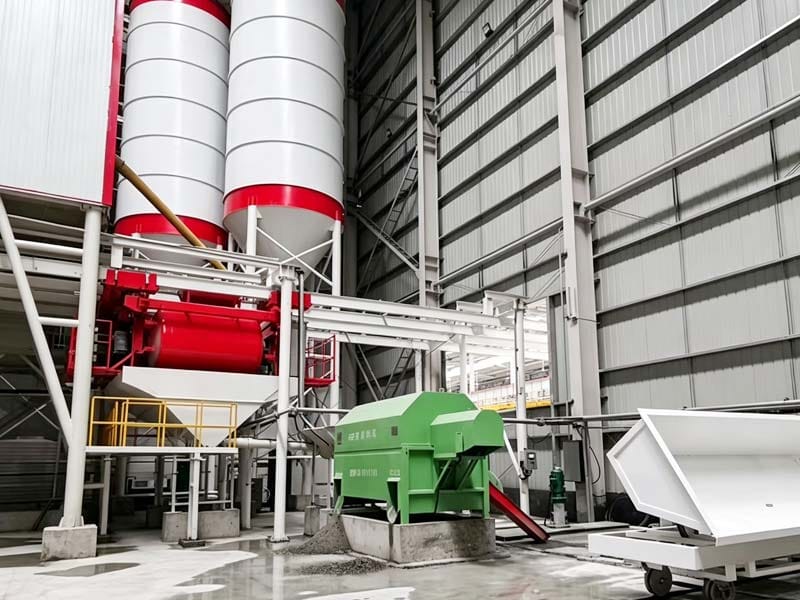
A concrete batching sequence is the controlled series of actions used to prepare one concrete batch.
It can include:
- recipe confirmation;
- material availability check;
- alimentation globale;
- aggregate weighing;
- cementitious-material weighing;
- water measurement;
- admixture dosing;
- correction de l'humidité;
- material transfer;
- mixer-ready confirmation;
- charging.
The batching sequence ends where the mixing sequence begins.
Recipe Selection Comes Before Physical Batching
The control system first needs to know which mixture is being produced.
A useful recipe record defines:
- fractions d'agrégats;
- matériaux cimentaires;
- target water;
- admixture products;
- taille du lot;
- authorized revisions.
The batching sequence should not begin until the correct recipe and required material paths are confirmed.
Material Identification Is the First Quality Check
Accurate weighing of the wrong material still creates the wrong batch.
Before automatic batching starts, the plant should know:
- which aggregate bin contains each fraction;
- which silo contains each cementitious material;
- which tank contains each admixture;
- which water source is selected.
Batching sequence control should therefore include material IDs and routing logic, not only target weights.
Aggregate Moisture Correction Changes the Recipe Before Weighing
Aggregate is often stored and batched in a moist condition.
The control system may need to adjust:
- wet aggregate target weight;
- separate batch-water target.
This should happen before aggregate and water batching are completed.
Notre guide de correction de l'humidité des agrégats explains how moisture changes the material balance.
Aggregate Feeding Usually Starts with Individual Bins
Each aggregate fraction is released from its storage bin into the aggregate weighing system.
Typical controls can include:
- ouverture du portail;
- feeder speed;
- coarse feed;
- fine feed;
- material-in-flight compensation.
The batching sequence should stop or adjust feeding before the final target is exceeded.
Aggregate Weighing Can Be Cumulative or Separate
Some batching plants weigh several aggregate fractions sequentially into one common hopper.
Other designs use separate weighing arrangements.
For cumulative weighing, the batching sequence might be:
| Étape | Example action |
|---|---|
| 1 | Feed first aggregate fraction to target |
| 2 | Hold accumulated weight |
| 3 | Add second fraction to new cumulative target |
| 4 | Continue until all fractions are complete |
| 5 | Confirm aggregate batch ready for transfer |
The exact architecture depends on the plant configuration.
Aggregate Weighing Accuracy and Sequence Are Different Issues
A scale can be properly calibrated while the feeding sequence still overshoots.
Problems can come from:
- gate response;
- feed rate;
- material in flight;
- aggregate bridging;
- unstable zero.
Notre aggregate weighing guide explains why scale accuracy and feeder behavior should be checked separately.
Powder Weighing Can Run in Parallel with Aggregate Weighing
Concrete plants do not always wait for aggregates to finish before cementitious-material weighing begins.
Parallel weighing can reduce the overall batch cycle.
For example, the plant can weigh:
- aggregate;
- ciment ;
- fly ash or other SCM;
- eau;
- admixture;
at the same time in independent weighing systems.
The batching sequence then coordinates when each completed material group is allowed to enter the mixer.
Parallel Weighing Does Not Mean Uncontrolled Charging
Several materials can be ready simultaneously while the mixer is still completing the previous batch.
The control system should hold them until:
- the mixer is empty;
- the discharge gate is closed;
- the receiving path is clear;
- required interlocks are satisfied.
Batching sequence optimization is therefore about overlapping preparation without losing control of material release.
Cementitious Materials Need Positive Silo Identification
Concrete plants may store multiple powders.
Les exemples incluent :
- ciment ;
- cendres volantes;
- slag cement;
- other approved supplementary cementitious materials.
The batching sequence must select the correct silo and transfer route for every recipe.
Coarse and Fine Powder Feeding Can Reduce Overshoot
The current MixingPlantPro side-mounted belt plant uses dual butterfly-valve control for coarse and fine powder metering.
A typical control concept is:
- high-rate feeding while far from target;
- lower-rate feeding near target;
- final cutoff before the scale reaches the final settled weight.
This helps balance dosing speed and final accuracy.
Powder Transfer Must Wait for the Correct Receiving Condition
After powder weighing is complete, material should not automatically discharge if the downstream path is not ready.
Vérifier:
- mixer-ready status;
- powder hopper discharge gate;
- air pressure where pneumatic gates are used;
- upstream/downstream interlocks.
The batching sequence should prevent one completed material group from entering at the wrong time.
Water Dosing Runs as Its Own Controlled Stream
Batch water can be measured by weighing or by an approved metering system depending on the plant design.
For the batching sequence, the control system should determine the corrected water target after considering aggregate moisture.
The current NRMCA specification guidance emphasizes that total mixing water can include several sources, including plant batch water and free moisture carried by aggregate.
Notre water dosing guide explains how water measurement should be verified.
Water Should Not Be Treated Independently from Aggregate Moisture
If wet sand contributes more water than expected, simply delivering the nominal water recipe can raise total mixing water.
The batching sequence should therefore connect:
- aggregate moisture;
- wet aggregate correction;
- batch water target;
- operator override.
This is a material-balance problem, not only a water-meter problem.
Admixture Dosing Can Also Run in Parallel
Liquid admixtures are normally prepared in a separate dosing system.
The plant can dose admixture while aggregates and powders are also being weighed.
For batching sequence control, verify:
- correct admixture tank;
- target dose;
- actual dose;
- delivery route;
- flush-water logic where used.
Notre admixture dosing guide explains why low quantities and line residual volume need special attention.
The Admixture Addition Point Can Affect the Mixing Procedure
The correct timing of admixture addition depends on the concrete mixture and product instructions.
Possible approaches can include adding admixture:
- with part of the batch water;
- through the water line;
- at a defined point during mixer charging.
There is no universal batching sequence that applies to every chemical admixture.
The approved concrete procedure and admixture supplier instructions should determine the timing.
NRMCA Guidance Supports Plant Batching of Ingredient Materials
The NRMCA/ASCC preconstruction checklist notes that batching ingredient materials at the plant supports stronger concrete quality control.
This is important because the batching sequence can then document:
- material identity;
- target quantity;
- actual quantity;
- adjustments;
- batch completion.
Ready Signals Prevent Premature Transfer
Every material system should have a defined readiness condition.
| Système matériel | Possible ready condition |
|---|---|
| Agréger | Weighing complete and transfer path available |
| Powder | Target reached and discharge route clear |
| Eau | Corrected quantity complete |
| Admixture | Required dose complete and correct route selected |
| Mélangeur | Previous batch discharged and gate closed |
The batching sequence should move to the next stage only after the required signals are true.
Interlocks Protect the Process from Impossible States
An interlock prevents equipment from operating when a required condition is not satisfied.
Les exemples peuvent inclure :
- no aggregate discharge if the transfer belt is stopped;
- no powder discharge if the mixer is not ready;
- no new batch if a previous batch remains in the mixer;
- no automatic cycle if a critical scale is in fault.
These conditions should be tested during FAT and again after site installation.
Aggregate Transfer Can Become the Longest Pre-Mixing Step
In belt-fed plants, aggregate may move from the weigh hopper through a flat belt and inclined conveyor before reaching the mixer.
If the transfer route is long, aggregate movement can determine when charging can begin.
The batching sequence should therefore compare:
- aggregate weighing time;
- belt transfer time;
- powder weighing time;
- water/admixture dosing time.
The slowest path often controls the pre-mixing cycle.
Overlapping Weighing Can Reduce Idle Time
A well-designed plant can prepare the next batch while the current batch is mixing, provided the weighing systems and storage buffers allow it.
This is one of the main reasons to separate:
- weighing cycle;
- transfer cycle;
- mixing cycle.
Batching sequence optimization can reduce mixer idle time without shortening the actual required mixing duration.
Do Not Reduce Mixing Time to Compensate for Slow Batching
If aggregate feeding or powder dosing is slow, shortening mixing time is not the correct solution unless concrete performance has independently validated the shorter duration.
The batching sequence should be optimized before changing a quality-critical mixing parameter.
Material Buffers Can Decouple Some Process Steps
Intermediate hoppers can hold a completed weighed material group until the mixer is ready.
This can allow:
- early completion of weighing;
- faster mixer recharge;
- better overlap between batches.
However, buffers must be designed to discharge completely and avoid cross-batch contamination.
Sequence Design Changes with Plant Architecture
A high-profile gravity plant, low-profile belt plant and skip-hoist plant can all use different transfer timing.
NRMCA describes both high-profile plants, where aggregate and cement storage feed batchers by gravity, and low-profile plants where aggregate weighing occurs near ground level and belts elevate material to the mixer.
The batching sequence should therefore match the physical material route.
Belt-Fed Plants Need Conveyor Ready Logic
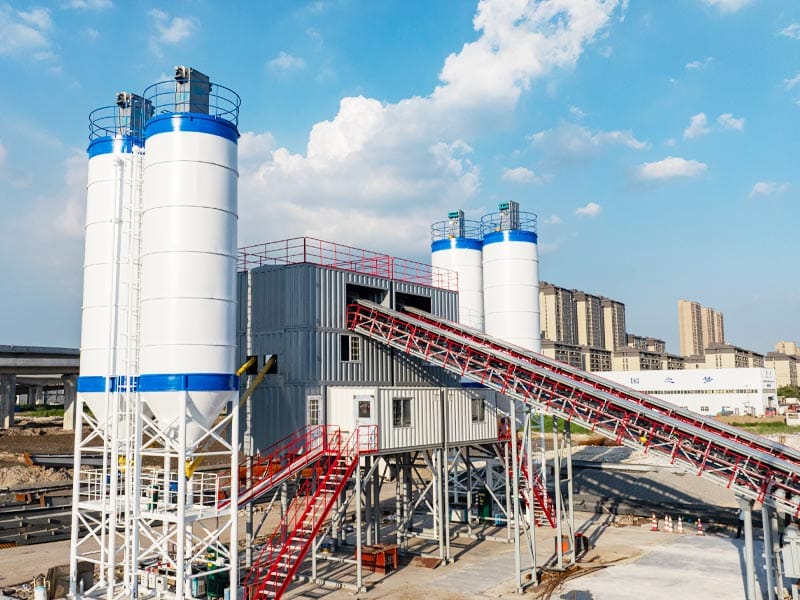
For belt-fed aggregate transfer, check:
- flat conveyor running;
- inclined conveyor running;
- belt tracking alarm clear;
- receiving hopper available;
- discharge gate interlock.
Aggregate should not be released onto a stopped or blocked conveyor.
Skip-Hoist Plants Need Position and Travel Logic
A skip-hoist batching sequence includes additional movement states.
These can include:
- skip at lower loading position;
- aggregate loaded;
- skip travel enabled;
- upper position reached;
- discharge complete;
- skip returned.
The same recipe can therefore have a different cycle structure depending on aggregate transfer architecture.
Batching Sequence Should Include Timeout Logic
If one feeder or transfer step takes too long, the control system should not wait indefinitely.
Timeout alarms can help identify:
- pontage ;
- empty material bin;
- slow screw feeder;
- conveyor fault;
- valve failure;
- scale instability.
A repeated timeout trend can reveal which part of the batching sequence limits output.
Track Cycle Time by Process Stage
Instead of recording only total batch duration, record:
- aggregate weighing time;
- powder weighing time;
- water dosing time;
- admixture dosing time;
- aggregate transfer time;
- mixer charging time.
This makes bottleneck analysis much more precise.
Batch Records Should Capture Target and Actual Quantities
The batching sequence should produce a usable record for every batch.
NRMCA quality-control guidance includes target and actual batching information as part of process control and production records.
A useful record can include:
- ID de lot ;
- recipe;
- quantités d'ingrédients cibles ;
- quantités réelles d'ingrédients ;
- moisture corrections;
- manual changes;
- alarms;
- cycle timestamps.
Manual Mode Should Not Become the Normal Sequence
Manual operation is useful for maintenance, commissioning and troubleshooting.
However, routine production should not depend on operators manually opening feeders and guessing cutoff points.
The automated batching sequence should control normal production so batch records remain consistent and repeatable.
Manual Overrides Need Traceability
If an operator changes a target or adds material manually, the event should be recorded where the control system supports it.
This is especially important for:
- water adjustments;
- admixture changes;
- replacement material routes;
- scale fault recovery.
Recipe Changes Should Trigger Sequence Validation
A new recipe can change:
- number of aggregate bins used;
- powder silos used;
- water target;
- nombre de mélanges ;
- batch size.
The batching sequence should therefore be checked when introducing a significantly different mixture.
Small Batches Can Expose Sequence Problems
A sequence tuned for full-size batches may not perform the same way at lower targets.
Small batches can magnify:
- material-in-flight error;
- scale resolution;
- feeder cutoff delay;
- admixture-dose sensitivity.
Commissioning should include the minimum routine production batch.
Moisture Changes Can Alter Both Weight and Cycle Time
Wet sand can flow differently from dry sand.
It can also require a higher wet aggregate target for the same dry aggregate mass.
The batching sequence may therefore take longer after rain even when the concrete recipe itself has not changed.
Commission the Sequence with Real Materials
Dry-run control testing is useful, but it cannot prove real material flow.
Commission with representative:
- aggregate;
- matériaux cimentaires;
- eau;
- admixtures.
Verify the complete path from recipe call to mixer charge.
Use Consecutive Batches to Test Repeatability
A single successful cycle does not prove a stable batching sequence.
Run several consecutive batches and compare:
| Test value | What it can reveal |
|---|---|
| Aggregate dosing time | Gate or flow variation |
| Powder dosing time | Screw or silo-flow variation |
| Water dosing time | Meter or valve behavior |
| Admixture dosing time | Pump or line variation |
| Pre-mixing cycle time | Overall batching bottleneck |
What Should Buyers Send for a Batching Sequence Review?
A useful batching sequence review needs the actual plant and recipe requirements.
Fournir:
- fractions d'agrégats;
- matériaux cimentaires;
- nombre de mélanges ;
- normal and minimum batch size;
- aggregate transfer method;
- moisture-control method;
- taux de production requis;
- batch-record requirements;
- special sequence requirements.
Notre solutions concrètes de production can then be configured around the full batching and transfer cycle rather than mixer capacity alone.
Send your batching requirements and quality concerns through our page contact pour un examen technique.
Conclusion
A concrete batching sequence coordinates recipe selection, moisture correction, aggregate weighing, powder weighing, water dosing, admixture dosing, transfer and mixer-ready conditions before mixing starts.
The fastest sequence is not necessarily one fixed material order. Modern plants can prepare several materials in parallel and then release them according to interlocks and process readiness.
The strongest batching system minimizes idle time while protecting weighing accuracy, material identity and traceability. Measuring each stage separately makes it possible to improve cycle time without compromising the actual concrete mixing requirement.
FAQ
What is a concrete batching sequence?
It is the controlled order and coordination of recipe confirmation, material weighing, moisture correction, transfer, interlocks and mixer charging before the actual mixing period begins.
Can aggregate, cement, water and admixtures be weighed at the same time?
Yes, when the plant has independent weighing systems. Parallel batching can reduce cycle time, while interlocks still control when each material enters the mixer.
Does concrete always need the same charging sequence?
No. The correct charging and admixture timing can depend on mixer design, concrete recipe and material supplier requirements.
Why does batching sequence affect plant capacity?
Slow weighing, material transfer or waiting for a ready signal can keep the mixer idle. Overlapping independent steps can reduce this idle time.
What data should be recorded during batching?
Record target and actual ingredient quantities, moisture corrections, dosing times, alarms, manual overrides and key cycle timestamps.