
A smart concrete batching plant should do more than automate start and stop commands. Its value comes from controlling material dosing, recording what actually happened in each batch, identifying abnormal conditions, and preserving enough production data for operators, quality teams and project managers to trace a concrete batch later.
For buyers, this means “smart” should be translated into specific functions. Which ingredients are controlled automatically? Which values are measured? Which alarms are recorded? Can recipe revisions be traced? Can a supervisor review production remotely without changing unsafe settings? Can batch records be linked to delivery or precast production information?
Naš mobilno postrojenje za doziranje betona integrates batching, weighing, mixing and computer control in a modular frame, while our postrojenje za doziranje montažnog betona includes dedicated software integration for coordination with a precast production line. This guide explains what a smart concrete batching plant should actually control and record.
What Makes a Smart Concrete Batching Plant “Smart”?
A smart concrete batching plant combines automated process control with production data that can be reviewed later. Automation executes the batch; traceability explains how that batch was produced.
Useful functions can include:
- automatic aggregate, powder, water and admixture batching;
- recipe selection and revision control;
- moisture-correction inputs;
- mixer timing and discharge sequencing;
- equipment interlocks;
- alarm and event history;
- batch quantity records;
- operator permissions;
- production summaries;
- remote monitoring where included.
NRMCA plant inspection process specifically reviews the recording capability for batched materials and whether the batching system can accurately produce concrete without interference. Its quality-management material also emphasizes batch records, batching accuracy and record retention.
A smart concrete batching plant should therefore be judged by what it can control, verify and document—not by the presence of a touchscreen alone.
Automatic Batching Is the Foundation of the Control System
The first job of a smart concrete batching plant is to convert a recipe into controlled material quantities.
The system may coordinate aggregate gates or feeders, powder feeding, water addition, admixture dosing and mixer charging. Each material should have a defined target and an actual measured quantity where the installed hardware supports that measurement.
For plant selection, ask how the control system handles:
| Material system | Control function | Record to request |
|---|---|---|
| Aggregates | Bin selection, target weight and feeder cutoff | Target and actual quantity by fraction |
| Cementitious powders | Coarse/fine feeding and final weight | Target, actual and dosing time |
| Voda | Recipe quantity and moisture correction | Base target, correction and final addition |
| Admixtures | Product selection and controlled dose | Material code, target and delivered quantity |
A smart concrete batching plant should make it possible to understand the batch after production, not only while the operator watches the screen.
Recipe Version Control Prevents Silent Formula Changes
Automation can reproduce a recipe accurately, but it cannot decide whether the selected recipe is the correct approved version.
For this reason, recipe management is a core smart concrete batching plant function.
A good system should distinguish the recipe name from its revision. If a water target, admixture quantity or cementitious proportion changes, the system should make that revision identifiable in later batch records.
Ask whether the control software records:
- recipe identifier;
- revision number or revision date;
- authorized user who made the change;
- time of the change;
- which batches used the old and new revision.
NRMCA quality-certification guidance emphasizes maintaining records for concrete mixture proportions, batch records and delivery documentation. That principle makes recipe traceability especially relevant to a smart concrete batching plant used on quality-sensitive projects.
Operator Permissions Should Match Responsibility
Not every user should be able to change every parameter.
A smart concrete batching plant can separate operator-level actions from supervisor, maintenance or quality-control permissions. The exact structure depends on the project and software, but the concept is important.
An operator may need permission to start a recipe, pause production or acknowledge alarms. A technical manager may control recipe revisions. A maintenance user may need access to diagnostic screens without permission to change concrete proportions.
Ask whether user actions are logged. If a manual addition or recipe edit occurs, the batch record should make that intervention visible where the software supports it.
Permission control improves traceability because it links a change to a responsible user rather than leaving the plant with unexplained parameter changes.
Batch Records Should Show Target Versus Actual Quantities
Production traceability is weak if a record contains only the recipe target.
A smart concrete batching plant should record the actual measured values produced by the installed weighing and dosing systems. This allows plant teams to investigate whether a concrete-quality issue corresponds with a batching deviation.
NRMCA’s quality-management audit material specifically calls for documented batching procedures, monitoring batching accuracy and retaining identifiable batch records. Its plant inspection guidance also reviews recording capability for batched materials.
For each batch, useful fields can include:
- batch ID;
- date and time;
- recipe and revision;
- target ingredient quantities;
- actual ingredient quantities;
- aggregate moisture values;
- water corrections;
- vrijeme miješanja;
- manual additions or overrides;
- alarms occurring during the cycle.
The exact fields should be agreed for the smart concrete batching plant before commissioning.
Moisture Data Should Be Part of the Batch Story
Aggregate moisture can change both wet aggregate weight and batch-water demand. If the smart concrete batching plant performs moisture correction, the values used in that calculation should be traceable.
For example, a batch record that shows 1,040 kg of wet sand may appear to be above a 1,000 kg SSD recipe target. Without the moisture value and correction logic, the record is easy to misinterpret.
Naš precast concrete batching plant guide already explains why batch records should connect recipe revision, actual ingredient quantities, moisture correction and destination.
A smart concrete batching plant should therefore record enough context to explain why the actual wet target differed from the laboratory mix basis.
Alarm History Is More Useful Than One Flashing Message
A real smart concrete batching plant should preserve alarm history rather than showing only the latest fault.
The first alarm in a sequence may reveal the root cause. Later alarms can simply be consequences.
For example, aggregate feeding may stop because a receiving hopper is not ready. The operator may then see a later timeout at the mixer. If only the final alarm is retained, troubleshooting starts in the wrong place.
Ask whether the system records:
- alarm time;
- alarm description;
- equipment state;
- batch number;
- acknowledgement time;
- user acknowledgement;
- cleared or restored condition.
Naš toranj za miješanje betona lists one-button operation, fault diagnosis and simulation among its intelligent-control functions. These features are most useful when diagnostic information can be connected to real plant events.
Interlocks Turn Automation into Process Control
Automation is not only about sending commands. A smart concrete batching plant also needs to prevent the process from moving forward when required conditions are not satisfied.
Examples can include:
- preventing discharge when the receiver is not ready;
- preventing the next charge when the mixer has not discharged;
- stopping material transfer when a downstream hopper is full;
- blocking a recipe if a required material is unavailable;
- preventing equipment movement when a safety condition is not satisfied.
The actual interlocks depend on the configuration. Buyers should request a functional description rather than assuming every “intelligent” plant uses the same logic.
A smart concrete batching plant is easier to troubleshoot when each interlock is visible on the operator screen with a meaningful reason for why the sequence is waiting.
Remote Monitoring and Remote Control Are Not the Same Thing
Remote access is often promoted as a smart-plant feature, but buyers should separate remote monitoring from remote control.
Remote monitoring can allow managers to view production output, batch records, inventory status, alarms or equipment condition from another office or device.
Remote control allows a user to change or operate the process from outside the local operator station. That requires a much more careful review of permissions, cybersecurity, communication reliability and site safety procedures.
For a smart concrete batching plant, ask:
- What information can be viewed remotely?
- Can recipes be changed remotely?
- Can equipment be started or stopped remotely?
- How are users authenticated?
- What happens if the communication link fails?
- Are remote actions stored in the event history?
Do not assume that remote monitoring automatically means unrestricted remote machine control.
Traceability Should Connect the Batch to Its Destination
A smart concrete batching plant becomes more valuable when production data can be linked to where the concrete went.
In ready-mix production, that connection may involve an order, delivery ticket or truck. In a precast factory, it may involve a casting station, mold or production lot.
Our precast batching plant includes dedicated software integration for PC production-line coordination. For that type of project, define how a casting request identifies the recipe, requested volume and destination.
Useful traceability can connect:
| Batch information | Destination information | Quality link |
|---|---|---|
| Batch ID and time | Truck, station or mold | Fresh-concrete test or product lot |
| Recipe revision | Order or product type | Approved mixture reference |
| Actual material quantities | Delivery or casting record | Investigation of production variation |
| Alarm or manual override | Affected destination | Disposition or corrective action |
This is where a smart concrete batching plant moves from automation into real production traceability.
Data Retention Should Be Defined Before the Plant Goes Live
Recording data is not enough if the plant overwrites it before the project needs it.
NRMCA quality-certification guidance calls for a defined record-retention policy based on company, project or jurisdictional requirements.
For a smart concrete batching plant, determine:
- which data are retained;
- how long records are stored;
- whether data can be exported;
- which file format is available;
- who can delete or modify records;
- whether backups are created;
- how archived records are restored.
A project requiring multi-year traceability should not discover after commissioning that the controller stores only a short rolling history.
Production Dashboards Need Defined Metrics
Smart-plant dashboards can display many numbers, but not every number is useful.
Define the metrics that support actual operating decisions.
Examples can include:
- batches produced;
- concrete volume by recipe;
- average cycle time;
- waiting time by production stage;
- material consumption;
- alarm frequency;
- manual intervention frequency;
- batching deviation trends.
A smart concrete batching plant dashboard should make abnormal patterns easier to see rather than simply filling the screen with live values.
For example, average cycle time alone can hide a recurring ten-minute interruption every hour. Stage-level timestamps can reveal more about the real production bottleneck.
Trend Data Can Support Preventive Maintenance
Control-system data can also support maintenance when the available signals are interpreted carefully.
If mixer current gradually increases under comparable recipes, the team may investigate buildup, wear or material changes. If an aggregate gate begins taking longer to reach position, the trend may justify inspection before the sequence fails completely.
This does not mean a smart concrete batching plant automatically predicts every failure. Predictive claims require validated models and appropriate sensor data.
A practical starting point is condition trending: use repeated measurements and event history to identify change from the plant’s own normal behavior.
Naš vodič za održavanje miješalice za beton explains how physical inspection remains necessary even when the control system provides drive or operating data.
Simulation Can Help Test Logic Before Production
The concrete mixing tower product page identifies simulation among its intelligent-control functions. Simulation can be useful when it allows engineers to check sequences or signals without running a normal material-loaded production cycle.
For a smart concrete batching plant, simulation can support:
- control logic checks;
- operator training;
- signal testing;
- interlock review;
- fault-response scenarios.
However, a simulated cycle does not prove that actual materials will flow, weigh, mix and discharge as intended.
Factory simulation should therefore be followed by site commissioning with real or representative materials where the acceptance plan requires it.
Cybersecurity and Access Control Belong in the Technical Review
As soon as the smart concrete batching plant connects to external networks, cybersecurity becomes part of the plant architecture.
Buyers should ask who controls user accounts, how passwords are managed, whether remote access can be disabled, how software updates are handled and whether network separation is recommended.
The U.S. National Institute of Standards and Technology maintains the Cybersecurity Framework as a general framework for managing cybersecurity risk. It is not a batching-plant certification standard, but its identify-protect-detect-respond-recover structure is useful when discussing connected industrial systems.
A smart concrete batching plant should not require unrestricted internet access simply to provide useful local automation and traceability.
Do Not Let “Smart” Hide Basic Measuring-System Requirements
Digital control cannot compensate for a poorly installed scale or incorrect moisture input.
NRMCA’s plant inspection process emphasizes verified measuring devices, functioning moisture-accounting systems and accurate batching without interference.
For a smart concrete batching plant, confirm the physical measurement layer before evaluating dashboards and reports.
Provjera:
- scale calibration and verification;
- water-meter verification where applicable;
- admixture dispenser verification;
- moisture-probe verification where used;
- mechanical freedom of weighing hoppers;
- material transfer after weighing.
Naš vodič za kalibraciju postrojenja za doziranje explains how these measuring systems should be checked separately.
Commission the Data System as Carefully as the Mechanical Plant
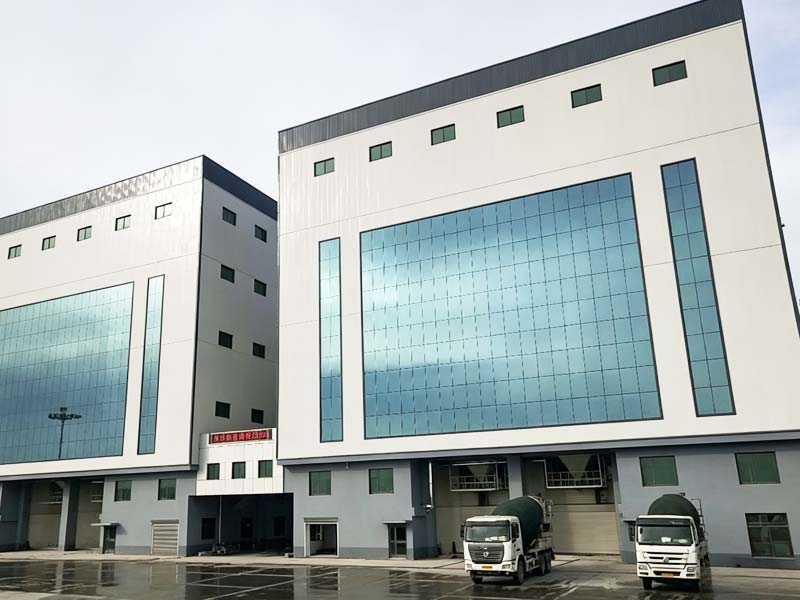
Site commissioning should verify both machine operation and production records.
For a smart concrete batching plant, run a controlled batch and trace it from recipe selection through final record generation.
Verify:
- correct recipe and revision;
- target material quantities;
- actual measured quantities;
- moisture correction;
- mixing and discharge timestamps;
- alarm behavior;
- manual intervention recording;
- destination or order linkage where required;
- report export.
Then deliberately test at least one abnormal but safe scenario, such as a receiver-not-ready condition or simulated missing signal, to confirm that the plant stops or waits according to the approved logic.
What Should Buyers Specify for a Smart Concrete Batching Plant?
A useful smart concrete batching plant specification should describe the production workflow and data requirements rather than simply requesting “PLC automation.”
Osigurati:
- concrete product range;
- number of aggregate and powder materials;
- moisture-correction requirements;
- batch sizes and peak production schedule;
- required recipe permissions;
- batch-record fields;
- order, truck or precast-station interfaces;
- remote-monitoring needs;
- data-retention requirements;
- report formats;
- future system-integration requirements.
Naš prilagođena proizvodna rješenja can use these requirements to define the automated batching and control architecture around the actual project.
Send your production and data requirements through our kontakt stranica for a project-specific control and plant configuration review.
Zaključak
A smart concrete batching plant is valuable when automation and traceability work together. Automatic batching controls the process; batch records, alarms, recipe versions and destination links explain what happened.
The strongest smart-plant specification begins with verified measuring systems, then defines recipe permissions, event history, batch records, data retention, remote-access boundaries and commissioning tests.
Smart control should make the plant easier to operate, diagnose and audit. It should not replace basic weighing verification, material control or engineering judgment.
FAQ
What is a smart concrete batching plant?
A smart concrete batching plant combines automated material batching and process control with production data such as recipe information, actual ingredient quantities, alarms, timestamps and batch records. Some configurations can also support remote monitoring and external system integration.
What data should a smart concrete batching plant record?
Useful records can include batch ID, recipe revision, target and actual ingredient quantities, aggregate moisture, water corrections, mixing time, alarms, manual overrides and the truck, order or casting station receiving the batch.
Can a smart concrete batching plant be monitored remotely?
Yes, depending on the control-system configuration. Buyers should distinguish remote monitoring from remote machine control and define user permissions, network security, communication-failure behavior and event logging before enabling remote access.
Does automation guarantee batching accuracy?
No. Automation depends on correctly installed and verified scales, meters, dispensers and sensors. A smart control system can execute the wrong measurement accurately if the underlying measuring device or input data are incorrect.
Why is batch traceability important?
Batch traceability connects production data with a delivery, order, mold or precast component. It helps quality teams investigate variation, confirm which recipe was used and identify any alarms or manual changes that occurred during production.


