
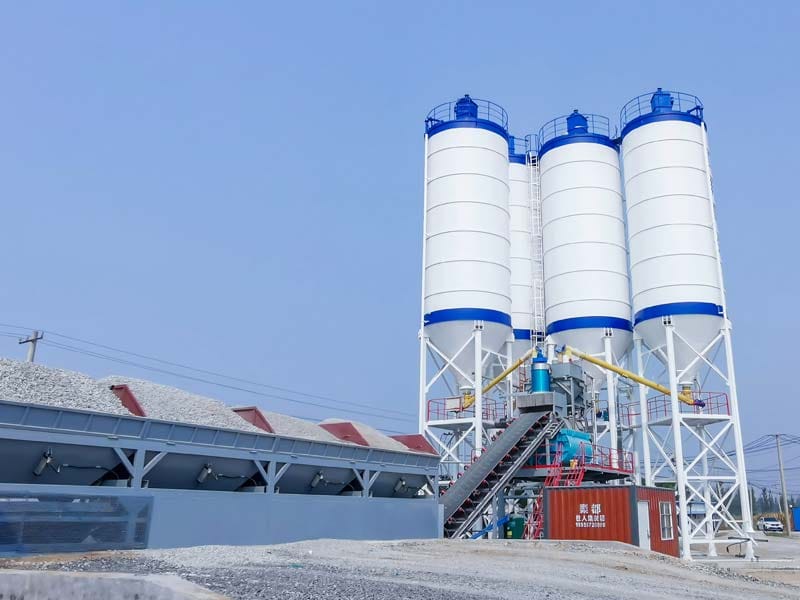
A mobile concrete batching plant makes sense when mobility solves a real production problem. That problem may be repeated relocation, a temporary construction schedule, unreliable ready-mix delivery, limited site space, or the need to move concrete production closer to changing work zones.
The key word is real. A plant should not be selected simply because “mobile” sounds more flexible. If the equipment will remain in one place for years, requires large permanent storage, or must support a highly integrated fixed production system, a stationary configuration may be the stronger choice.
This guide explains how to decide whether a mobile concrete batching plant fits your project, which site and production details should be checked before purchase, and what evidence to request before approving a configuration.
What Is a Mobile Concrete Batching Plant?
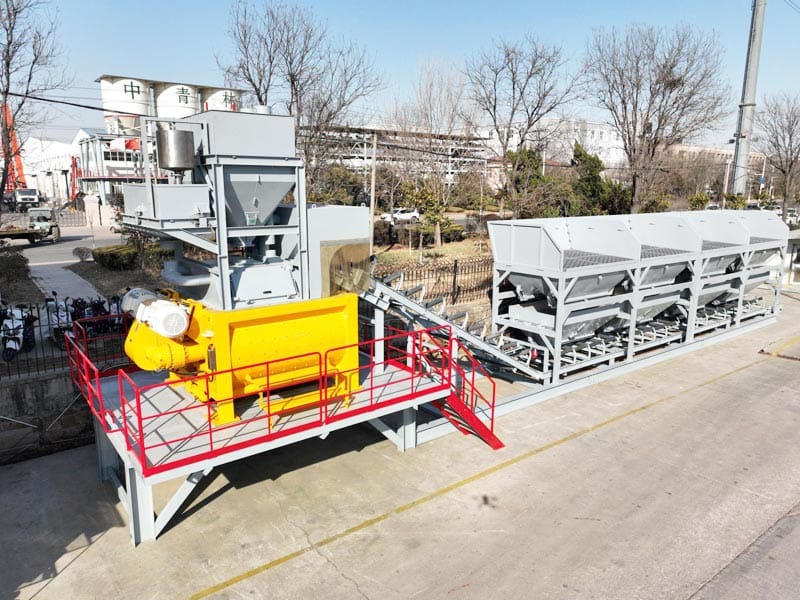
A mobile concrete batching plant combines core production functions within a relocatable or modular arrangement. The exact configuration varies by project, but the objective is to reduce the amount of permanent construction that must be rebuilt every time production moves.
Onze mobiele betonbatchinstallatie integrates batching, weighing, twin-shaft mixing and computer control within a modular frame. The published product range also describes factory pre-installation and testing, multiple layout options, and use in temporary, dispersed and space-limited projects.
Those features describe the equipment architecture. They do not remove the need to confirm ground conditions, utilities, material storage, traffic routes or commissioning requirements at each destination. A mobile concrete batching plant is still a concrete production system, and the surrounding site must be able to support it.
The U.S. Federal Highway Administration has long recognized portable batch plants as a practical way to bring concrete production closer to transportation projects, while emphasizing the plant’s ability to produce consistent concrete rather than mobility alone. See the FHWA material on portable concrete batching and mixing equipment.
Start with the Project Lifecycle, Not the Machine
The first question is not “How fast can this plant move?” It is “How will the project move?”
A mobile concrete batching plant becomes more relevant when the production location is expected to change during the equipment’s useful life. This may happen because one contract ends and another begins, because a linear project advances over distance, or because the same contractor repeatedly establishes temporary production bases.
Create a simple project-lifecycle map before comparing equipment:
| Project question | Waarom het ertoe doet | What to verify |
|---|---|---|
| How long will production stay at one site? | Shorter stays increase the value of relocatability. | Installation, dismantling and recommissioning scope. |
| Will production move within the same project? | Linear or dispersed work may need several production points. | Transport routes, module dimensions and site readiness. |
| Will the plant serve future contracts? | Future reuse can justify a relocatable arrangement. | Expected site types, required capacities and utility conditions. |
| Is one permanent location already available? | Long-term fixed production may favor a stationary layout. | Storage, expansion, traffic and maintenance requirements. |
This approach keeps a mobile concrete batching plant tied to the business and project lifecycle rather than treating mobility as an isolated feature.
When Remote Concrete Supply Creates a Real Constraint
A mobile concrete batching plant is often considered when ready-mixed concrete must travel a difficult route to the placement area. Distance matters, but distance alone is not enough. Road condition, traffic, truck availability, concrete specification, ambient conditions and pour sequence can all affect whether external supply is dependable.
NRMCA describes ready-mixed concrete as a material commonly delivered from a plant to the point of placement in truck mixers. Its overview of ready-mixed concrete delivery is useful background when reviewing the role of the transport fleet.
For a project study, map the complete delivery cycle. Record loading time, travel time, site waiting, discharge, return travel and truck availability. Then identify which parts vary during the busiest period.
If the route is unpredictable, producing closer to the work can reduce dependence on that external transport chain. But a mobile concrete batching plant introduces its own requirements: aggregates, cement, water, admixtures, power, loader access, operators and maintenance all need to be available at the temporary production site.
The correct comparison is therefore not “truck distance versus no truck distance.” It is one complete supply system versus another.
Check Whether Production Demand Actually Fits a Mobile Plant
Mobility is useful only if the proposed mobile concrete batching plant can meet the required production pattern. Do not compare equipment using the largest published hourly number without defining how that number will be used.
Start with peak demand. Suppose a project requires 360 m³ of concrete over a 10-hour shift. The average requirement is 36 m³/h. That figure may look modest, but if 180 m³ must be placed during one three-hour paving window, the relevant average during that window is 60 m³/h.
The plant must also recover from routine interruptions. Material replenishment, truck positioning, recipe changes and inspection can reduce productive time. A theoretical plant rating therefore needs to be compared with the actual project schedule.
For a mobile concrete batching plant, ask the supplier to state:
- the proposed discharged batch size;
- the assumed repeat cycle under the specified mix;
- which operations overlap during the cycle;
- how aggregate and powder storage support the production window;
- what downstream truck or receiving capacity is assumed.
Use one agreed operating scenario for every proposal. Otherwise, a higher theoretical number may simply reflect a different set of assumptions.
Compare Mobile and Stationary Plants by Complete Site Requirements
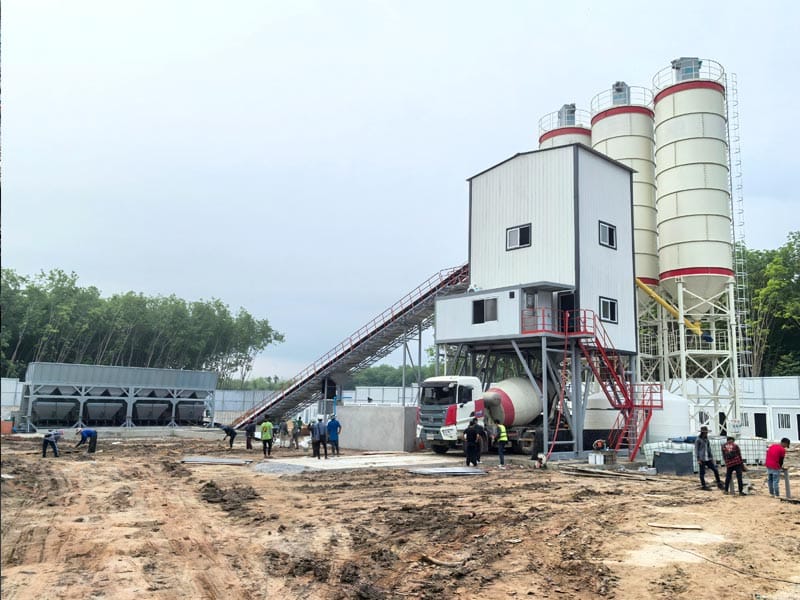
A mobile concrete batching plant and a stationary plant can both produce concrete, but they organize the site differently. The comparison should include the whole material and traffic system rather than only the mixer structure.
| Decision factor | Mobile configuration | Stationary configuration |
|---|---|---|
| Relocation | Designed to make future moves more practical. | Usually optimized for long-term use at one location. |
| Site preparation | May reduce permanent works, subject to actual support and ground conditions. | Can justify more permanent civil and utility infrastructure. |
| Storage | Often needs careful balance between mobility and buffer capacity. | Can be designed around larger permanent storage arrangements. |
| Expansion | Possible, but must be reviewed against modular layout and relocation goals. | Permanent sites may offer more freedom for staged expansion. |
| Project duration | Strong candidate for temporary or multi-site work. | Strong candidate for long-term fixed production. |
If relocation is unlikely, the main benefit of a mobile concrete batching plant may never be used. In that case, compare the mobile option with a fixed configuration such as a aan de zijkant gemonteerde bandbetonmenginstallatie using the same production, storage and site assumptions.
Do Not Treat “No Fixed Foundation” as “No Site Engineering”
Our product page describes a mobile concrete batching plant as capable of operating on a simple, level, hardened site without a fixed concrete foundation for the main mobile arrangement. That can reduce civil works, but it should not be interpreted as permission to place the equipment on any ground without review.
The project still needs an approved support condition. Ground bearing capacity, drainage, settlement, frost, slopes, local weather, vehicle loading and separate equipment such as silos may introduce their own requirements.
Before purchase, request support reactions or loading information, allowable site tolerances, requirements for silo supports and other independent structures, drainage provisions, and the interface between equipment supports and local civil design.
A mobile concrete batching plant reduces permanent construction only when the site can satisfy the equipment’s actual support and safety requirements.
Plan Material Storage Around the Time Between Deliveries
Temporary projects can have highly variable supply conditions. Aggregate or cement deliveries that work at a permanent urban plant may be less reliable at a remote or moving work site.
Size buffer storage from the production schedule and replenishment risk. For example, assume a mobile concrete batching plant consumes 70 tonnes of aggregate per hour during a four-hour critical production window. The theoretical demand is 280 tonnes. If truck deliveries can be interrupted for two hours, the project team should understand whether on-site storage can bridge that interruption.
This is not a recommendation that every plant store a fixed number of hours of material. It is a planning method. Cement storage, water availability and admixture supply require the same treatment.
Also review loader travel. A compact mobile concrete batching plant can lose its site advantage if aggregate piles force the loader to cross truck routes or travel excessive distances every cycle.
Draw the stockpiles, loader route, cement delivery path, concrete truck route and maintenance zone on one plan. A workable mobile site is a logistics layout, not just a small machine footprint.
Check Utilities Before Calling a Site “Ready”
Every mobile concrete batching plant needs defined utility interfaces. Confirm power supply, water supply, compressed air where applicable, drainage, lighting, communications and any external systems connected to the control platform.
Do not use total installed power as the only electrical design input. The site electrical engineer should review connected loads, starting behavior, operating sequence, voltage and frequency, protection, earthing and any local requirements.
Water deserves a similar check. Identify the required source, pressure, storage and treatment conditions. If production depends on trucked water, add that delivery route to the logistics plan.
Onze customization and plant configuration service can use these site inputs when developing a layout. The earlier utilities are defined, the less likely commissioning is to be delayed by an interface that sits outside the equipment package.
Relocation Time Must Include More Than Dismantling
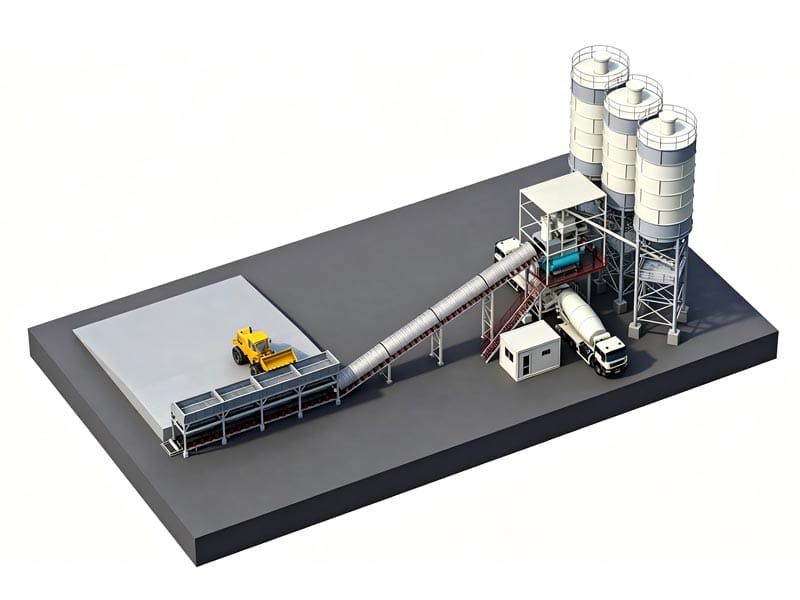
A mobile concrete batching plant may be easier to relocate than a permanent plant, but the useful project metric is the time from the last accepted batch at Site A to the first accepted batch at Site B.
That interval can include material cleanout, isolation, dismantling, lifting, transport, site preparation, reassembly, utility connection, inspection, weighing-system verification and production trials.
Consider a hypothetical sequence:
| Stage | Illustratieve duur | Can it overlap? |
|---|---|---|
| Site B preparation | 3 days | Yes, before shutdown at Site A. |
| Dismantling and loading | 1.5 days | Partly. |
| Transport | 1 day | Depends on module sequence. |
| Reassembly and utilities | 2 days | Partly. |
| Inspection and production verification | 1 day | After required systems are available. |
Adding every number gives 8.5 days, but that would be a poor schedule if Site B preparation is completed before the plant leaves Site A. The critical path may be much shorter. This example is not an installation promise; it shows why relocation should be planned as a dependency schedule.
NRMCA plant guidance also calls for weighing-system verification after a portable plant is moved. That is a useful reminder that mechanical reassembly and production acceptance are different milestones. See the NRMCA-richtlijn voor fabriekscertificering for the program’s verification framework.
Quality Control Still Matters After Every Move
Relocation should not change the approved concrete simply because the plant is mobile. A mobile concrete batching plant needs the same discipline around ingredient measurement, material condition, mixing and batch records as any other production facility.
After relocation, verify the systems that could have been affected by transport or reassembly. These may include weighing assemblies, supports, wiring, water and admixture lines, mixer clearances, discharge functions and control signals.
Do not assume that a factory test automatically covers Site B. Factory testing verifies the equipment under the conditions used there. Site commissioning verifies the installed arrangement with the destination site, utilities and materials.
For buyers, the practical requirement is traceability. Ask what will be inspected, who records the result and what condition must be met before normal production begins.
When a Mobile Concrete Batching Plant Is Usually a Strong Candidate
A mobile concrete batching plant deserves serious consideration when several of the following conditions occur together:
- the project is temporary;
- future relocation is expected;
- the work front changes over time;
- external concrete supply is unreliable or difficult to coordinate;
- the site can support a modular plant and required material storage;
- the production requirement fits the proposed mobile configuration;
- future projects are likely to reuse the equipment.
Road, railway, water-conservancy, municipal renovation, remote infrastructure and other dispersed construction can fit these conditions, which is why our mobile product range is positioned around temporary and multi-site project work.
However, application labels should never replace a project review. A highway project with one long-term central production base may favor a stationary plant. A building project on a constrained temporary site may favor a mobile concrete batching plant. The project structure matters more than the industry label.
When a Stationary Plant May Be the Better Choice
A mobile concrete batching plant is not the default answer for every contractor. A stationary configuration should receive stronger consideration when production will remain at one site for a long period, when large permanent storage is required, when the plant is tightly integrated with fixed downstream equipment, or when future expansion is central to the plan.
Permanent ready-mix production and fixed precast factories often justify a deeper comparison because the value of future relocation may be limited. In these cases, maintenance access, storage, truck circulation and future equipment additions can be optimized around one site.
The decision should not be presented as mobile versus stationary in isolation. Compare two complete layouts that satisfy the same concrete specification and peak production schedule. Then judge which arrangement better supports the project over its expected life.
What Information Should You Send Before Requesting a Configuration?
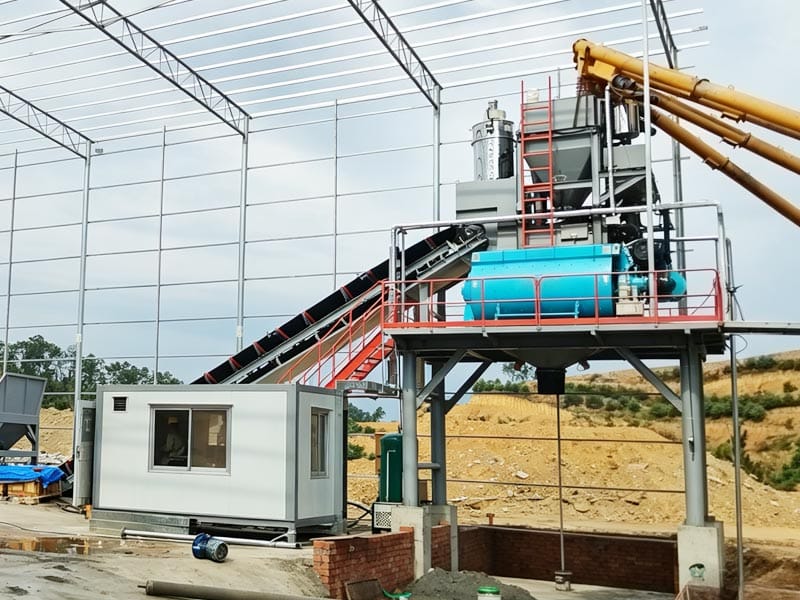
A useful mobile concrete batching plant inquiry should describe the work, not just request a model number.
Provide the project duration, required concrete types, expected daily volume and busiest production window. Include aggregate fractions, cementitious materials, admixtures and water source. Share the available site dimensions, access roads, utility conditions and any height or transport restrictions.
If future relocation matters, describe the expected next sites as well. A configuration optimized for one location may become difficult to reuse if the next project has a different footprint, power supply or material-handling method.
Also identify what equipment will receive the concrete and what storage already exists. This allows the proposal to define the interfaces instead of hiding them behind a generic statement that the plant is mobile.
Send these details through our project inquiry page so the equipment configuration, layout and relocation requirements can be reviewed together.
Conclusie
A mobile concrete batching plant makes sense when mobility improves the way concrete production follows the project. Temporary operation, repeated relocation, difficult external supply and dispersed work zones can all strengthen the case, but only if the proposed plant also fits the required output, materials, storage and site conditions.
The best decision comes from comparing complete production systems. Define the project lifecycle, map the logistics, verify site readiness and agree how the plant will be recommissioned after each move. Then mobility becomes a measurable project advantage rather than a marketing label.
FAQ
Is a mobile concrete batching plant only suitable for small projects?
No. Project suitability depends on required production, batch size, storage, logistics and the actual mobile configuration. A mobile concrete batching plant should be checked against the peak production window rather than classified only by project size.
Does a mobile concrete batching plant need a concrete foundation?
Not always for the main modular arrangement. Our mobile plant is designed for a simple, level, hardened site without a fixed concrete foundation for the mobile frame, but actual ground support and separate structures still require project-specific verification.
How often can a mobile concrete batching plant be relocated?
There is no universal relocation frequency. The practical limit depends on module design, transport conditions, site preparation, dismantling procedures and recommissioning requirements. Define the expected project sequence before purchasing.
Can a mobile concrete batching plant replace ready-mix delivery?
It can provide on-site or near-site concrete production where that arrangement is technically suitable, but the project must supply raw materials, utilities, operators, storage and quality control. Compare the complete supply systems rather than assuming on-site production automatically solves every delivery problem.
What should be checked after relocating a mobile concrete batching plant?
Inspect systems affected by dismantling, transport and reassembly, then verify utilities, controls, weighing, mixing and discharge functions before normal production. The exact acceptance plan should follow the equipment documentation and project requirements.


