
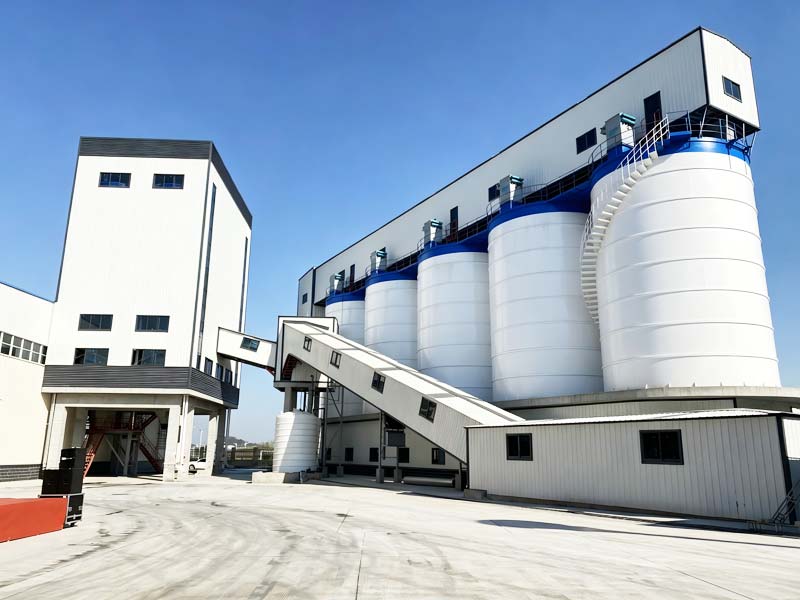
A batching plant scope of supply should define exactly what the equipment supplier will provide, what the buyer must prepare, and where the technical responsibility changes from one party to another. Without that definition, two quotations that look similar can actually include very different equipment, services, drawings, installation support and commissioning responsibilities.
For buyers, this is one of the most important documents in a concrete batching plant project. A low equipment price can become misleading if silos, control cabinets, air compressors, cables, foundations, erection supervision or commissioning are excluded. At the same time, suppliers should not be expected to provide civil works, utility infrastructure or third-party interfaces unless those items are specifically included.
Onze maatwerk productie oplossingen include project-specific equipment configuration, plant layout, installation guidance, technical training and spare-parts support. This guide explains how to define a batching plant scope of supply so both buyer and supplier work from the same technical boundary.
What Is a Batching Plant Scope of Supply?
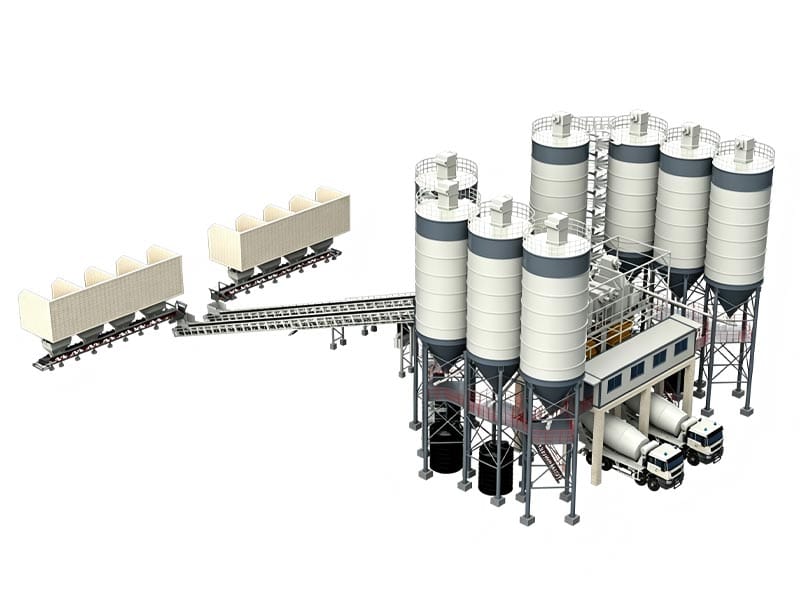
A batching plant scope of supply is the agreed list of equipment, documentation, services and interfaces included in the supplier’s responsibility.
It normally covers:
- main production equipment;
- material storage and transfer systems;
- weighing and dosing systems;
- mixer and discharge equipment;
- control system;
- steel structures and platforms;
- electrical equipment;
- documentation;
- factory testing;
- installation or installation guidance;
- commissioning;
- training;
- spare parts.
The document should also identify exclusions such as civil foundations, external utilities, building works, local permits or customer-supplied equipment where applicable.
Start with the Process Boundary
The first question is where the batching plant scope of supply begins and ends.
For example, does the supplier’s responsibility begin at the aggregate receiving hopper or only at the aggregate batching bins? Does it end at the mixer discharge or include truck loading, precast transport buckets or concrete pumps?
| Process boundary | Question to define |
|---|---|
| Aggregate intake | Does scope include receiving hopper, loader-fed bins or upstream conveyor? |
| Powder intake | Are cement silos, filling pipes and screw conveyors included? |
| Water | Does scope start at customer water tank or include storage and pumping? |
| Admixtures | Are tanks, pumps and dosing units included? |
| Concrete discharge | Does scope stop at mixer gate or include downstream transport? |
A batching plant scope of supply becomes much clearer when every material stream has an identified handover point.
Define the Main Mixer and Batching Equipment
The scope should identify the exact production equipment included in the proposed plant.
For a belt-fed system, this may include:
- aggregate storage bins;
- aggregate feeders;
- aggregate weighing hopper;
- flat conveyor;
- inclined conveyor;
- temporary aggregate hopper;
- mixer;
- main structural frame.
Onze aan de zijkant gemonteerde bandbetonmenginstallatie uses continuous flat and inclined belt transfer, while other plant types use skip-hoist aggregate lifting.
The batching plant scope of supply should identify the selected arrangement rather than simply stating “complete batching plant.”
List Every Aggregate Bin and Its Accessories
Aggregate batching equipment should be described in enough detail that the buyer knows how many materials the plant can handle.
Define:
- number of aggregate bins;
- bin volume;
- feeder type;
- weighing arrangement;
- vibrators or flow aids where included;
- liners where included;
- support steelwork;
- inspection platforms.
If an additional aggregate fraction is expected later, note whether the current batching plant scope of supply includes provision for expansion.
Define Cement and Powder Storage Clearly
Cement silos are often one of the largest sources of quotation differences.
One supplier may include them while another may quote only the main mixing plant.
The batching plant scope of supply should state:
- number of silos;
- storage capacity;
- silo body and support structure;
- filling pipe;
- level indicator;
- dust collector;
- pressure-relief device;
- discharge valve;
- screw conveyor;
- foundation interface.
Also specify whether silos are side-mounted or overhead, because this affects the main plant layout and support structure.
Identify Every Weighing and Dosing System
The plant should not be described only by mixer model and output.
A complete batching plant scope of supply should identify the measuring systems for:
- aggregates;
- cementitious powders;
- water;
- liquid admixtures;
- other project-specific materials.
Onze kalibratiegids voor batchinstallaties explains why each measuring system should be treated independently.
Where coarse and fine powder feeding is included, this should also be stated in the equipment description.
Separate Weighing Hardware from Calibration Responsibility
Supplying a scale and performing site calibration are not necessarily the same contractual responsibility.
The batching plant scope of supply should clarify:
- whether load cells and indicators are included;
- whether factory calibration is performed;
- whether site calibration is included;
- who provides test weights or reference equipment;
- who signs the final calibration record;
- whether local legal metrology approval is required.
This avoids a common commissioning delay where the equipment is installed but no party has prepared the required reference loads or local certification.
Define the Control System in Functional Terms
“Automatic control system included” is too vague.
The batching plant scope of supply should state which control functions are included.
Examples include:
- recipe management;
- automatic batching sequence;
- moisture correction;
- target-versus-actual batch records;
- alarm history;
- user permissions;
- production reports;
- remote monitoring;
- external system interfaces.
Onze slimme concrete batching plant guide explains why automation should be specified as functions rather than as a general “smart” feature.
Clarify the Control Cabinet and Electrical Boundary
Electrical scope is another common area of misunderstanding.
Define whether the supplier includes:
- main control cabinet;
- PLC and HMI;
- motor control equipment;
- variable-frequency drives;
- local junction boxes;
- plant-level cables;
- cable trays;
- lighting;
- earthing components.
Then define the buyer’s electrical boundary.
For example, the buyer may provide incoming power to the main cabinet while the supplier provides internal plant wiring from the cabinet to supplied equipment.
The exact handover point should be shown on a drawing or single-line diagram.
Utility Supply Should Have Clear Handover Points
A concrete batching plant depends on water, compressed air and electrical power.
The batching plant scope of supply should define who provides:
- incoming electrical power;
- transformer;
- water source;
- water storage;
- water pumps;
- air compressor;
- air receiver;
- external pipework.
A supplier may include an air compressor as part of the plant or may require the customer to provide plant air at an agreed pressure and flow.
The scope should not leave this assumption unresolved until installation.
Steel Structure and Platforms Should Be Listed
The batching plant main structure may include several service platforms, ladders, stairs and guardrails.
Define:
- main support frame;
- mixer platform;
- weighing platforms;
- conveyor supports;
- maintenance walkways;
- stairs;
- ladders;
- guardrails.
Do not assume every access structure visible in a reference image is automatically included in the batching plant scope of supply.
Civil Foundations Need a Separate Responsibility Matrix
Equipment suppliers often provide foundation load data or drawings, while local civil works are performed by the buyer or a local contractor.
The batching plant scope of supply should clarify who provides:
- foundation loads;
- anchor-bolt layout;
- civil reference drawings;
- geotechnical investigation;
- final structural foundation design;
- excavation;
- reinforcement;
- concrete works;
- embedded plates.
Foundation design must reflect local ground and structural requirements.
A supplier’s equipment load drawing should not automatically be treated as a complete locally approved civil design unless that service is explicitly included.
Installation Scope Should Be Defined Before Shipment
“Installation included” can mean very different things.
Possible models include:
- buyer installs from supplier drawings;
- supplier provides remote installation guidance;
- supplier sends a supervisor while local labor performs erection;
- supplier provides a larger installation team;
- third-party contractor performs the work.
MixingPlantPro’s customized solution page currently identifies installation guidance as part of project support. citeturn890098search0
The batching plant scope of supply should state the selected model and the responsibilities of each party.
Define Who Provides Cranes and Local Labor
Even when a supplier sends installation personnel, the site may still need local resources.
Clarify responsibility for:
- mobile cranes;
- forklifts;
- manlifts;
- welders;
- electricians;
- mechanical labor;
- rigging tools;
- temporary power;
- site accommodation where applicable.
These items can materially affect the installation schedule.
Commissioning Should Have Defined Preconditions
Commissioning cannot begin simply because the mechanical equipment is standing on its foundations.
The batching plant scope of supply should identify what must be ready before commissioning personnel arrive.
Typical prerequisites include:
- mechanical installation complete;
- power available;
- water available;
- compressed air available;
- materials available;
- scales ready for verification;
- safety guards installed;
- customer operators available.
If these conditions are not ready, commissioning time can be consumed by construction completion rather than equipment testing.
Factory Acceptance Testing and Site Testing Are Different
Factory testing can verify control cabinets, motors, sensors, software functions and selected mechanical operations before shipment.
Site commissioning verifies the plant after final installation and utility connection.
The batching plant scope of supply should define:
- factory test scope;
- customer witness requirements;
- site no-load testing;
- site material-loaded testing;
- performance test conditions;
- acceptance records.
Do not use the phrase “tested before delivery” as a substitute for an agreed acceptance plan.
Training Scope Should Be Specific
MixingPlantPro lists technical training among its project-support services. citeturn890098search0
The batching plant scope of supply should state whether training covers:
- normal operation;
- recipe management;
- alarm handling;
- daily inspection;
- smering;
- calibration procedures;
- basic troubleshooting;
- spare-parts identification.
Also identify the number of trainees, training language and whether the sessions occur during commissioning or separately.
Spare Parts Should Be Split into Categories
“Spare parts included” is too vague.
Separate:
- commissioning spares;
- recommended one-year operating spares;
- critical long-lead spares;
- wear parts;
- consumables.
MixingPlantPro identifies spare-parts supply as part of long-term project support. citeturn890098search0
The batching plant scope of supply should list the exact parts included in the initial order and which are only recommended for separate purchase.
Documentation Should Be Part of the Deliverable
Technical documentation is necessary for installation, operation and maintenance.
Define the required documents:
- general arrangement drawing;
- equipment list;
- foundation load drawing;
- electrical drawings;
- control-system documentation;
- operation manual;
- maintenance manual;
- spare-parts list;
- lubrication schedule;
- commissioning records.
If local-language documentation is required, specify it before contract award.
Third-Party Interfaces Need Named Responsibility
A batching plant may connect to equipment supplied by another company.
Examples include:
- aggregate crushing plant;
- recycled-water system;
- truck dispatch system;
- ERP software;
- precast transport bucket;
- concrete pump;
- external dust collector.
The batching plant scope of supply should define the mechanical, electrical and data interface for each third-party system.
Our precast plant, for example, can use production-line software interfaces, but the exact signals and responsibility must be agreed for the project.
Define Environmental Equipment Separately
Environmental-control equipment can include:
- silo dust collectors;
- transfer-point enclosures;
- mixer dust extraction;
- washout system;
- settling tanks;
- recycled-water equipment;
- noise enclosures.
Do not assume all environmental systems required by local permits are automatically included in the standard batching plant scope of supply.
Onze gids voor milieuontwerp van batchinstallaties explains how dust, noise and water-control requirements vary with the project.
Shipping and Packaging Boundaries Should Be Clear
International projects also need logistics definitions.
Clarify:
- equipment packing standard;
- containerization;
- oversized components;
- loading responsibility;
- shipping terms;
- insurance responsibility;
- unloading at destination;
- storage before erection.
These commercial terms may sit outside the technical specification, but they should align with the batching plant scope of supply so no major equipment item is omitted from the shipping plan.
Use an Inclusion and Exclusion Matrix
A simple matrix makes the scope easier to review.
| Item | Supplier | Buyer | To Be Confirmed |
|---|---|---|---|
| Main batching plant equipment | ✓ | ||
| Civil foundations | Project-specific | Confirm final responsibility | |
| Incoming utility power | Project-specific | Define handover point | |
| Installation supervision | Project-specific | Define duration and resources | |
| Commissioning | Project-specific | Define prerequisites | |
| Local permits | Usually project-specific | Confirm jurisdiction |
This example is illustrative only. The final responsibility matrix should be agreed contractually for the actual project.
What Should Buyers Send Before Finalizing the Scope?

A useful technical scope review begins with a complete project brief.
Verstrekken:
- required concrete output;
- concrete applications;
- aggregaatfracties;
- poedermaterialen;
- water and admixture requirements;
- site drawing;
- power and utility data;
- environmental requirements;
- installation resources available locally;
- automation and interface requirements;
- future expansion plans.
Onze concrete batching plant project brief guide provides a structured list of the information needed before technical configuration begins.
Send your project brief and site information through our contactpagina for an engineering review.
Conclusie
A batching plant scope of supply should make every equipment item, service, document and responsibility visible before the order is finalized.
The strongest scope separates supplier equipment from buyer civil works, defines utilities and third-party interfaces, identifies installation and commissioning responsibilities, and lists training, documentation and spare parts clearly.
Do not compare batching plant proposals only by headline price or mixer model. Compare them line by line against the same scope matrix so the technical and commercial differences are clear before contract award.
FAQ
What should be included in a batching plant scope of supply?
It should identify main equipment, storage, conveying, weighing, mixer, control system, steelwork, electrical equipment, documentation, testing, installation support, commissioning, training and spare parts, together with clear exclusions.
Are civil foundations normally included with a batching plant?
Not automatically. Equipment suppliers may provide loads and reference drawings, while local civil works are often project-specific. The final responsibility should be stated explicitly in the contract.
Should commissioning be included in the equipment scope?
It should be clearly defined whether included or excluded. The scope should also state commissioning prerequisites such as completed installation, utilities, materials, scale verification and available operators.
What is the difference between factory testing and site commissioning?
Factory testing checks selected equipment and control functions before shipment. Site commissioning verifies the assembled plant under final utility connections and, where agreed, real production materials.
Why is a responsibility matrix useful?
It shows which party supplies or performs each item, highlights unresolved interfaces and makes competing proposals easier to compare on the same technical basis.


