
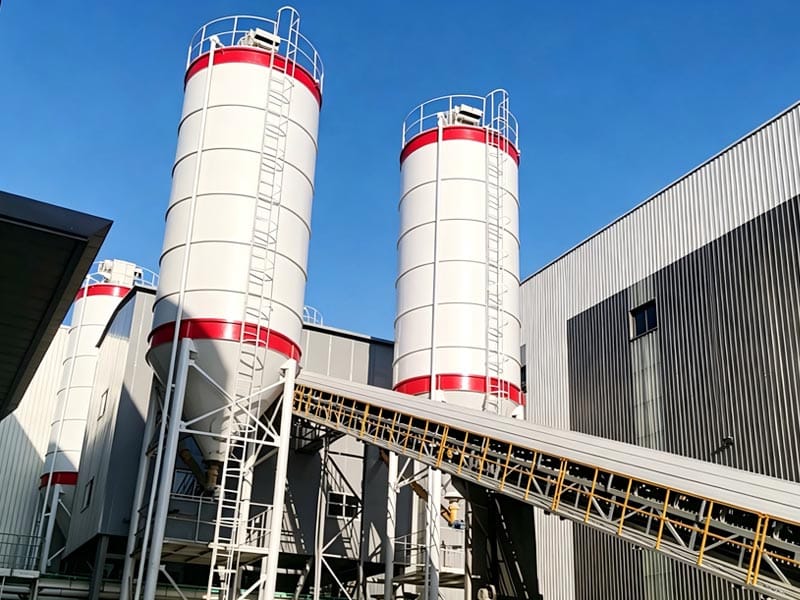
Planetary vs twin shaft mixer is a practical comparison for precast concrete producers because the mixer affects much more than nominal batch capacity. It influences how concrete moves inside the mixing chamber, how a batch discharges, how easily the mixer fits into a casting schedule, and how well the equipment handles the range of mixtures a factory intends to produce.
For precast production, the useful question is not which mixer is universally “better.” It is which mixing action, batch range, discharge arrangement and production cycle fit the actual products leaving your factory.
Náš prefabrikovaná betonáreň uses a vertical-shaft planetary mixer, while other concrete batching applications in our product range use twin-shaft mixing. This guide uses the planetary vs twin shaft mixer comparison to show what a buyer should verify before selecting the mixing system for a precast line.
Why Planetary vs Twin Shaft Mixer Is Not a Simple Capacity Comparison
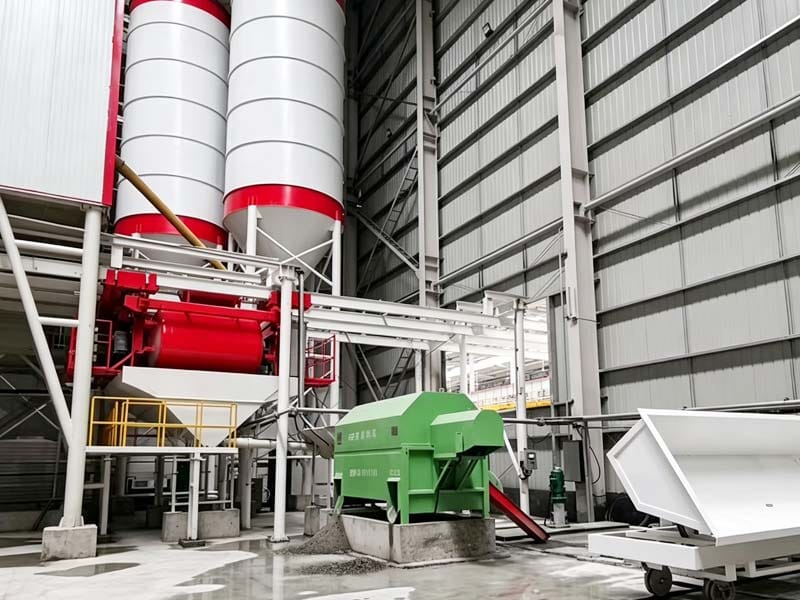
A planetary vs twin shaft mixer comparison should begin with the concrete and the production process, not with an hourly output number. Two mixers with different geometries can have similar nominal batch volumes yet behave differently with stiff mixes, highly flowable concrete, fiber additions, short production runs or repeated recipe changes.
NIST’s review of concrete mixing methods and mixer performance emphasizes that the quality of a mixing method should ultimately be judged by the concrete produced and its homogeneity. Mixer geometry, ingredient sequence, mixing energy and the properties of the mixture all affect the process.
That is why a planetary vs twin shaft mixer decision should be based on representative trials. A brochure can identify the mixer type. It cannot prove that a specific recipe, batch size and casting schedule will achieve the required result.
How a Planetary Mixer Moves Concrete
A planetary mixer is a vertical-shaft pan-type mixer. The mixing tools rotate around their own axes while also moving around the mixer center, producing overlapping paths through the material.
The National Precast Concrete Association describes planetary mixers as counter-current pan mixers in which the blade and paddle system covers the pan and is intended to reduce dead areas. Its overview of batching and mixing equipment for precast production also notes that pan and planetary arrangements are commonly used in precast applications.
In a planetary vs twin shaft mixer review, this geometry is particularly relevant when the factory handles multiple precast products, short batches or concrete that benefits from intensive mixing across the full pan area.
The planetary mixer used in our precast batching plant is paired with multiple discharge doors, moisture and temperature monitoring, and software integration for the precast production line. Those features make the mixer part of a wider factory system rather than an isolated machine.
How a Twin-Shaft Mixer Moves Concrete
A twin-shaft mixer uses two horizontal shafts fitted with mixing arms and paddles. Their opposing mixing zones force materials through an intensive compulsory mixing action.
NPCA notes that twin-shaft mixers are widely used for wet-cast concrete and are capable of rapid mixing. In a planetary vs twin shaft mixer comparison, this makes the twin-shaft arrangement relevant when a project prioritizes high batch throughput, larger repetitive batches and a production flow well matched to horizontal mixing.
Náš mobilná betonáreň, for example, uses a twin-shaft forced mixer because its design priorities differ from those of a dedicated precast factory.
That does not mean twin-shaft mixing is unsuitable for precast concrete. It means suitability should be tested against the intended concrete, production schedule and discharge system. The planetary vs twin shaft mixer decision is therefore an application decision, not a ranking of mixer names.
Compare the Two Mixers by the Concrete You Actually Produce
Before choosing between planetary vs twin shaft mixer options, prepare a product matrix. Include every major concrete family, expected batch size, fresh-concrete requirement, production frequency and receiving station.
| Production question | Prečo na tom záleží | What to verify in trials |
|---|---|---|
| Do you produce stiff or low-slump concrete? | Higher internal resistance can change mixing demand. | Uniformity, discharge behavior and mixer loading. |
| Do you produce self-consolidating concrete? | Flowability and segregation resistance depend on controlled processing. | Fresh properties, mixing sequence and repeatability. |
| Do recipes include fibers or small additions? | Dispersion can become a critical mixing task. | Distribution, balling risk and addition sequence. |
| Are batch sizes frequently changed? | Small batches may behave differently from nominal batches. | Minimum validated batch and complete discharge. |
| Do multiple casting stations share one mixer? | Discharge routing and schedule can limit useful output. | Outlet sequence, receiving capacity and cycle timing. |
This matrix turns a planetary vs twin shaft mixer discussion into a production specification. The selected mixer should demonstrate acceptable concrete across the operating range, not just during one convenient trial.
Which Mixer Is Better for Dry-Cast or Stiff Precast Concrete?
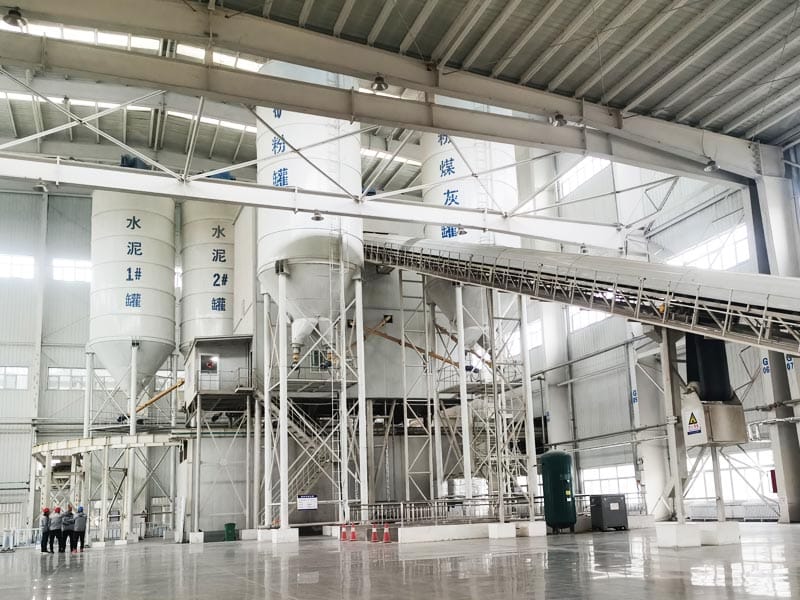
Dry-cast concrete is a stiff mixture used with mechanical consolidation. It should not be confused with dry batching, because water is still part of the concrete mixture.
NPCA’s discussion of precast mixing equipment indicates that planetary and other pan-type mixers are widely used for dry-cast applications, while twin-shaft mixers are more commonly associated with wet-cast concrete, although successful dry-cast use also exists. That makes dry-cast production an important checkpoint in any planetary vs twin shaft mixer evaluation.
Do not translate that industry tendency into an automatic rule. Concrete rheology, aggregate grading, binder content, admixtures, mixer loading and forming equipment all affect the result.
If dry-cast products are important to your factory, conduct a trial using the actual recipe or a technically representative formulation. Record the mixing sequence, current or power behavior, mixing time, discharge condition and the forming-machine response. The planetary vs twin shaft mixer decision should follow those observations.
What About Self-Consolidating Concrete?
Self-consolidating concrete places different demands on process control. High flowability must be achieved without unacceptable segregation, and production repeatability matters because relatively small changes in water or admixture can affect fresh behavior.
ACI maintains extensive technical resources on self-consolidating concrete, including precast and prestressed applications. These references reinforce the point that SCC performance is a mixture-design and production-control issue, not a property guaranteed by a mixer label.
For planetary vs twin shaft mixer selection, run SCC trials at the expected batch size and ingredient sequence. Verify the fresh properties required by the approved mix design and observe whether discharge introduces delays or segregation concerns.
A mixer that produces acceptable SCC in a laboratory-sized or specially controlled demonstration has not automatically proven the full production system. Batching accuracy, aggregate moisture, mixer loading and transport to the mold remain part of the result.
Batch Size Can Matter More Than Nameplate Volume
Precast factories rarely produce only one full-size batch. A plant may need large batches for wall panels, smaller batches for stairs or beams, and partial completion batches when a mold needs less than the mixer’s nominal output.
That is why the planetary vs twin shaft mixer comparison should include minimum, normal and maximum planned batch sizes.
Consider a hypothetical factory using a 2 m³ nominal mixer. One product normally requires 1.8 m³ per batch, while another repeatedly requires only 0.7 m³. If the smaller batch cannot be mixed and discharged within the agreed quality criteria, the nominal 2 m³ capacity does not solve that production requirement.
Do not assume that reducing every ingredient to 35% of the nominal batch automatically preserves the same mixing action. The relationship between tool geometry, material depth and energy transferred into the concrete changes with loading.
For planetary vs twin shaft mixer trials, test the smallest routine batch instead of relying on the full-load result. Record concrete performance and complete discharge before defining the validated operating range.
Mixing Time Is Not the Same as Production Cycle Time
One of the most common mistakes in a planetary vs twin shaft mixer comparison is using mixing time as if it were the complete repeat cycle.
A batch cycle can include ingredient charging, final additions, mixing, discharge, confirmation that the receiving system is ready, and preparation for the next batch. Some operations overlap; others do not.
Suppose, as an illustrative example, that Mixer A requires 45 seconds of mixing and Mixer B requires 35 seconds. That ten-second difference does not establish a ten-second production advantage if both systems spend another 70 seconds on non-overlapping charging and discharge activities.
| Illustrative stage | Mixer A | Mixer B |
|---|---|---|
| Non-overlapping final charging | 25 s | 25 s |
| Mixing | 45 s | 35 s |
| Discharge and receiver confirmation | 45 s | 50 s |
| Illustrative repeat cycle | 115 s | 110 s |
The difference in this example is five seconds, not ten. These figures are hypothetical and do not describe product performance. They demonstrate why planetary vs twin shaft mixer selection should use a complete timed production sequence.
Discharge Design Matters in a Precast Factory
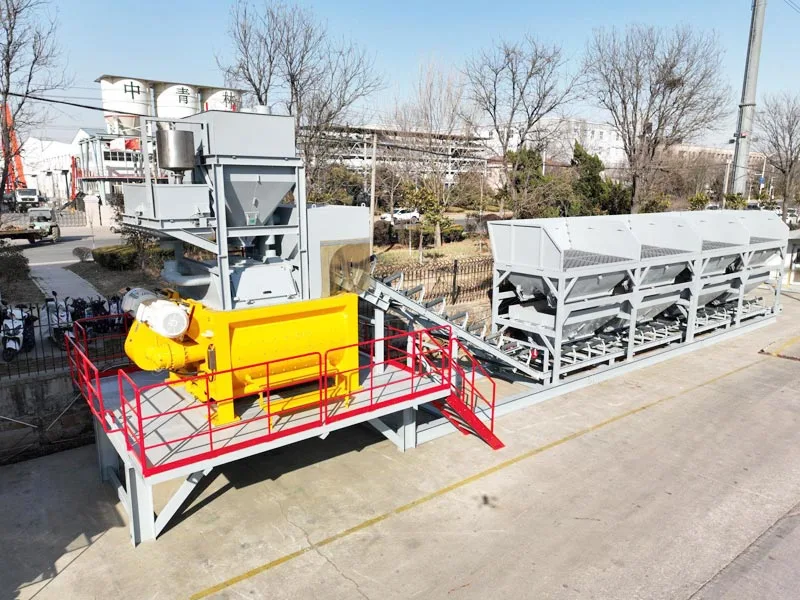
For precast production, concrete must reach the correct mold or transport system at the required time. Mixer discharge is therefore part of the planetary vs twin shaft mixer decision.
Our precast batching plant uses a planetary mixer with a multiple-discharge-door arrangement. That can support different delivery routes within a precast factory, subject to the final project layout and receiving equipment.
When reviewing either mixer type, identify the usable discharge volume, outlet location, opening sequence and receiver capacity. Check whether the concrete feeds a rail bucket, transfer hopper, truck, conveyor-supported system or another project-specific interface.
Multiple outlets do not create multiple independent mixers. If two casting stations request concrete simultaneously, the control logic still needs to determine which batch is produced first and which receiving route is available.
Our earlier guide to matching a precast concrete batching plant to the casting line explains this scheduling issue in more detail.
How Should Mixing Uniformity Be Evaluated?
The planetary vs twin shaft mixer debate often relies on statements such as “more uniform” or “faster mixing.” These claims are only useful when the test method and concrete are defined.
NIST emphasizes homogeneity as a key measure when evaluating concrete mixing effectiveness. A project trial should therefore use agreed sampling locations, timing and concrete tests rather than visual appearance alone.
The appropriate measurements depend on the product and governing quality plan. They may include fresh-concrete properties, hardened test specimens or comparisons between samples taken from different portions of the batch.
Keep the test objective clear. If the purpose is to compare planetary vs twin shaft mixer performance, change as few other variables as practical. Different recipes, batch sizes or mixing sequences can make the result impossible to interpret.
Also distinguish “mixed adequately” from “mixed for the shortest possible time.” Production optimization should come after acceptable concrete has been demonstrated.
Maintenance Access Should Be Compared Before Purchase
Mixing quality matters, but a mixer also has to be inspected, cleaned and maintained throughout its service life. Include those tasks in the planetary vs twin shaft mixer comparison.
Ask how personnel safely access the chamber, how mixing tools and wear liners are inspected, how replacement components are removed, and what isolation is required before entry or service work.
For twin-shaft equipment, review shaft-end areas, arms, paddles and liner access. For planetary equipment, review the planetary drive arrangement, mixing arms, scrapers, pan liners and discharge doors. The exact parts depend on the proposed mixer model and should be confirmed from the manufacturer’s documentation.
Do not compare maintenance using a generic statement such as “fewer wearing parts.” Request an actual parts drawing, recommended inspection schedule and replacement procedure for the offered configuration.
Maintenance also affects factory scheduling. A mixer that requires a longer planned service window may still be the right choice if that work can be scheduled between production campaigns. The planetary vs twin shaft mixer decision should consider maintainability in the context of your operating calendar.
Use a Factory Trial to Make the Final Decision
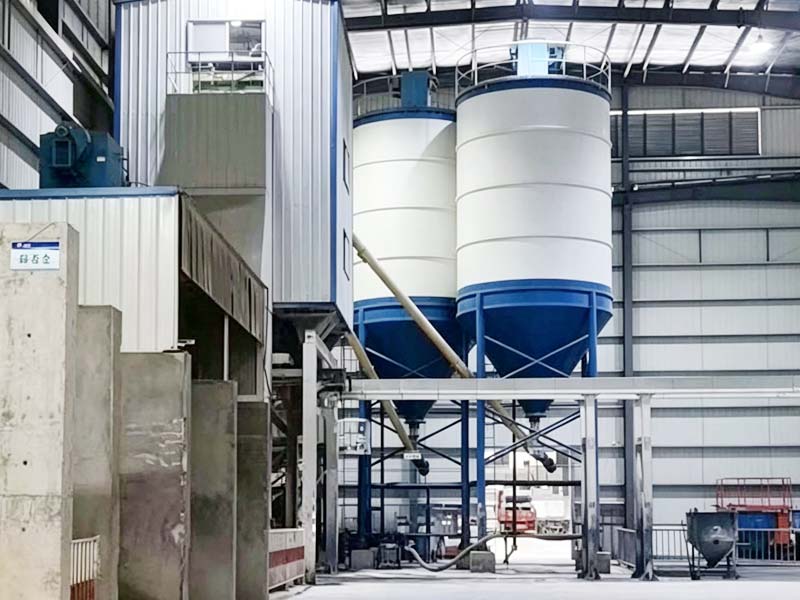
For a serious precast project, the strongest planetary vs twin shaft mixer decision comes from representative evidence rather than general claims.
Prepare a trial matrix with the concrete producer and equipment supplier. Include a normal batch, the smallest routine batch and at least one demanding mix if the factory uses stiff, SCC, fiber-reinforced or otherwise challenging concrete.
For every trial, record:
- ingredient quantities and material lots;
- ingredient charging sequence;
- mixer loading level;
- mixing time and complete repeat cycle;
- fresh-concrete test results;
- discharge behavior and residue observations;
- receiving equipment and transfer time;
- any manual intervention or alarm.
Use the same acceptance criteria that will matter during normal production. If the two mixer concepts are being compared, keep the testing basis consistent.
Náš precast concrete solutions are configured around production capacity, product type and site conditions. Supplying those details makes the mixer discussion part of a complete plant design rather than a standalone equipment choice.
Planetary vs Twin Shaft Mixer: A Practical Selection Matrix
The table below summarizes how to approach planetary vs twin shaft mixer selection. It is a decision framework, not a universal performance ranking.
| Selection factor | Planetary mixer question | Twin-shaft mixer question |
|---|---|---|
| Precast product range | Does pan-type mixing suit the planned product diversity and batch range? | Does horizontal compulsory mixing fit the dominant wet-cast production? |
| Small batches | What minimum batch has been validated? | What minimum batch has been validated? |
| Stiff mixtures | What trial evidence supports the proposed configuration? | What trial evidence supports the proposed configuration? |
| High throughput | What is the complete repeat cycle? | What is the complete repeat cycle? |
| Multiple casting stations | How do discharge doors and routing integrate with receivers? | How will discharge connect to the required destinations? |
| Maintenance | How are planetary tools, liners and outlets serviced? | How are shafts, seals, paddles and liners serviced? |
The repeated questions are intentional. A mixer type creates a starting hypothesis, not a pass-or-fail decision. Planetary vs twin shaft mixer selection becomes reliable only when the proposed machine is evaluated under the production conditions it will actually face.
Záver
Planetary vs twin shaft mixer selection for precast concrete should be based on the concrete, batch range, production cycle, discharge route and maintenance requirements—not on a universal claim that one mixer is superior.
Planetary mixers are strongly associated with precast production because their pan-type mixing action and layout can suit varied batches and factory integration. Twin-shaft mixers are proven compulsory mixers with strong relevance to repetitive wet-cast production and high-throughput concrete plants. Either concept still needs project-specific verification.
Share your precast products, concrete types, minimum and maximum batch sizes, casting schedule and factory layout through our kontaktná stránka. We can review the mixer and batching configuration as one complete production system.
FAQ
Is a planetary mixer always better for precast concrete?
No. Planetary mixers are widely used in precast production, but the correct choice depends on concrete type, batch range, discharge requirements and production schedule. Use representative trials rather than selecting only by mixer category.
Is a twin-shaft mixer suitable for precast concrete?
Yes, depending on the application. Twin-shaft mixers are commonly used for wet-cast concrete and can be appropriate for precast production when their batch size, mixing performance and discharge arrangement fit the factory.
Which mixer is better for small precast batches?
Do not decide from nominal volume alone. Test the smallest intended batch in the proposed mixer and verify concrete uniformity, ingredient dispersion and discharge. The validated operating range is more useful than a general planetary vs twin shaft mixer rule.
Which mixer produces concrete faster?
Compare the complete repeat cycle rather than mixing time alone. Ingredient charging, discharge and receiver readiness may reduce or eliminate an apparent difference in mixer speed.
What should be tested before selecting a precast mixer?
Use representative concrete, batch sizes and ingredient sequences. Record fresh-concrete results, mixing time, discharge behavior, residue, repeat cycle and receiving-system performance. The trial should reflect normal factory production as closely as practical.


