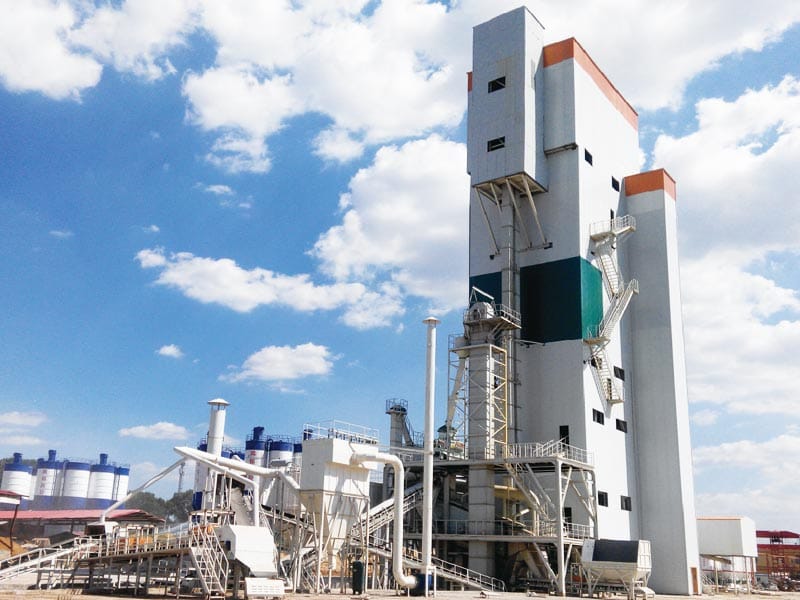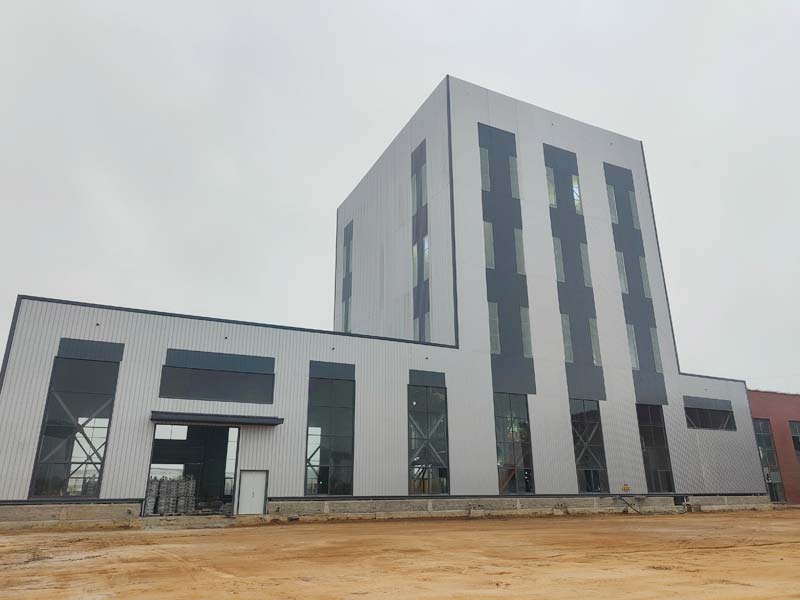
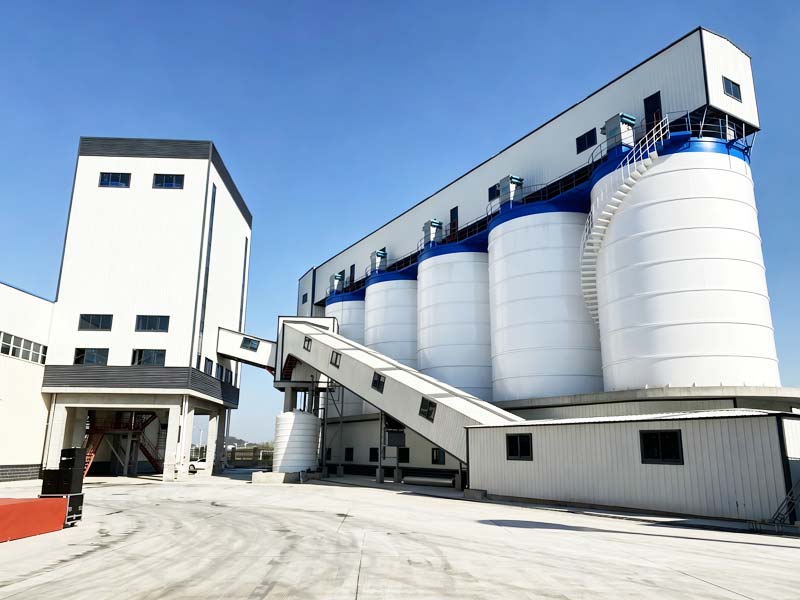
A concrete mixing tower and a conventional batching plant can both produce ready-mixed or project concrete, but they organize storage, weighing, conveying and mixing in different ways. The most important difference is not simply plant height. It is how far the process is vertically integrated and how many material-transfer stages are required before ingredients reach the mixer.
For buyers, this matters because plant layout affects footprint, structural height, aggregate lifting, powder routing, maintenance access, expansion options and long-term production efficiency. A mixing tower can be attractive for large fixed production bases, but a belt or skip-hoist batching plant may be more practical where site height, construction scope or flexibility matters more.
Наш бетонозмішувальна вежа is designed for long-term fixed production and large commercial or infrastructure projects, while MixingPlantPro also offers belt-fed, bucket-fed and mobile batching plants. This guide explains the layout differences so buyers can compare systems based on project needs rather than labels.
What Is a Concrete Mixing Tower?
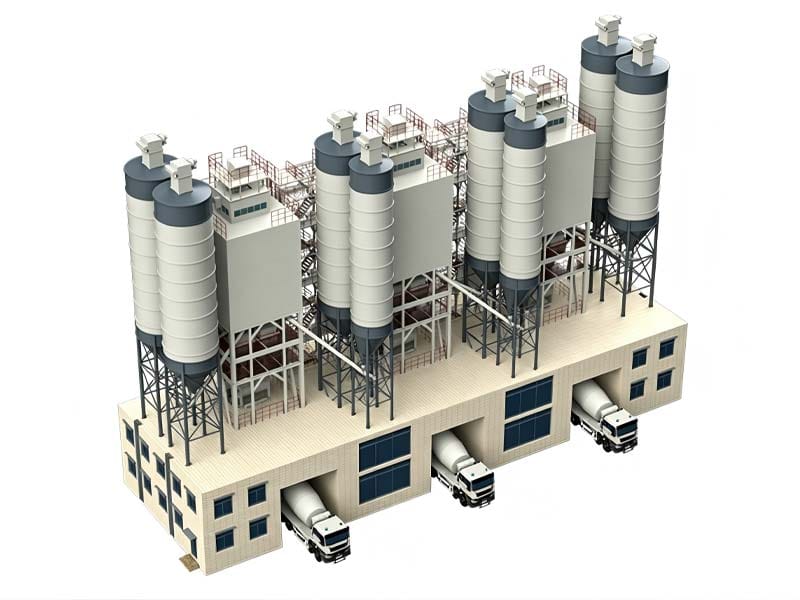
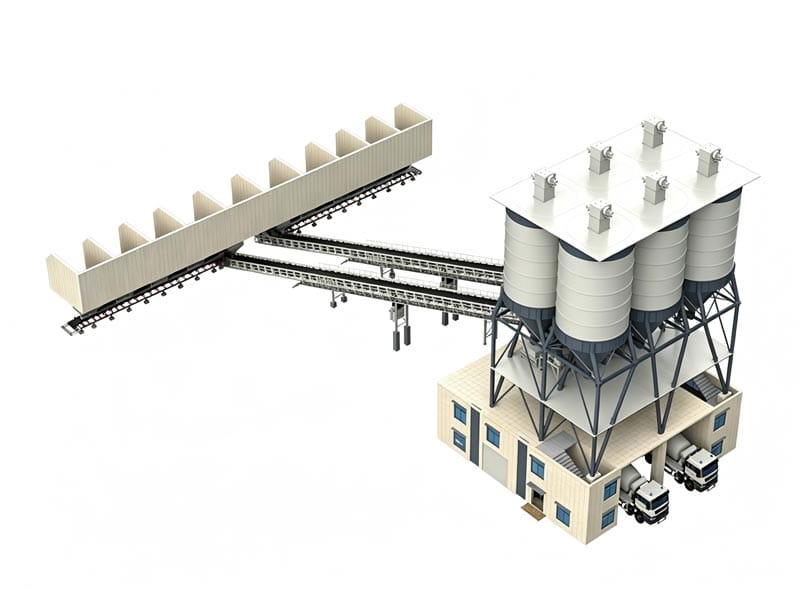
A concrete mixing tower is a vertically integrated batching system that places major storage, batching and mixing functions within a tall structural arrangement.
The current MixingPlantPro concrete mixing tower uses a modular design and includes rooftop storage, large reserve hoppers, batching and control systems, and vertical material distribution inside the tower structure.
The main idea is to use gravity wherever practical after materials have been lifted to the upper part of the plant.
A concrete mixing tower is typically selected for:
- large commercial concrete production bases;
- major infrastructure projects;
- large precast yards;
- fixed sites with sustained production demand;
- projects that value compact ground footprint and centralized material flow.
What Is a Conventional Concrete Batching Plant?
A conventional concrete batching plant can use several layouts.
Examples include:
- side-mounted belt plants;
- overhead belt plants;
- side-mounted bucket plants;
- overhead bucket plants;
- mobile plants;
- precast batching plants.
These plants can also use gravity at selected process stages, but the overall system is generally less vertically integrated than a concrete mixing tower.
The main plant, silos, aggregate bins and conveyors may be arranged across a broader site footprint.
The Main Difference Is Vertical Integration
| Фактор компонування | Concrete mixing tower | Conventional batching plant |
|---|---|---|
| Process arrangement | Highly vertical and centralized | More distributed across the site |
| Material movement | Lift once, then use gravity where practical | More horizontal or repeated transfer stages |
| Footprint | Potentially smaller ground footprint | Often broader layout |
| Structure height | Higher | Usually lower |
| Доступ обслуговування | Requires planned elevated access | More service points may be closer to ground level |
This is the core reason a concrete mixing tower should not be compared with a batching plant only by mixer model or rated output.
Overhead Silos Do Not Automatically Make a Plant a Mixing Tower
One important distinction is that some conventional batching plants also place powder silos above the main mixing building.
Наш підвісна стрічкова бетонозмішувальна установка places cement and other powder silos above the main structure and uses gravity-fed batching and metering.
However, that does not automatically make it a concrete mixing tower.
The concrete mixing tower has a more integrated vertical process arrangement with rooftop storage, reserve hoppers and centralized vertical material flow.
The overhead belt plant still uses the belt-fed batching-plant architecture for aggregate transport.
Aggregate Handling Is a Major Layout Difference
Aggregate is usually the largest material stream in concrete production.
In a conventional belt-fed plant, aggregate typically moves through:
- ground-level aggregate bins;
- партія та зважування;
- flat belt;
- inclined belt;
- upper receiving hopper;
- mixer.
In a concrete mixing tower, aggregate handling is arranged around a more vertically integrated storage and distribution system.
The key engineering question is how many transfer stages are required and where the aggregate is stored before final weighing and mixing.
Gravity Flow Can Reduce Repeated Mechanical Transfer
One purpose of a concrete mixing tower is to use vertical gravity flow after material has reached the upper storage level.
This can reduce dependence on repeated mechanical conveying between stages.
Potential advantages include:
- fewer horizontal transfer points;
- shorter internal material routes;
- centralized batching;
- compact process arrangement.
However, gravity flow still requires properly designed hoppers, gates and chutes.
It should not be assumed that all materials flow perfectly simply because they move downward.
Footprint Can Favor the Tower on Tight Fixed Sites
A highly vertical plant can use less ground area for the central process structure.
This can be useful for:
- urban commercial concrete bases;
- large infrastructure hubs;
- industrial sites with expensive land;
- projects that need more room for truck circulation or stockpiles.
However, the total site still needs space for:
- aggregate receiving;
- truck queues;
- доступ до цементного танкера;
- maintenance;
- washout;
- utilities.
A concrete mixing tower does not eliminate site-planning requirements.
Height Can Become the Main Constraint
The vertical integration that reduces footprint also increases structural height.
For a concrete mixing tower, buyers should review:
- local height restrictions;
- вітрові умови;
- structural design;
- доступ крана;
- erection sequence;
- aviation or planning restrictions where applicable.
A lower conventional batching plant may be more practical where height is restricted even if it uses more ground area.
Foundation Design Is Different for Tall Centralized Structures
A concrete mixing tower concentrates structural load into a taller central frame.
This changes the foundation design compared with a more distributed plant.
Огляд:
- equipment loads;
- wind loads;
- сейсмічні вимоги, де це можливо;
- ground-bearing capacity;
- foundation dimensions;
- anchor layout.
The equipment supplier can provide structural loads and reference drawings, but final civil design should reflect local site conditions and code requirements.
Tower Layouts Need More Elevated Maintenance Access
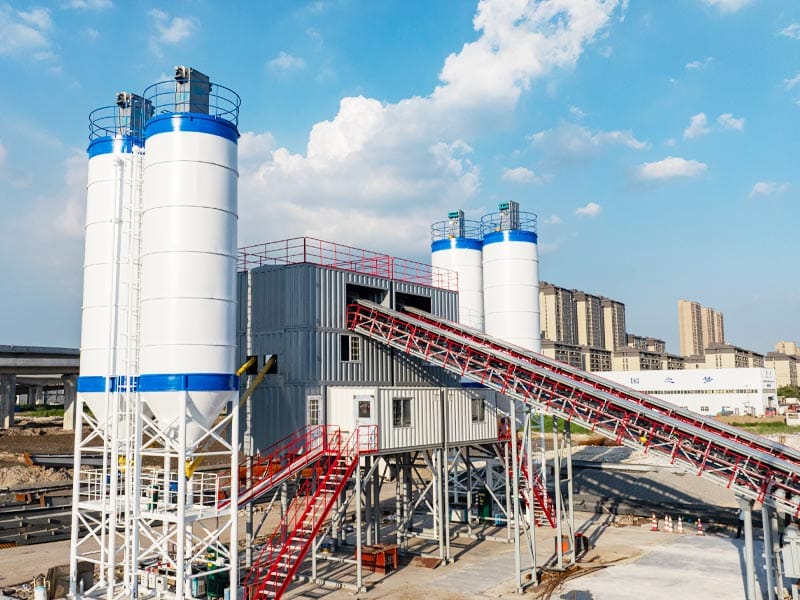
Vertical integration places more equipment at upper levels.
That means maintenance planning should include:
- stairs;
- platforms;
- guardrails;
- lifting points;
- access doors;
- service clearances.
For a concrete mixing tower, good elevated access is essential because routine inspection cannot rely on temporary ladders or improvised access.
Conventional Belt Plants Can Be Easier to Spread Out for Maintenance
A distributed belt plant often places more equipment along the ground and conveyor route.
This can make some components easier to access individually.
Typical service points include:
- бункери-агрегати;
- flat conveyor;
- inclined conveyor;
- belt take-up;
- head and tail pulleys;
- mixer platform.
Наш conveyor maintenance guide explains why maintenance access should be considered during plant layout.
Tower Layouts Can Centralize Dust-Control Points
Centralized vertical material flow can make it easier to enclose major batching and transfer areas inside the tower structure.
Potential dust-control advantages include:
- shorter enclosed transfer paths;
- centralized dust-extraction points;
- reduced exposed transfer equipment.
However, dust-control performance still depends on:
- enclosure design;
- негативний тиск;
- filter sizing;
- material transfer rates;
- maintenance.
A concrete mixing tower is not automatically dust-free simply because it is enclosed.
Aggregate Storage Strategy Is Different
Conventional batching plants commonly keep the main aggregate storage at ground level.
A concrete mixing tower may use upper-level storage or reserve hoppers as part of the tower arrangement.
This changes the material-flow logic.
For buyers, the main questions are:
- How much aggregate is stored at height?
- How often is upper storage replenished?
- What is the reserve capacity?
- How are different aggregate fractions separated?
- How is segregation controlled?
Powder Silo Position Is Only One Classification Axis
MixingPlantPro’s concrete batching range distinguishes overhead and side-mounted powder-silo layouts.
This is separate from aggregate-transfer method.
A plant can use:
- overhead powder silos + belt aggregate transfer;
- overhead powder silos + skip aggregate transfer;
- side-mounted powder silos + belt transfer;
- side-mounted powder silos + skip transfer.
A concrete mixing tower should therefore be treated as a different overall architecture rather than another simple combination of silo position and aggregate transfer method.
Internal Buffering Can Support Continuous Production
The current MixingPlantPro concrete mixing tower highlights large reserve hopper capacity as part of its design.
Internal buffering can help separate the timing of upstream material replenishment from the immediate mixer cycle.
For a concrete mixing tower, review:
- aggregate reserve capacity;
- powder reserve strategy;
- швидкість поповнення;
- peak production duration;
- material segregation.
A buffer helps only when it is correctly balanced with downstream consumption.
Do Not Assume a Tower Is Always Higher Capacity
A mixing tower is commonly used for large fixed production, but layout alone does not determine practical output.
Actual production still depends on:
- розмір партії змішувача;
- weighing cycle;
- material replenishment;
- час змішування;
- розрядка;
- truck availability;
- maintenance.
Наш concrete batching plant capacity guide explains why rated output should be separated from actual sustained production.
Commercial Ready-Mix Bases Can Benefit from Centralized Layout
A large commercial concrete base often has:
- many daily truck movements;
- multiple concrete recipes;
- high aggregate consumption;
- high cement consumption;
- continuous dispatch requirements.
A concrete mixing tower can be attractive where a fixed high-utilization production base justifies a more integrated structure.
The decision should still consider site height, civil works and maintenance resources.
Major Infrastructure Projects May Favor Long-Term Fixed Systems
Large infrastructure projects can require sustained concrete production over long periods.
The current MixingPlantPro tower page positions the concrete mixing tower for major infrastructure and long-term fixed production.
For these projects, compare:
- peak demand;
- project duration;
- site logistics;
- material delivery;
- spare-parts strategy;
- maintenance staffing.
A more complex tower structure makes more sense when the production duty justifies it.
Precast Yards Can Use Either Architecture
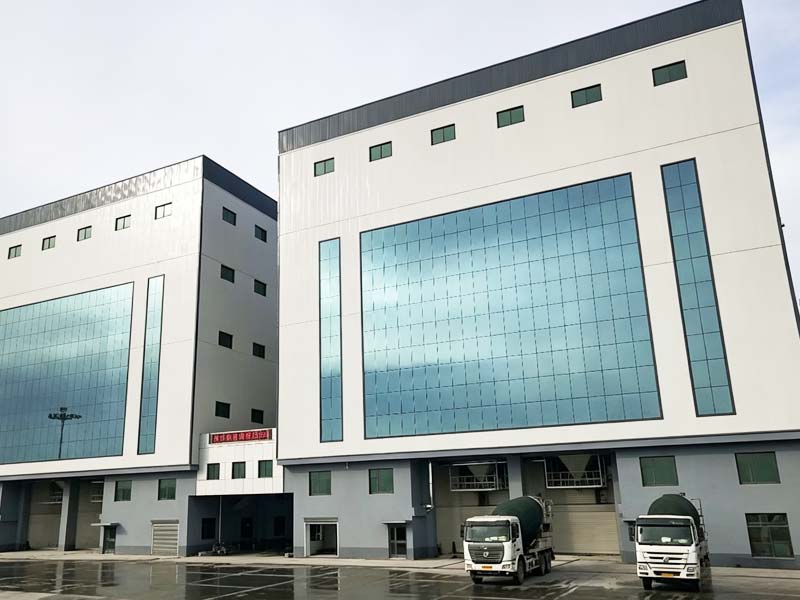
Large precast yards may use a concrete mixing tower or a dedicated precast batching plant depending on the production system.
For precast applications, important questions include:
- розмір партії;
- concrete consistency;
- transport bucket route;
- casting-line integration;
- multiple discharge points;
- production traceability.
Наш збірні бетонні розчини should therefore be compared with tower architecture based on the actual factory workflow.
Site Expansion Can Be Easier in a Distributed Layout
A conventional batching plant may offer more flexibility to add:
- extra aggregate bins;
- additional powder silos;
- longer conveyor routes;
- another loading lane.
A concrete mixing tower can also be modular, but major expansion inside a compact vertical structure may require more detailed planning.
Buyers should define future production requirements before finalizing the tower structure.
Erection Sequence Is More Important for Tower Projects
A tall mixing tower can require:
- larger lifting equipment;
- planned module sequence;
- temporary bracing;
- controlled access;
- more detailed site coordination.
The current MixingPlantPro tower uses modular design to support installation, but site crane and erection requirements still depend on the final project.
These responsibilities should be clearly defined in the project scope.
Shipping Strategy Can Differ
A conventional plant may ship as multiple modular frames, conveyors, silos and loose structural sections.
A concrete mixing tower can involve larger structural modules and more integrated assemblies.
Buyers should confirm:
- containerization;
- oversized loads;
- site unloading;
- storage before erection;
- assembly sequence.
Utilities Should Be Designed Around the Complete Layout
Both tower and conventional plants need:
- electrical power;
- compressed air;
- вода;
- control network;
- dust collection.
However, utility routing in a concrete mixing tower needs to reach multiple elevated levels.
That affects cable trays, piping, access and maintenance.
Operator Control Can Be Centralized in Either Plant Type
Automation is not unique to the tower.
Both concrete mixing towers and conventional batching plants can use centralized PLC and HMI control.
Наш smart batching plant guide explains functions such as recipe control, batch records, alarms and traceability.
The layout difference is physical architecture, not whether the plant can be automated.
Environmental Performance Depends on Engineering Details
MixingPlantPro’s tower page highlights low noise and full-recovery environmental features.
For any project, however, environmental performance should be evaluated from actual equipment and site design.
Перевірка:
- dust-extraction points;
- silo filters;
- truck washout;
- recycled water;
- noise sources;
- enclosures;
- local environmental requirements.
Наш керівництво з екологічного дизайну заводу для дозування explains why dust, noise and water controls need project-specific review.
Use a Layout Comparison Instead of a Product Label
| Стан проекту | Tower tendency | Conventional plant tendency |
|---|---|---|
| Very limited central footprint | Can be attractive | May need broader site area |
| Height restriction | Can be difficult | Often easier |
| Long-term fixed production | Strong application | Also suitable depending on duty |
| Frequent relocation | Generally poor fit | Mobile plant is better suited |
| Ground-level maintenance preference | More elevated access | Can be easier to distribute access |
| Highly centralized process | Strong fit | More distributed |
This table is directional, not a universal selection rule.
Compare Total Project Cost, Not Only Equipment Price
A tower can change civil, erection and site costs.
A conventional plant can change land, conveyor and traffic-layout costs.
When comparing a concrete mixing tower with a batching plant, include:
- equipment scope;
- foundation;
- steel structure;
- конвеєри;
- crane requirements;
- installation labor;
- доступ обслуговування;
- land use.
The lowest equipment quotation is not always the lowest total installed project cost.
What Should Buyers Send for a Tower vs Plant Review?
A useful comparison needs project-specific layout information.
Забезпечити:
- average and peak concrete demand;
- project duration;
- site dimensions;
- maximum practical plant height;
- сукупні фракції;
- цементні матеріали;
- truck traffic plan;
- maintenance staffing;
- future expansion plan;
- local civil constraints.
Наш concrete production solutions can then compare tower, belt, skip-hoist or mobile configurations against the same project requirements.
Send your site layout and production requirements through our сторінка контакту для огляду конфігурації заводу.
Висновок
A concrete mixing tower differs from a conventional batching plant mainly in the degree of vertical integration, not simply in height or powder-silo position.
The tower centralizes storage, batching and mixing into a compact vertical structure and uses gravity flow where practical. Conventional batching plants distribute more equipment across the site and can offer lower structures, different maintenance access and more flexible layout options.
The right choice depends on production duty, site footprint, height limits, civil works, aggregate flow, maintenance strategy and future expansion. Compare the full process layout before comparing rated capacity or equipment price.
FAQ
What is the main difference between a concrete mixing tower and a batching plant?
The main difference is vertical integration. A mixing tower centralizes more storage, batching and mixing functions in a tall structure, while a conventional batching plant distributes more equipment across the site.
Is an overhead belt batching plant the same as a concrete mixing tower?
No. An overhead belt plant places powder silos above the mixing building but still uses a belt-fed batching-plant architecture. A mixing tower integrates more of the overall process vertically.
Does a concrete mixing tower always have higher capacity?
No. Practical capacity depends on mixer size, weighing, replenishment, discharge, truck availability and operating conditions. Tower layout alone does not guarantee higher sustained output.
When is a concrete mixing tower most suitable?
It is typically suited to long-term fixed production, large commercial concrete bases, major infrastructure and large precast operations where centralized high-volume production is required.
What information is needed to compare a tower and conventional batching plant?
Provide production demand, site dimensions, height limits, material system, truck traffic, project duration, maintenance requirements and future expansion plans.