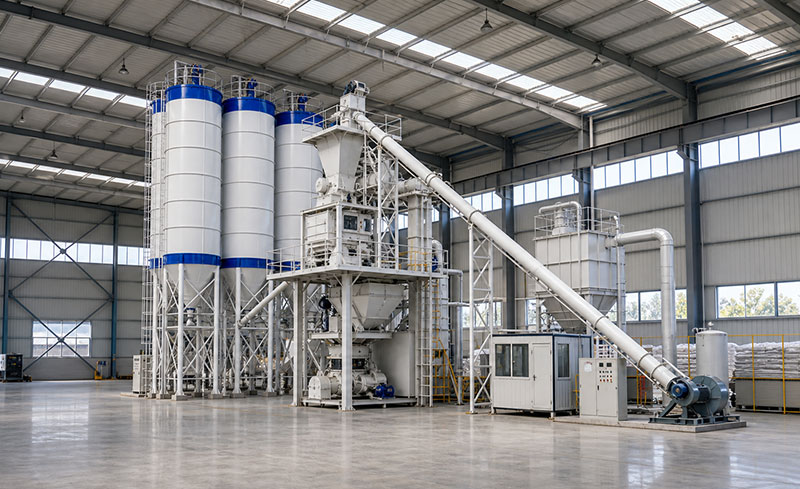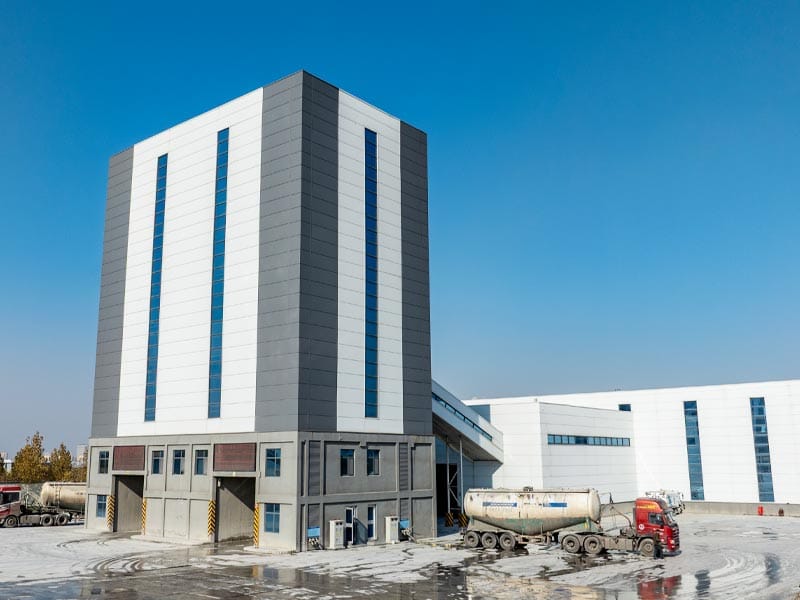
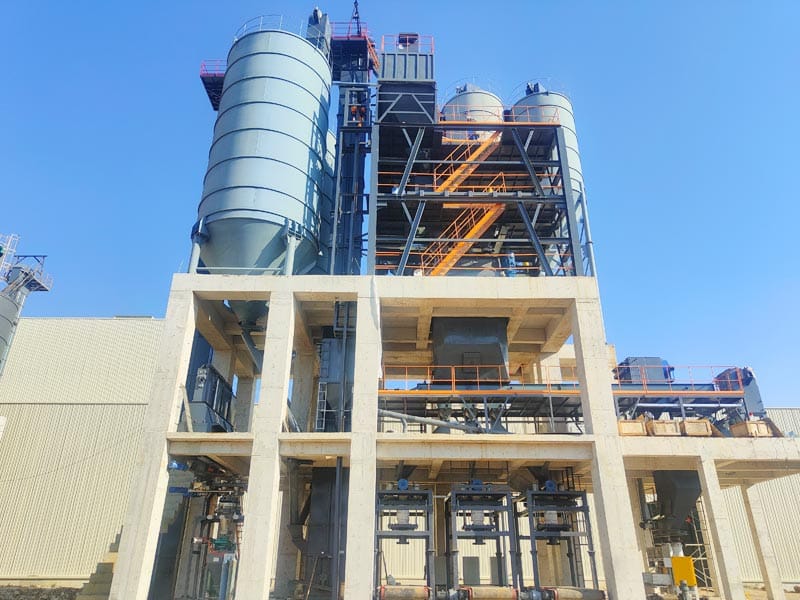
Gypsum mortar production requires a dry mixing line that can protect moisture-sensitive materials, meter low-dose additives accurately, maintain clean product changeovers and package the finished mortar before humidity or contamination affects performance. Although gypsum-based products can use equipment similar to cement-based dry mortar, the production risks are not identical.
For equipment buyers, the most important question is not simply whether a line can “mix gypsum.” The plant should be configured around the actual gypsum product family, aggregate content, setting-control additives, polymer system, batch size and packaging method.
Наш цеховий тип сухого розчину змішувальний завод і завод сухого розчину баштового типу can support specialty dry mortar production. This guide explains how gypsum mortar production requirements should be translated into storage, dosing, mixing, cleaning and packaging decisions.
What Is Gypsum Mortar Production?

Gypsum mortar production is the controlled manufacture of dry gypsum-based plaster or mortar products that are mixed with water before application.
Depending on the target market and product, the formulation can include:
- gypsum binder;
- мінеральні наповнювачі;
- fine aggregate;
- lightweight fillers;
- polymers;
- cellulose ethers;
- модифікатори налаштування;
- air-entraining or rheology-control additives.
ASTM C28/C28M-26 covers several gypsum plaster categories and requires performance testing such as compressive strength and Vicat testing for the covered products. citeturn890882search5
The production line’s job is to reproduce the approved formulation consistently.
Keep Gypsum Materials Dry from Receiving to Packaging
Moisture control is one of the most important requirements in gypsum mortar production.
ASTM C842-05(2025) states that gypsum plasters and other cementitious materials should be kept dry until use and stored under cover away from damp surfaces and condensation. citeturn890882search1
At the production plant, moisture can enter through:
- wet aggregate;
- damaged raw-material bags;
- humid air;
- condensation;
- water cleaning;
- poorly sealed storage;
- packaging defects.
Gypsum mortar production should therefore be designed as a dry process from raw-material intake to finished-bag storage.
Define the Gypsum Binder Before Selecting Storage
Not every gypsum-based binder behaves the same way.
For gypsum mortar production, provide:
- binder type;
- насипна щільність;
- particle fineness;
- нормальна доза;
- daily consumption;
- delivery form;
- storage sensitivity.
These data influence silo size, feeder type, powder transfer and weighing range.
Do Not Mix Product Standards with Equipment Specifications
A gypsum mortar plant does not itself guarantee that a finished product complies with ASTM C28/C28M, ASTM C842 or another regional product specification.
Those standards define material or application requirements.
The plant should instead be evaluated on whether it can:
- store approved materials correctly;
- meter the intended recipe;
- mix consistently;
- avoid contamination;
- package the product reliably;
- generate traceable batch records.
Gypsum mortar production should always connect equipment verification with finished-product laboratory testing.
Fine Fillers Need Stable Powder Handling
Gypsum products can contain fine mineral fillers that behave differently from sand.
These materials can:
- aerate during transfer;
- bridge in hoppers;
- generate dust;
- compact during storage;
- feed unevenly into screws.
For gypsum mortar production, define bulk density and flowability for every major filler.
Fine Sand or Aggregate Should Match the Product
Some gypsum mortar formulations contain aggregate while others rely more heavily on binder and filler.
If sand is used, provide:
- розподіл частинок за розміром;
- maximum size;
- насипна щільність;
- вологість;
- вміст порошку.
Наш направляюча кривої градації піску explains why a full sieve distribution is more useful than one nominal maximum size.
Lightweight Fillers Can Change Mixer Volume
Some gypsum products use lightweight fillers to reduce finished density.
Low-density materials occupy more volume per unit mass.
That means the mixer can reach its practical volume limit before the expected batch mass is reached.
For gypsum mortar production, check:
- насипна щільність;
- loose volume per batch;
- mixer working volume;
- спосіб годування;
- fragility.
Setting-Control Additives Need Accurate Small-Dose Handling
Gypsum setting behavior can be strongly influenced by relatively small additive quantities.
These can include accelerators, retarders or other formulation-specific modifiers.
For gypsum mortar production, define:
- minimum production dose;
- нормальна доза;
- максимальна доза;
- number of additives per recipe;
- спосіб зберігання;
- feeding method.
Наш сухий розчинник точність зважування керівництво explains why the smallest routine dose should be validated independently.
Micro-Dosing Can Be More Critical Than Bulk Weighing
A bulk sand scale may handle hundreds of kilograms per batch, while one setting modifier may be added in a much smaller quantity.
For gypsum mortar production, the micro-dosing system should be selected around the actual additive range.
| Матеріальна група | Typical dosing challenge |
|---|---|
| Gypsum binder | Large powder mass and stable flow |
| Fine filler | Dust, aeration and bridging |
| Polymer | Lower dose and moisture sensitivity |
| Setting modifier | Very small quantity and high formulation sensitivity |
| Fiber | Bridging and dispersion |
Manual Additions Need Controlled Records
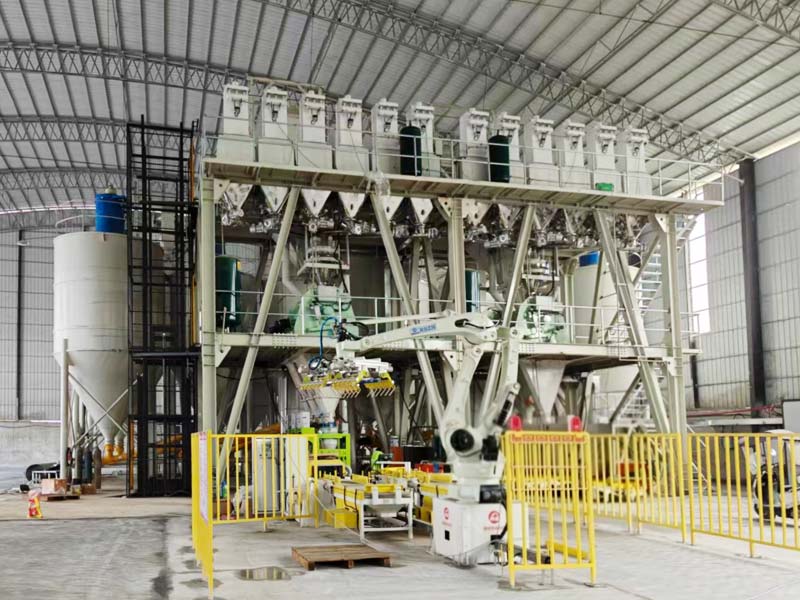
Some specialty gypsum mortars may use manually added low-volume ingredients.
If manual addition is part of the process, record:
- material identity;
- цільова кількість;
- фактична кількість;
- ідентифікатор партії;
- підтвердження оператора;
- час додавання.
Manual addition should not become an unrecorded step outside the batch-control system.
Mixing Sequence Can Affect Uniformity
Adding every ingredient at the same time is not automatically the best strategy.
Gypsum mortar production may use a sequence such as:
- main binder and filler charging;
- aggregate addition;
- мікроадитивне живлення;
- fiber addition where applicable;
- остаточна гомогенізація.
The actual sequence should be validated using the approved product formulation.
Mixing Time Should Be Product-Specific
There is no universal mixing time for every gypsum mortar.
Правильна тривалість залежить від
- конструкція змішувача;
- рівень заповнення партії;
- ingredient count;
- filler fineness;
- вміст полімеру;
- fiber use;
- послідовність змішування.
Gypsum mortar production should establish mixing time from uniformity and finished-product performance rather than from one generic timer setting.
Overmixing Can Reduce Throughput Without Adding Value
If uniformity is already achieved, excessive additional mixing consumes cycle time and energy.
It can also create more wear on mixing tools.
Commissioning should therefore identify the shortest mixing period that consistently meets the product’s validated quality requirement.
Small Batches Need Separate Validation
Specialty gypsum products may be produced in smaller campaigns.
A mixer that performs well at full capacity may behave differently at low fill level.
For gypsum mortar production, validate:
- мінімальна рутинна партія;
- звичайна партія;
- максимальна партія;
- однорідність змішування;
- discharge residue.
Gypsum and Cement Products Need Strong Separation
A plant that produces both gypsum-based and cement-based mortars needs careful changeover planning.
Residual material from one binder family can affect the setting behavior of the next.
For gypsum mortar production, review whether both product families share:
- powder silos;
- weigh hoppers;
- шнекові конвеєри;
- змішувач;
- буфери готового продукту;
- пакувальники.
Наш dry mortar mixer cleaning guide explains how product-change matrices can define the required cleaning level.
Residue Can Change Setting Behavior
Small quantities of residual product can matter when the next formulation is sensitive to setting control.
Інспектувати:
- куточки змішувача;
- discharge gate;
- мікрогодівниці;
- шнекові конвеєри;
- buffer hoppers;
- packaging feeders.
Gypsum mortar production should therefore consider cross-contamination through the complete product route, not only inside the mixer.
Water Cleaning Is Usually a High-Risk Choice
A dry mortar line should remain dry.
Introducing water during cleaning can create:
- hardened residue;
- злежування;
- corrosion;
- future contamination.
Any wet-cleaning method should be used only when the equipment manufacturer and plant procedure explicitly permit it and complete drying can be verified.
Moisture Can Cause Caking Before Packaging
Gypsum mortar production is sensitive to unintended humidity and condensation.
Possible problem points include:
- raw-material silo;
- weigh hopper;
- змішувач;
- буфер готової продукції;
- packer hopper.
Наш dry mortar caking guide explains how to locate the first point where a normally free-flowing material becomes lumpy.
Packaging Must Protect the Product from Moisture
ASTM C842-05(2025) emphasizes that gypsum plaster materials should remain dry and protected from damp surfaces. citeturn890882search1
After production, the package becomes the main moisture barrier.
Gypsum mortar production should therefore validate:
- тип сумки;
- closure or valve performance;
- filling temperature;
- bag integrity;
- warehouse conditions;
- storage duration.
Bulk Density Affects Packaging Size
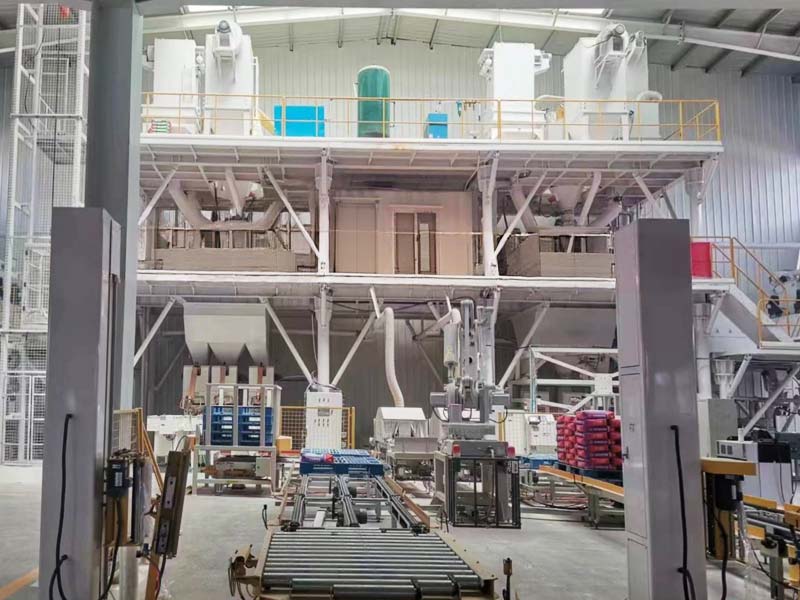
Different gypsum mortar formulations can have different bulk densities.
A low-density gypsum plaster may require a larger bag volume for the same net mass.
Перевірка:
- finished bulk density;
- target bag weight;
- bag volume;
- filling speed;
- air release during filling.
The packaging system should be tested with the actual finished product.
Bag Weight Variation Can Be a Flow Problem
Unstable pack weight does not always mean the packer scale is incorrectly calibrated.
Gypsum powder can change flow because of:
- рівень бункера;
- насипна щільність;
- aeration;
- злежування;
- bridging.
Наш посібник із зміни ваги мінометного мішка explains how product flow and scale control interact.
Dust Control Should Cover Fine-Powder Transfer Points
Gypsum mortar production can generate fine airborne dust during:
- відкриття сумки;
- силосне наповнення;
- зважування;
- зарядка змішувача;
- розрядка;
- упаковка.
The plant should use appropriate enclosure and local dust extraction at transfer points.
The MixingPlantPro tower and workshop dry mortar systems include pulse dust collection in their published process configurations.
Workshop-Type Lines Can Suit Flexible Product Portfolios
Our workshop-type plant uses a horizontal same-workshop arrangement with screw conveyors and convenient access to production equipment.
For gypsum mortar production, this can be useful where:
- several specialty products share one line;
- frequent changeovers are expected;
- operators need direct access to micro feeders;
- small batches are common.
The building still needs sufficient floor load, height, dust control and maintenance space.
Лінії баштового типу можуть відповідати більшому повторюваному виробництву
A tower-type dry mortar plant uses vertical storage and gravity-assisted material flow.
For gypsum mortar production, a tower arrangement can be attractive where:
- production volume is sustained;
- multiple bulk materials are stored centrally;
- a compact footprint is valuable;
- vertical process integration suits the site.
The decision should follow the product portfolio, not one generic output category.
Do Not Reuse Conflicting Step-Type Capacity Figures
Step-type dry mortar plants can also be considered for gypsum products, but equipment selection should be based on the actual project configuration.
For gypsum mortar production, compare:
- material list;
- site height;
- horizontal transfer distance;
- розмір партії;
- упаковка;
- обслуговування доступ.
Capacity should be confirmed from the final technical proposal rather than inferred from a generic website figure.
Quality Control Should Link Batch Data with Product Tests
ASTM C28/C28M-26 requires testing such as compressive strength and Vicat testing for the gypsum plaster categories within its scope. citeturn890882search5
Gypsum mortar production records should therefore make it possible to connect finished test results with:
- ідентифікатор партії;
- recipe revision;
- фактична кількість інгредієнтів;
- час змішування;
- raw-material lot;
- manual additions.
This helps the quality team separate formulation problems from production-process problems.
Storage Time Should Be Controlled by Product and Material
Gypsum-based dry products should remain protected from moisture during storage.
For both raw materials and finished mortar, define:
- supplier shelf-life guidance;
- warehouse conditions;
- first-in/first-out practice;
- bag integrity checks;
- maximum internal storage target.
Do not invent a universal shelf life for all gypsum mortars because formulations and packaging differ.
Commissioning Should Use Representative Gypsum Products
Factory no-load tests cannot prove that all gypsum materials will feed, weigh, mix and pack correctly.
Commissioning should verify:
- binder flow;
- filler flow;
- micro-additive dosing;
- small batch performance;
- однорідність змішування;
- changeover;
- передача готової продукції;
- упаковка;
- batch records.
Finished-product testing should then confirm that the line reproduces the approved formulation.
What Should Buyers Send for a Gypsum Mortar Line Review?
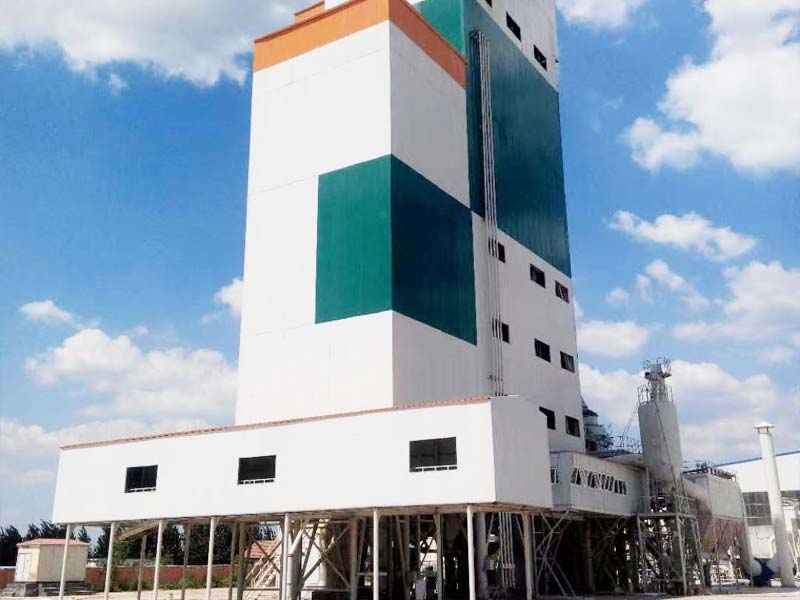
A useful gypsum mortar production review needs the real product and raw-material data.
Забезпечити:
- gypsum product types;
- binder type;
- aggregate or filler grading;
- насипна щільність;
- polymer and additive list;
- minimum additive dose;
- fiber information where used;
- normal and minimum batch size;
- розмір сумки;
- changeovers per shift;
- розміри сайту;
- required production schedule.
Наш сухі розчинні розчини can then be reviewed around the actual gypsum product portfolio.
Send your mortar product requirements and raw-material information through our сторінка контакту для огляду конкретної лінії проекту.
Висновок
Gypsum mortar production requires a dry, controlled process with reliable powder storage, accurate micro-dosing, validated mixing, strict changeover control and moisture-resistant packaging.
The strongest plant design starts with the binder, filler, additive and product data rather than with a generic tonnes-per-hour target.
When storage, dosing, mixing and packaging are configured around the actual gypsum formulation, the production line can support more repeatable product quality while reducing caking, cross-contamination and changeover problems.
FAQ
What equipment is needed for gypsum mortar production?
A line can include dry material storage, bulk powder feeding, micro-dosing, dry mixing, dust collection, finished-product transfer and packaging. The exact configuration depends on the gypsum product.
Why must gypsum raw materials be kept dry?
Moisture can cause caking, premature reaction and unstable product performance. Gypsum materials should remain protected from humidity, condensation and direct water exposure.
Can gypsum and cement mortars use the same production line?
They can in some projects, but changeover and contamination risks must be evaluated carefully. Shared hoppers, conveyors, mixers and packers may require stricter cleaning procedures.
Why are micro-additives important in gypsum mortar production?
Setting modifiers and other functional additives can be used at low doses but strongly affect product behavior, so the smallest routine dose needs reliable measurement.
What information should I provide before selecting a gypsum mortar production line?
Provide gypsum product types, raw materials, dose ranges, bulk densities, batch sizes, packaging method, changeover frequency and site dimensions.