
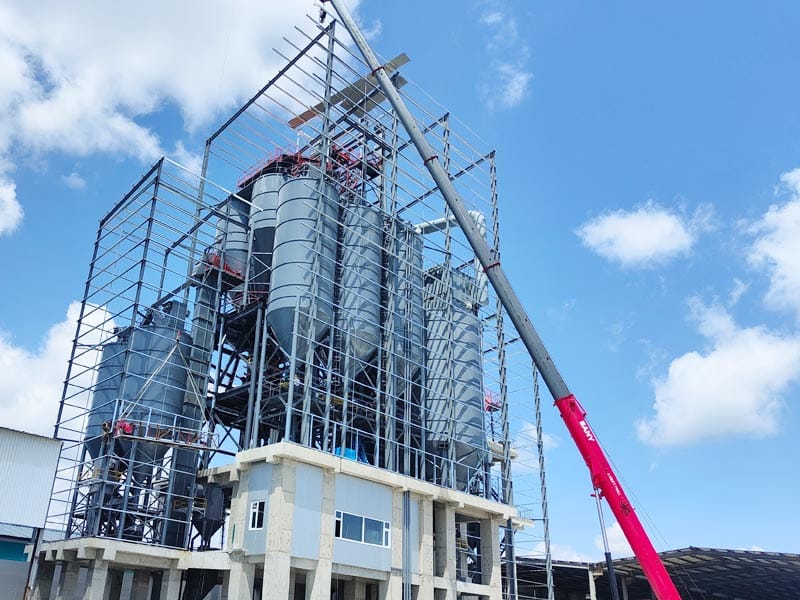
An integrated sand mortar plant is not simply a sand-making machine placed beside a dry mortar mixer. The value of integration comes from controlling the material between the two processes: particle size, powder content, moisture, storage, metering and the rate at which qualified sand is supplied to each mortar recipe.
If the sand section produces more material than the mortar section can use, storage and classification become the constraint. If the mortar section requires a fraction that the sand section cannot supply consistently, total sand output may look sufficient while production still stops. The connection between the two systems therefore matters as much as the capacity of either system by itself.
Của chúng tôi nhà máy sản xuất cát và vữa đặc biệt tích hợp combines sand preparation with dry mortar production. This guide explains how to evaluate an integrated sand mortar plant from feed material to finished mortar and what buyers should verify before approving the complete line.
What Is an Integrated Sand Mortar Plant?
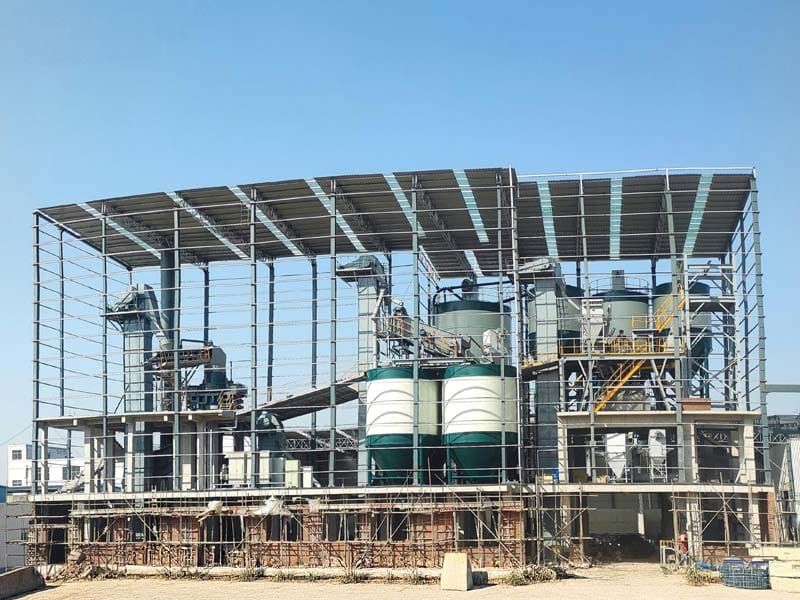
An integrated sand mortar plant combines two production systems within one coordinated material flow. The first system prepares manufactured sand. The second stores, weighs and mixes that sand with binders and additives to produce dry mortar.
The upstream section can include crushing or shaping, screening, powder classification, recirculation and finished-sand storage. The downstream section can include sand bins, binder and additive storage, batching, dry mixing, finished-product transfer and bagging or bulk loading.
Our integrated line is designed around a 0–3 mm manufactured-sand product range and connects sand preparation with automated mortar batching and mixing. The important engineering question is how that 0–3 mm material is divided, stored and used for the mortar products planned at the site.
An integrated sand mortar plant should therefore be specified as one process with two linked quality gates: qualified sand must leave the sand section, and qualified mortar must leave the mixing section.
Start with the Mortar Products, Then Work Backward to the Sand
The best way to design an integrated sand mortar plant is to begin with the dry mortar product portfolio. Different mortars do not automatically use the same sand grading.
Masonry mortar, plastering mortar, tile adhesive, repair products and self-leveling mortar can require different particle distributions and different proportions of fine material. The equipment should therefore be configured around the formulations that will actually be produced.
| Mortar planning question | Why it matters upstream | What to define for the sand section |
|---|---|---|
| How many mortar families will be produced? | More formulations may need more sand fractions or blending options. | Number of finished-sand bins and classification strategy. |
| What is the coarsest permitted particle size? | Oversize material can disrupt product performance and downstream handling. | Final screen cut and oversize return route. |
| How much fine material is required? | Too much or too little fine fraction can change formulation behavior. | Powder classification and blending control. |
| How often do products change? | Frequent changeovers increase demand for controlled storage and traceability. | Bin assignment and recipe-specific sand routing. |
This product-first approach prevents an integrated sand mortar plant from being designed around a generic sand specification that later forces the mortar laboratory to compensate for the wrong aggregate distribution. A well-planned integrated sand mortar plant should let the approved mortar formulation define the required sand fractions.
Define the Sand Quality Gate Between the Two Processes
The sand-making section should not release material to mortar production simply because it has passed through the crusher and screen. A quality gate should define when the manufactured sand is acceptable for downstream use.
For masonry mortar applications, ASTM C144 recognizes manufactured sand and specifies grading and quality requirements for aggregate used in masonry mortar. It is not a universal specification for every special mortar, but it demonstrates why manufactured sand must be evaluated as a controlled aggregate rather than generic crusher fines.
Particle-size distribution can be measured using methods such as ASTM C136/C136M, while material finer than 75 μm can require a washing-based determination such as ASTM C117.
For an integrated sand mortar plant, the actual acceptance criteria should come from the product specification and formulation trials. At minimum, define the grading envelope, maximum particle size, fine fraction, moisture condition and material-quality requirements that matter to the mortar being produced.
Do Not Treat Fineness Modulus as a Complete Sand Specification
Fineness modulus is useful for summarizing an aggregate grading, but it does not show how particles are distributed across every sieve. Two sands can have similar fineness modulus values while having different amounts of very fine or intermediate particles.
Our integrated product page states that the sand-making section can adjust fineness modulus within its published operating range and can also adjust powder content. Those functions are useful because an integrated sand mortar plant may need more than one aggregate condition for different mortar products.
However, the control target should still be the approved grading envelope or formulation requirement. Do not select a single fineness-modulus number and assume that every sand matching it is interchangeable.
When commissioning the line, compare complete sieve results and fine-particle measurements with the mortar formulation. The sand-making controls should then be set to reproduce the approved material condition, not merely a summary number.
Separate Stone Powder Control from Clay Contamination
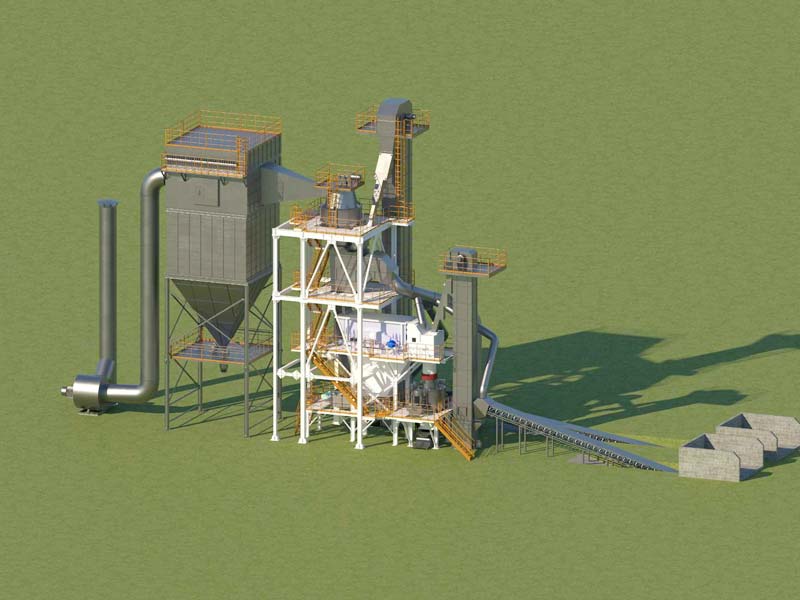
An integrated sand mortar plant often needs to control the amount of fine mineral powder entering mortar production. That does not mean every fine particle is equally acceptable.
Fine particles generated from sound parent rock can function differently from clay-rich contamination or weathered material. Classification equipment can change the amount of powder, but it cannot automatically convert poor-quality feed into suitable mortar aggregate.
ASTM C117 distinguishes material finer than the 75-μm sieve by washing and notes that clay particles and other dispersed fine materials can be removed during the test.
For the integrated sand mortar plant, establish both a quantity target and a material-quality check for fines where the formulation requires it. This is especially important when the raw material source changes or when wet weather increases contamination from stockpiles.
The control system can manage a process variable, but the laboratory still has to define what kind of fine material is acceptable.
Use Classification Bins to Turn Sand into Recipe Ingredients
The most important connection between the sand and mortar sections is usually storage. Finished manufactured sand becomes a mortar ingredient only after it is assigned to a known fraction or controlled blend.
A single large finished-sand bin can work for a narrow product range. A factory producing several special mortars may need multiple fractions stored separately so recipes can combine them in different proportions.
For an integrated sand mortar plant, decide:
- how many sand fractions the formulations require;
- which screen cuts create those fractions;
- how much buffer storage each fraction needs;
- whether fractions are blended before storage or during mortar batching;
- how contamination between fractions is prevented.
Do not create more bins than the product range needs. Additional fractions increase equipment, controls and inventory complexity. The purpose of classification is to give the mortar system useful ingredients, not to maximize the number of possible sieve cuts.
Balance Sand Production by Fraction, Not Only by Total Tonnes
Total sand output can hide a shortage in one critical fraction. This is one of the most important capacity checks for an integrated sand mortar plant.
Consider a hypothetical line producing 40 tonnes per hour of qualified sand. After classification, the output is:
| Phần cát | Illustrative production | Mortar demand during peak operation | Balance |
|---|---|---|---|
| Coarse fraction | 16 t/h | 10 tấn/giờ | +6 t/h |
| Medium fraction | 14 t/h | 16 t/h | -2 t/h |
| Fine fraction | 10 tấn/giờ | 8 tấn/giờ | +2 t/h |
| Tổng cộng | 40 t/h | 34 t/h | +6 t/h overall |
The total sand production exceeds the total mortar demand, yet the medium fraction is short by 2 t/h. Without sufficient buffer inventory or a way to adjust the classification balance, the mortar plant can still be limited.
This example is illustrative, not a product-performance claim. It shows why integrated sand mortar plant sizing should use fraction-by-fraction mass balances rather than only a total production number.
Size Buffer Storage Around Process Variability
The sand-making and mortar sections do not always operate at identical rates. Sand production may stop for screen inspection or raw-material changes while mortar production continues. Mortar production may stop for recipe changeover while sand preparation continues.
Buffer storage separates these short interruptions so one process does not immediately stop the other.
For an integrated sand mortar plant, determine buffer capacity from the expected production schedule. If a critical sand fraction is consumed at 12 t/h and the sand section may be unavailable for 90 minutes during a planned intervention, the theoretical consumption during that interval is 18 tonnes.
That arithmetic does not mean the bin should automatically be exactly 18 tonnes. Safety stock, usable bin volume, material flow, future product changes and replenishment strategy still need review.
The useful design question is: how long should the mortar section operate independently of the sand section, and for which sand fractions?
Moisture Must Be Controlled Before Sand Enters Dry Mortar Production
Dry mortar production requires controlled dry materials. If the manufactured sand contains too much moisture, it can affect storage, powder flow, dosing and the stability of the finished dry product.
An integrated sand mortar plant should therefore define where moisture is measured and what treatment occurs before sand enters the mortar bins.
If feed or finished sand needs drying, the dryer capacity should be calculated from the actual moisture load, not only from tonnes per hour. The same mass of wet sand can require very different thermal duty at different inlet moisture levels.
Where drying is included, cooling may also matter before the sand reaches additives or finished-product storage. The required arrangement should be confirmed for the project rather than assumed from a generic dry mortar flow.
Record moisture alongside grading during commissioning. A grading sample taken from dry laboratory material does not describe how wet production sand will flow through storage and metering equipment.
Match Sand Supply with Mortar Batching Accuracy
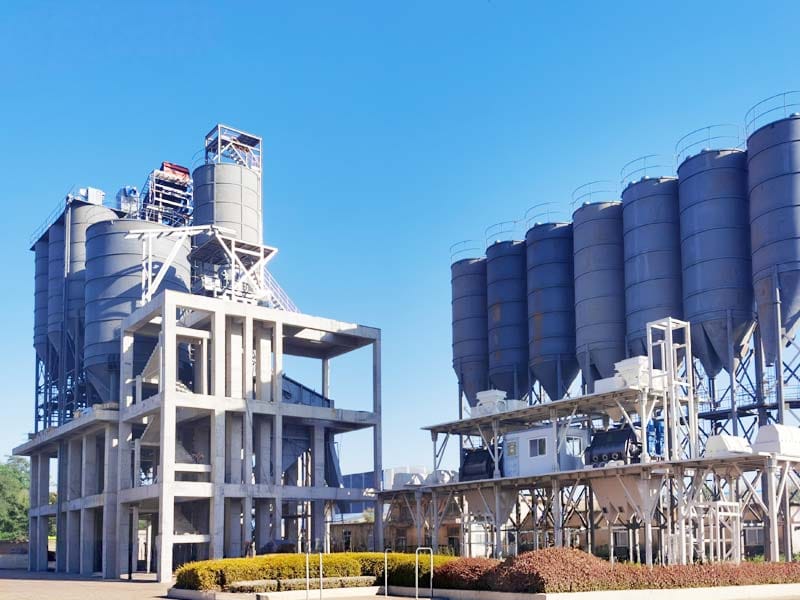
Once manufactured sand reaches the mortar section, it becomes one of several precisely proportioned ingredients. The mortar control system needs to know which fraction is in each bin and how much each recipe requires.
The integrated sand mortar plant product range includes automated batching and formula management. Those functions are valuable when the sand section and mortar section share production data, but the final control architecture should be defined for the project.
For each sand bin, verify the weighing range, feeder response and batch record. A correct upstream grading does not guarantee the correct downstream blend if the wrong amount is discharged.
Include small production batches in the test plan. A weighing system that performs acceptably near normal capacity may need separate verification at lower quantities used for special mortar recipes.
Coordinate the Control System Across Both Production Stages
Integration should be visible in the control logic. Operators need to know whether the sand section has enough qualified material available for the next mortar recipe before production begins.
A useful integrated sand mortar plant control strategy can track:
- raw stone feed status;
- sand-making operating mode;
- grading or classification condition;
- inventory in each finished-sand bin;
- mortar recipe requirements;
- weighing and mixing status;
- alarms that prevent unsuitable material from moving downstream.
This does not require every project to use one identical PLC screen or database. It means the interface between the two processes must be defined.
For example, if the medium sand bin falls below the quantity required for the next recipe, the mortar section should not assume that total sand inventory elsewhere can replace it. The operating logic should reflect the actual product requirement.
Dust Control Should Follow Material Transfer Points
Both sand processing and dry mortar production can generate airborne dust. Integrating the systems can reduce intermediate handling, but it also concentrates transfer points within one facility.
Our integrated product page describes negative-pressure dust control across the process. The final extraction system still needs to be engineered around the actual sources, ducts, filters and site conditions.
Map dust generation at crushers, screens, classifiers, bin filling, weighing, mixer charging, finished-product transfer and packaging. Then define which points are enclosed and which require local extraction.
Do not use one general dust-collector capacity number as proof that every source is controlled. Commissioning should verify capture at the relevant operating conditions.
Integrated Does Not Mean Every Upstream Process Is Included
An integrated sand mortar plant still has a supply boundary. The published sand-making process on our standalone line begins with prepared stone feed rather than quarry boulders. Large raw rock therefore needs appropriate upstream crushing and screening before it reaches the fine sand-making section.
Likewise, bag palletizing, laboratory equipment, raw-material mining, civil works or other project systems may sit outside the integrated line unless they are specifically included.
During procurement, create a process boundary drawing. Mark:
- incoming stone size and condition;
- upstream preparation responsibility;
- sand processing equipment;
- drying or cooling where required;
- sand storage and classification bins;
- mortar ingredient storage;
- mixing and finished-product handling;
- packaging or bulk loading interfaces.
This prevents “integrated” from being interpreted as “everything on the site is included.”
Use One Mass Balance for the Complete Integrated Line
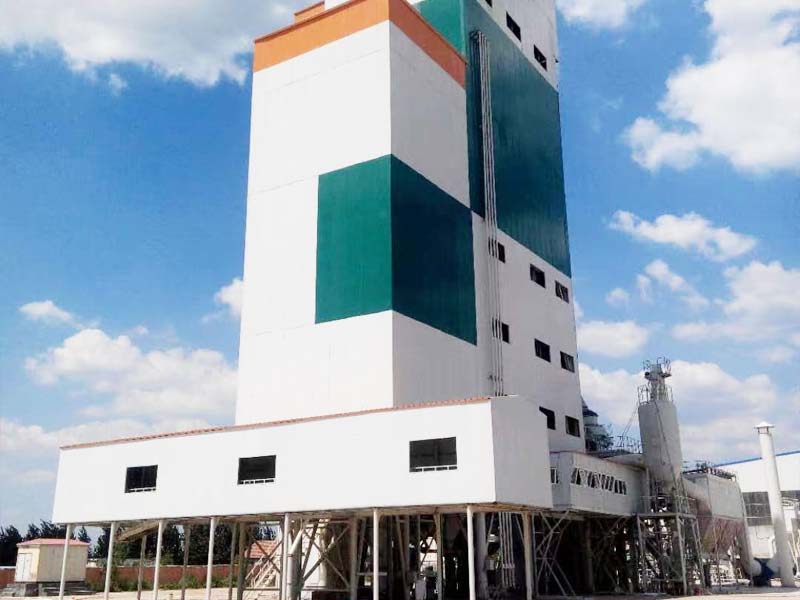
A complete mass balance is one of the best tools for reviewing an integrated sand mortar plant.
Start with fresh stone feed. Track qualified sand, recirculating oversize, separated powder and any other identified stream. Then track how qualified sand is divided among storage fractions and how each fraction enters mortar recipes.
Do not add internal recirculation to finished production. Material passing through a return loop several times is still the same material until it exits as product or another defined stream.
The same rule applies downstream. Mortar mixer throughput is not identical to bagged finished-product output if packaging or bulk loading is slower.
A complete mass balance allows the buyer to identify the true bottleneck. It may be sand making, classification, one storage fraction, mortar batching, mixing, packaging or the interface between them.
What Should Buyers Provide Before Requesting an Integrated Line?
A useful integrated sand mortar plant inquiry should contain information from both sides of the process.
For the sand section, provide the rock type, prepared feed-size distribution, expected moisture, existing upstream crushing equipment and target sand grading.
For the mortar section, provide product families, formulations at an ingredient-category level, required sand fractions, production schedule, package formats and workshop or site dimensions.
Also identify whether sand production and mortar production will run simultaneously, how many hours of buffer storage are preferred, and whether the line needs to support future mortar products.
Của chúng tôi giải pháp cát sản xuất and dung dịch vữa khô show the two process families that the integrated configuration connects.
Send the project information through our trang liên h so the sand preparation, storage, mortar batching and finished-product sections can be reviewed as one system.
Kết luận
An integrated sand mortar plant works when the sand-making section produces exactly the material the mortar section needs, in the fractions and quantities required by the production schedule. Integration is therefore a problem of material control, not simply equipment proximity.
Define the finished mortar first, translate each formulation into sand requirements, set a quality gate for manufactured sand, size fraction-specific buffers, and connect both production stages with traceable control logic. This approach makes the integrated line easier to balance, verify and expand.
Câu hỏi thường gặp
What is an integrated sand mortar plant?
An integrated sand mortar plant combines manufactured-sand preparation with dry mortar batching and mixing. The systems are connected through sand classification, storage, metering and production control so qualified sand can feed mortar recipes directly.
Why is sand grading important in an integrated line?
Different mortar formulations may require different particle-size distributions. Total sand production can be sufficient while one critical fraction is short, so grading and fraction-specific storage must be matched to mortar demand.
Can one integrated sand mortar plant make different mortars?
Yes, if the storage, classification, dosing and mixing configuration supports the required formulations. The number of sand fractions, additives and changeover procedures should be based on the actual product range.
Does integrated production eliminate the need for sand testing?
No. In-house sand production improves process control, but the manufactured sand still needs agreed grading, fines, moisture and material-quality checks before it is released to mortar production.
What information is needed to configure an integrated sand mortar plant?
Provide raw stone characteristics, feed size, target sand grading, mortar product range, required sand fractions, production schedule, packaging needs and site conditions. These inputs allow both sections to be balanced as one production system.


