

Aggregate weighing is one of the most important control steps in concrete batching because sand and coarse aggregate make up a large share of every batch. If the measured quantity changes unexpectedly, the plant can alter total solids, paste demand, water correction and concrete consistency even when the stored recipe has not changed.
However, aggregate weighing variation is not always a scale-calibration problem. Material can continue falling after a feeder closes, aggregate can bridge inside a bin, a weighing hopper can touch surrounding steelwork, moisture correction can change the wet target, or cumulative weighing can hide an error in one individual fraction.
لدينا مصنع خلط الخرسانة المثبت على الجانب و مصنع خلط الخرسانة بدلو علوي both use three-point sensor weighing arrangements. This guide explains how to investigate aggregate weighing from the bin gate through the final batch record rather than assuming every deviation begins at the load cell.
What Does Aggregate Weighing Control?
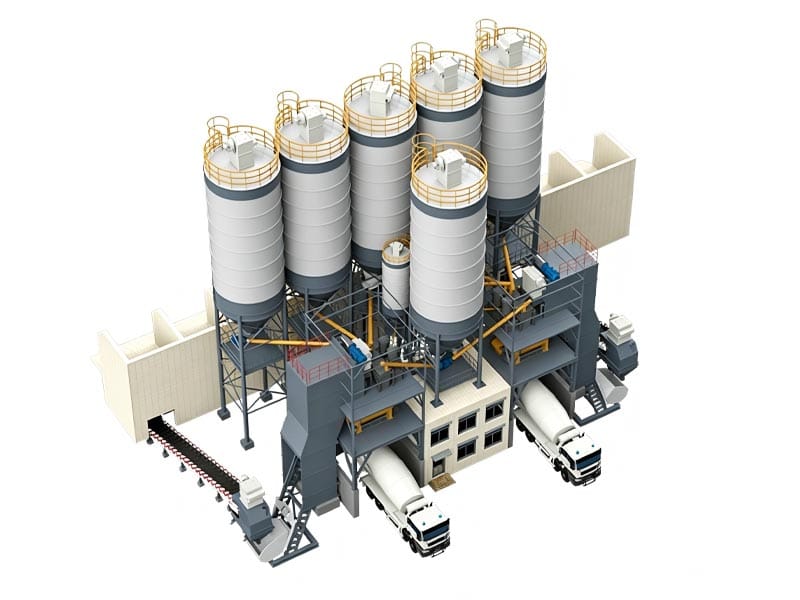
Aggregate weighing converts the concrete recipe into actual sand and stone quantities for each batch.
Depending on the plant configuration, aggregates may be:
- weighed separately;
- weighed cumulatively in one hopper;
- fed from several bins into one common scale;
- transferred after weighing by belt, skip or another system.
For quality control, the useful question is whether the required dry or SSD-equivalent aggregate quantity is being delivered into the production process consistently.
NRMCA’s current إرشادات شهادة النبات requires scale checks through the actual range of use and emphasizes retaining detailed verification data rather than relying on a simple “scale OK” certificate. That principle is directly relevant to aggregate weighing because plant accuracy has to be demonstrated across real production loads.
Aggregate Weighing Variation Has More Than One Source
When an aggregate batch is heavy or light, the cause can come from measurement, feeding, material behavior or recipe correction.
| Variation source | Typical symptom | What to investigate |
|---|---|---|
| Scale drift | Reference loads no longer match indicated weight | Calibration and verification |
| Feeder or gate overshoot | Actual weight repeatedly ends above target | Cutoff timing and material in flight |
| Bridging | Slow or intermittent feed followed by sudden flow | Bin geometry and material condition |
| Mechanical contact | Unstable or biased scale reading | Hopper, cables, chutes and flexible connections |
| Moisture correction | Wet target differs from recipe SSD quantity | Moisture input and correction logic |
| Residual material | Weighed quantity does not fully reach the next stage | Discharge gate and transfer route |
A good aggregate weighing investigation separates these causes before any adjustment is made.
Start by Confirming the Scale Itself
Before changing feeder settings, confirm whether the weighing system indicates known reference loads correctly.
NRMCA guidance calls for aggregate scale verification through the plant’s range of use, not only at one convenient test point. The organization also requires documented load values and errors so the inspection record shows how the scale was tested.
NIST’s 2026 Handbook 44 contains current technical requirements for scales and other weighing systems. The exact applicability depends on jurisdiction and use, but it provides the metrology framework behind many commercial scale practices.
For aggregate weighing, the test plan should cover:
- empty zero;
- low production loads;
- normal batch loads;
- higher routine loads;
- the scale’s actual operating range.
Do not assume one correct reading proves the full range.
Mechanical Contact Can Make a Good Load Cell Read Wrong
A load-cell system only measures the load that passes through the intended supports.
If the aggregate weighing hopper touches a rigid chute, frame member, buildup, cable or pipe, part of the force can bypass the sensors or introduce extra force.
This can create a scale error even when the load cells and indicator are functioning normally.
يفتش:
- hopper clearance;
- flexible connections;
- cables and hoses;
- dust seals;
- تراكم المواد؛;
- mechanical stops;
- load-cell mounts.
Three-point sensor arrangements, such as those used on our skip-hoist plant designs, still depend on the weighing body remaining mechanically free. The sensor architecture cannot compensate for unintended structural contact.
Zero Drift Should Be Investigated, Not Hidden
Aggregate weighing begins from a stable empty condition.
If the empty hopper does not return to the same zero after discharge, determine why.
Possible causes include:
- material remaining in the hopper;
- wet sand sticking to surfaces;
- mechanical contact;
- electrical instability;
- load-cell damage;
- vibration from nearby equipment.
Repeatedly resetting zero without finding the cause can hide a developing problem.
Record the as-found zero before adjustment so the maintenance history shows whether the drift is occasional or recurring.
Gate Cutoff Creates Material-in-Flight Error
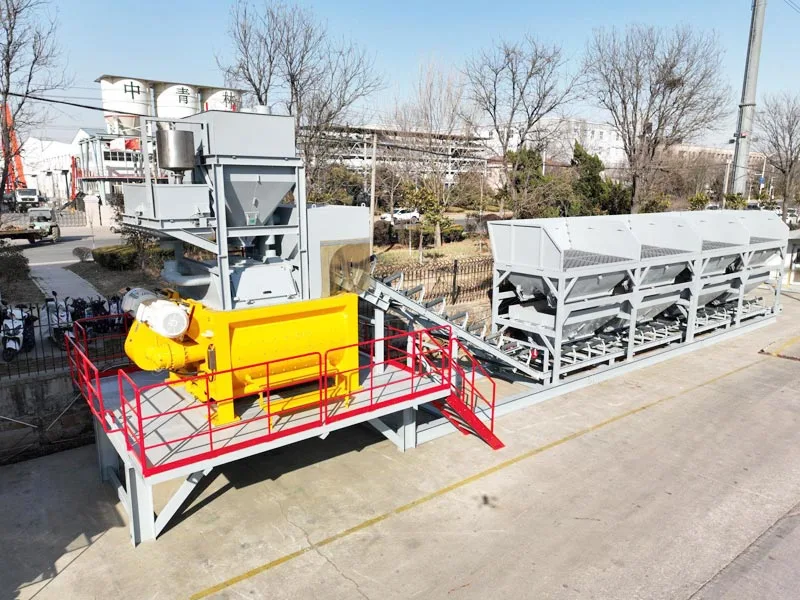
One of the most common aggregate weighing problems happens after the control system tells a feeder or gate to stop.
Material already falling between the bin outlet and the weighing hopper continues moving. This “material in flight” can push the final weight above the target.
The effect depends on:
- gate opening;
- material flow rate;
- drop height;
- particle size;
- moisture;
- control-system cutoff timing.
Aggregate weighing control often uses a pre-act or cutoff compensation so the gate closes before the final target is reached.
If overshoot changes when the sand becomes wetter or the stone grading changes, the cause may be feeding dynamics rather than scale calibration.
Coarse and Fine Feeding Can Improve Final Control
Some batching systems use a faster initial feed followed by a slower final feed as the target approaches.
The principle is similar to powder coarse/fine dosing: move most of the material quickly, then reduce the feed rate near the target.
For aggregate weighing, the transition point should be validated using the actual material.
If the slow stage begins too late, overshoot may increase. If it begins too early, cycle time can increase unnecessarily.
Do not copy one cutoff value across all aggregate fractions. Fine sand and coarse stone can have very different flow behavior.
Bin Bridging Can Create Underfeed and Sudden Surges
Aggregate does not always flow continuously from a storage bin.
Moist sand can bridge or form a stable arch above the outlet. Coarse aggregate can interlock depending on bin geometry and particle shape.
A bridge may cause:
- slow feeding;
- timeout alarms;
- underweight batches;
- sudden surges when the bridge collapses;
- large variation between consecutive cycles.
Aggregate weighing records become especially useful here. If the same bin repeatedly has long feeding times before an overshoot, investigate the material-flow condition rather than the scale first.
Any flow-aid solution should be selected for the actual bin and material instead of adding uncontrolled vibration or air assistance without engineering review.
Moisture Changes the Correct Aggregate Target
Aggregate weighing cannot be interpreted correctly without understanding moisture correction.
A concrete recipe may be based on saturated surface-dry quantities, while the actual sand in the bin contains additional surface water. The plant therefore needs to weigh a larger wet mass to deliver the intended amount of aggregate solids.
For example, a laboratory recipe might call for 1,000 kg of sand on an SSD basis. Under a particular moisture condition, the correct wet target could be higher than 1,000 kg.
That does not mean the aggregate weighing system is overfeeding.
لدينا aggregate moisture correction guide explains why both wet aggregate target and added batch water need to change together.
Incorrect Moisture Data Can Look Like a Weighing Problem
The scale may weigh the commanded target perfectly while the commanded target itself is wrong.
If the moisture probe reads too low, the system may under-correct the wet sand quantity and add too much separate water. If it reads too high, the opposite can happen.
When concrete consistency changes but aggregate weighing records look normal, check:
- moisture sensor reading;
- reference oven-dry or approved moisture test;
- sampling location;
- sensor calibration or verification;
- software correction formula.
NRMCA production-facility certification specifically includes devices used for automated aggregate moisture measurement among the equipment that must be maintained within applicable requirements.
Cumulative Aggregate Weighing Can Hide Individual Errors
When several aggregate fractions are weighed into one hopper, the final total can look correct even when individual fractions are wrong.
Consider a simple example:
| Aggregate | Target | Actual |
|---|---|---|
| Sand | 600 kg | 585 kg |
| Stone | 400 kg | 415 kg |
| Total | 1,000 kg | 1,000 kg |
The total aggregate weighing result is correct, but the recipe proportions are not.
For cumulative systems, preserve the incremental weight achieved by each material rather than reviewing only the final hopper total.
This is especially important when sand moisture, stone grading or individual feeder behavior changes.
Residual Aggregate Can Break the Link Between Weighed and Delivered Mass
The weighing hopper can contain the correct quantity while less material reaches the skip, belt or mixer.
Aggregate can remain:
- in the hopper corner;
- around a partially opening gate;
- in a chute;
- on a belt transfer point;
- inside a temporary storage hopper.
For aggregate weighing, define where the measurement responsibility ends.
A correct scale proves what entered the weighing hopper. A separate transfer check may be needed to confirm that the measured material reaches the next production stage.
Skip-Hoist Plants Add a Transfer Stage After Weighing
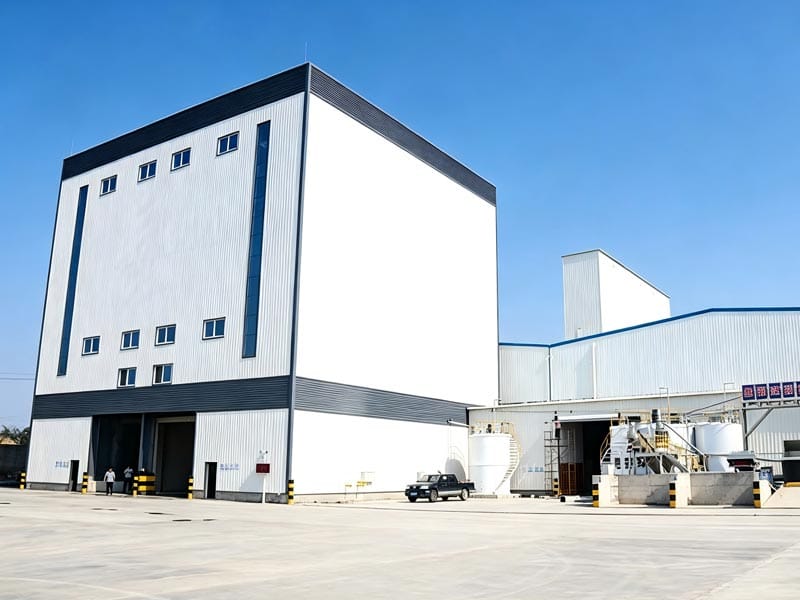
In a skip-hoist plant, aggregate weighing and aggregate lifting are separate functions.
Our side-mounted and overhead bucket plants weigh the aggregates before they are lifted intermittently by skip hoist to the mixer area.
That means a stable scale does not by itself prove the skip cycle is transferring every batch correctly.
Check:
- complete weighing-hopper discharge;
- skip receiving position;
- material spillage;
- skip capacity relative to batch size;
- temporary hopper discharge above the mixer;
- interlocks between weighing, lifting and discharge.
Aggregate weighing should therefore be reviewed together with the transfer sequence.
Vibration Can Disturb the Final Weight Reading
Concrete plants contain mixers, conveyors, skips, compressors and other vibrating equipment.
If the weighing hopper is mechanically or structurally exposed to strong vibration, the displayed value may fluctuate around the target.
The control system may use signal filtering and settling time before accepting the final weight.
For aggregate weighing, review whether:
- the scale stabilizes before the batch is accepted;
- nearby equipment starts at the same time as weighing;
- structural vibration has changed after plant modification;
- load-cell cables are routed and protected correctly.
Do not compensate for a mechanical vibration problem only by increasing software filtering. Excessive filtering can delay detection of real weight changes.
Different Aggregate Fractions Need Different Feeding Settings
A single plant may handle fine sand, 5–10 mm stone, 10–20 mm stone and other fractions.
These materials do not leave storage bins at the same rate.
Aggregate weighing settings should therefore consider each material’s:
- particle size;
- shape;
- moisture;
- bulk density;
- outlet geometry;
- gate opening response.
A cutoff value tuned for dry coarse stone may produce overshoot when copied directly to moist fine sand.
Use actual production data to optimize each bin independently.
Low Batch Sizes Deserve Their Own Verification
A plant may be accurate during a large normal batch but less stable when producing small completion batches.
At lower quantities, a fixed overshoot becomes a larger percentage of the target.
If a feeder consistently adds 10 kg after cutoff, that error represents 1% of a 1,000 kg target but 4% of a 250 kg target.
This arithmetic example does not describe a MixingPlantPro specification. It shows why aggregate weighing should be checked across the real operating range.
NRMCA’s scale-verification guidance follows the same principle by requiring checks through the range of use rather than only one high-load condition.
Use Batch Records to Separate Random Variation from Drift
One unusual batch may result from a temporary material condition. Repeated deviation in the same direction suggests a systematic issue.
Track aggregate weighing by:
- bin;
- material;
- target;
- actual;
- signed deviation;
- وقت التغذية؛;
- moisture;
- حجم الدفعة؛;
- time of day.
If sand repeatedly finishes heavy during the wet part of the day, compare moisture and feeder behavior. If one stone bin drifts regardless of weather, inspect its gate and weighing sequence.
لدينا دليل مصنع خلط الخرسانة الذكية explains how production records and alarm histories can support this type of analysis.
Calibration and Process Tuning Are Different Tasks
Calibration establishes whether the weighing system indicates a known reference load correctly.
Process tuning adjusts feeder cutoffs, pre-act values or control timing so the automatic batch reaches the target consistently.
Do not use calibration to compensate for feeder overshoot.
If the scale is correct but the process ends 20 kg high, changing the calibration relationship makes the measurement wrong while leaving the feeding problem unresolved.
لدينا batching plant calibration guide explains the difference between calibration, adjustment and verification in more detail.
What Should an Aggregate Weighing Acceptance Test Include?
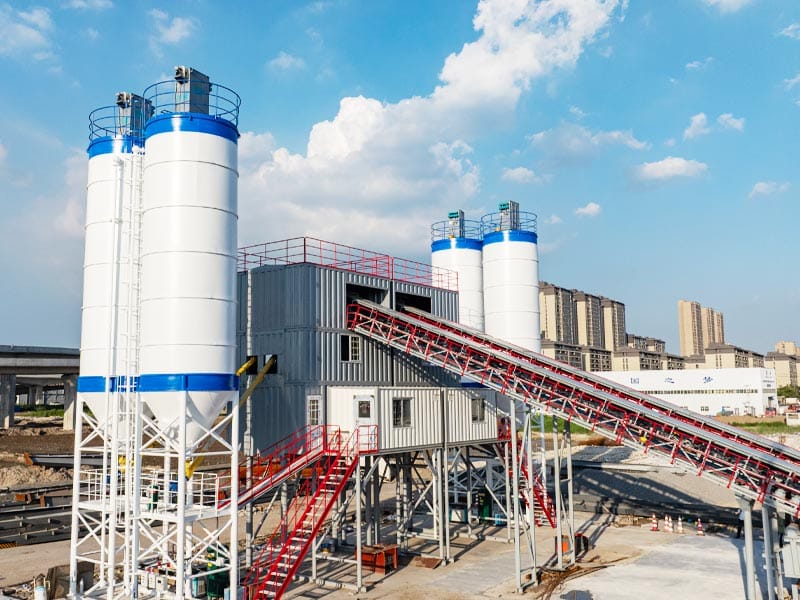
A new plant should be tested using both reference loads and actual aggregate.
For aggregate weighing, include:
- zero check;
- scale verification across the working range;
- test of each aggregate bin;
- low and normal batch quantities;
- automatic feeder cutoff;
- material-in-flight compensation;
- complete hopper discharge;
- skip or belt transfer;
- moisture-correction logic;
- batch-record output.
Repeat several automatic batches. One successful cycle does not establish repeatability.
If the plant will use both dry and wet seasonal sand conditions, include representative material states where practical.
What Should Buyers Send for Aggregate System Design?
Aggregate weighing works best when the batching system is designed around the real material range.
يقدم:
- aggregate fractions;
- maximum particle sizes;
- normal moisture range;
- minimum and maximum quantity per batch;
- حجم الدفعة العادي؛;
- required production rate;
- preferred aggregate transfer method;
- site constraints;
- quality-control requirements.
These inputs help determine bin arrangement, weighing range, feeder control and transfer sequence.
Send your batching requirements and aggregate data through our صفحة الاتصال for a project-specific equipment review.
خاتمة
Aggregate weighing variation can come from the scale, but it can also come from feeder overshoot, bridging, mechanical contact, moisture correction, residual material and cumulative weighing logic.
The strongest troubleshooting method verifies the scale first, then separates measurement from feeding and transfer. Each aggregate fraction should be reviewed across the actual operating range, with moisture and batch size included in the analysis.
When weighing, feeding, transfer and batch records are treated as one process, plant teams can find the real source of variation instead of repeatedly adjusting a scale that may already be correct.
الأسئلة الشائعة
What causes aggregate weighing variation in a concrete plant?
Common causes include scale drift, feeder overshoot, material in flight, bridging, mechanical contact, moisture correction errors, residual aggregate and unstable transfer. The scale should be verified before control settings are changed.
Why can the final aggregate total be correct while the recipe is wrong?
In cumulative weighing, one aggregate fraction can be low while another is high by the same amount. The final total then appears correct even though the individual proportions are wrong.
Does aggregate moisture affect weighing?
Yes. Surface moisture changes the wet mass needed to deliver the intended aggregate solids. A correct wet target can therefore be higher than the SSD quantity in the laboratory recipe.
What is material in flight?
Material in flight is aggregate that continues falling toward the weighing hopper after the feeder or gate receives a stop command. The control system may need cutoff compensation to account for this delayed material.
How should aggregate weighing be tested on a new batching plant?
Verify zero and scale response through the working range, test each aggregate bin, run automatic batches, check feeder cutoff and hopper discharge, confirm moisture-correction logic, and review the final batch records.

