

Manufactured sand raw materials determine how easily a sand-making line can produce a stable grading, acceptable particle shape and a controlled fines fraction. Two feed sources can enter the same machine at the same nominal size and still produce very different sand because their mineralogy, strength, weathering, clay content and moisture are different.
For a buyer, this means equipment selection should not begin with crusher capacity alone. It should begin with representative feed samples and a clear finished-sand target. The question is not simply whether a rock can be crushed, but whether the resulting product can meet the requirements of concrete, dry mortar or another intended application.
আমাদের উৎপাদিত বালি উৎপাদন লাইন is designed around prepared stone feed, vertical-shaft impact crushing, screening, powder classification and closed-loop return. To configure that process correctly, the properties of the manufactured sand raw materials need to be understood first.
Why Manufactured Sand Raw Materials Matter More Than the Crusher Name
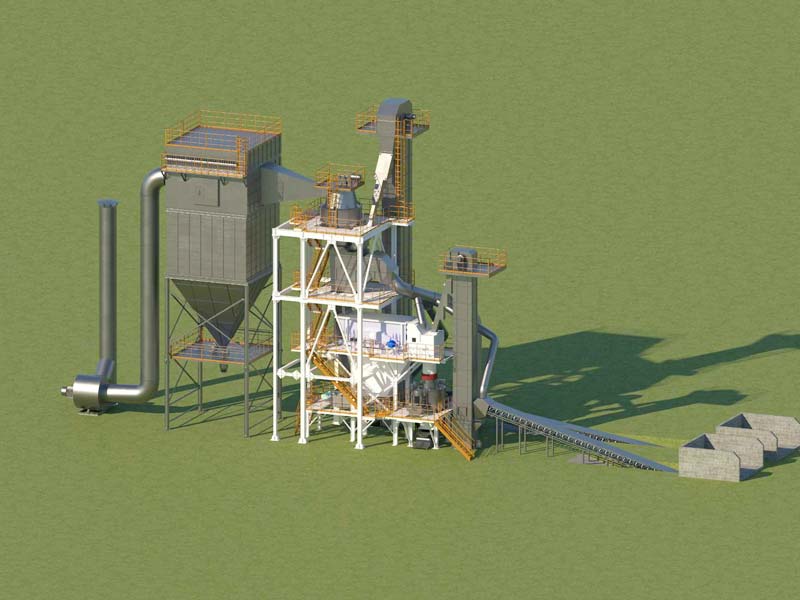
Manufactured sand is produced by controlled size reduction and classification. The machine creates the final particle size distribution, but it cannot erase the basic characteristics of the feed.
Hardness affects wear and crushing behavior. Mineral composition affects durability and chemical suitability. Weathering can introduce weak particles. Clay and other deleterious material may pass into the fine fraction. Moisture changes screening and powder-separation behavior. Feed-size variation changes the load entering the sand maker.
That is why manufactured sand raw materials should be treated as a process input, not as an interchangeable commodity.
ASTM C33/C33M defines requirements for the grading and quality of fine aggregate used in concrete and recognizes manufactured sand as an acceptable fine aggregate category. It also addresses organic impurities, durability and potentially deleterious reactions. See the current ASTM C33 concrete aggregate specification for the applicable scope and edition.
The standard does not say that every crushed rock automatically becomes suitable concrete sand. The source material and the finished aggregate still need testing against the intended specification.
Start by Defining the Finished Sand Application
Before testing manufactured sand raw materials, define what the finished sand is expected to do. Sand for concrete, masonry mortar, tile adhesive and self-leveling products may require different grading, fines control and performance verification.
Our sand-making equipment focuses on a 0–3 mm product range and is also used as upstream preparation for special dry mortar. That makes the downstream application especially important when setting the test plan.
| Finished application | Feed-related concern | What the production trial should verify |
|---|---|---|
| Concrete | Durability, particle shape, grading and potentially harmful constituents. | Whether the processed fine aggregate meets the project aggregate specification. |
| Masonry mortar | Gradation and deleterious substances. | Whether the finished sand is suitable for the required mortar standard and mix design. |
| Tile adhesive | Fine grading consistency and controlled powder fraction. | Whether the approved adhesive formulation can be reproduced with the processed sand. |
| Self-leveling or repair mortar | Particle-size distribution and fine-particle behavior. | Whether the sand supports the validated formulation and application properties. |
For masonry mortar, the current ASTM C144 specification specifically recognizes manufactured sand produced by crushing suitable material and processed to achieve an appropriate grading. Again, the finished material must meet the relevant requirements; the raw rock name alone is not enough.
Check Rock Type and Mineral Composition First
The first screening step for manufactured sand raw materials is identifying the actual rock or mineral source. Limestone, granite, basalt and other rocks can all be processed into manufactured sand under suitable conditions, but they do not behave identically.
Our product page identifies limestone, granite and basalt among the materials that can be accommodated through variable-speed operation. That is an equipment capability statement, not proof that every deposit of those rock types will produce acceptable sand.
Within the same geological name, different deposits can vary in mineral composition, microcracking, weathering and impurities. A weathered granite zone may behave differently from fresh granite. A limestone containing weak or clay-rich seams may not behave like a clean, dense limestone.
For manufactured sand raw materials, request a geological or petrographic description where the application justifies it. At minimum, record the source, visible variation and whether different quarry benches or stockpiles are likely to be blended.
If the sand will be used in concrete, potentially deleterious alkali-aggregate reaction also requires appropriate evaluation. ASTM C1778 provides a framework for assessing and reducing the risk of harmful alkali-aggregate reaction. See the current ASTM C1778 guidance when this issue is relevant to the project.
Test Strength, Durability and Crushing Behavior
Manufactured sand raw materials should survive processing in a way that produces a useful fine aggregate rather than an excessive proportion of weak or unstable fines.
A very strong rock may require more crushing energy and may increase wear. A weak or highly weathered rock may break too easily, creating excessive fines or fragile particles. Neither condition should be judged from visual appearance alone.
Use the test methods required by the intended aggregate specification to evaluate durability and mechanical behavior. Depending on the project, this may include soundness, crushing-related tests, abrasion-related tests or other source-quality checks.
Do not confuse a crusher’s ability to reduce size with proof of aggregate durability. Manufactured sand raw materials can pass through a machine successfully and still produce a final aggregate that fails the product specification.
A useful production trial therefore records both process behavior and material test results. Equipment current, wear observations and recirculating load describe the process; grading, particle quality and downstream concrete or mortar tests describe the product.
Clay and Harmful Fines Need Separate Attention
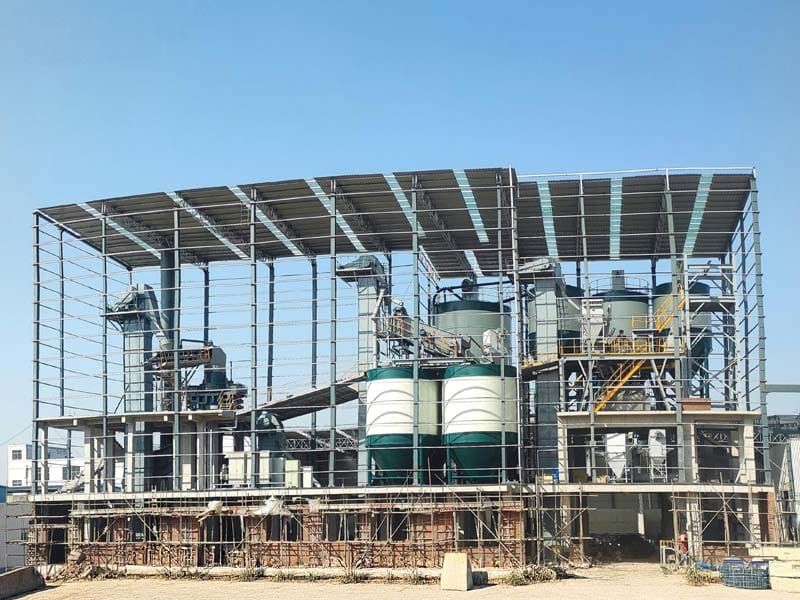
One of the most important distinctions in manufactured sand raw materials is the difference between useful stone powder and harmful clay contamination.
Fine particles generated from sound parent rock are not automatically the same as clay. Clay minerals can change water demand, admixture demand and mixture behavior differently from inert mineral fines.
Our manufactured sand line includes powder classification so that the powder fraction can be adjusted during production. That helps manage the amount of fine material, but it does not turn unsuitable clay-contaminated feed into automatically acceptable sand.
For manufactured sand raw materials, examine where the fine fraction originates. Is it generated by crushing fresh rock, carried in from weathered overburden, stuck to wet feed, or introduced through contaminated stockpiles?
If the intended application uses a methylene-blue or similar test to distinguish clay activity from inert fines, define the method and acceptance criteria before commissioning. The equipment proposal should support the material requirement rather than invent a universal fines limit.
Feed Moisture Can Change Screening and Classification
Moisture is often discussed only after sand has been produced, but it can also change how manufactured sand raw materials behave inside the plant.
Wet fine particles can adhere to larger particles, screens and chutes. This can reduce screening efficiency and change the apparent size distribution reaching the classifier. Moist feed may also behave differently in dry powder-separation equipment.
For this reason, measure feed moisture under representative operating conditions. Do not rely only on a sample collected during a dry period if the quarry experiences seasonal rain or uses water during upstream processing.
When evaluating manufactured sand raw materials, record:
- normal moisture range;
- expected wet-season condition;
- whether the feed is washed upstream;
- whether covered storage is available;
- whether drying is required before the downstream mortar process.
If the manufactured sand will feed a dry mortar plant, final sand moisture becomes even more important. The সমন্বিত উৎপাদিত বালি এবং বিশেষ মর্টার প্ল্যান্ট connects sand preparation with dry-mortar production, so moisture and storage strategy need to be reviewed across both processes.
Feed Size Distribution Matters, Not Just Maximum Size
Our standalone sand-making line describes a prepared stone feed of approximately 5–15 mm before vertical-shaft impact crushing. This is a critical supply-boundary point: large quarry rock requires upstream preparation before entering the sand-making system.
However, manufactured sand raw materials should not be specified only as “maximum 15 mm.” The proportion of 5 mm, 8 mm, 12 mm and 15 mm particles affects the load entering the machine and the amount of material that may need recirculation.
Consider two hypothetical feeds. Both are technically within a 5–15 mm envelope. Feed A contains mostly 6–8 mm stone. Feed B contains mostly 13–15 mm stone. Even though both satisfy the same nominal size range, their breakage demand and internal mass flow may differ.
For manufactured sand raw materials, collect a representative sieve distribution of the feed entering the sand maker. Then use trial data to confirm whether the proposed crusher settings, screen configuration and return loop can maintain the target finished grading.
This is also why the earlier process guide should distinguish feed preparation from sand making. The sand-making tower is not a substitute for every upstream quarry-crushing stage.
Particle Shape Starts with Fracture Behavior
The shape of manufactured sand depends on both the machine and the way the source rock fractures. Some rocks break into more equidimensional particles; others tend to create flaky, elongated or rough particles.
The FHWA notes that fine aggregate particle shape and surface texture can influence void content and water demand. Its petrographic guidance explains that highly angular particles with complex surface geometry can increase the amount of paste needed to coat the particles. See the FHWA discussion of fine aggregate particle shape and surface texture.
That does not mean angular manufactured sand is undesirable. It means manufactured sand raw materials and crushing conditions must be evaluated together with the intended concrete or mortar formulation.
Our sand line uses stone-on-stone vertical-shaft impact crushing and shaping. During a trial, examine whether the selected feed produces the required particle shape after the actual crushing and recirculation sequence, rather than assuming the rotor design guarantees the same result with every rock source.
Weathered and Mixed Feed Sources Can Create Hidden Variability
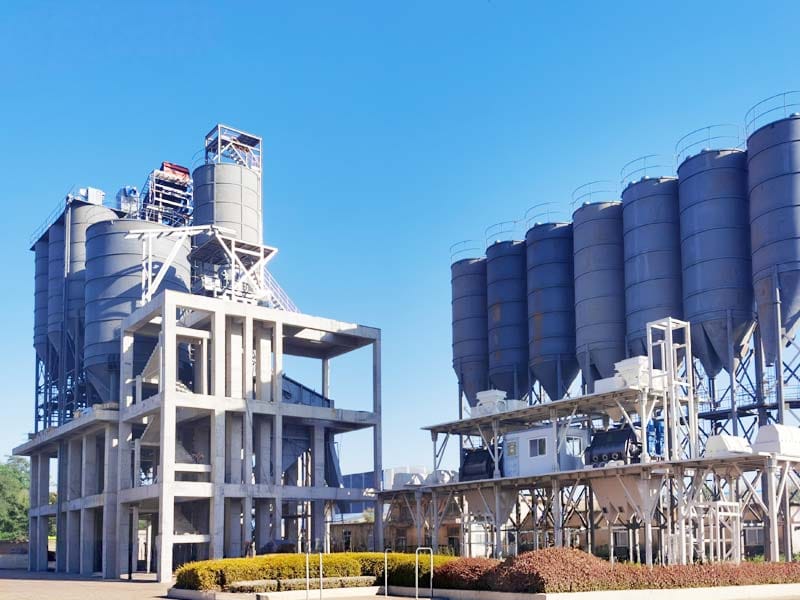
A sample from a fresh quarry face may perform well, while routine production later receives a mixture of fresh stone, weathered material and fines from different stockpiles. That variability is often more important than the average result from one laboratory sample.
Manufactured sand raw materials should therefore be sampled across the expected production range. If multiple sources or quarry benches will be used, test them individually before deciding whether they can be blended.
Record visible differences in color, texture and fracture behavior. Compare gradation and fines after processing. If one feed creates substantially more return load or powder, the control system may need a different operating window.
A process line should be designed around expected variation rather than an unusually favorable sample. When requesting a configuration, provide both normal material and the realistic worst-case feed that the plant is expected to handle.
Use Representative Sampling, Not Hand-Picked Stone
Testing manufactured sand raw materials is only useful when the sample represents normal production.
A few clean stones selected by hand can show that the rock is crushable, but they cannot establish typical clay content, feed-size distribution or moisture variation. For a plant trial, sampling should capture the material stream or stockpile in a way that reflects the actual feed.
Document the sampling location, date, stockpile or quarry bench, moisture condition and approximate quantity. If the sample is dried or screened before the test, record that preparation because it changes the material entering the trial.
For manufactured sand raw materials used across different seasons, more than one sampling campaign may be necessary. The purpose is not to collect as many samples as possible, but to identify the range that matters to equipment selection.
The final test report should connect each sample to its process settings and finished-sand results. This makes it possible to see whether a change in grading came from the equipment adjustment or from a different feed.
Run a Mass-Balance Trial Before Final Equipment Selection
A useful manufactured sand raw materials trial should quantify where the feed goes. Record the mass entering the line, the qualified sand produced, oversized material returned, collected powder and any material not accounted for.
Consider a hypothetical dry-solids trial with 100 tonnes of prepared feed. After one operating period, suppose 68 tonnes meet the finished-sand specification, 20 tonnes are in the recirculating oversize stream, 10 tonnes are separated as powder and 2 tonnes remain in equipment or are otherwise unaccounted for at the measurement boundary.
That does not mean the “yield” is automatically 68%. The 20 tonnes in the return loop may be processed again and later become qualified sand. Internal recirculation is not the same as final loss.
For manufactured sand raw materials, distinguish:
| Mass-balance term | Meaning | Why buyers should care |
|---|---|---|
| তাজা ফিড | New prepared stone entering the system. | Defines the external supply requirement. |
| Qualified finished sand | Material released to the product bin. | Relates directly to usable output. |
| Recirculating material | Material returned for another pass. | Loads internal conveying and crushing equipment. |
| Separated powder | Fine fraction removed by classification. | Must be managed according to product and process requirements. |
| Unaccounted material | Difference within the measurement boundary. | Signals sampling, measurement or inventory uncertainty. |
This type of trial connects feed behavior with the real capacity of the line. A high internal circulating load can limit fresh-feed throughput even when the crusher itself appears capable of processing more material.
What Information Should You Send to the Equipment Supplier?
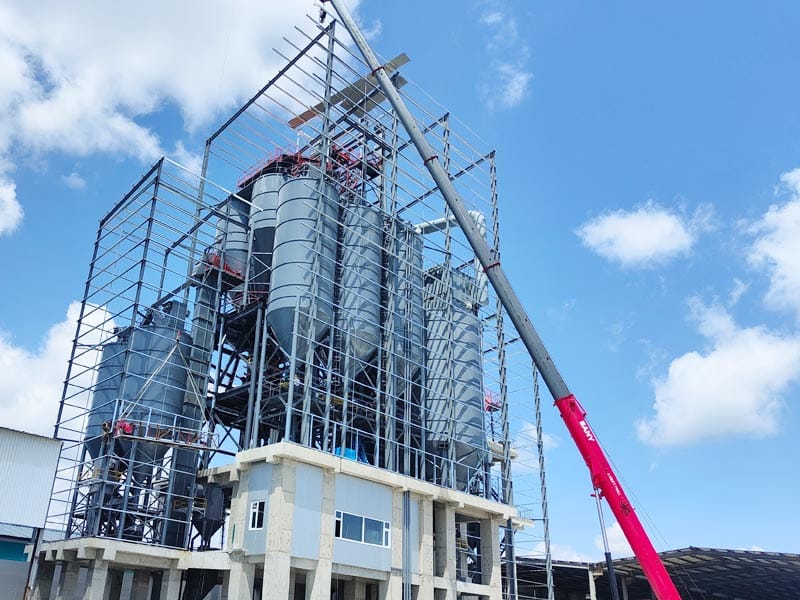
A serious manufactured sand raw materials inquiry should include more than the rock name.
Send the source description, feed-size distribution, moisture range, expected hourly demand and available upstream preparation equipment. Include any existing test data for mineral composition, strength, durability, clay contamination or other relevant properties.
Also provide the finished-sand target: maximum size, grading envelope, desired powder-control range and downstream application. If the sand will feed dry mortar, identify the main products and whether several sand fractions need separate storage.
আমাদের manufactured sand solutions can then be reviewed against a real material and product requirement rather than a generic capacity request.
If representative samples are available, agree in advance what the trial should measure. The result should define the proposed operating conditions and any upstream or downstream equipment that falls outside the sand-making line.
উপসংহার
Manufactured sand raw materials determine the starting conditions for every downstream crushing, screening and classification decision. Rock type, durability, clay contamination, moisture, feed grading and fracture behavior can all change the quality and productivity of the same nominal sand-making equipment.
The safest selection process is to define the finished sand first, collect representative feed samples, test the material, and then run a process trial with a clear mass balance. This approach turns equipment selection from a catalogue comparison into a material-specific production plan.
Send your feed source, particle-size distribution and target finished-sand specification through our যোগাযোগ পাতা for a project-specific sand-making line review.
FAQ
What are the best manufactured sand raw materials?
There is no single best rock type for every application. Suitable manufactured sand raw materials must have acceptable mineral composition, durability, cleanliness and crushing behavior for the intended finished-sand specification. Representative testing is more reliable than choosing by rock name alone.
Can limestone be used for manufactured sand?
Yes, suitable limestone can be processed into manufactured sand. However, the specific deposit should still be checked for strength, weathering, clay or other impurities, feed grading and downstream product requirements.
Can granite or basalt be used as manufactured sand raw materials?
Yes. Granite and basalt are among the rock types that can be processed by suitable sand-making equipment. Their hardness, fracture behavior and wear implications should be confirmed during material and process trials.
Why is clay contamination important in manufactured sand production?
Clay can influence water demand, admixture response and finished-product behavior differently from inert stone powder. Powder classification can control particle quantity, but contaminated manufactured sand raw materials may still require source control or upstream treatment.
What feed size should enter a manufactured sand production line?
The required feed depends on the specific equipment. Our published standalone sand-making line is based on prepared stone in the approximately 5–15 mm range. Larger quarry material requires suitable upstream preparation before entering the sand-making stage.

