
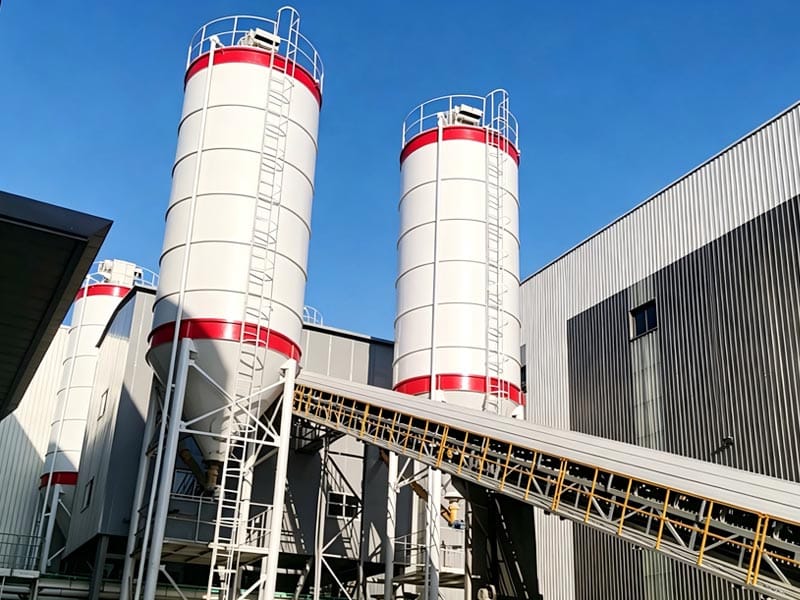
Precast concrete transport is the link between the batching plant and the mold. A mixer can produce excellent concrete at the required rate, but the factory can still lose productivity if the transport bucket is too small, the route is too long, a casting station is not ready, or the return cycle delays the next batch.
For precast producers, concrete transport should therefore be designed together with the batching plant. The useful question is not simply how many cubic meters the mixer can produce per hour. It is whether each finished batch can leave the mixer, reach the correct production station and return the transport equipment in time for the next demand.
Nuestro planta dosificadora de hormigón prefabricado uses planetary mixing, multiple discharge doors and software integration for PC production lines. These features make the mixer-to-factory interface especially important. This guide explains how to design precast concrete transport around batch size, delivery route, casting rhythm and factory control.
What Does Precast Concrete Transport Include?
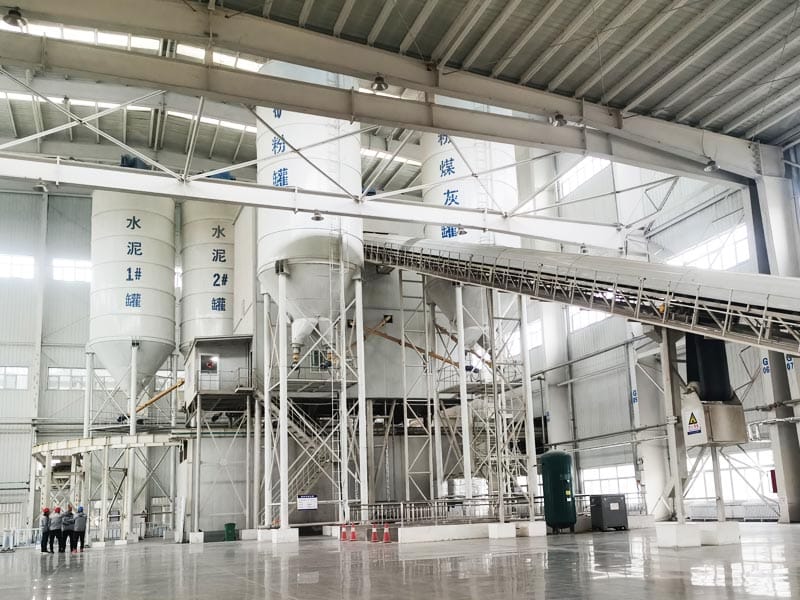
Precast concrete transport covers the movement of fresh concrete from the mixer discharge to the mold, casting machine or other receiving point inside the factory.
Depending on the production line, transport can use:
- rail-mounted buckets;
- overhead or floor-traveling buckets;
- transfer hoppers;
- concrete distributors;
- truck mixers;
- pumps or conveyors for specific applications.
ACI Committee 304’s guide to measuring, mixing, transporting and placing concrete treats transporting as a separate production stage and covers concrete movement using buckets, conveyors, pumps and other methods.
For a precast factory, the transport method should match the concrete, the casting process and the physical layout. Precast concrete transport is therefore part of the plant-production interface, not just an accessory after the mixer.
Start with the Casting Stations, Not the Transport Bucket
The transport system should be designed around where concrete needs to go.
Before choosing a bucket, rail or distributor, list every casting station and define:
| Casting-line question | Por qué es importante | Transport implication |
|---|---|---|
| How much concrete does the station need per pour? | Defines the useful delivery quantity. | Bucket or hopper capacity should fit the receiving demand. |
| How often does the station request concrete? | Defines delivery frequency. | Controls travel and return-cycle requirements. |
| Can the pour be interrupted? | Some products need consecutive delivery. | May require protected transport priority. |
| What concrete type is used? | Fresh properties can change transport behavior. | Influences bucket, chute or pump suitability. |
| Where is the station located? | Distance changes cycle time. | Affects route, rail layout and number of transport units. |
This station-first method keeps precast concrete transport tied to actual factory production rather than selecting equipment from a generic capacity chart.
Match Transport Capacity to Mixer Batch Size
One of the first checks is whether the receiving transport equipment can accept the complete mixer batch.
Suppose a mixer discharges 1.5 m³ per batch while the transport bucket has a usable capacity of only 1.0 m³. The factory must either split the batch, use a different receiving method or change the production sequence.
Splitting a batch can add delay and complicate traceability. It may also leave part of the concrete waiting in the mixer while the first load is delivered.
For precast concrete transport, compare:
- mixer discharged batch volume;
- usable transport-container volume;
- freeboard or operating allowance;
- receiving-station capacity;
- whether partial batches are permitted.
The transport system should be sized around the validated operating batch range, not just the nominal mixer volume.
Travel Time Can Limit Plant Output
Precast concrete transport can become the real production bottleneck even when the batching plant has spare capacity.
Consider a hypothetical example. A mixer produces a 1.5 m³ batch every three minutes. The theoretical mixer rate is 30 m³/h.
Now assume one transport bucket carries 1.5 m³ and requires six minutes for a complete load-deliver-return cycle. That bucket can complete ten cycles per hour:
1.5 × 10 = 15 m³/h
The mixer can theoretically produce 30 m³/h, but the single bucket can move only 15 m³/h under those assumptions.
This example does not describe a MixingPlantPro product performance value. It shows why precast concrete transport should be analyzed as a complete cycle, including return time.
Calculate the Complete Transport Cycle
A transport cycle normally contains more than travel.
For precast concrete transport, include:
- positioning below the mixer;
- mixer discharge;
- confirmation that loading is complete;
- travel to the casting station;
- positioning at the receiver;
- controlled discharge;
- return travel;
- waiting for route clearance.
A system described as “fast” can still have a long practical cycle if it spends time waiting for a production station or crossing another transport route.
Build a timed sequence using the longest realistic route and the busiest production window. Then compare the transport cycle with the mixer repeat cycle.
Multiple Discharge Doors Need a Defined Routing Strategy
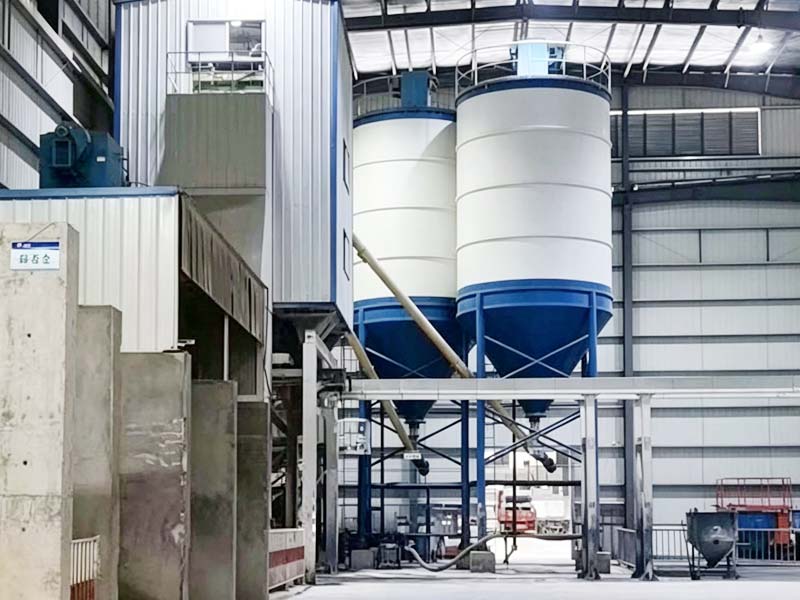
Our precast batching plant uses multiple discharge doors to support different delivery routes. That can be valuable when one mixer serves several casting areas.
However, multiple doors do not create multiple independent mixers. Only one concrete batch occupies the mixer at a time.
For precast concrete transport, define:
- which discharge door serves which route;
- which transport unit waits below each door;
- how the control system confirms the correct receiver;
- what happens if the intended route is unavailable;
- whether one door can serve more than one destination.
The control logic should prevent the mixer from discharging to the wrong transport system or to a receiver that is not ready.
Transport Routing Should Avoid Factory Cross-Traffic
A precast factory often contains cranes, reinforcement preparation, mold movement, forklifts and personnel traffic. Precast concrete transport should not be planned in isolation from those activities.
Map the concrete route through the factory and identify:
- crossings with crane paths;
- forklift aisles;
- personnel walkways;
- mold-transfer systems;
- acces de întreținere;
- doors and structural columns.
A direct route is usually easier to control than a route with repeated crossings and waiting points.
Our earlier guide on matching a precast concrete batching plant to the casting line explains why plant layout, production schedule and receiving stations should be reviewed together.
Bucket Design Should Match the Concrete
The receiving bucket or hopper should allow fresh concrete to enter and leave without unnecessary segregation, leakage or buildup.
NPCA guidance on precast plant production recommends directing concrete into the transport bucket over the bucket gate and keeping the bucket interior smooth and well maintained so concrete can discharge effectively.
See the NPCA discussion of transport bucket best practices for precast production.
For precast concrete transport, review:
- bucket geometry;
- gate size and location;
- interior surface condition;
- acces de curățare;
- usable volume;
- leakage control.
Do not assume one bucket design is suitable for every concrete type. Stiff concrete, SCC and fiber-containing mixes can behave differently during loading and discharge.
Self-Consolidating Concrete Needs Controlled Transport
SCC is designed to flow and consolidate without conventional vibration, but that flowability also makes transport control important.
A leaking gate, long waiting period or uncontrolled drop can change how the concrete behaves before placement.
For precast concrete transport with SCC, check:
- bucket sealing;
- waiting time;
- discharge height;
- transfer points;
- concrete temperature;
- fresh-property verification.
The transport system should preserve the concrete condition demonstrated during production trials.
Nuestro precast concrete consistency guide explains why moisture, batching, mixing and delivery should be treated as one process chain.
Dry-Cast Concrete Can Need a Different Transport Approach
Dry-cast concrete is much stiffer than conventional wet-cast concrete and does not flow through transport equipment in the same way.
For precast concrete transport, the equipment must be compatible with the forming process and material discharge characteristics.
A bucket or hopper that works well for flowable wet-cast concrete may retain stiff material or discharge unevenly.
When a factory produces dry-cast products, carry out a joint review of the mixer, transport container and forming machine. Do not assume that a general precast transport system automatically suits every concrete family.
Waiting Time Should Be Treated as a Production Variable
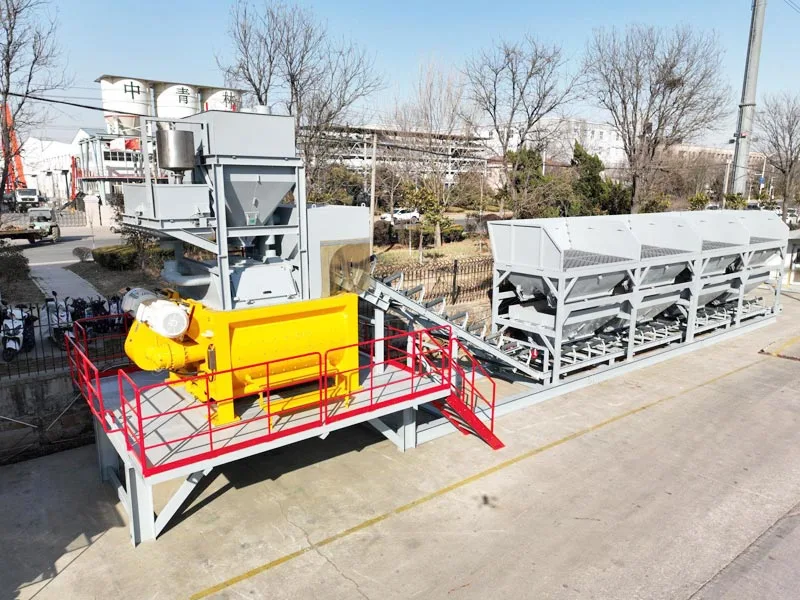
Concrete can wait because a mold is not ready, a crane is occupied or another transport unit is blocking the route.
Precast concrete transport planning should therefore include waiting time as a measurable production variable.
Record:
| Timestamp | What it shows |
|---|---|
| Mixer discharge complete | When the concrete leaves the mixing stage |
| Transport departure | Whether loading or routing causes delay |
| Arrival at station | Actual travel time |
| Discharge start | Waiting time at the receiver |
| Return available | Complete transport-cycle duration |
These timestamps make it possible to determine whether the bottleneck is the batching plant, transport route or casting station.
One Transport Unit May Not Be Enough During Peak Demand
A single bucket can meet average demand but fail during the busiest production period.
Suppose three stations require 6 m³, 4.5 m³ and 3 m³ within the same 30-minute window. Total demand is 13.5 m³.
With a 1.5 m³ transport bucket, the system needs nine deliveries during that half hour. If the average complete cycle is four minutes, one bucket can complete only about seven full cycles during the window.
That indicates a scheduling or transport-capacity problem even before unexpected delays are considered.
Precast concrete transport capacity should therefore be checked against peak synchronized demand, not only hourly average production.
Adding a Second Bucket Requires Route Coordination
Using two transport units can increase capacity, but it also creates route-management questions.
If both buckets use one rail, define:
- passing or waiting points;
- safe separation;
- priority rules;
- loading sequence;
- return sequence;
- what happens when one unit is out of service.
If the buckets use separate routes, the mixer discharge system must identify which door and which bucket correspond to each batch.
A second unit only improves precast concrete transport when the control and physical routes allow both units to operate efficiently.
Concrete Pumps May Be Appropriate for Some Factory Interfaces
Some precast factories can use pumping rather than bucket transport for specific concrete products or production layouts.
ACI’s guide to placing concrete by pumping methods emphasizes mixture pumpability, equipment layout, line routing and consistent concrete at the discharge end.
For precast concrete transport by pump, evaluate:
- concrete pumpability;
- pipeline route;
- cleaning requirements;
- changeover between recipes;
- placement control;
- factory space.
Pumping can be useful in some applications, but it should be validated with the actual mixture rather than selected only for convenience.
Transport Equipment Needs Its Own Cleaning Plan
Fresh concrete remaining in a bucket, hopper or chute can harden and change usable volume, gate operation and product contamination.
NPCA guidance recommends thoroughly cleaning transport buckets and maintaining smooth internal surfaces.
For precast concrete transport, define:
- where cleaning occurs;
- how wash water is collected;
- who verifies the bucket is ready for the next shift;
- how hardened buildup is removed safely;
- how cleaning affects the transport schedule.
Cleaning should not be left until buildup becomes large enough to affect capacity.
Maintenance Should Focus on the Complete Transport System
Transport reliability depends on more than the bucket itself.
Depending on the system, maintenance can include:
- bucket gates;
- drive motors;
- rails or travel wheels;
- position sensors;
- cables or power supply;
- brakes;
- chutes;
- washing stations;
- control interlocks.
Precast concrete transport maintenance should follow the manufacturer’s instructions and actual operating history rather than a universal interval copied from another factory.
Track route delays, gate problems and repeated position alarms. These production symptoms can identify developing maintenance issues before the system fails completely.
Traceability Should Follow the Batch to the Mold
In a modern precast factory, the concrete batch should remain identifiable after it leaves the mixer.
Our precast batching plant includes production-line software integration. For precast concrete transport, define how the batch ID is connected to:
- transport bucket;
- casting station;
- mold or product lot;
- delivery time;
- fresh-concrete testing;
- operator actions.
This allows a quality team to trace a finished component back to the batching record and transport sequence.
Nuestro guía inteligente de plantas dosificadoras de hormigón explains how batch records, alarms and production destinations can form one traceability chain.
Use a Plant-to-Mold Acceptance Test
Commissioning should not stop at the mixer discharge.
For precast concrete transport, run a representative test from batching through the actual receiving station.
Record:
- dimensiunea lotului;
- concrete type;
- mixer discharge time;
- transport loading time;
- travel time;
- waiting time;
- discharge time;
- return time;
- fresh-concrete condition at the point of use.
The objective is to verify the complete interface between the plant and the casting line.
A mixer test proves the mixer can produce concrete. A plant-to-mold test proves that the factory can actually deliver that concrete where and when it is needed.
What Should Buyers Send for a Precast Transport Review?
A useful precast concrete transport review needs factory and production data.
Proporcionar:
- factory layout;
- mixer location;
- casting-station locations;
- concrete types;
- minimum and maximum batch sizes;
- peak simultaneous demand;
- required pour continuity;
- proposed transport method;
- available rail or floor routes;
- future production stations.
Nuestro soluciones prefabricadas de hormigón can then be configured around batching, transport and casting as one production system.
Send your factory layout and production schedule through our página de contacto for a project-specific precast concrete transport and batching review.
Conclusión
Precast concrete transport is the production link between the mixer and the mold. Bucket size, route length, discharge design, waiting time and return cycle can limit factory output even when the batching plant has enough theoretical capacity.
The strongest system begins with the casting stations, matches transport volume to batch size, checks the complete cycle during peak demand and keeps each batch traceable to its destination.
Design the batching plant and transport system together. When concrete can move to the correct station at the right time without unnecessary waiting or handling, the entire precast factory becomes easier to schedule and control.
Preguntas frecuentes
What is precast concrete transport?
Precast concrete transport is the movement of fresh concrete from the batching plant mixer to the mold, casting machine or other receiving station inside the factory. Common methods include buckets, transfer hoppers, pumps and other project-specific systems.
How should a transport bucket be sized?
The usable bucket capacity should be compared with mixer batch size and receiving-station demand. If the bucket cannot accept the intended batch, the factory may need split deliveries, another bucket size or a different production sequence.
Can precast concrete transport limit batching plant output?
Yes. If the transport cycle takes longer than the mixer repeat cycle, concrete can accumulate at the mixer or the plant must slow down. Peak casting demand should be checked against the complete load-deliver-return cycle.
Why are multiple discharge doors useful in a precast batching plant?
Multiple discharge doors can serve different transport routes or receiving systems. The control logic still needs to identify the correct destination and confirm that the receiving equipment is ready before discharge.
What should be tested during precast concrete transport commissioning?
Test representative batch sizes and concrete types through the full plant-to-mold route. Record loading, travel, waiting, discharge and return times, and verify the concrete condition at the receiving station.


