
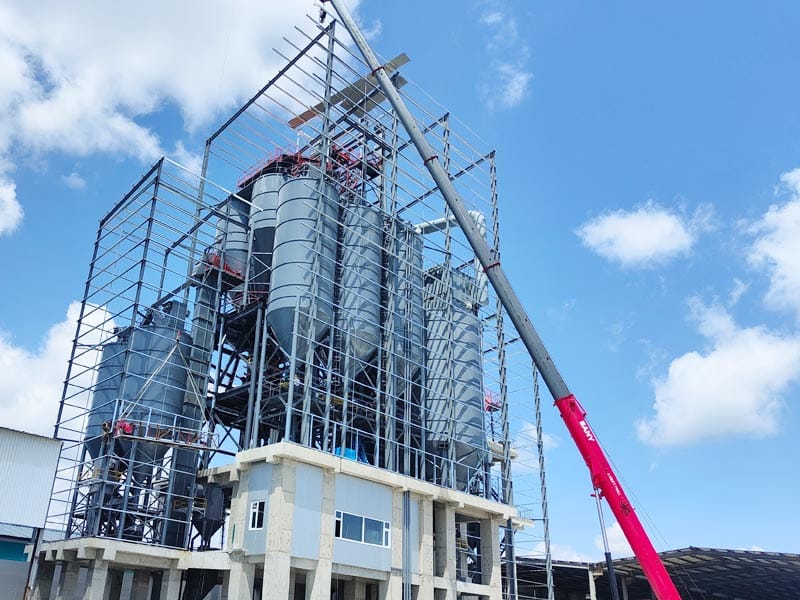
A manufactured sand production process should be judged by the sand leaving the plant, not simply the amount of rock entering the crusher. A line can move plenty of material while producing the wrong grading, excessive fines or inconsistent feed for the next production stage.
The practical starting point is the finished product specification. Work backward from that requirement to decide how the rock should be prepared, crushed, separated and stored. This guide follows that route, explaining where quality is created, where it can be lost and what to verify before selecting equipment.
Sadržaj
What Does the Manufactured Sand Production Process Include?

The manufactured sand production process converts suitable rock into a controlled fine aggregate through size reduction, separation and handling. Manufactured sand, often called M-sand, is therefore more than an unsorted fine fraction discharged from a crusher.
The EPA’s description of crushed stone processing distinguishes crushing, screening, classification and storage, with washing or air separation used where the product requires further treatment.
A practical flow is: prepared feed, crushing and shaping, screening, fines classification, product storage and quality release. Oversize can return for further crushing. Dust control operates alongside these stages rather than replacing product classification.
Not every manufactured sand production process needs the same machinery. An installation receiving prepared stone starts from a different point than a quarry handling large rock. Define that boundary before comparing proposals.
Define the Finished Sand Before Selecting Equipment
Begin the manufactured sand production process with a written product requirement. State the application, maximum particle size, grading envelope, permissible fines, moisture condition and relevant material-quality tests.
For concrete applications, ASTM C33/C33M on concrete aggregates addresses grading and quality and recognizes manufactured sand as a fine aggregate. It is not a universal specification for every mortar, adhesive or other building material.
Naš proizvedena pijesak proizvodnoj liniji focuses on a 0–3 mm product range and combines a vertical-shaft impact sand maker, screening, powder selection and a return system.
That size range describes the equipment’s stated product focus, not proof that any resulting blend suits every formulation. Have the concrete or mortar technologist approve the target distribution. The manufactured sand production process should produce an agreed material, not leave the downstream factory to compensate for an undefined one.
Check the Feed and Identify What Must Happen Upstream
The published flow for our sand-making line begins with 5–15 mm stone. Large quarry rock therefore needs an upstream preparation route; the sand-making tower should not be assumed to accept boulders directly.
For your manufactured sand production process, record the actual incoming size distribution rather than only the largest piece. Identify changes in source, weathering, moisture and visible contamination. Ask the material supplier how different deposits or stockpiles are kept separate.
Prepare representative samples from normal production and less favorable conditions. A clean, hand-selected sample may be useful for an initial trial, but it cannot establish performance across the expected feed range.
Also mark who supplies any primary crushing, preliminary screening or other preparation equipment. A complete process drawing should show these interfaces even when they fall outside the proposed sand line’s supply scope.
Use Crushing and Shaping to Create a Suitable Feed for Separation
In this equipment range, vertical-shaft impact crushing provides the sand-making stage. The published configuration uses stone-on-stone impact, followed by screening and classification. Those downstream operations remain necessary parts of the manufactured sand production process.
A laboratory investigation of processed manufactured sands found that processing changed particle shape and grading, while mineralogy and clay content still influenced concrete behavior. Its results do not establish a universal performance guarantee for other rocks or plants.
During trials, compare the feed and discharge samples using the same test methods. Record the operating settings alongside throughput and product results. Do not judge shaping from a few attractive particles in a photograph.
The useful question is whether the manufactured sand production process creates enough material in the required size bands. A high crushing rate has limited value when most output needs another pass or falls outside the intended product.
Make Screening and Closed-Circuit Return Work Together
Screening separates material by size; a return circuit sends selected oversize back for another crushing pass. The EPA’s stone-processing flow diagram illustrates this distinction between product streams and recirculating material.
For a manufactured sand production process, label every outlet on the flow sheet. Which stream becomes finished sand? Which returns to the crusher? Which leaves as a separate product or rejected material?
Then review screen condition, feed presentation and the expected load at each deck. The nominal aperture alone does not demonstrate the grading achieved during production; verify the outlet samples.
A return conveyor carrying material is not necessarily evidence of a problem. However, compare its measured flow with the design assumptions. An unexpectedly large return stream deserves investigation before increasing fresh feed. The manufactured sand production process must accommodate internal circulation as well as incoming stone.
Choose Between Dry Classification and a Wet Route
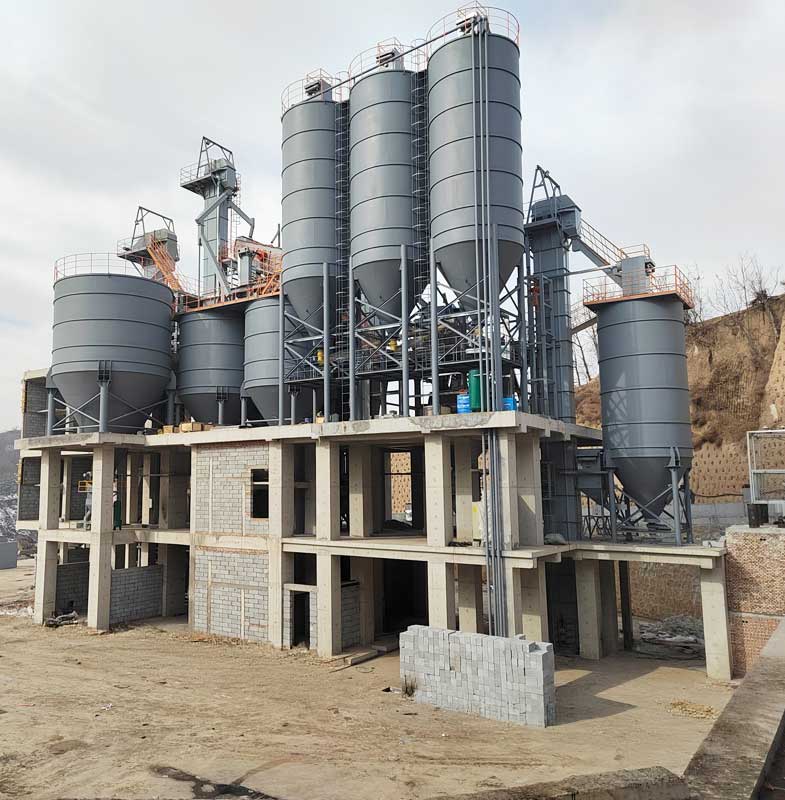
The manufactured sand production process may use dry separation or include washing. The choice should follow feed trials and the required product condition, rather than a blanket claim that one route always produces better sand.
Dry classification
Air classification provides a route for separating fines without a sand-washing stage. In the research cited above, air classification removed a portion of potentially deleterious fines; it did not make the original mineralogy irrelevant.
For a dry route, establish the feed-moisture range under which the proposed separation works. Include the actual material in the trial, identify where removed fines go and confirm whether any conditioning is required before downstream use.
Treat removal and recovery as two different objectives. Diverting more fines may lower their content in the sand, but it can also remove a fraction the formulation needs. Compare both outlet samples and the mass balance after a setting change. Approve a documented operating range, not one setting assumed suitable for every incoming material.
Wet processing
EPA guidance notes that washing is required in some cases to meet product requirements. Where a wet route is proposed, include water supply, product dewatering and management of the separated material in the engineering review.
For dry-mortar production, also establish how the sand reaches the required final moisture condition. Washing, dewatering and drying should not be treated as interchangeable operations or assumed standard inclusions. Compare the complete manufactured sand production process through to usable material.
Separate Fines Content from Clay-Related Quality
Reducing all powder to the lowest possible level is not a sufficient quality objective. The manufactured sand production process needs a specified fines range and a separate assessment of potentially harmful material.
ASTM C117 measures material finer than 75 μm by washing. That result reports a size fraction; it does not identify how much of that fraction consists of problematic clay minerals.
ASTM C1777 uses methylene blue adsorption to assess fine aggregate or mineral filler. Its guidance relates the value to the amount and characteristics of clay minerals and warns that different methylene blue methods can produce very different numbers.
For a manufactured sand production process, compare laboratory results only when the method and tested fraction match. Do not copy an acceptance value from another method or treat a low fines percentage as proof that the material is suitable.
Agree the limit with the responsible technologist and validate the intended mixture. C1777 itself does not prescribe one maximum value for every application.
Measure the Grading Curve, Not Just Fineness Modulus
Grading control makes the manufactured sand production process useful to the next production stage. ASTM C136/C136M sieve analysis determines particle-size distribution and provides information for aggregate production control.
Review the percentage passing every specified sieve. A summary number such as fineness modulus cannot uniquely describe an entire distribution: different combinations of individual fractions can produce the same aggregate summary.
This matters when one blend lacks a middle fraction while another contains it. Comparing only their summary values can hide the difference. Keep the full grading results with the production record.
ASTM C136/C136M also states that dry sieving alone cannot accurately determine material finer than 75 μm and directs users to C117. Distinguish that laboratory washing procedure from a decision to install a washing plant. Testing the manufactured sand production process and selecting its equipment are related, but separate, tasks.
Separate Fresh Feed, Circulating Load and Finished Output
Capacity claims become meaningful only when their measurement boundary is clear. For a manufactured sand production process, distinguish fresh feed entering the system, gross flow through recirculating equipment and accepted sand leaving it.
The following example is hypothetical. All figures represent dry solids at steady operation, with no accumulation or unmeasured losses. They are not equipment ratings or promised yields.
| Material stream | Illustrative rate | How it is counted |
|---|---|---|
| Fresh feed | 100 t/h | New material entering the system |
| Internal return | 40 t/h | Material circulating inside the system |
| Combined inlet to the recirculating stage | 140 t/h | Fresh feed plus return, for this assumed arrangement |
| Accepted sand | 75 t/h | Product meeting the agreed specification |
| Separated fines | 15 t/h | Separate outlet, not included in accepted sand |
| Other diverted material | 10 t/h | Separate outlet requiring its own destination |
The external balance is 100 = 75 + 15 + 10 t/h. The additional 40 t/h is internal circulation, so adding it to finished output would count the same material again.
The accepted-sand yield is 75 ÷ 100 × 100 = 75%. A different product specification could change that yield, even with the same fresh-feed rate.
Apply this distinction to every manufactured sand production process proposal. Request a mass balance that identifies the moisture basis, product definition and location of each measurement. A figure measured as wet incoming material should not be compared directly with dry finished-sand tonnage.
Report output by grade when the line serves more than one application. Count only material passing that grade’s acceptance checks. For a whole-shift assessment, record opening and closing inventory as well: filling or emptying bins can otherwise distort a comparison between material processed and sand dispatched.
Protect Quality Through Storage and Dust Control
Do not end the manufactured sand production process review at the classifier outlet. Inspect the route into storage and onward to dispatch or batching. Identify opportunities for unintended blending, contamination or moisture changes.
Give each product a defined storage destination and sampling point. Establish how material produced during startup, adjustments or an unsuccessful test is kept out of accepted inventory. A batch identifier should remain meaningful after the sand leaves the processing equipment.
Dust control also needs a complete boundary. EPA identifies crushing, screening and handling as potential particulate sources. Review extraction and enclosure around the actual transfer points, not just the crusher housing.
Confirm the destination of collected powder. Returning it to saleable sand changes the material balance and should follow an approved quality-control procedure, not an informal disposal decision.
Connect Sand Preparation to the Mortar Production Schedule
Naš integrirano proizvedeno postrojenje za pijesak i specijalne žbuke connects sand preparation with ingredient metering, mixing and packaging or bulk delivery. This creates a reason to assess both stages together, while keeping their capacity figures separate.
For an integrated manufactured sand production process, specify which sand fractions each mortar recipe needs and how much is required during the busiest production window. Design storage around those requirements, not just total sand output.
A large quantity of one available fraction cannot replace a missing fraction unless the formulation team approves the change. Similarly, simultaneous nameplate operation is not the only useful schedule: the sand section may replenish defined storage ahead of mortar production.
Ask for a coordinated material-flow and storage review through our manufactured sand production solutions. Confirm interfaces and supply boundaries explicitly rather than assuming that every upstream or downstream unit is included.
Validate the Process with Representative Material
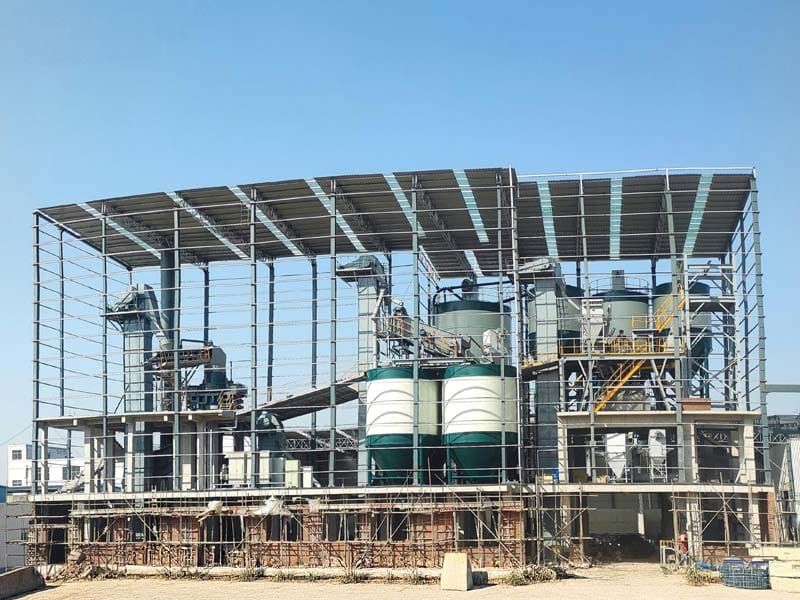
Acceptance of a manufactured sand production process should connect output to quality. Agree the feed characteristics, operating period, sampling locations and product criteria before the run begins.
Record fresh feed, accepted product, separated fines and return flow where relevant. Retain samples from several points in the run rather than selecting one favorable result. Compare the full grading, fines and agreed material-quality measurements.
For the intended application, also test representative concrete or mortar. Passing an aggregate grading check alone does not demonstrate every performance requirement of the finished mixture.
Supply your feed analysis, target grading and required accepted-sand output for a process configuration and layout review. Include site space, storage needs and the downstream production schedule so the proposal can explain how the complete line will operate.
Zaključak
A reliable manufactured sand production process links the rock source to a defined finished product. Crushing creates material for separation; screening, fines control, testing and storage determine whether that material is ready for use.
Compare accepted output and verified quality, not throughput alone. Share your raw material information, grading targets and production requirements with our team. Contact us for a sand production line review based on the product you need to make.
FAQ
What are the main stages of the manufactured sand production process?
The main stages are feed preparation, crushing and shaping, screening, classification and product handling. Depending on the feed and specification, the line may include oversize return or washing. Quality checks should cover the resulting sand, not just equipment operation.
Does every manufactured sand line need washing?
No. Dry classification is one available route. Decide from representative material trials and the required final product condition. When washing is needed, define dewatering, water management and any subsequent conditioning as part of the complete proposal.
Is quarry dust the same as finished manufactured sand?
Not automatically. A fine material stream from crushing still needs evaluation against the intended grading and quality requirements. Some material may need further processing or blending. Its name alone does not establish suitability for concrete or mortar.
Does fineness modulus prove that sand grading is correct?
No. Review the complete sieve analysis and the applicable fines test. Fineness modulus summarizes grading but does not uniquely identify every size fraction. Two products with the same summary value may still require different assessments for the intended mixture.
Why can finished-sand output be lower than crusher throughput?
Some material may circulate internally or leave through separate fines and diverted-material streams. Check what the stated throughput measures. As the example above shows, gross equipment flow, fresh feed and accepted product are different quantities.

