Dry mortar caking is a quality problem in which a normally free-flowing powder develops lumps, compacted masses or hardened zones before it is mixed with water at the jobsite. The cause is often blamed on “humidity,” but that explanation is too broad for production troubleshooting. Caking can begin in raw-material storage, inside a hopper, after mixing, during packaging, inside the sealed bag, or later in the warehouse.
For dry mortar manufacturers, the most useful approach is to identify where the caking first appears and then trace the material backward through the production line. A lump found inside a finished bag does not automatically mean the packaging machine is at fault. The same material may already have absorbed moisture before mixing or may have been packed while still too warm.
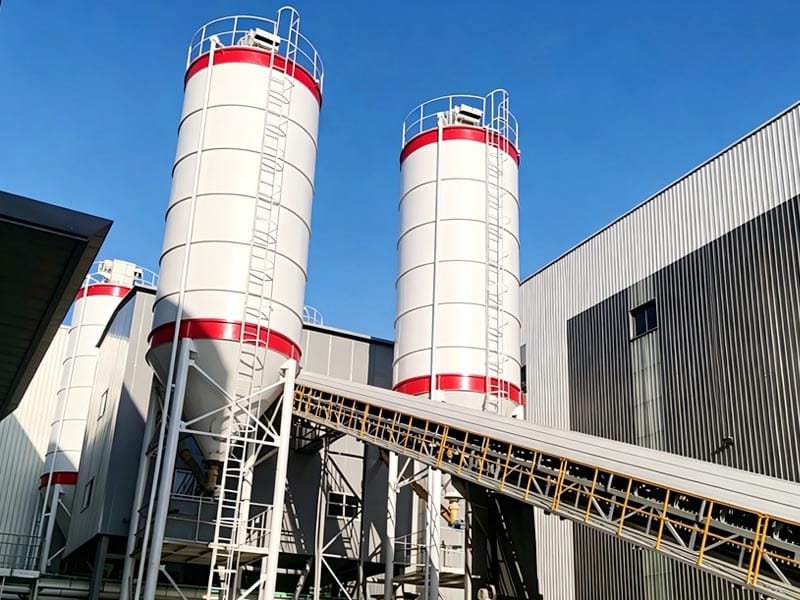
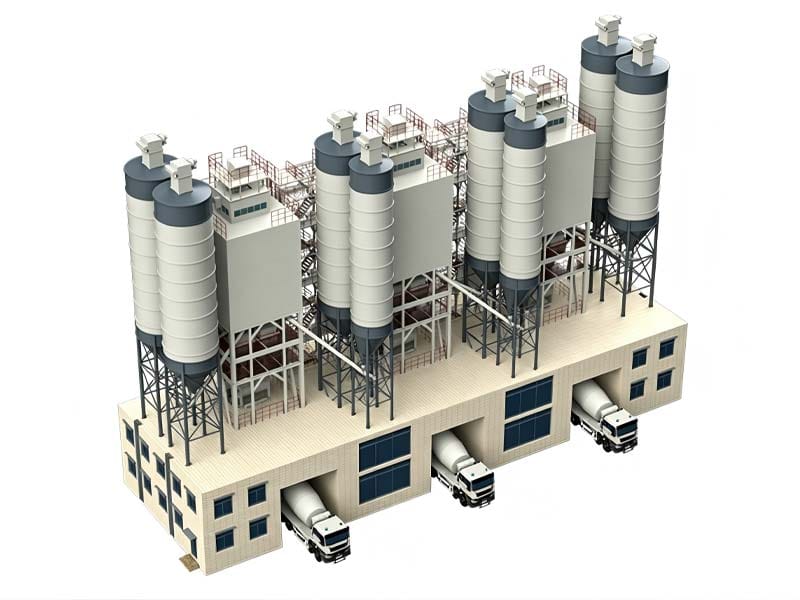
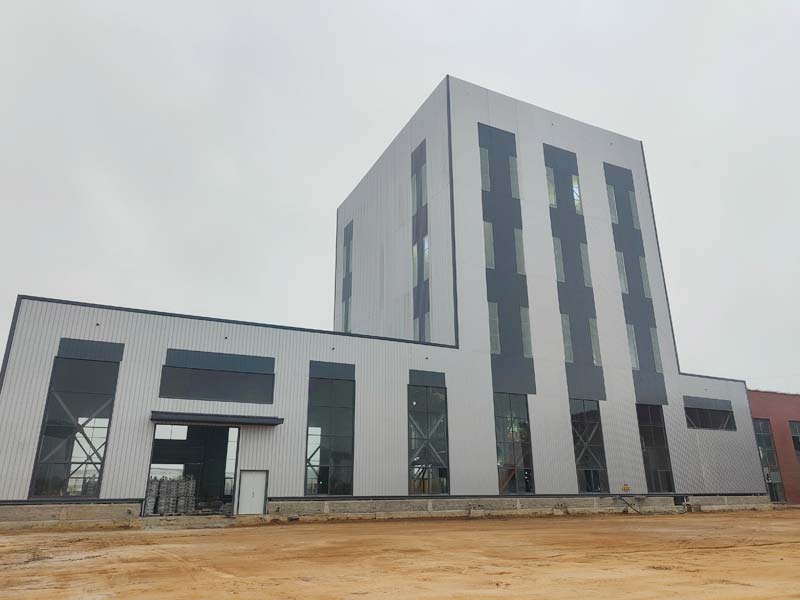
우리의 작업장형 건식 모르타르 혼합 플랜트 그리고 타워형 건식 박격포 공장 are designed for controlled dry-material storage, weighing, mixing, dust collection and packaging. This guide explains how to diagnose dry mortar caking by separating moisture, temperature, storage, packaging and equipment causes.
What Is Dry Mortar Caking?
Dry mortar caking occurs when individual powder or aggregate particles begin to bind together strongly enough that normal handling no longer restores free flow.
The result may appear as:
- soft lumps that break under light pressure;
- hard compacted pieces;
- a crust near the bag surface;
- large masses inside a silo or hopper;
- bridges that block material flow.
These symptoms can have different causes.
Dry mortar caking should therefore be described by location, severity and timing rather than simply recorded as “material clumped.”
First Identify Where the Caking Starts
The first diagnostic question is where the material is still free-flowing and where it first becomes caked.
| First caking location | Likely areas to investigate |
|---|---|
| Raw material silo | Incoming moisture, condensation, long storage, poor venting |
| Weigh hopper | Residual material, humid air, buildup, poor discharge |
| 믹서 | Moisture ingress, residue, cleaning method, wet contamination |
| Finished buffer | Warm product, moisture, long residence time |
| Bag immediately after packing | Incoming moisture, packaging conditions, product temperature |
| Bag after storage | Packaging barrier, warehouse humidity, condensation, storage duration |
This location-based method makes dry mortar caking easier to troubleshoot than starting with one assumed root cause.
Moisture Is the Most Common Starting Point
Dry mortar contains cementitious materials and other powders that should remain dry until use.
When unwanted moisture enters the system, it can promote:
- partial hydration;
- particle adhesion;
- capillary bridging;
- soft agglomeration;
- hard caking over time.
For dry mortar caking, the critical question is how moisture entered the material.
Possible sources include wet sand, humid air, condensation, damaged packaging, water cleaning, leaking roofs, or improperly sealed storage.
Wet Sand Can Introduce Moisture Before Mixing
건식 모르타르에는 건식 골재가 필요합니다.
If sand is insufficiently dried, residual moisture enters the formulation before any other production stage can correct it.
확인하다:
- 들어오는 모래 수분;
- dryer performance;
- outlet moisture;
- cooling condition;
- storage after drying;
- seasonal variation.
우리의 dry mortar raw materials guide explains why normal and worst-case incoming moisture should be included in plant design.
For dry mortar caking, residual sand moisture can be especially difficult to diagnose because the finished product may still appear free-flowing immediately after mixing.
Condensation Can Create Moisture Without a Direct Leak
Temperature differences can create condensation inside silos, hoppers, equipment or packaging.
This can happen when:
- warm material enters a colder vessel;
- hot product is packed and later cools;
- day-night temperature changes are large;
- humid air contacts a cool metal surface.
Powder-handling guidance notes that moisture migration can occur when temperature gradients change the equilibrium conditions around stored powder.
For dry mortar caking, condensation should be considered even when no obvious water leak is found.
Product Temperature Before Packaging Can Matter
If dry sand has recently been dried, the mixed product may still retain elevated temperature.
Packing warm mortar into a sealed bag can create a different moisture environment as the bag cools.
For dry mortar caking, record:
- sand temperature after drying;
- product temperature after mixing;
- temperature at packaging;
- warehouse temperature;
- temperature change during transport.
The need for cooling should be validated from the actual formulation, packaging and climate.
Humidity Can Affect Open Transfer Points
Even if raw materials are initially dry, humid air can enter open equipment.
Potential exposure points include:
- bag-dump stations;
- 검사문;
- open hoppers;
- 완제품 버퍼;
- packaging feed hoppers.
Dry mortar caking can therefore increase during humid seasons even when the main process has not changed mechanically.
Hygroscopic Additives Need Protected Storage
Some polymers, cellulose ethers, salts and specialty additives can absorb moisture from the surrounding air more readily than sand or cement.
For each additive, check:
- supplier storage instructions;
- bag integrity;
- warehouse humidity;
- time after bag opening;
- resealing practice;
- feeding-hopper exposure.
Dry mortar caking can begin in a small additive stream and later appear as lumps in the final blend.
Raw Material Lumps Should Be Detected Before They Enter the Mixer
If a raw material is already caked, the mixer should not be expected to restore the original particle condition automatically.
Inspect incoming powders and additives for:
- hard lumps;
- bag damage;
- water marks;
- compressed material;
- expired or long-stored stock.
A screening or de-lumping step may be appropriate for some materials, but the root cause of incoming caking should still be addressed.
Silo Condensation Should Be Checked at the Walls and Roof
Large powder silos can experience temperature differences between the stored material, outside air and steel shell.
검사하다:
- roof area;
- vent filters;
- silo walls;
- inspection ports;
- water ingress around fittings;
- areas of repeated wall buildup.
For dry mortar caking, buildup concentrated near one wall may provide useful evidence about where moisture is entering.
Long Storage Can Increase Compaction and Caking Risk
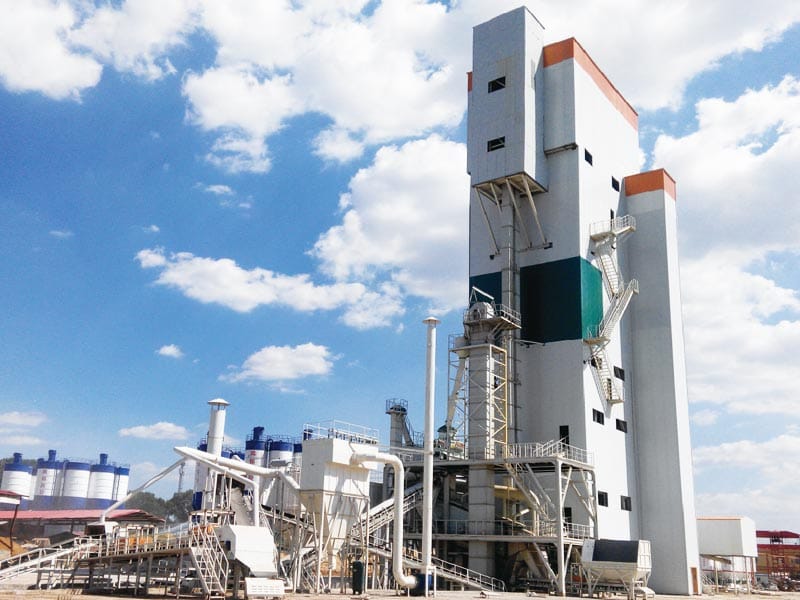
Powder stored for long periods can become denser and less free-flowing even without severe moisture contamination.
Storage time can promote:
- particle rearrangement;
- compaction;
- stronger contact between particles;
- wall buildup;
- bridging.
Dry mortar caking investigations should therefore record material age and stock rotation.
First-in/first-out practices can help prevent older material from remaining unused in the bottom of a bin.
Caking and Hopper Bridging Are Related but Not Identical
Caking describes particles binding together.
Bridging describes a stable arch that blocks material flow above a hopper outlet.
Caked material can cause bridging, but a hopper can also bridge because of:
- cohesive powder;
- small outlet size;
- poor wall angle;
- 벽 마찰;
- compaction.
우리의 호퍼 브리징 가이드 explains how to separate flow-geometry problems from material-condition problems.
Check Whether the Problem Appears Before or After Mixing
If raw materials are free-flowing but the finished blend cakes quickly, investigate the mixing and post-mixer stages.
가능한 원인은 다음과 같습니다:
- wet residue inside the mixer;
- water introduced during cleaning;
- condensation;
- cross-contaminated additive;
- warm product entering a sealed buffer;
- long residence time before packaging.
Dry mortar caking after mixing often points to process conditions rather than the raw material source alone.
Mixer Residue Can Act as a Caking Nucleus
Residual material left on mixer walls, paddles or discharge doors can attract more powder during later batches.
If the residue has absorbed moisture, new dry material can stick to it and increase the buildup.
검사하다:
- 믹서 코너;
- paddles;
- shaft areas;
- liners;
- 배출 게이트;
- inspection covers.
우리의 건식 모르타르 믹서 청소 가이드 explains why periodic physical inspection is still necessary even when purge cleaning is used.
Water Cleaning Can Create Future Caking if Not Fully Controlled
Dry mortar plants are designed for dry materials.
If water is used during cleaning without a validated drying procedure, residual moisture can remain in:
- mixer seams;
- 배출 게이트;
- 스크류 컨베이어;
- 버퍼 호퍼;
- packaging feeders.
For dry mortar caking, review whether the problem started after a maintenance or cleaning event.
Finished-Product Buffers Can Hold Warm or Humid Material
A buffer hopper between the mixer and packer can help decouple mixing from packaging, but it also creates residence time.
If product remains in the buffer for too long, especially under unfavorable temperature or humidity conditions, caking risk can increase.
확인하다:
- average residence time;
- dead zones;
- 재료 축적;
- hopper venting;
- cleanout frequency.
Packaging Is the Main Moisture Barrier After Production
Once mortar leaves the plant, the package becomes the main barrier between the dry product and external humidity.
Dry mortar caking during storage can be associated with:
- damaged bags;
- poor valve closure;
- weak seams;
- insufficient moisture barrier;
- punctures during handling.
A product that leaves the packer in good condition can still cake later if the package does not protect it through the required storage and transport period.
Do Not Judge Packaging Only by Bag Strength
A mechanically strong bag can still have inadequate moisture resistance for a particular product or climate.
Packaging selection should consider:
- water-vapor barrier;
- seal integrity;
- puncture resistance;
- filling method;
- transport duration;
- warehouse conditions.
Dry mortar caking problems that appear only after long storage should trigger a packaging-barrier review.
Warehouse Floors Can Transfer Moisture
Finished bags should not be treated as isolated from the warehouse environment.
Potential storage risks include:
- direct contact with concrete floors;
- water leaks;
- open doors during humid weather;
- poor pallet condition;
- condensation on walls or roof;
- unwrapped pallets.
For dry mortar caking, compare problem pallets with their warehouse position.
Pallet Wrapping and Stack Pattern Can Matter
Stretch wrapping can help protect bags from dust and incidental humidity, but it can also trap heat if the product is packed warm.
Stacking pressure can also compact lower bags.
검토:
- bag temperature before palletizing;
- wrap timing;
- stack height;
- pallet flatness;
- warehouse ventilation.
Dry mortar caking should be investigated across the whole packaging and storage sequence.
Distinguish Soft Lumps from Hard Hydrated Lumps
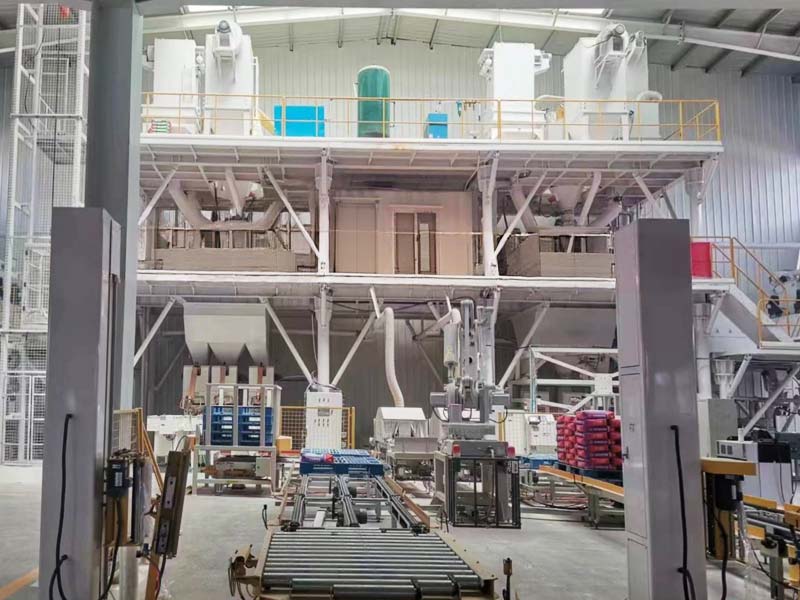
The physical character of the caking can provide clues.
| Observed condition | Possible interpretation |
|---|---|
| Soft, easily crushed lumps | Compaction or early moisture pickup |
| Hard, stone-like lumps | More severe moisture exposure or partial hydration |
| Surface crust only | Localized moisture transfer through packaging |
| Bottom compacted layer | Storage pressure, moisture migration or long residence |
These are diagnostic clues, not definitive laboratory conclusions.
Compare Moisture Before and After Storage
If dry mortar caking appears after several weeks or months, compare material at different stages.
Possible sampling points include:
- raw sand;
- bulk powders;
- fresh mixed mortar;
- freshly packed bag;
- stored bag;
- problem bag.
This can show where moisture increased.
Check Whether the Problem Is Product-Specific
If only one mortar formula cakes, investigate ingredients unique to that formula.
비교:
- 폴리머 함량;
- cellulose ether;
- salts or accelerators;
- gypsum;
- fine filler;
- lightweight aggregate.
If all products cake, the cause may be more likely related to common raw materials, plant moisture, packaging or warehouse conditions.
Gypsum and Cement Products Can Show Different Caking Behavior
Different binder systems react differently to moisture.
A plant producing both gypsum-based and cement-based products should record whether dry mortar caking appears equally in both families.
This comparison can help separate formulation sensitivity from a plant-wide moisture problem.
Do Not Change the Formula Before Checking the Process
Anti-caking additives or formulation changes may help in some products, but they should not be the first response to an uncontrolled moisture source.
Before changing the formula, check:
- raw material moisture;
- equipment dryness;
- product temperature;
- packaging integrity;
- warehouse humidity;
- storage time.
Dry mortar caking caused by water ingress cannot be solved reliably by formulation adjustment alone.
Use Production Records to Find the Time of Change
Trend records can show when the problem began.
Useful fields include:
- production date;
- raw material lot;
- 모래 수분;
- dryer condition;
- product temperature;
- bag lot;
- warehouse location;
- customer complaint date.
Dry mortar caking becomes easier to trace when production and storage records are linked.
Check Seasonal Patterns
If caking complaints increase only during one season, compare:
- ambient humidity;
- rainfall;
- 모래 수분;
- warehouse ventilation;
- temperature swings;
- transport conditions.
A seasonal pattern can reveal environmental causes that are invisible during a one-day plant inspection.
Use a Root-Cause Matrix
| Symptom | First checks | Likely process area |
|---|---|---|
| Raw powder caked before dosing | Bag/silo condition, humidity, storage age | Raw material storage |
| Mixer buildup increases rapidly | Residual moisture, cleaning method, formulation | 믹싱 |
| Freshly packed mortar already lumpy | Raw moisture, hot product, buffer residence | Production/packing |
| Bags cake after warehouse storage | Packaging barrier, condensation, pallet position | Packaging/storage |
| Only one formula cakes | Unique additive or binder | Formulation/material |
This matrix helps separate equipment, material and storage causes.
Workshop-Type Plants Make Some Inspection Points Easier to Reach
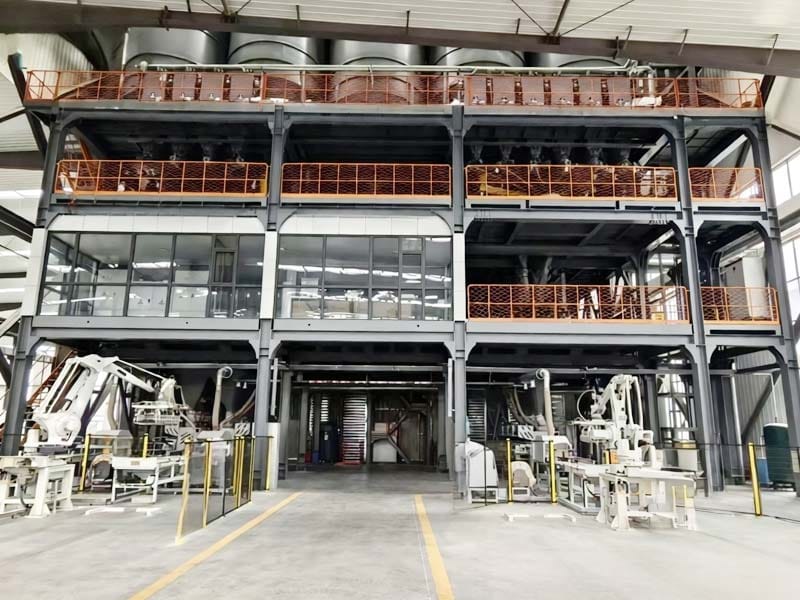
Our workshop-type dry mortar plant uses a horizontal arrangement connected by screw conveyors.
For dry mortar caking investigations, that layout can make it easier to inspect:
- feed hoppers;
- screw conveyor inlets;
- weighing points;
- mixer access;
- packaging feeders.
However, every inspection should still follow the plant’s safe-access and isolation procedures.
Tower Plants Need Attention to Vertical Residence and Condensation Points
A tower plant uses vertical gravity flow through storage, batching, mixing and finished-product handling.
For dry mortar caking, inspect elevated:
- 사일로;
- 계량 호퍼;
- chutes;
- 완제품 쓰레기통;
- vent filters.
Vertical integration reduces some mechanical transfer stages, but moisture and condensation control remain important.
Commissioning Should Establish a Dryness Baseline
Before full production, establish baseline conditions for:
- raw material moisture;
- sand outlet moisture;
- product temperature;
- equipment cleanliness;
- bag integrity;
- warehouse conditions.
If dry mortar caking appears later, these baseline records help identify which condition changed.
What Should Buyers Send for a Caking Investigation?
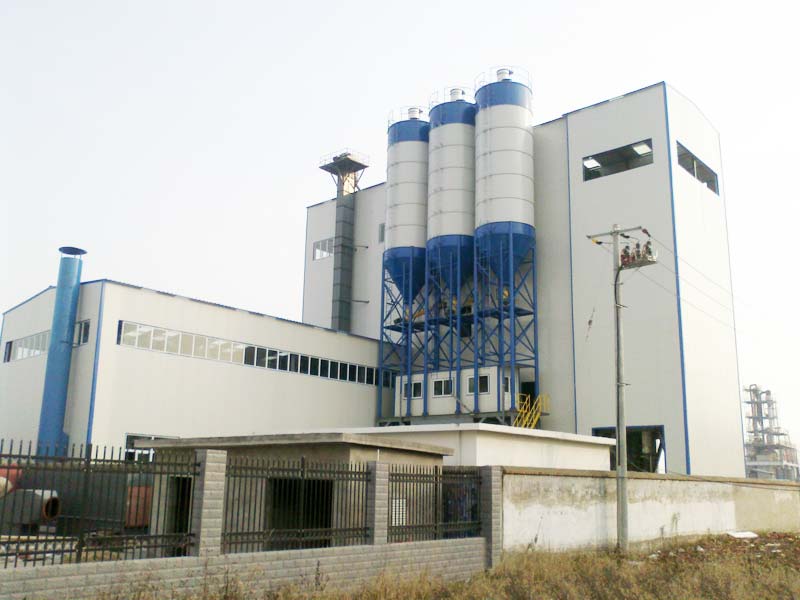
A useful technical review needs information from production through storage.
제공하다:
- product type;
- raw material list;
- 모래 수분;
- drying process;
- product temperature at packing;
- 가방 유형;
- storage duration;
- warehouse conditions;
- where the caking appears;
- photos of lumps or buildup;
- when the problem first started.
우리의 건식 모르타르 용액 can then be reviewed around the actual material and storage conditions instead of treating every caking problem as the same fault.
Send your mortar line configuration and production records through our 연락처 페이지 for a technical review.
결론
Dry mortar caking is usually a symptom of moisture exposure, condensation, long storage, material compaction, packaging failure or residue somewhere in the production chain.
The strongest troubleshooting method identifies the first location where the material stops being free-flowing, then checks raw-material moisture, equipment condition, product temperature, packaging and warehouse storage in sequence.
Do not respond to every caking problem by changing the formula or increasing cleaning. When the location and timing of the problem are documented clearly, plant teams can identify whether the real cause is raw material, process equipment, packaging or storage.
FAQ
What causes dry mortar caking?
Common causes include wet raw materials, humidity, condensation, long storage, equipment residue, warm product packaging, damaged bags and poor warehouse conditions.
Can dry mortar cake even if the bag is sealed?
Yes. Moisture can already be inside the product or package, and temperature changes can cause moisture migration or condensation during storage.
Does caking always mean the mortar absorbed water?
No. Compaction and long storage can also create soft lumps, although hard irreversible caking often suggests more serious moisture exposure or hydration.
Can water be used to clean a dry mortar plant?
Only where the equipment manufacturer and site procedure specifically allow it and the system can be dried completely. Residual water can contribute to later caking.
What information is needed to troubleshoot dry mortar caking?
Provide raw-material moisture, product type, packaging, product temperature, storage duration, warehouse conditions and the first process location where caking appears.