
Batching plant maintenance starts before the first breakdown—and, ideally, before the plant is purchased. A layout that leaves room to inspect a conveyor, replace a liner and verify a weighing hopper gives the maintenance team a workable starting point.
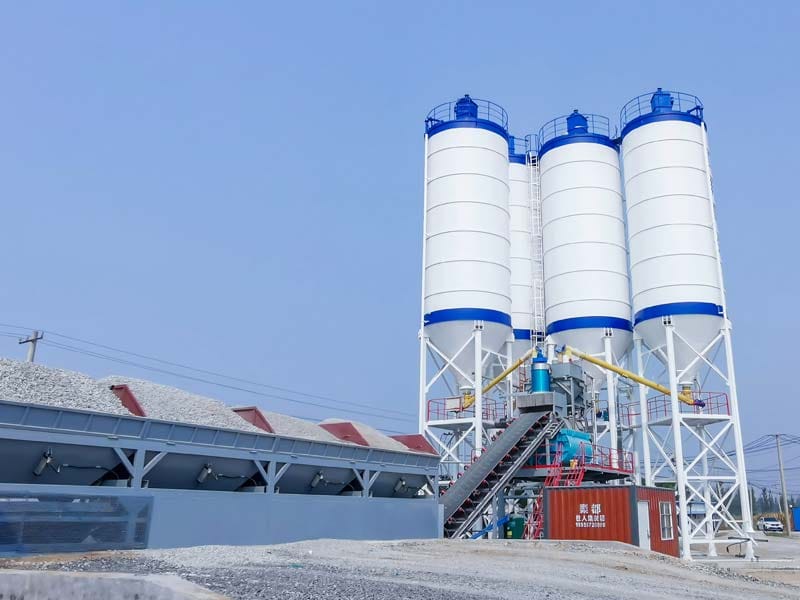
Our pabrik pencampuran beton sabuk yang dipasang di samping combines separate powder silos, flat and inclined aggregate belts, and a lined aggregate holding hopper. Each arrangement needs its own inspection access and service plan.
This guide connects batching plant maintenance to the equipment you select: what to inspect, how to organize the work, and which maintenance provisions to confirm before approving a concrete plant.
Daftar Isi
What Should Batching Plant Maintenance Cover?
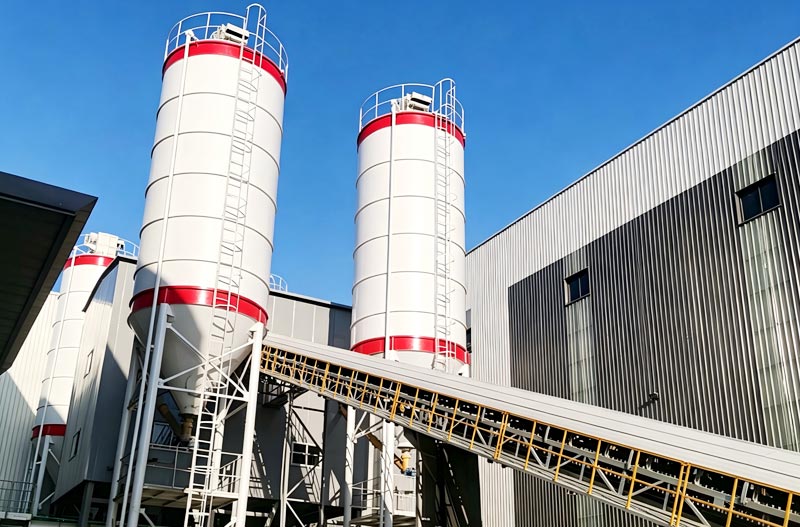
A complete plan follows the material from storage to discharge while also covering the systems that measure, control and protect the process. Cleaning the mixer is only one part of that plan.
Separate three outcomes: equipment remains safe, production functions remain reliable, and the plant continues to deliver the specified concrete. A completed repair does not automatically establish all three.
For batching plant maintenance, create an equipment register with asset identifiers, applicable manuals, service responsibilities and required records. Identify externally supplied equipment as well. A compressor, dust collector or receiving system should not disappear from the schedule because a different contractor supplied it.
The register also makes an inquiry more useful. Instead of requesting a vaguely “easy-to-maintain” plant, you can discuss specific components, access requirements and maintenance resources.
Match the Plan to Your Plant Configuration
Batching plant maintenance should reflect the proposed hardware, rather than a checklist copied from an unrelated station.
Side-mounted belt plants
In our side-mounted arrangement, aggregate passes through flat and inclined belts to a temporary storage hopper with wear-resistant liners and two discharge doors. Review conveyor access, hopper inspection openings and door servicing as separate tasks. The liner location matters: a holding-hopper liner is not a mixer liner.
Mobile plants
Our pabrik batching beton bergerak uses a modular frame and twin-shaft forced mixer. Include the mixer’s shaft-end sealing arrangement in the service discussion, together with connections and supports affected by relocation. Mobility does not remove recommissioning checks.
Precast plants
The pabrik batching beton pracetak uses planetary mixing, multiple discharge doors and production-line software interfaces. Its maintenance plan should address every installed discharge route and the signals exchanged with the casting line, not just the mixer drive.
Build a Practical Batching Plant Maintenance Schedule
Use the following as a planning framework, not a substitute for the model-specific manual. Actual intervals depend on operating duty, environment, inspection findings and applicable requirements.
HSE’s panduan inspeksi peralatan supports setting inspection scope and frequency around risk, manufacturer recommendations and operating experience. It does not establish one universal schedule for every batching station.
| Planning point | Work to organize | Useful record |
|---|---|---|
| Before each shift | Review unresolved defects; complete approved pre-use observations and safety checks from designated positions. | Defects, operating restrictions and responsible person. |
| After production | Complete the approved cleaning and housekeeping routine; report leakage, residue or unusual wear. | Cleaning completion and outstanding work. |
| Weekly planning review | Review trends, parts readiness and upcoming work. Arrange an isolated inspection when due—not automatically every week. | Work orders, resources and planned shutdown window. |
| At specified hours or intervals | Perform the component manufacturer’s lubrication, servicing, inspection and verification tasks. | Hours, measurements, parts fitted and acceptance results. |
| After repair, relocation or abnormal events | Determine which safety, measuring and production functions need reinspection before release. | Event details, tests and authorization to restart. |
A useful batching plant maintenance checklist gives each task an owner and an action threshold. “Inspect mixer” is too vague. “Record liner condition against the documented replacement criteria” tells the technician what evidence is needed.
Make Safe Isolation the First Requirement
Batching plant maintenance must not depend on a stop button alone. Electrical supplies, pressurized services, gravity-fed material and movable components need assessment within the task-specific isolation procedure.
HSE’s panduan pemeliharaan yang aman addresses locking off supplies, controlling stored energy, supporting parts that could fall and using competent personnel. Guards and interlocks must not be bypassed to gain access.
Before intrusive work, authorized personnel must establish and verify the safe condition under the site procedure. Mixer or silo entry requires a separate assessment of confined-space and other hazards; this article is not an entry procedure.
Buyers should request an isolation-point drawing and a demonstration of safe service access. British guidance is referenced here for maintenance principles; local legal requirements and the installed equipment’s instructions govern the actual work.
Keep Mixer Cleaning and Wear Inspection Separate
For batching plant maintenance, define two different tasks: removing material by the approved cleaning method and evaluating the condition of blades, arms, liners, seals and discharge components afterward. A clean appearance is not a wear measurement.
Request the mixer manual’s inspection locations, permissible clearances and replacement criteria. Record findings at consistent locations so successive inspections are comparable. Do not invent a universal blade gap or replace parts solely because an online checklist assigns a calendar date.
Concrete quality belongs in this review. NIST’s tinjauan metode pencampuran beton evaluates mixing through concrete performance and homogeneity. Following significant mixer work, have the responsible technologist define the production checks needed to confirm acceptable results.
Plan cleaning-water containment and personnel protection as well. HSE’s cement safety guidance identifies dermatitis and burns from wet cement. Confirm which cleaning methods are compatible with seals, sensors and electrical enclosures before using them.
For batching plant maintenance, keep the mixer chamber and aggregate hopper on separate inspection sheets. Record part identification, installation date and the agreed condition measurements. A mixed list of “liners” can send the wrong replacement to the job. Confirm the drawing revision and mounting details before ordering replacement parts.
Inspect Aggregate Conveyors and Transfer Points Together
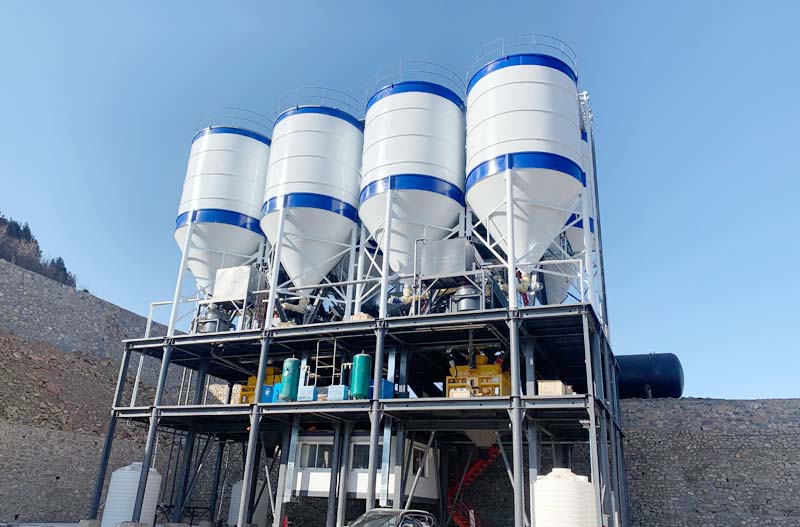
Batching plant maintenance should follow the entire aggregate route. A belt inspection and a clean floor do not explain why material repeatedly accumulates at one transfer point.
For a belt-fed installation, arrange documented checks of belt condition, tracking, rollers, transfer chutes and the receiving hopper. Separate observations permitted during normal operation from work requiring shutdown and isolation. Never reach into a moving conveyor or attempt a running adjustment from an exposed position.
Repeated spillage is a reason to investigate the loading point, material trajectory and receiving condition—not simply assign more sweeping. Record where and when it appears. Comparisons are more useful when the aggregate fraction and production setting are known.
During equipment selection, review how a technician reaches the return belt, replaces an installed roller and removes a worn hopper liner. Put the required working envelope on the general arrangement drawing.
Protect Weighing Accuracy After Maintenance
The maintenance question is whether the installed measuring system remains fit for use after service, cleaning or physical changes. Detailed tolerance selection belongs in the separate guide to batching and weighing accuracy.
Include weighing assemblies in batching plant maintenance records. Preserve unusual zero readings, mechanical-contact observations and any work on supports, connections or load cells. A repeated zero adjustment is not evidence that the underlying condition has been corrected.
NRMCA’s plant certification guidance calls for scale verification after a portable plant moves, after maintenance affecting weighing systems and when accuracy is in doubt. It also requires checks across the working range and detailed results rather than a simple acceptable/not-acceptable statement.
These are requirements within that guidance, not a claim that every plant is certified. Agree the applicable verification scope and acceptance criteria for your installation.
Separate Dust Extraction from Silo Protection
Dust-control performance and silo protective functions need distinct entries in the batching plant maintenance plan. One inspection should not silently stand in for the other.
For extraction equipment, obtain the commissioning benchmarks, test locations and filter-service instructions. HSE’s panduan commissioning ventilasi pembuangan lokal explains how documented operating conditions and performance measurements provide a reference for later examinations.
Compare subsequent readings under comparable conditions. A running fan or a newly fitted filter does not, by itself, demonstrate adequate capture at every extraction point.
For each supplied silo, separately identify the level monitoring, venting and protective devices specified by its designer. Obtain inspection and functional-test instructions. Do not alter relief settings or bypass alarms to maintain production. Confirm the actual supply scope rather than assuming every protective feature is standard.
Include Lubrication, Pneumatics and Control Functions
A batching plant maintenance plan needs a component-specific lubrication schedule: lubricant specification, application point, quantity, interval and method. Request these from the equipment documentation instead of assigning the same grease or frequency throughout the plant.
For fitted compressed-air equipment, identify service points, drains, protection devices and operating limits. HSE’s guidance on using pressure systems emphasizes suitable maintenance, functioning protective devices and competent personnel. Apply the requirements relevant to the installed system and jurisdiction.
Control-system work needs a record too. Preserve approved settings and software versions, document changes and test the affected operating sequence. For precast production, include the receiving-station signals in that test scope.
Batching plant maintenance is incomplete when a replaced component works locally but the complete sequence has not been checked. An output indication and a confirmed mechanical response should be distinguished during the approved test.
Turn Repeat Defects into Specific Work Orders
Useful batching plant maintenance records connect a symptom to an investigation and a verified outcome. They do not diagnose a fault solely from its appearance.
The following examples are planning prompts for qualified personnel, not instructions to operate defective equipment.
| Reported symptom | Evidence to preserve | Work-order question |
|---|---|---|
| Recurring material beneath one transfer point | Location, aggregate fraction, operating stage and photographs taken safely. | Which loading, conveying or receiving condition explains the repeat pattern? |
| Longer discharge time | Comparable batch quantities, elapsed time and relevant indications. | Is the restriction mechanical, material-related or downstream? |
| Changing scale zero | Reading history and recent cleaning or repair activity. | What inspection and verification establish the cause? |
| Extraction performance outside its agreed range | Test point, operating condition and commissioning benchmark. | What correction restores demonstrated extraction performance? |
Give each record a component identifier, owner and closure requirement. Repeat defects should remain visible until the agreed follow-up demonstrates improvement. Closing a work order because someone attended the plant is not the same as resolving it.
Plan the Whole Shutdown, Not Just the Repair
Batching plant maintenance planning should include access preparation, isolation, the repair itself, reassembly and return-to-service checks.
Consider a hypothetical task: 20 minutes to prepare and isolate, 35 minutes for the repair, 20 minutes for reassembly and inspection, and 25 minutes for controlled testing and release. If these stages are sequential, the required window is 100 minutes—not 35.
These figures are illustrative, not product service-time claims. Their purpose is to show why a spare part on the shelf does not establish how quickly production can resume.
Before scheduling batching plant maintenance, confirm parts compatibility, tools, lifting arrangements, qualified personnel and the acceptance test. Identify missing information while the work can still be planned. During equipment procurement, the same review exposes maintenance access that a compact layout may overlook.
For batching plant maintenance records, distinguish elapsed downtime from labor time. Two technicians working together for one hour contribute two labor-hours, but the plant may be unavailable for one hour rather than two. Record waiting for parts, active repair and release testing separately when reviewing where better preparation would help.
Recheck the Plant After Relocation or Major Work
Mobile equipment needs an event-triggered release process, not just another date on the calendar. For batching plant maintenance after relocation, identify connections, supports, guards and instruments affected by dismantling and reassembly.
HSE’s equipment inspection guidance addresses reinspection following reassembly where safety depends on installation conditions. NRMCA’s guidance separately addresses scale verification after a portable plant moves. These checks have different purposes.
Use a coordinated release record covering the affected safety functions, mechanical systems, measuring equipment and production sequence. Keep unresolved items visible and specify who can authorize restart. Factory precommissioning does not demonstrate the condition of every system after transport and installation.
Specify Maintenance Access Before Ordering the Plant
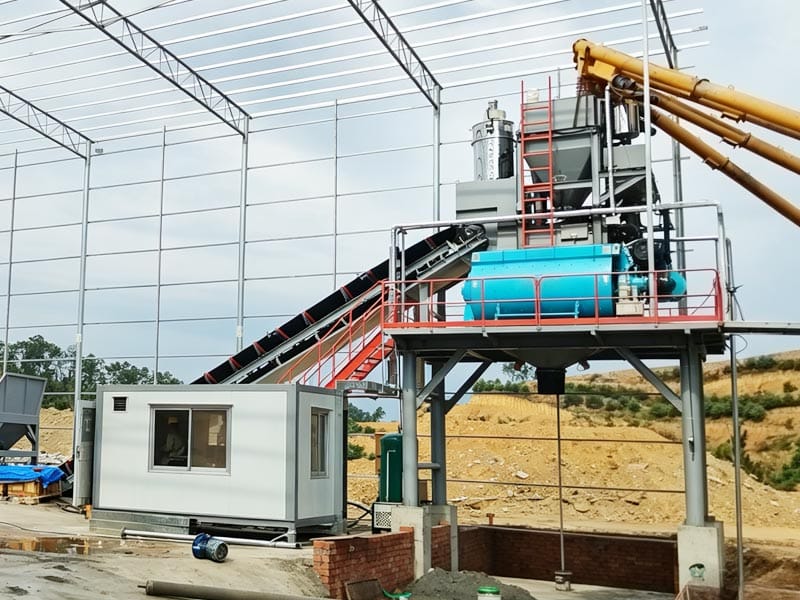
Bring batching plant maintenance into the tata letak pabrik dan tinjauan konfigurasi. Provide the operating schedule, available shutdown windows, site dimensions and the maintenance capabilities of your team.
Review component removal paths as carefully as routine inspection access. Can the proposed liner, drive or valve assembly pass through the available opening? Where will lifting equipment stand? Does the service area conflict with truck loading or aggregate deliveries?
Request a handover package containing component manuals, lubrication instructions, parts identification, relevant drawings, baseline test records and agreed training. Confirm these deliverables in the project scope.
This turns batching plant maintenance from a general promise into a set of practical design requirements. The aim is a plant your team can inspect, service and return to operation using documented methods.
Kesimpulan
Effective batching plant maintenance combines a realistic schedule with safe access, model-specific instructions, traceable work records and checks after intervention. The right starting point is the actual equipment configuration, not a universal list of intervals.
Share your concrete products, operating hours and site layout with our team. Request a concrete plant configuration review that includes maintenance access, service documentation and the provisions your production operation needs.
FAQ
How often should batching plant maintenance be carried out?
Combine approved pre-use checks, cleaning routines, component-specific service intervals and event-triggered inspections. Use the manufacturer’s instructions and site risk assessment to set the schedule. A weekly planning review does not mean every component needs weekly servicing.
Which parts need the most maintenance attention?
Start with the fitted mixer, material-transfer equipment, discharge components, measuring systems and protective functions. Rank work by safety significance, duty and inspection history. The priorities for a belt-fed station may differ from those for a precast or frequently relocated plant.
Does a mobile plant need checks after each move?
Its release plan should address systems affected by transport and reassembly. Scale verification after relocation is specifically addressed in NRMCA’s guidance. Confirm the wider inspection and recommissioning scope with the equipment manufacturer and responsible site personnel.
Can one lubrication schedule cover every mixer?
No. Obtain instructions for the actual mixer, drive, bearings and sealing arrangement. Lubricant specifications and application requirements should come from the relevant documentation. Do not assume planetary and twin-shaft configurations use interchangeable service instructions.
What maintenance information should a plant buyer request?
Request service-access drawings, manuals, parts identification, lubrication requirements, isolation information and relevant baseline tests. Agree training and handover responsibilities. These documents help evaluate the proposed plant before maintenance constraints become operating problems.


