
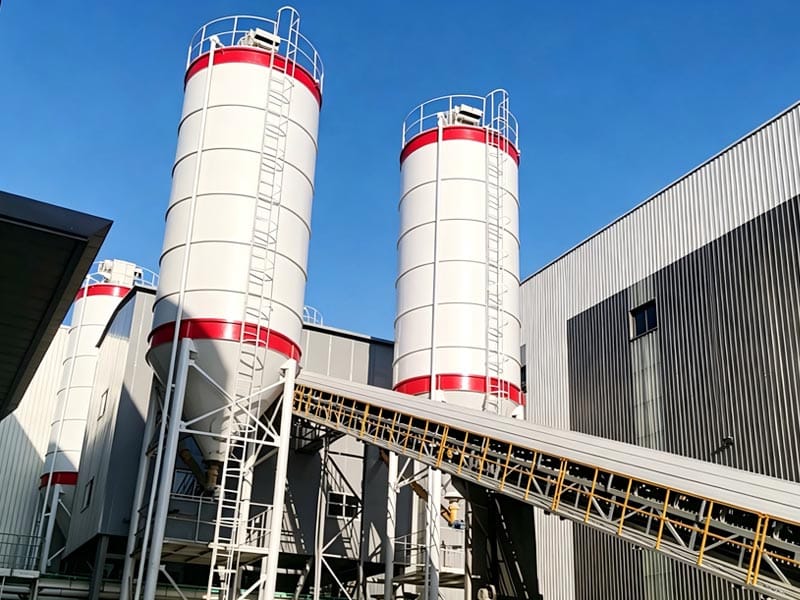
Batching plant lubrication should not be managed with one universal calendar. A concrete batching plant contains several mechanical systems with different speeds, loads, sealing conditions and exposure to dust, cement paste, moisture and vibration. Mixer shaft ends, bearings, gearboxes, conveyor drives, skip-hoist components and other moving parts may all need lubrication, but they do not necessarily need the same lubricant, quantity or service interval.
For plant teams, the goal is to build a lubrication schedule from the actual equipment manual, operating duty and condition history. A schedule copied from another plant can lead to both under-lubrication and over-lubrication.
ของเรา โรงงานผสมคอนกรีตสายพานติดด้านข้าง combines aggregate conveying, powder feeding, weighing and forced mixing, while other MixingPlantPro configurations use skip hoists, planetary mixers or mobile integrated layouts. This guide explains how batching plant lubrication should be organized by component instead of by one generic maintenance interval.
Why Batching Plant Lubrication Needs a Component-Based Plan
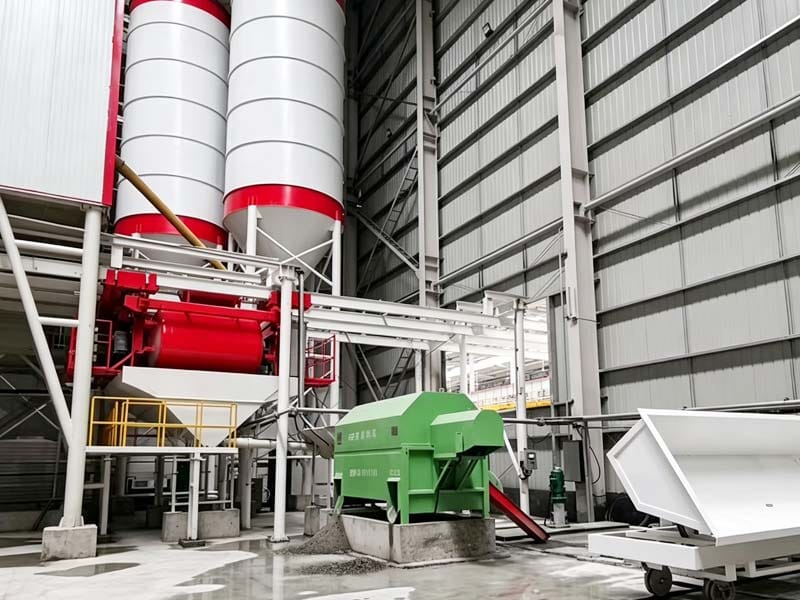
Different parts of a batching plant operate under very different conditions.
A mixer bearing near a shaft-end seal may be exposed to cement slurry and wash water. A conveyor head-pulley bearing may operate in dusty aggregate conditions. A gearbox may use an enclosed oil system. A skip-hoist sheave or bearing can see intermittent movement and repeated starts.
That means batching plant lubrication should answer four questions for every lubricated point:
- What lubricant is specified?
- How much should be applied?
- How often should it be applied or checked?
- What operating condition should trigger earlier inspection?
SKF grease relubrication guidance explains that both grease quantity and relubrication frequency depend on bearing type, size, speed, operating temperature, grease type and environment.
That is why an equipment-specific schedule is more reliable than one plant-wide interval.
Start with a Lubrication Point Register
A useful batching plant lubrication program begins with a list of every lubrication point.
| Equipment | Typical lubrication area | What to record |
|---|---|---|
| มิกเซอร์ | Shaft-end seals, bearings, drive components | Lubricant type, point, quantity, interval and condition |
| Gearbox | Internal oil system | Oil grade, level, inspection and replacement criteria |
| Belt conveyor | Head and tail pulley bearings and drive | Grease point, contamination, temperature and noise |
| Skip hoist | Sheaves, bearings and drive components | Lubrication point and wear condition |
| Discharge gates | Pivots or actuators where specified | Approved lubricant and service method |
Do not include a point simply because it appears to be movable. Some bearings are sealed-for-life or have their own specific maintenance instructions.
Batching plant lubrication should follow the actual component documentation.
Use the Manufacturer’s Lubricant Specification
Grease and oil are not interchangeable simply because they are both lubricants.
Different components can require different:
- base oil viscosity;
- grease thickener;
- NLGI consistency;
- extreme-pressure properties;
- temperature range;
- ความต้านทานน้ํา;
- compatibility with existing lubricant.
For batching plant lubrication, record the exact approved product specification or equivalent technical requirement from the component manual.
Do not mix greases without confirming compatibility. Different thickeners and base oils can react poorly and change consistency or lubrication performance.
Mixer Shaft-End Lubrication Deserves Special Attention
Twin-shaft mixers use shaft-end sealing systems to protect bearings and adjacent components from concrete paste and water.
ของเรา โรงงานผสมคอนกรีตเคลื่อนที่ uses a twin-shaft forced mixer with multiple shaft-end seals. On this type of system, lubrication can be part of the seal-protection strategy as well as bearing maintenance.
For batching plant lubrication at mixer shaft ends, check:
- grease reservoir level;
- automatic pump operation where fitted;
- บล็อกการกระจาย;
- individual grease lines;
- leaks or damaged fittings;
- actual grease arrival at each shaft end.
A full reservoir does not prove every seal point is receiving lubricant.
Do Not Set One Grease Quantity for Every Shaft End
The correct grease quantity depends on the mixer and seal design.
Too little grease may leave sealing or bearing surfaces insufficiently protected. Too much grease can create heat, resistance or excessive purge.
SKF bearing guidance warns that excessive grease can create churning and higher operating temperatures, while contamination can also reduce bearing reliability.
For batching plant lubrication, use the mixer manufacturer’s instructions for quantity and interval rather than an approximate rule based on another machine.
Automatic Lubrication Systems Still Need Inspection
Automatic lubrication reduces manual work but does not eliminate maintenance.
An automatic system can fail because of:
- empty reservoir;
- blocked line;
- damaged hose;
- failed pump;
- blocked distributor;
- air in the system;
- incorrect lubricant.
Batching plant lubrication records should therefore show more than “auto lube installed.”
Inspect whether lubricant reaches the actual endpoint. If one mixer shaft seal repeatedly develops leakage while other positions remain stable, compare its lubrication line with the unaffected points.
Bearing Lubrication Should Follow Speed, Load and Environment
Bearing relubrication depends on operating condition.
A high-speed bearing in a clean enclosure can have a different lubrication requirement from a slow bearing exposed to cement dust or wash water.
SKF identifies operating temperature, speed, bearing type, grease type and environment among the main factors that influence relubrication interval.
For batching plant lubrication, record bearing location and service environment so the schedule can distinguish:
- mixer bearings;
- conveyor pulley bearings;
- motor bearings where serviceable;
- skip-hoist bearings;
- other rotating supports.
Contamination Can Be More Important Than Operating Hours
Concrete plants are dusty environments.
Cement powder, aggregate dust, water and concrete slurry can contaminate grease or oil.
SKF guidance on bearing contamination explains how water and solid contamination can degrade lubrication and increase operating temperature or wear.
Batching plant lubrication should therefore include inspection for:
- water in grease;
- cement contamination;
- dust around grease fittings;
- damaged seals;
- dirty lubricant containers;
- open or uncapped lubrication points.
Cleaning the grease fitting before relubrication helps avoid pushing contamination directly into the bearing.
Gearboxes Need Oil-Level and Oil-Condition Checks
Many mixer, conveyor and hoist drives use gearboxes with enclosed oil lubrication.
These systems should be managed separately from grease points.
For gearbox lubrication, check:
- correct oil grade;
- oil level;
- leakage;
- breather condition;
- oil appearance;
- operating temperature;
- abnormal noise.
Batching plant lubrication schedules should identify whether oil replacement is time-based, hour-based, condition-based or specified by the gearbox manufacturer.
Do not top up repeatedly without investigating the source of a continuing oil leak.
Conveyor Bearings Need Dust-Focused Inspection
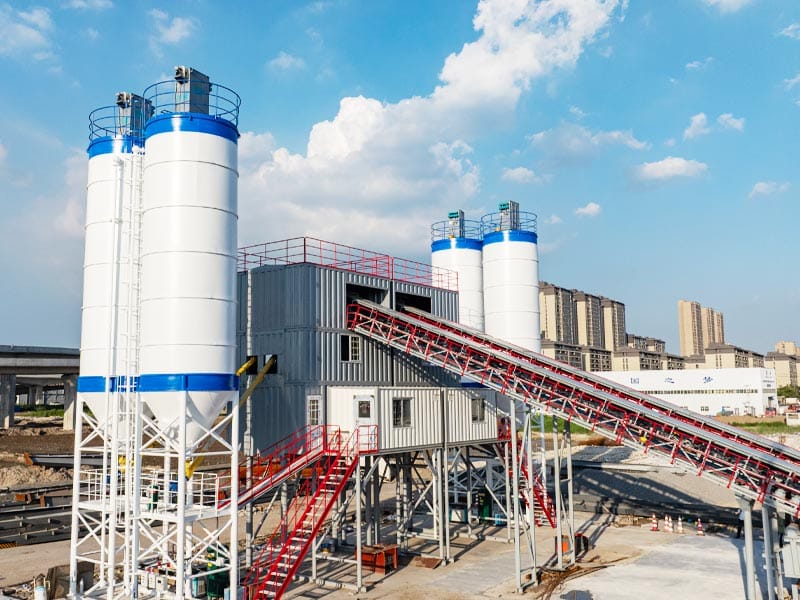
Belt-fed batching plants depend on pulley bearings and conveyor drive components.
Aggregate dust can collect around bearing housings and grease fittings.
For batching plant lubrication on conveyors, inspect:
- head-pulley bearings;
- tail-pulley bearings;
- take-up components where applicable;
- drive motor and gearbox;
- grease purge condition;
- อุณหภูมิแบริ่ง;
- abnormal noise.
Lubrication should be coordinated with belt inspection rather than performed as an isolated task.
Skip-Hoist Plants Have Different Lubrication Points
Skip-hoist plants replace the long aggregate belt transfer with intermittent lifting equipment.
That changes the lubrication register.
Depending on the actual skip-hoist design, the maintenance plan may include:
- sheave bearings;
- drive components;
- gearbox;
- guide or pivot points where specified;
- braking system components that require inspection but may not require lubrication.
Batching plant lubrication should distinguish skip-hoist equipment from belt conveyor equipment instead of applying the same checklist to both plant types.
Discharge Gates and Pivots Need the Correct Service Method
Mixer discharge gates, aggregate gates and powder valves include moving components, but not every point should be greased manually.
Some pivots may have specified grease points, while pneumatic or hydraulic actuators have their own maintenance requirements.
For batching plant lubrication, confirm:
- whether the pivot is lubricated;
- the approved lubricant;
- where grease should not be applied;
- how buildup is prevented;
- whether lubrication requires equipment isolation.
Applying grease to an exposed surface can attract cement dust and create abrasive paste if the point was not designed for external lubrication.
Lubrication Frequency Should Reflect Actual Duty
A plant operating two shifts per day has a different duty cycle from a plant running a few batches each morning.
Batching plant lubrication frequency can also change with:
- production hours;
- number of mixer cycles;
- ambient temperature;
- washdown frequency;
- dust exposure;
- aggregate abrasiveness;
- seasonal shutdowns.
Use the manufacturer’s base interval, then compare it with actual condition history.
A schedule should become more accurate over time as the plant builds maintenance records.
Use Condition Signals to Refine the Schedule
Lubrication should not rely only on a calendar.
Condition signals can show that a component needs earlier inspection.
| Condition signal | Possible lubrication-related question |
|---|---|
| Rising bearing temperature | Is lubrication quantity, type or contamination changing? |
| New bearing noise | Is the bearing dry, contaminated or mechanically damaged? |
| Higher grease consumption | Is a seal or grease line leaking? |
| Lower grease consumption | Is a line blocked or pump failing? |
| Gearbox oil loss | Where is the leak and has oil level fallen? |
These symptoms do not prove lubrication is the cause, but they help prioritize inspection.
Temperature Trends Are More Useful Than Random Spot Checks
One bearing temperature reading has limited meaning without context.
Batching plant lubrication teams should compare temperature under similar production conditions.
บันทึก:
- equipment load;
- ambient temperature;
- concrete or aggregate condition;
- recent lubrication;
- temperature trend.
A gradual rise over several weeks can be more important than one isolated high reading.
Do not use a universal alarm temperature unless it comes from the component documentation or approved engineering procedure.
Over-Lubrication Can Be a Real Failure Mode
Adding extra grease “for safety” is not always safe for the machine.
Too much grease can increase resistance, generate heat and damage seals.
For batching plant lubrication:
- use measured quantities where specified;
- do not grease until the fitting refuses to accept more unless that is the documented method;
- observe normal purge behavior;
- record abnormal grease loss.
Under-Lubrication Creates a Different Risk
Insufficient lubricant can allow friction and wear to increase.
Possible warning signs include:
- higher temperature;
- noise;
- vibration;
- dry or discolored grease;
- การรั่วไหลของซีล;
- accelerated bearing wear.
Batching plant lubrication should therefore target the specified amount at the specified point rather than simply maximizing or minimizing grease use.
Keep Lubricants Clean During Storage and Transfer

Clean grease can become contaminated before it reaches the machine.
Store lubricants in:
- clean, closed containers;
- identified containers by lubricant type;
- dry storage conditions;
- dedicated transfer tools where practical.
Do not use the same dirty grease gun across incompatible lubricant types without a controlled cleaning and identification procedure.
Batching plant lubrication quality starts in the maintenance store, not at the grease fitting.
Label Lubrication Points and Lubricant Types
Visual identification reduces mistakes.
Each lubrication point can be assigned:
- equipment ID;
- point number;
- lubricant specification;
- service method;
- interval;
- last service date.
For a plant with several similar conveyors or bearings, clear labeling helps prevent technicians from missing one point or lubricating the wrong location twice.
Lubrication During Maintenance May Require Lockout/Tagout
Some lubrication tasks can be performed from protected external points during normal operation when the machine design and site procedure allow it.
Other tasks require guards to be removed or personnel to enter areas where unexpected machine movement could cause injury.
ของโอชา การควบคุมมาตรฐานพลังงานอันตราย includes lubrication within servicing and maintenance when workers may be exposed to unexpected energization, startup or release of stored energy.
For batching plant lubrication, the site procedure should clearly distinguish:
- routine external lubrication points that can be serviced safely;
- lubrication requiring machine isolation;
- inspection requiring guard removal;
- work inside mixer or conveyor hazard zones.
When guarding must be removed and exposure to hazardous movement exists, appropriate energy-control procedures apply.
Do Not Lubricate Moving Parts from an Unsafe Position
Convenient grease access should be part of plant design.
If a lubrication point can only be reached by climbing over a moving conveyor or standing beside an unguarded coupling, the maintenance arrangement needs review.
For batching plant lubrication, ask during equipment selection:
- Can the grease point be reached from a safe platform?
- Can remote grease lines be installed where appropriate?
- Can the gearbox level be checked without removing major guards?
- Can automatic lubrication reservoirs be refilled safely?
OSHA machine-guarding guidance notes that machinery should, where possible, permit routine lubrication and adjustment without removing safeguards.
Record As-Found Condition Before Adding Lubricant
If a bearing is hot or a shaft-end seal is leaking, record the condition before immediately adding grease.
Otherwise, useful diagnostic evidence can be lost.
For batching plant lubrication records, capture:
- temperature;
- noise;
- leakage;
- grease level;
- oil level;
- contamination;
- last service date.
Then perform the approved lubrication action and record the after-service condition.
Use Maintenance History to Adjust Spare-Parts Planning
Lubrication records can help explain repeated bearing, seal or gearbox problems.
If one conveyor bearing consumes grease rapidly and fails more often than similar bearings, investigate:
- การจัดตําแหน่ง;
- seal condition;
- dust exposure;
- bearing load;
- lubrication line;
- lubricant specification.
Batching plant lubrication data should therefore be linked with component replacement history rather than kept as a separate checklist that is never analyzed.
Build the Lubrication Schedule from Equipment Manuals
A practical schedule can be organized by equipment and interval.
| Schedule field | What to include |
|---|---|
| Equipment ID | Mixer, conveyor, skip, gearbox or other asset |
| Lubrication point | Exact physical location |
| Lubricant | Approved grease or oil specification |
| Quantity | Manufacturer-specified amount where applicable |
| Base interval | Manual or manufacturer requirement |
| Condition trigger | Temperature, leakage, noise or contamination change |
| Safety method | Normal guarded service or isolated maintenance |
This is more useful than one line saying “grease plant weekly.”
What Should Buyers Ask Before Ordering the Plant?
Batching plant lubrication should be considered during equipment procurement.
Ask the supplier for:
- lubrication-point drawings;
- lubricant specifications;
- mixer shaft-end lubrication description;
- automatic lubrication system details where included;
- gearbox oil requirements;
- safe service access;
- recommended critical lubrication spares;
- maintenance manuals.
ของเรา บริการกําหนดค่าโรงงานที่กําหนดเอง can include maintenance-access requirements when the final plant layout is developed.
Send your plant model, operating schedule and maintenance requirements through our หน้าติดต่อ for a technical review.
บทสรุป
Batching plant lubrication should be built around individual equipment, not one universal calendar. Mixers, bearings, gearboxes, belt conveyors and skip-hoist systems operate under different speeds, loads and contamination conditions.
The strongest lubrication program combines manufacturer requirements with condition trends, clean lubricant handling, clear point identification and maintenance history.
Use the correct lubricant in the correct quantity, confirm that automatic systems actually deliver it, and apply proper hazardous-energy controls whenever lubrication work exposes technicians to unexpected machine movement.
คําถามที่พบบ่อย
How often should batching plant lubrication be performed?
There is no universal interval. Follow the mixer, bearing, gearbox and conveyor manufacturer’s instructions, then refine the schedule using operating hours, temperature, contamination, washdown and maintenance history.
Can too much grease damage a batching plant bearing?
Yes. Excess grease can create churning, heat and seal stress. Use the specified quantity and method rather than adding grease until the housing is completely full.
What should be checked on an automatic lubrication system?
Check reservoir level, pump operation, distribution blocks, individual lines, fittings and whether grease reaches each endpoint. A full reservoir does not prove every lubrication point is receiving lubricant.
Does lubrication work require lockout/tagout?
It depends on exposure. If lubrication or inspection exposes a worker to unexpected startup, movement or stored energy, the applicable hazardous-energy control procedure should be used. Safe external lubrication points may be handled differently under the site’s approved procedure.
What information belongs in a batching plant lubrication schedule?
Record equipment ID, lubrication point, lubricant specification, quantity, base interval, condition triggers, safety method and service history for each point.

