
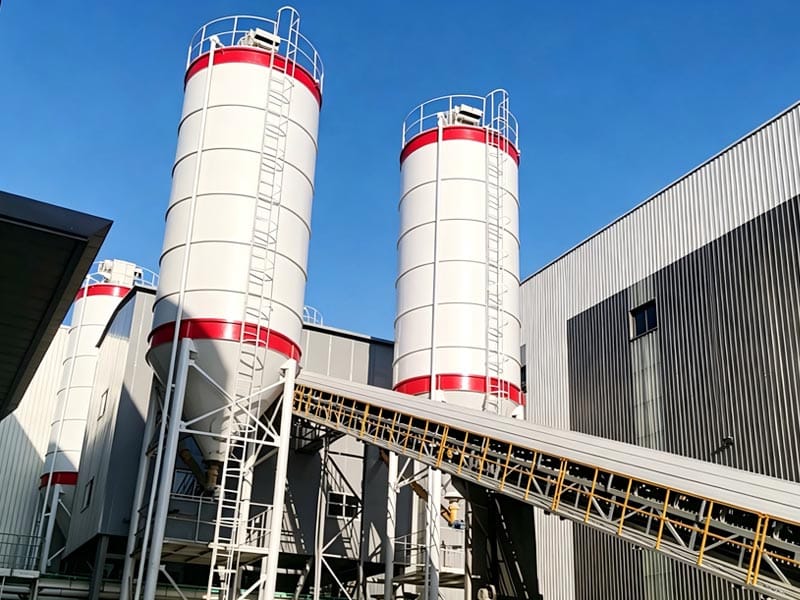
Concrete mixer shaft seals are critical on twin-shaft mixers because the rotating shafts pass through the mixer housing while concrete, cement paste, wash water and abrasive particles remain inside the mixing chamber. The seal system has to keep the wet mix away from bearings and other mechanical components while allowing the shafts to rotate through repeated production cycles.
For plant teams, the challenge is identifying a developing shaft-end problem early. A small amount of leakage, unusual grease consumption, rising temperature, abnormal noise or hardened material around the shaft end can be an early warning. None of these symptoms proves one specific failure by itself, but each deserves inspection before the condition becomes more serious.
Nuestro planta dosificadora móvil de hormigón uses a twin-shaft forced mixer with multiple shaft-end seals, and twin-shaft mixing is also used across several concrete batching configurations. This guide explains what concrete mixer shaft seals do, what early symptoms to watch, and how to structure inspection without guessing at replacement intervals or seal clearances.
What Do Concrete Mixer Shaft Seals Do?
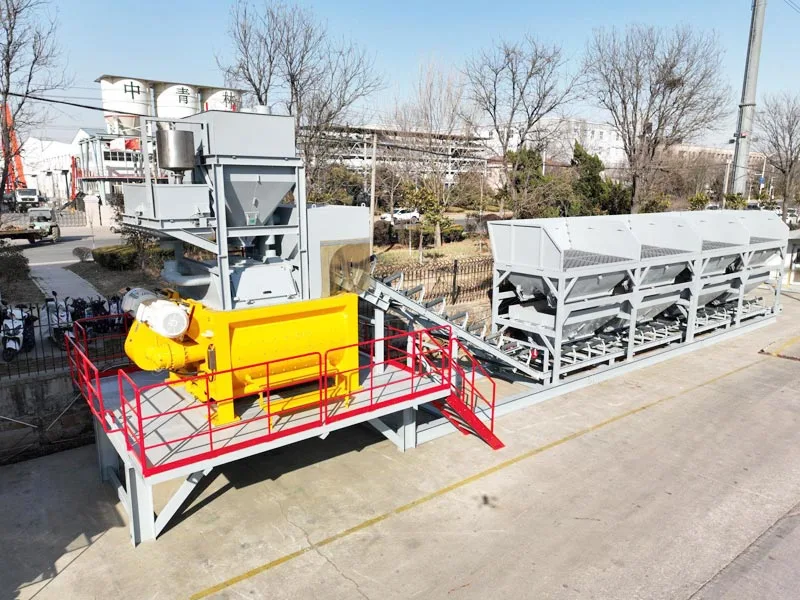
Concrete mixer shaft seals form the barrier between the wet mixing chamber and the shaft-end mechanical components outside the mixer.
The exact seal architecture depends on the mixer manufacturer, but the system may combine:
- mechanical sealing elements;
- labyrinth or multi-stage sealing paths;
- grease or oil barriers;
- protective rings;
- shaft sleeves;
- external covers.
The purpose is not simply to prevent visible concrete leakage. A good seal system also helps keep abrasive cement paste and wash water away from bearings and adjacent drive components.
Concrete mixer shaft seals should therefore be treated as a system rather than one replaceable ring.
Why Twin-Shaft Mixers Need Shaft-End Seal Inspection
In a twin-shaft mixer, two horizontal shafts pass through the mixer body. The shaft-end locations are exposed to a difficult operating environment because concrete inside the chamber is continuously moved toward, away from and around the sealing region.
Aggregate particles are abrasive. Cement paste can penetrate small gaps. Wash water can carry fines into areas that should remain clean.
Concrete mixer shaft seals therefore need routine visual and operational inspection even when no major leak is visible.
Nuestro concrete mixer maintenance guide treats shaft-end seals as one of the main twin-shaft inspection points because seal condition is closely linked with lubrication, bearing protection and mixer reliability.
Visible Slurry Leakage Is an Early Warning
One of the clearest early symptoms is cement slurry or water appearing around the shaft-end area.
A small leak should not automatically be dismissed as normal housekeeping.
Inspeccionar:
- where the leakage begins;
- whether it appears on one shaft end or several;
- whether it occurs only during wet mixes;
- whether it becomes worse during washing;
- whether grease is also being displaced;
- whether hardened paste is building up outside the seal.
Concrete mixer shaft seals may show leakage because of wear, contamination, damaged sealing surfaces, lubrication problems, misalignment or another mechanical condition. The exact cause should be confirmed before parts are replaced.
Grease Consumption Can Reveal a Developing Problem
Many shaft-end seal systems use grease as part of the protective barrier or lubrication arrangement.
A sudden change in grease consumption can therefore be useful maintenance information.
If a system begins using much more grease than normal, possible causes can include:
- seal leakage;
- damaged grease lines;
- loose fittings;
- incorrect lubrication-system pressure;
- grease escaping into the wrong area.
If grease consumption suddenly falls, investigate whether the supply line is blocked or the automatic lubrication system is no longer feeding the intended point.
Concrete mixer shaft seals should not be evaluated by reservoir level alone. Confirm that lubricant is actually reaching the required locations.
Do Not Use a Universal Grease Quantity
Lubrication requirements depend on the specific mixer, seal design, grease type and installed lubrication system.
Do not copy a grease quantity, interval or pressure from another mixer simply because both machines are twin-shaft models.
For concrete mixer shaft seals, confirm from the equipment documentation:
- approved lubricant;
- manual or automatic lubrication method;
- lubrication points;
- required inspection procedure;
- alarm or low-level conditions where fitted.
Excessive lubrication can create its own problems, while insufficient lubrication can leave sealing surfaces unprotected.
The correct condition is the one specified and validated for the installed mixer.
Rising Shaft-End Temperature Deserves Investigation
Temperature change can indicate increasing friction, lubrication problems, bearing stress or another developing mechanical issue.
Concrete mixer shaft seals themselves may not be the only cause, so temperature should be used as a diagnostic signal rather than a standalone failure test.
Comparar:
- left and right shaft ends;
- current temperature with the normal operating trend;
- temperature under similar concrete recipes;
- temperature before and after lubrication work;
- temperature together with noise and vibration.
Do not rely on a generic temperature limit unless it comes from the mixer or bearing documentation.
A trend away from the mixer’s own normal condition can be more useful than an unrelated number copied from another machine.
Abnormal Noise Can Point to More Than the Seal
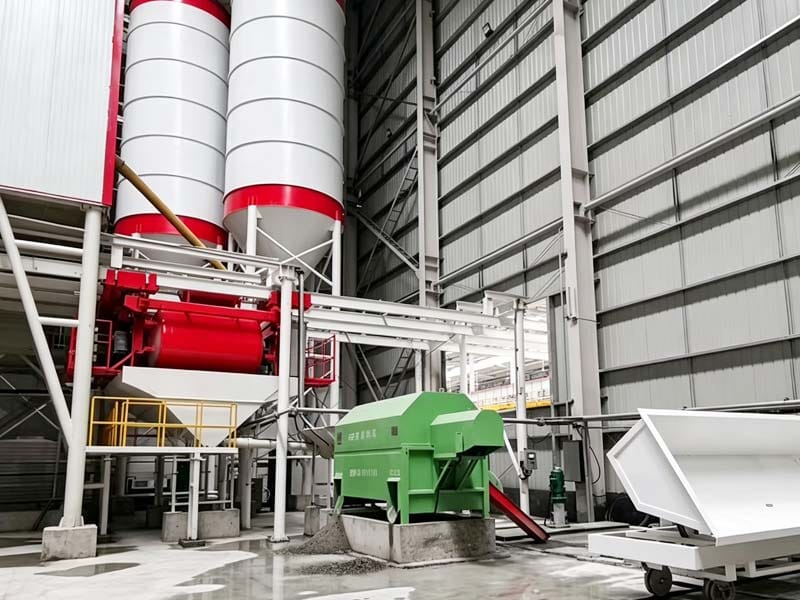
A new scraping, grinding or bearing-like noise near the shaft end should be investigated.
Concrete mixer shaft seals may be associated with the symptom, but the actual cause could also involve:
- bearing condition;
- shaft alignment;
- foreign material;
- damaged mixing components;
- loose covers;
- drive or coupling issues.
Listen for differences between shaft ends and note whether the sound occurs under load, during empty rotation or during startup and stopping.
A maintenance record that only says “abnormal noise” is less useful than one that identifies location, operating condition and when the sound first appeared.
Hardened Concrete Around the Shaft End Can Hide the Real Condition
Material buildup around concrete mixer shaft seals can make inspection difficult.
Hardened paste may conceal a small leak, restrict movement of protective components or create a false impression that the leak has stopped.
Clean the accessible external area according to the mixer maintenance procedure before evaluating the seal condition.
Do not use destructive cleaning methods that could damage:
- seal surfaces;
- grease lines;
- sensor cables;
- protective covers;
- machined shaft surfaces.
Once the area is clean, inspect whether fresh leakage reappears during the next controlled operating check.
Wash Water Can Create a Different Seal Problem
Concrete mixer cleaning is necessary, but water should not be directed carelessly into shaft-end sealing areas.
High-pressure or uncontrolled wash water can carry cement fines toward seals and bearings depending on the mixer design.
For concrete mixer shaft seals, the cleaning procedure should follow the mixer manufacturer’s instructions.
Plant teams should know:
- which areas can be washed directly;
- which areas should be protected;
- where drainage should occur;
- how seal areas are inspected after cleaning.
A seal problem that appears only after washdown may indicate that the cleaning procedure should be reviewed along with the mechanical condition.
Uneven Leakage Between Shaft Ends Is Useful Diagnostic Evidence
A twin-shaft mixer has multiple shaft-end locations. If only one end shows leakage while the others remain dry, that difference is useful.
Concrete mixer shaft seals on the same mixer operate under broadly similar production conditions, so an isolated symptom can point toward a local issue such as:
- seal wear;
- shaft-sleeve condition;
- lubrication delivery;
- local alignment;
- acumulación de material;
- damage from previous maintenance.
Record the exact location instead of reporting “mixer seal leak.”
This makes it easier to compare the condition after maintenance and determine whether the same position is repeatedly affected.
Seal Leakage Can Be a Symptom of Shaft Movement
Concrete mixer shaft seals need a stable rotating surface and predictable shaft position.
If the shaft develops abnormal movement because of bearing wear, support problems or mechanical damage, the seal may no longer operate under its intended geometry.
In that case, replacing only the seal may provide temporary improvement without correcting the underlying cause.
Check for:
- abnormal radial or axial movement;
- bearing noise;
- coupling condition;
- loose support components;
- unusual vibration.
Measurement methods and allowable movement should come from the mixer manufacturer’s documentation.
Seal Problems Can Follow Mixer Overloading
Repeated operation outside the intended batch range can increase mechanical loads throughout the mixer.
Concrete mixer shaft seals should therefore be investigated together with production records when problems appear after a change in batch size, concrete consistency or material type.
Revisar:
- batch volume;
- mixer motor current;
- concrete type;
- mixing time;
- abnormal overload alarms;
- recent recipe changes.
This does not mean an overloaded batch automatically damages the shaft seals. It means the operating history provides useful context for why a previously stable seal area may have changed.
Stiff Concrete Can Change Shaft-End Operating Conditions
Low-slump, dry or stiff mixtures can create different internal resistance from more flowable concrete.
If a plant begins producing a new concrete family, monitor whether mixer load and shaft-end condition change.
Concrete mixer shaft seals should be reviewed as part of the complete mixer commissioning for the new product.
For precast factories using stiff or specialized concrete, our planta dosificadora de hormigón prefabricado uses a planetary mixer rather than the horizontal twin-shaft architecture discussed here. That distinction matters because planetary mixer sealing and shaft arrangements require a different maintenance approach.
Seal Inspection Should Be Linked with Bearing Inspection
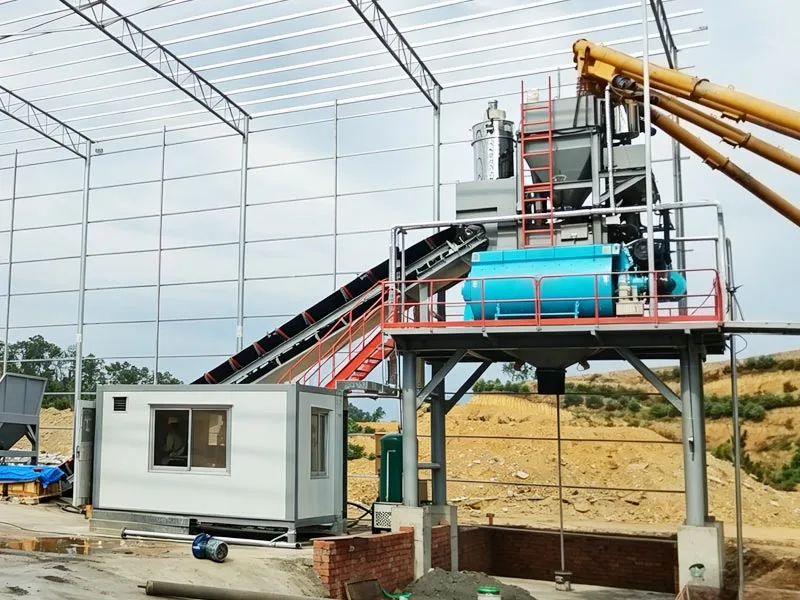
The seal protects components near the shaft end, while the bearing supports shaft rotation. Problems in one area can affect the other.
Concrete mixer shaft seals should therefore be inspected together with:
- bearing temperature;
- bearing noise;
- lubricant contamination;
- housing condition;
- fastener condition;
- shaft movement.
If cement paste has passed beyond the intended sealing boundary, determine whether adjacent bearings or lubrication systems need inspection before the mixer returns to full production.
Cleaning the visible leak without checking the protected components can leave hidden damage unaddressed.
Automatic Lubrication Systems Need Functional Checks
An automatic lubrication system reduces manual work, but it also creates additional points that need inspection.
For concrete mixer shaft seals, check:
- reservoir level;
- pump operation;
- distribution blocks;
- individual lines;
- damaged fittings;
- low-level or pressure alarms where fitted.
A full grease reservoir does not prove that grease reaches each shaft end.
If one seal repeatedly leaks while the others remain stable, compare its lubrication line with the unaffected positions.
Do Not Tighten or Adjust Seal Components Without the Correct Procedure
Concrete mixer shaft seals can include precisely positioned parts.
Uncontrolled tightening, shimming or adjustment can create excessive friction, misalignment or rapid wear.
Use the correct service manual, tools and replacement procedure.
Where seal adjustment requires measurement of a clearance or compression value, use the manufacturer’s specified method. Do not infer a number from another mixer model.
If the procedure is not available, obtain it before dismantling the seal system.
Internal Inspection Requires Hazardous-Energy Control
Any maintenance that exposes technicians to moving mixer parts or stored energy requires a formal isolation procedure.
OSHA’s control of hazardous energy standard requires machines to be isolated from hazardous energy during covered servicing and maintenance where unexpected startup or stored-energy release could cause injury.
For concrete mixer shaft seals, potential energy sources can include:
- mixer drive power;
- hydraulic or pneumatic discharge systems;
- automatic lubrication equipment;
- upstream material feeding;
- stored mechanical energy.
The applicable site procedure must be followed before guards are removed or personnel enter hazardous areas.
Use an As-Found Inspection Before Replacing Parts
When a shaft-end problem occurs, record the condition before cleaning, adjustment or replacement.
For concrete mixer shaft seals, an as-found record can include:
| Inspection record | Por qué es importante |
|---|---|
| Leak location | Shows which shaft end is affected. |
| Leak material | Distinguishes grease, water and cement slurry. |
| Grease consumption | Shows change in lubrication behavior. |
| Temperature | Provides condition trend. |
| Noise or vibration | Can point to bearing or alignment issues. |
| Recent production changes | Links the symptom with operating history. |
This evidence helps determine whether the repair addressed the real cause.
Replace the Seal Only After Checking Related Components
A worn seal may need replacement, but a good repair also asks why it wore.
Before installing new concrete mixer shaft seals or seal components, inspect:
- shaft surface or sleeve;
- bearings;
- alignment;
- lubrication delivery;
- seal housing;
- fasteners;
- protective components.
If one related component is damaged, installing a new seal against the same bad condition can shorten service life.
The replacement decision should follow the mixer manufacturer’s criteria and the actual inspection findings.
Perform a Controlled Restart After Seal Maintenance
Maintenance is not complete when the seal assembly has been reinstalled.
Before the mixer returns to normal production, inspect the work area, restore guards and confirm that tools and loose parts have been removed.
OSHA’s lockout/tagout requirements also require appropriate checks before energy is restored after servicing.
For concrete mixer shaft seals, a controlled restart can include:
- empty rotation check where appropriate;
- lubrication-system check;
- observation of each shaft end;
- noise and vibration check;
- controlled production batch;
- post-batch leak inspection.
The exact restart method should match the maintenance performed and the equipment manual.
Track Seal History by Shaft-End Position
Concrete mixer shaft seals become easier to manage when maintenance records identify each position separately.
Instead of recording only “shaft seal replaced,” record:
- mixer identification;
- left/right shaft;
- drive-side or opposite-side position;
- inspection date;
- observed symptom;
- parts replaced;
- related bearing or lubrication work;
- restart result.
If the same shaft end repeatedly develops leakage earlier than the others, the history may reveal a local mechanical or lubrication problem.
Condition history is more useful than applying one identical replacement interval to every seal position.
What Should Buyers Ask About Shaft-End Seal Maintenance?
Concrete mixer shaft seals should be considered during equipment selection.
Before approving a twin-shaft mixer, ask for:
- shaft-end seal architecture;
- lubrication-system description;
- inspection access;
- seal replacement procedure;
- recommended spare seal components;
- shaft sleeve or wear-surface information;
- required tools;
- service documentation.
Also check whether the surrounding batching plant layout gives technicians enough space to reach the shaft ends safely.
Nuestro servicio personalizado de configuración de planta can include maintenance-access requirements during plant layout review rather than treating mixer service space as an afterthought.
Send your plant model, mixer symptoms and operating history through our página de contacto for a technical equipment review.
Conclusión
Concrete mixer shaft seals protect the interface between the wet mixing chamber and the mechanical shaft-end components. Small slurry leaks, changing grease consumption, rising temperature, abnormal noise and material buildup can all provide early evidence that the area needs inspection.
The best maintenance response is not automatically to replace the seal. Inspect lubrication, bearings, shaft condition, alignment and operating history so the underlying cause is understood.
Use the equipment manufacturer’s procedure for adjustments and replacement, isolate hazardous energy before service, and complete a controlled restart before returning the mixer to full production.
Preguntas frecuentes
What are early signs of concrete mixer shaft seal problems?
Possible early signs include slurry leakage, unusual grease consumption, rising shaft-end temperature, abnormal noise, hardened buildup and contamination near the bearing area. These symptoms should trigger inspection but do not by themselves prove one specific failure.
Why do twin-shaft mixers need shaft-end seals?
The mixer shafts pass through the mixer housing, so the seal system helps keep concrete paste, abrasive fines and wash water away from bearings and other shaft-end components while allowing the shafts to rotate.
Should I replace a mixer shaft seal as soon as it leaks?
Not necessarily. First inspect the seal area, lubrication system, shaft surface, bearing condition and alignment. Replacing a seal without correcting an underlying mechanical problem can result in repeat leakage.
Can lubrication problems cause shaft-seal leakage?
Yes. Depending on the seal design, inadequate, blocked or abnormal lubrication can reduce the protective barrier around the shaft end. Follow the mixer manufacturer’s lubricant type, quantity and inspection requirements.
How should a mixer be checked after shaft-seal maintenance?
After safe reassembly and removal of energy-control devices according to site procedure, use a controlled restart to verify lubrication, noise, vibration and leakage, then inspect the shaft ends again after a representative production batch.


