

VSI sand making is usually the fine-crushing and shaping stage of a manufactured sand line, not the first machine that receives large quarry rock. Its job is to take properly prepared stone, accelerate it through a vertical-shaft impact process, and create a product that can then be screened and classified into the required sand fractions.
For equipment buyers, that distinction matters. A VSI can perform well only when feed size, feed grading, rock properties, screening and return load are designed as one process. Feeding oversized or highly variable quarry material directly into the VSI can overload the sand-making stage and make finished grading difficult to control.
Bizim imal kum üretim hattı starts the sand-making stage with prepared 5–15 mm stone, then uses vertical-shaft impact crushing, screening, airflow classification and closed-loop return to produce 0–3 mm manufactured sand. This guide explains where VSI sand making fits in that process and what buyers should verify before selecting the line.
What Is VSI Sand Making?
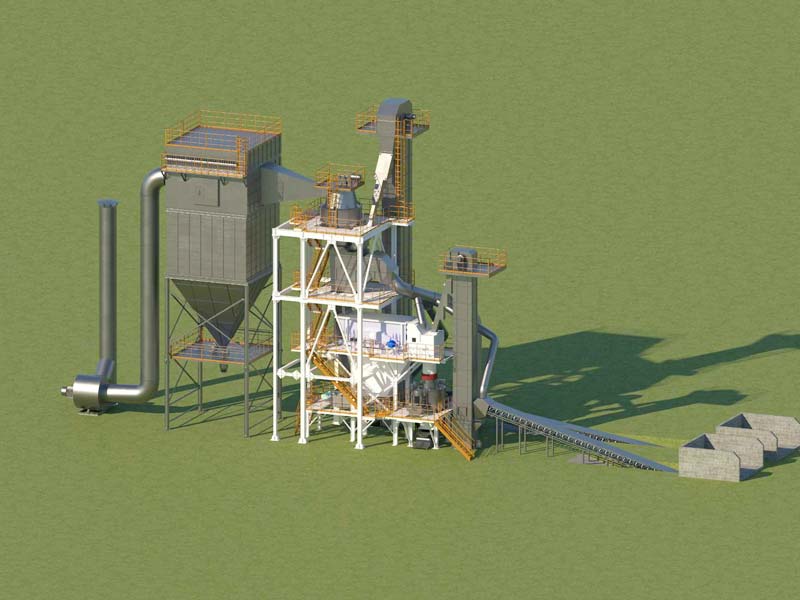
VSI sand making uses a vertical-shaft impact crusher to accelerate stone through a high-speed rotor. The material then breaks through impact and interparticle collision before leaving the crushing chamber.
The “VSI” name refers to vertical shaft impact. It describes the crusher architecture rather than a complete sand-production process.
A full manufactured sand line usually includes:
- prepared feed storage;
- controlled feeding;
- VSI crushing and shaping;
- screening;
- powder or fines classification;
- return of off-spec material;
- finished-sand storage;
- dust collection.
VSI sand making should therefore be evaluated together with these upstream and downstream stages.
VSI Sand Making Is Normally a Later Crushing Stage
One of the most important design boundaries is the size of stone entering the VSI.
Our public process begins with 5–15 mm prepared stone. That means larger quarry rock needs suitable upstream crushing and screening before it reaches the sand-making machine.
For example, if a quarry produces rock at 100 mm or 300 mm, that material should not be treated as direct VSI feed simply because the final target is sand. Primary and secondary reduction may be required first.
VSI sand making is most effective when the upstream process delivers a controlled fine aggregate feed that matches the design basis of the sand-making stage.
This distinction prevents a common project mistake: selecting a VSI from the final sand requirement while ignoring the actual size of incoming raw stone.
Why Feed Size Control Matters Before the VSI
VSI sand making performance depends strongly on the particle-size distribution entering the machine.
Two feed streams can both satisfy a 5–15 mm nominal range while still placing different loads on the crusher.
A feed dominated by 5–8 mm particles requires less size reduction than a feed containing a much larger proportion near 15 mm. The coarser distribution can increase crushing duty and potentially change the amount of material returning from downstream screening.
Buyers should therefore provide a sieve analysis rather than only stating a maximum feed size.
Our guide to manufactured sand feed size explains why the complete feed curve is more useful than one maximum particle dimension.
Feed Rate and Feed Size Must Be Balanced Together
A VSI can receive correctly sized stone and still be overloaded if the feed rate is too high.
VSI sand making should therefore be controlled through both:
- feed size distribution;
- mass flow per unit time.
If the feed becomes coarser while the same tonnage continues entering the crusher, the reduction demand can rise. If the feed rate surges, the rotor and downstream screen may experience unstable loading.
A controlled feed hopper and feeder can help create a steadier material stream.
During commissioning, record feed rate together with grading so the operating team can identify which combination produces stable sand quality and acceptable circuit loading.
Rock Properties Affect VSI Sand Making Behavior
Feed size alone does not determine how a VSI performs.
Limestone, granite, basalt and other rocks can differ in hardness, abrasiveness, fracture behavior and moisture condition. These differences affect crushing efficiency, wear and finished particle shape.
Our manufactured sand production line is intended for several rock types, but the actual process settings still need to be selected around the project material.
For VSI sand making, buyers should provide:
| Raw material information | Neden önemli olduğunu |
|---|---|
| Rock type | Provides the first indication of likely crushing behavior. |
| Feed grading | Defines the size distribution entering the VSI. |
| Moisture | Can affect screening and dry classification. |
| Abrasiveness | Influences wear-part selection and inspection planning. |
| Clay or contamination | Can affect final fines quality and downstream classification. |
Bizim manufactured sand raw materials guide covers these feed-material questions in more detail.
Rock-on-Rock Crushing Helps Shape the Product
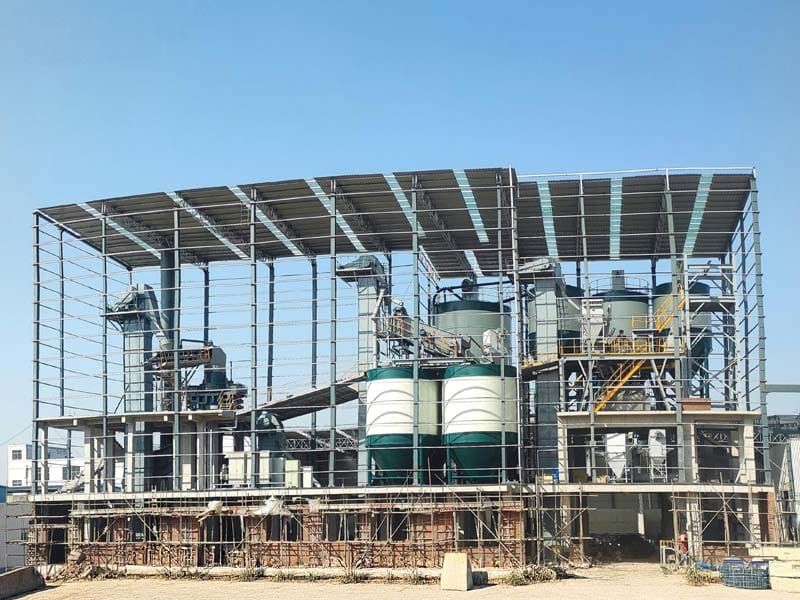
In rock-on-rock VSI sand making, accelerated particles collide with other stone rather than relying only on direct impact against metal surfaces.
This impact process can contribute to both size reduction and particle shaping.
However, buyers should avoid assuming that a VSI alone guarantees a specific final particle shape. The result also depends on:
- feed rock;
- feed grading;
- rotor operating condition;
- material flow through the chamber;
- screening;
- recirculation.
The correct way to confirm performance is to test representative material and evaluate the finished sand against the project’s grading and particle-quality requirements.
The VSI Does Not Produce the Final Grading by Itself
The material leaving the VSI contains a range of particle sizes. Screening and classification determine which fractions become finished product.
Our production line sends crushed material to a circular vibrating screen, followed by airflow powder classification. Qualified sand enters the finished-product bin while material outside the process target can return to the VSI.
This means VSI sand making and screening operate as one circuit.
If the crusher produces a slightly coarser discharge, the screen may send more material back for another pass. If it produces more fines, the powder-classification stage can see a higher load.
The sand maker should therefore never be selected without checking the capacity of the downstream screen and classifier.
Closed-Loop Return Changes the Real Crusher Load
A closed circuit improves control because off-spec material can be processed again, but return material increases internal load.
Consider a simplified example:
| Flow | Illustrative quantity |
|---|---|
| Fresh feed entering the circuit | 100 ton/saat |
| Material returned from screening | 25 t/h |
| Total material passing through the VSI | 125 t/h |
These figures are illustrative only. They show why a crusher handling 100 t/h of fresh feed may actually process more material internally because of recirculation.
VSI sand making capacity should therefore distinguish:
- fresh feed;
- internal circulating load;
- qualified finished product.
Confusing these three values can lead to an incorrectly balanced production line.
Screen Efficiency Directly Affects VSI Sand Making
If the downstream screen cannot separate material efficiently, the VSI may receive unnecessary return load.
A partially blocked screen, worn media or overloaded deck can send material back to the crusher even when some of it may already be close to the desired product range.
For VSI sand making, monitor:
- screen feed rate;
- screen condition;
- percentage of returned material;
- grading of the return stream;
- finished-sand grading.
A rising return load should not automatically trigger a VSI setting change. First confirm that the screen and classification stages are operating normally.
Powder Classification Controls a Different Part of Sand Quality
Crushing, screening and powder classification perform different jobs.
VSI sand making generates the crushed and shaped material. Screening separates particle sizes. Airflow classification adjusts the fine-powder fraction.
These functions should not be confused.
If finished sand contains too much very fine powder, the correct response may be to review classification rather than immediately changing the crusher.
If the overall sand is too coarse, the problem may lie in crushing duty, screen selection or recirculation.
Separating these functions makes troubleshooting faster because each process variable is linked to the part of sand quality it actually controls.
Moisture Can Change Screening and Dry Classification
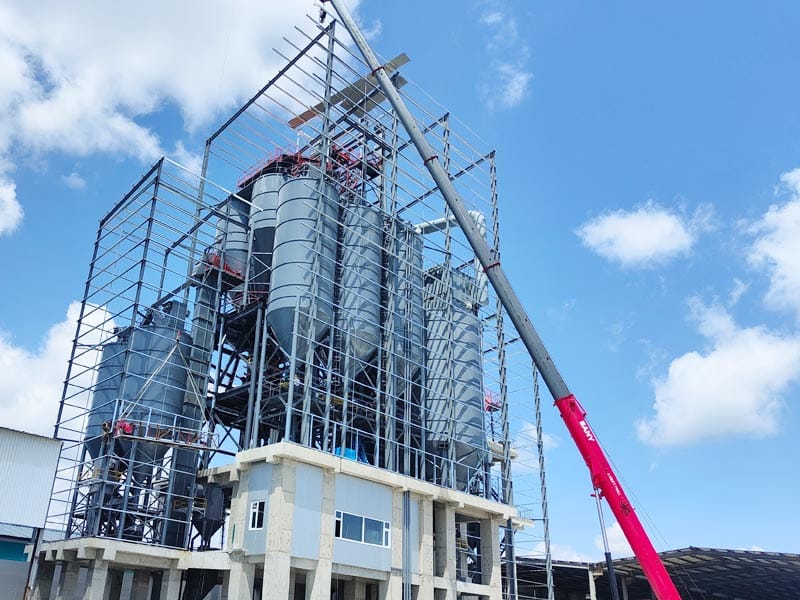
VSI sand making may continue mechanically with moist feed, but downstream dry screening and powder classification can become less stable.
Moist fines can adhere to larger particles or screen surfaces. This can change separation behavior even when the feed-size distribution has not changed.
For a dry manufactured sand process, record moisture during commissioning and seasonal operation.
EPA'lar AP-42 crushed stone processing guidance treats crushing, screening, transfer and fines handling as distinct mineral-processing stages. That process separation is also useful when diagnosing moisture-related problems.
VSI sand making should be validated under feed conditions that realistically represent the project.
Rotor Speed Is a Process Setting, Not a Standalone Quality Control
Rotor speed influences the energy transferred to the stone during VSI sand making.
Increasing speed can change reduction and shaping behavior, but it should not be treated as a universal solution to every grading problem.
A speed change can also change:
- power demand;
- wear;
- product distribution;
- return load;
- fine-powder generation.
Use representative material trials to establish an operating range for the actual rock and target sand.
When adjusting speed, record the before-and-after feed rate, finished grading and circulating load so the effect can be evaluated instead of guessed.
Wear Changes the Crushing Condition Over Time
The internal components of a VSI operate in a highly abrasive environment.
As wear develops, the material path and crushing condition can change. This may gradually affect the product even when the control-system setting remains unchanged.
VSI sand making maintenance should therefore include inspection of:
- rotor wear parts;
- distribution components;
- protective liners;
- feed tube or feed arrangement;
- chamber buildup;
- drive condition.
Do not use one universal replacement interval. Wear rate depends on material abrasiveness, operating hours and actual feed conditions.
Trend finished grading and return load alongside wear inspections. A change in sand quality can sometimes provide early evidence that crusher condition is changing.
Do Not Adjust Crusher, Screen and Classifier at the Same Time
When finished sand moves outside the desired grading range, changing several process variables at once makes the root cause difficult to identify.
A disciplined VSI sand making troubleshooting sequence is:
- confirm raw material and feed grading;
- confirm fresh feed rate;
- check moisture;
- inspect VSI operating condition;
- check screen performance;
- measure return load;
- check powder classification;
- change one justified variable at a time where practical.
Keep samples and operating records after each meaningful adjustment.
This approach builds a process history that can be reused when similar feed changes occur later.
VSI Sand Making for Dry Mortar Needs a Defined Sand Target
Dry mortar often requires tighter control of fine aggregate than general fill or road-base applications.
If the manufactured sand will feed a dry mortar plant, the target should be defined by the mortar product rather than by the crusher alone.
Tile adhesive, masonry mortar, plaster and self-leveling mortar may need different sand fractions.
Bizim entegre üretilmiş kum ve özel harç tesisi connects sand preparation with downstream mortar batching and mixing.
For this type of project, VSI sand making should be configured around the fraction demand of the mortar line. Producing a large total quantity of sand is not enough if the required fraction is undersupplied.
VSI Sand Making for Concrete Also Needs Grading Control
When manufactured sand is intended for concrete, the batching plant needs consistent fine aggregate properties.
Finished grading affects aggregate proportioning, moisture correction and concrete mix behavior.
For VSI sand making used upstream of concrete production, track:
- finished grading;
- i̇nce toz içeriği;
- nem;
- source rock;
- production changes that may alter the sand.
A stable manufactured sand source helps the concrete plant reduce unnecessary recipe adjustment.
This does not mean every concrete mixture should use the same manufactured sand. The final aggregate must satisfy the applicable project and mix-design requirements.
Commission the VSI as Part of the Complete Circuit
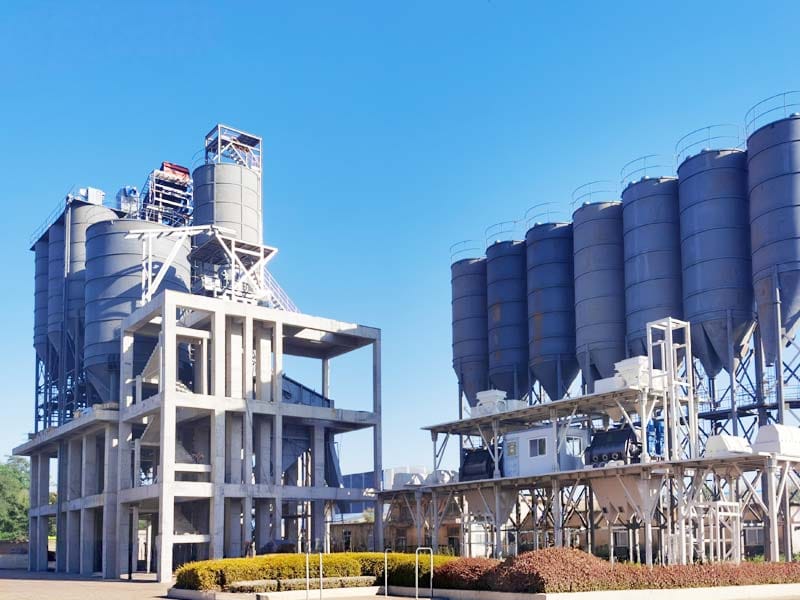
Testing the VSI without the screen and classifier does not prove that the production line can make the required finished sand.
A proper commissioning trial should follow material through the full process.
Kayıt:
| Commissioning input | Neden önemli olduğunu |
|---|---|
| Feed sieve analysis | Defines the material entering the VSI |
| Fresh feed rate | Defines throughput demand |
| Rock type and moisture | Provides material context |
| VSI operating setting | Defines the crushing condition |
| Return load | Shows internal circuit demand |
| Finished grading | Confirms whether the product meets the target |
| Powder fraction | Shows classifier performance |
Repeat the test under representative feed conditions rather than relying on one ideal sample.
What Should Buyers Send for VSI Sand Making Selection?
A useful VSI sand making inquiry should contain real material data.
Sağlamak:
- raw rock type;
- upstream crusher arrangement;
- feed size distribution entering the VSI stage;
- normal and worst-case moisture;
- required fresh feed rate;
- target finished particle-size range;
- required sand grading;
- target fine-powder condition;
- downstream application;
- available site layout.
Bizim üretilen kum çözümleri can then be reviewed around the real feed and finished-product requirements.
Send your material test data and target sand grading through our i̇letişim sayfası for a project-specific process review.
Sonuç
VSI sand making is the fine-crushing and shaping stage inside a larger manufactured sand process. It works best when upstream crushing delivers properly prepared feed and downstream screening and classification are balanced with the crusher.
Feed size, feed rate, rock properties, rotor condition, screen performance, powder classification and return load all influence the finished sand.
Design the VSI as part of the complete circuit rather than as a standalone machine. That makes it easier to control grading, diagnose production changes and match the manufactured sand to its final concrete or dry mortar application.
SSS
What is VSI sand making?
VSI sand making uses a vertical-shaft impact crusher to accelerate prepared stone for fine crushing and particle shaping. It is normally combined with screening, classification and return circuits to produce finished manufactured sand.
Can large quarry rock be fed directly into a VSI?
Not in the MixingPlantPro process described here. The published manufactured sand line starts its VSI stage with prepared 5–15 mm stone, so larger quarry material requires appropriate upstream crushing and screening first.
Why does a VSI sand-making line need a vibrating screen?
The VSI produces a range of particle sizes. The screen separates qualified and oversized fractions, while material outside the process target can return to the sand maker for another pass.
What affects VSI sand making capacity?
Important factors include feed rate, feed grading, rock properties, moisture, operating settings, screen efficiency and circulating load. Capacity should be evaluated for the complete circuit rather than the VSI alone.
What data should I provide before selecting a VSI sand-making line?
Provide rock type, upstream crushing condition, VSI feed grading, moisture, required throughput, target sand grading, powder requirements and downstream application.

