
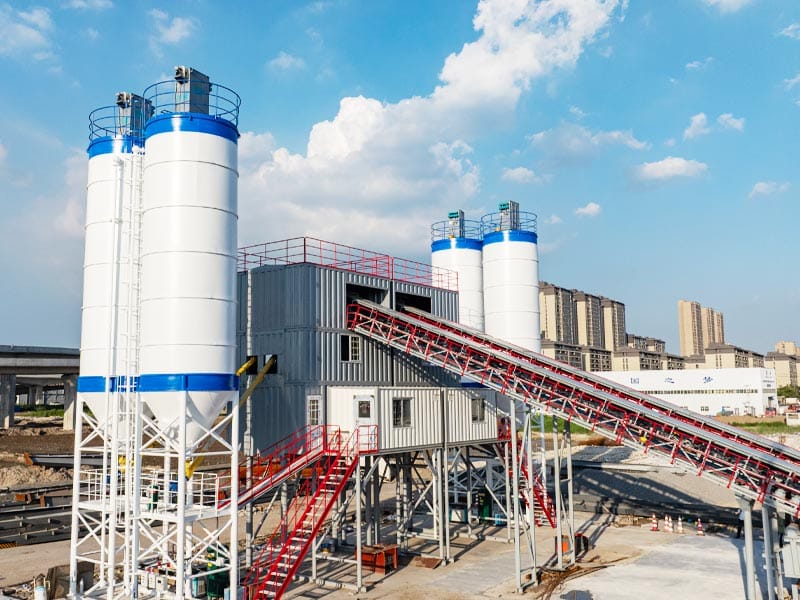
Concrete batching plant capacity is often presented as a rated hourly output, but the number on a product table does not automatically equal the amount of concrete a plant will deliver during a real working shift. Actual production depends on the complete batching cycle, material supply, weighing time, aggregate transfer, mixing, discharge, truck availability, recipe changes and planned or unplanned stops.
For buyers, this distinction matters because a plant selected only from a headline m³/h figure can be oversized in one project and undersized in another. A commercial ready-mix plant with continuous truck demand has a different operating pattern from a precast factory, a mobile project plant or a site that produces several concrete grades in short batches.
ของเรา โรงงานผสมคอนกรีตสายพานติดด้านข้าง และ โรงงานผสมคอนกรีตสายพานเหนือศีรษะ use continuous aggregate belt transfer, while skip-hoist and mobile configurations use different material-handling cycles. This guide explains how to evaluate concrete batching plant capacity from rated output to realistic daily production.
What Does Concrete Batching Plant Capacity Mean?
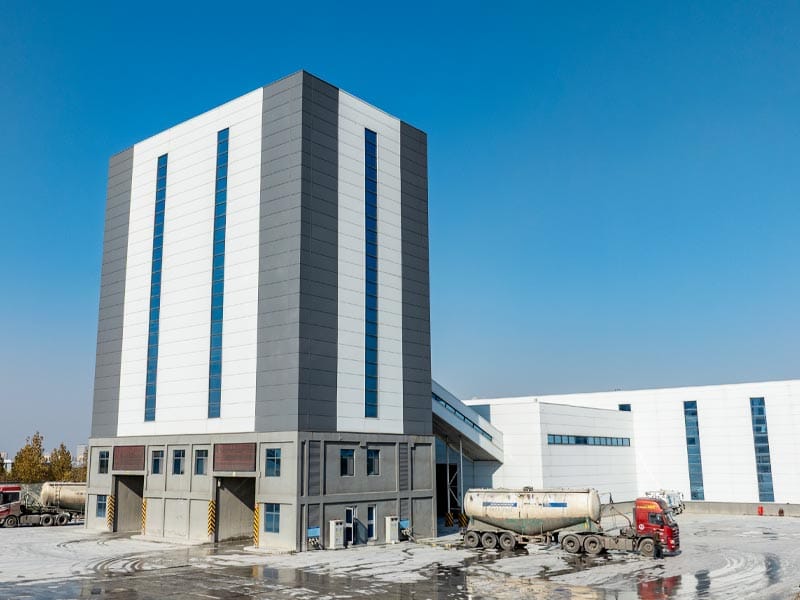
Concrete batching plant capacity can refer to several different measurements. These should be separated before two plants are compared.
| Capacity term | What it describes | What it may ignore |
|---|---|---|
| Rated hourly output | Nominal production under stated design conditions | Truck waiting, material delays, changeovers and downtime |
| Mixer theoretical output | Batch volume multiplied by possible cycles per hour | Upstream and downstream delays |
| Sustained line output | Output the complete plant can maintain continuously | Longer-term planned stops |
| Shift output | Finished concrete produced during a working shift | May vary from day to day |
| Annual practical output | Production over the operating year | Depends heavily on utilization and maintenance |
Concrete batching plant capacity becomes meaningful only when the comparison uses the same definition and operating assumptions.
Rated Output Is a Design Reference, Not a Guaranteed Shift Average
Rated output is useful because it provides a common starting point for equipment selection. It represents the production level the plant is designed around under defined or idealized operating conditions.
However, real production rarely operates at the exact rated condition for every minute of every hour.
A plant may lose productive time because:
- a mixer truck is not ready under the discharge point;
- one cement silo is being replenished;
- sand moisture changes require operator checks;
- a recipe switch takes additional time;
- aggregate delivery is interrupted;
- the mixer needs cleaning;
- a weigh hopper does not discharge completely;
- planned inspection stops the line.
Concrete batching plant capacity should therefore be evaluated as a process capability rather than a promise that every hour of the shift will equal the rated figure.
Start with Mixer Batch Volume and Complete Cycle Time
The mixer is central to plant output, but the relevant time is the complete repeat cycle.
A simplified batch cycle can include:
- aggregate weighing;
- powder weighing;
- water and admixture dosing;
- aggregate transfer to the mixer;
- การชาร์จมิกเซอร์;
- การผสม;
- การปลดปล่อย;
- confirmation that the receiver is ready.
If a mixer produces 2 m³ per batch and the full repeat cycle is 90 seconds, the theoretical mixer calculation is:
2 m³ × 40 cycles/hour = 80 m³/h
That arithmetic is only an example. Actual concrete batching plant capacity still depends on whether the upstream weighing system and downstream receiving system can support all 40 cycles.
Do Not Use Mixing Time Alone as the Cycle Time
A product page may list a mixing cycle or mixing time, but that number should not automatically be used as the full production cycle.
Mixing time is only the period when materials are being mixed inside the mixer.
The plant may still need time for:
- charging;
- weigh hopper discharge;
- skip travel;
- belt transfer;
- การปล่อยเครื่องผสม;
- receiver positioning.
For concrete batching plant capacity calculations, ask for a cycle diagram showing which operations happen sequentially and which can overlap.
ของเรา concrete batching plant types guide also recommends comparing actual process cycles rather than plant labels alone.
Parallel Operations Can Increase Effective Output
Modern batching plants do not necessarily perform every step one after another.
While the current batch is mixing, the plant may already be weighing the next aggregate and powder batch.
This overlap can shorten the effective repeat cycle.
For concrete batching plant capacity, identify which operations can occur in parallel:
- aggregate weighing during mixing;
- powder weighing during mixing;
- water preparation before mixer discharge;
- truck positioning before batch completion.
A plant with good process overlap can achieve a shorter repeat cycle than a plant where every stage waits for the previous one to finish.
Belt Conveyor Plants and Skip-Hoist Plants Have Different Cycle Logic
Aggregate feeding method changes how the plant cycle is organized.
Belt-fed plants use continuous flat and inclined conveyors to move aggregate toward the mixer area. Skip-hoist plants use intermittent lifting cycles.
Neither method should be judged only by the label “high output” or “compact.”
For concrete batching plant capacity, compare:
| Factor | Belt conveyor plant | Skip-hoist plant |
|---|---|---|
| Aggregate movement | Continuous conveying | Intermittent lifting |
| Cycle question | Can the belt continuously supply the next aggregate batch? | Can weighing, skip loading, lifting and return fit the required repeat cycle? |
| Site effect | Longer conveyor route and support structure | More compact aggregate lifting route |
| Capacity review | Check conveyor and receiving-hopper balance | Check skip payload and complete travel cycle |
ของเรา สายพานลําเลียงกับคู่มือรอกข้าม explains these differences in more detail.
Aggregate Weighing Can Become a Capacity Bottleneck
The mixer cannot start the next batch until the required aggregate quantity is ready.
Concrete batching plant capacity can fall if:
- aggregate flow is slow;
- sand bridges in the bin;
- coarse/fine feeding settings are conservative;
- the weighing hopper takes too long to discharge;
- moisture causes material buildup;
- one aggregate fraction repeatedly times out.
ของเรา aggregate weighing guide explains why feeding behavior and scale performance should be diagnosed separately.
A large mixer cannot compensate for a slow aggregate batching stage.
Cement and Powder Feeding Can Also Limit the Cycle
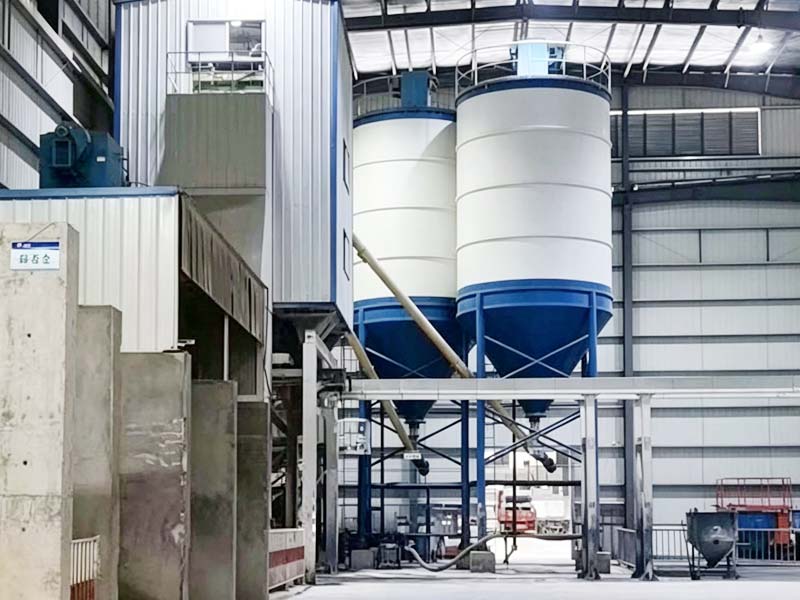
Cementitious materials often use screw conveyors or gravity-assisted feeding into a powder weigh hopper.
Concrete batching plant capacity can be reduced by:
- slow powder feeding;
- bridging inside the silo;
- coarse/fine dosing transition;
- material-in-flight control;
- powder settling time;
- weigh hopper residue.
ของเรา cement weighing guide explains how powder feeding and scale calibration are separate control problems.
Water and Admixture Dosing Need to Fit the Repeat Cycle
Water and admixtures may be much smaller material streams than aggregate, but their dosing time can still affect production.
If an admixture system takes longer to reach a low-dose target than the aggregate and powder systems take to finish, the mixer may wait for the liquid dosing stage.
For concrete batching plant capacity, record the time required for:
- water weighing or metering;
- admixture dosing;
- multiple admixture products;
- temperature-control additions where used.
The slowest required ingredient can define the end of the batching stage.
Recipe Complexity Changes Production Speed
A simple standard concrete recipe can batch faster than a complex product using several powders, multiple admixtures or specialty ingredients.
Concrete batching plant capacity should therefore be evaluated by concrete family.
For example, a plant may produce:
- standard ready-mix concrete;
- คอนกรีตความแข็งแรงสูง;
- คอนกรีตผสมเอง;
- fiber-reinforced concrete;
- architectural concrete.
Each can require different dosing, mixing and discharge conditions.
Do not assume one hourly output applies equally to every recipe.
Small Batches Reduce Hourly Output
A plant may be rated around a normal full batch but operate many smaller batches in practice.
This is common in precast factories and projects producing several concrete grades.
Suppose the complete cycle remains 90 seconds, but the mixer produces only 1 m³ instead of 2 m³ because a small completion batch is required.
The theoretical output falls from 80 m³/h to 40 m³/h under that simplified example.
Concrete batching plant capacity should therefore include the real batch-size distribution during the shift.
Concrete Transport Can Become the Downstream Bottleneck
The plant can produce concrete faster than the transport system can remove it.
In a ready-mix plant, the downstream bottleneck may be mixer-truck availability or loading-lane congestion.
In a precast factory, it may be transport buckets or casting-station readiness.
For concrete batching plant capacity, ask:
- Is a receiver always ready at discharge?
- How long does truck positioning take?
- How many loading lanes exist?
- Can two casting stations request concrete simultaneously?
- Does the transport bucket return before the next batch is ready?
ของเรา คู่มือการขนส่งคอนกรีตสําเร็จรูป shows how delivery-cycle time can become lower than the mixer’s theoretical output.
Truck Queue Design Directly Affects Ready-Mix Output
Ready-mix production depends on truck availability.
If the plant completes a batch but no truck is ready, the mixer must wait or the production sequence must pause.
Concrete batching plant capacity should therefore be reviewed together with:
- truck fleet size;
- queue lane;
- loading position;
- dispatch control;
- site exit;
- delivery cycle to the jobsite.
ของเรา batching plant layout guide explains why truck queues are part of the production system rather than only a traffic issue.
Material Storage Must Sustain Peak Demand
A plant cannot maintain high output if aggregate bins or cement silos run empty during the peak production window.
For concrete batching plant capacity, calculate:
- aggregate consumption per hour;
- cement consumption per hour;
- usable storage capacity;
- delivery frequency;
- time required to replenish each material.
A plant may be mechanically capable of a high output but unable to sustain it because the storage and delivery system is undersized.
Silo Replenishment Can Interrupt Production
Powder delivery should be included in the production plan.
If a cement tanker blocks mixer trucks or if filling operations require a production stop, practical output falls.
Concrete batching plant capacity should therefore be evaluated with the full material logistics plan, not just the main machine.
Moisture Correction Can Add Quality-Control Time
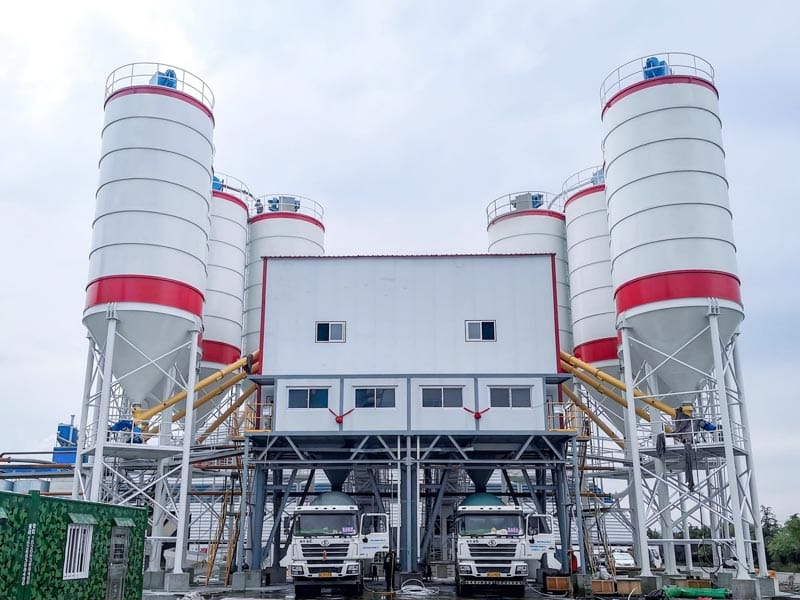
Aggregate moisture changes the required wet aggregate and batch water quantities.
Automatic moisture correction can reduce manual intervention, but representative checks and quality-control verification still take time.
ของเรา คู่มือการแก้ไขความชื้นรวม explains why moisture needs to be treated as part of the complete material balance.
For concrete batching plant capacity, moisture control should be included in operating procedures without sacrificing batching accuracy for speed.
Product Changeovers Reduce Practical Shift Output
If a plant produces several concrete grades, changeovers may require:
- recipe verification;
- aggregate or powder confirmation;
- admixture line changes;
- mixer rinsing or cleaning;
- quality-control checks.
These periods reduce productive time.
Concrete batching plant capacity should therefore be calculated across the actual production schedule rather than one uninterrupted recipe.
Maintenance and Inspection Belong in Capacity Planning
A plant cannot remain at rated output indefinitely without maintenance.
Planned stops can include:
- mixer inspection;
- การหล่อลื่น;
- belt inspection;
- skip-hoist inspection;
- การตรวจสอบขนาด;
- cleaning;
- wear-part replacement.
ของเรา รายการตรวจสอบการบํารุงรักษาโรงงานแบบแบทช์ และ lubrication guide explain why these tasks should be planned rather than treated as unexpected lost time.
Daily Production Should Use Productive Hours, Not Clock Hours
A common planning mistake is multiplying rated hourly output by the full shift length.
Suppose a plant is designed around 120 m³/h and the shift lasts eight hours. A simple multiplication gives 960 m³.
But if the shift contains:
- 30 minutes of startup and checks;
- 30 minutes of planned cleaning;
- 30 minutes of recipe changes;
- 30 minutes of truck or material waiting;
productive time is only six hours. Even if the plant maintained 120 m³/h during every productive minute, the shift output would be 720 m³.
This is illustrative arithmetic, not a MixingPlantPro performance claim.
Use a Practical Capacity Model
A more useful concrete batching plant capacity model is:
Practical Shift Output = Sustainable Production Rate × Productive Operating Time
Sustainable production rate should already reflect the slowest stage of the actual cycle.
Productive operating time should reflect:
- planned shift length;
- scheduled inspections;
- changeovers;
- cleaning;
- known logistics delays.
This creates a more realistic planning number than rated output alone.
Do Not Apply One Generic Efficiency Percentage
Some project calculations reduce rated capacity by a standard percentage to estimate practical output.
This can be convenient, but it hides the real bottleneck.
One plant may lose output because of trucks. Another may be limited by aggregate feeding. A precast line may be limited by transport buckets.
Concrete batching plant capacity should therefore be based on a cycle and utilization model rather than an arbitrary universal derating factor.
Compare Plants Using the Same Production Scenario
When comparing two batching plant configurations, use the same assumptions.
| Comparison input | Keep consistent |
|---|---|
| Concrete recipe | Same material and dosing complexity |
| Batch size | Same discharged volume |
| Mixing requirement | Same validated mixing condition |
| Truck or transport system | Same receiver availability |
| Material supply | Same storage and replenishment assumptions |
| เวลาทําการ | Same productive-time basis |
This makes the concrete batching plant capacity comparison technically meaningful.
When Belt-Fed Plants Make Capacity Planning Easier
Belt-fed plants use continuous aggregate transport and are commonly selected for higher-volume fixed production.
Our overhead and side-mounted belt configurations use flat and inclined conveyors to move aggregate toward the mixer.
For concrete batching plant capacity, the engineering review should confirm:
- belt feed rate;
- receiving hopper capacity;
- aggregate weigh cycle;
- conveyor overlap with mixing;
- การเข้าถึงการบํารุงรักษา.
Continuous conveying can support a stable cycle, but only when weighing, storage and downstream discharge are balanced with it.
When Mobile Plants Need a Different Capacity Review
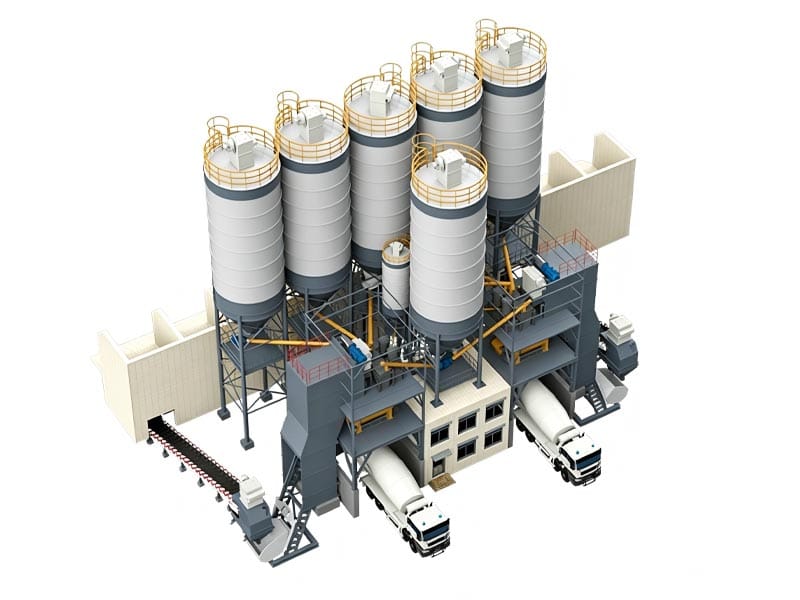
A mobile batching plant is selected partly for relocation and site flexibility.
Its practical output should be reviewed together with:
- available site space;
- aggregate replenishment;
- temporary foundations or supports;
- power and water supply;
- truck circulation;
- frequency of relocation.
ของเรา โรงงานผสมคอนกรีตเคลื่อนที่ uses an integrated modular frame, but actual project output still depends on the complete site setup.
What Should Buyers Send for Capacity Selection?
A useful concrete batching plant capacity review needs more than one target m³/h figure.
ให้:
- average daily demand;
- peak hourly demand;
- required duration of peak production;
- ครอบครัวผสมคอนกรีต;
- normal and minimum batch sizes;
- เศษส่วนรวม;
- วัสดุผง;
- จํานวนส่วนผสม;
- truck fleet or precast transport method;
- operating hours;
- planned changeovers;
- เค้าโครงไซต์;
- future production target.
ของเรา สรุปโครงการโรงงานผสมคอนกรีต provides a structured way to collect these inputs.
Send your production schedule and site information through our หน้าติดต่อ for a project-specific plant capacity review.
บทสรุป
Concrete batching plant capacity should be evaluated from the complete production cycle, not only from mixer size or rated m³/h.
Aggregate feeding, powder dosing, water and admixture systems, mixing, discharge, truck availability, transport cycles, storage, recipe changes and planned maintenance can all reduce actual production below the headline rating.
The strongest equipment selection starts with the real production schedule and identifies the slowest stage under peak conditions. When rated output and practical output are separated clearly, buyers can choose a plant that matches the project instead of relying on a number that may never be sustained in daily operation.
คําถามที่พบบ่อย
What does concrete batching plant capacity mean?
It can refer to rated hourly output, theoretical mixer output, sustained line output or practical shift production. Buyers should confirm which definition is being used before comparing plants.
Why is actual production lower than rated capacity?
Actual production can be reduced by material feeding, weighing, truck waiting, recipe changes, cleaning, moisture checks, maintenance and other production delays that are not part of the nominal rating.
Is mixer cycle time enough to calculate plant capacity?
No. The complete cycle should include charging, weighing, aggregate transfer, mixing, discharge and receiver readiness. Some steps can overlap, but they still need to be included in the process model.
Do belt-fed plants always have higher practical output than skip-hoist plants?
Not automatically. Belt plants use continuous aggregate transfer, while skip plants use intermittent lifting. Practical output depends on the complete proposed cycle, batch size, storage and receiving conditions.
What information is needed to select concrete batching plant capacity?
Provide peak and average demand, concrete types, batch sizes, material system, truck or precast transport, operating hours, changeover frequency and site conditions.


